English

Business Cooperation: promoting business and accompanying SMEs in their internationalisation processes

By Carolina Pérez, in charge of Communications.

The Eurochile Business Foundation was born with the objective of creating, promoting and consolidating economic, commercial, technological and Know How links between Chilean SMEs and institutions and nations from the European Union, both public and private, being a facilitator of the internationalisation process of SMEs and strengthening of the support institutions. That is to say: to be a bridge to unite ties between Chilean companies and entities with European counterparts. That is why the work of Eurochile, since its foundation on March 12, 1993, has played a relevant role for the development and internationalisation of Chilean SMEs.

In the book of the 15 years of the foundation, published in 2008, it is mentioned that Eurochile is an innovative project for several reasons. First, because when it was founded, mutual trust and interest was promoted with financing in equal and equitable parts between Europe and Chile; and second, however it was created by two public entities – the State of Chile and the European Union-the foundation is a private, non-profit institution. It should be noted at this point that, for Eurochile to maintain this status, a law was created in the Chilean Parliament to preserve its autonomy. This may be one of the most important points, because it has allowed this project to last for 28 years, without depending on any of the parties.

A third relevant point is that Eurochile is the only entity in Chile, and the first in Latin America, to have the Enterprise Europe Network. A virtual platform that in addition to being the backbone of Eurochile, is present in more than 60 countries worldwide, with more than 600 affiliated entities, chambers of commerce, technology centers, universities, foundations, public and private entities, among many more. This network allows all the professionals in the foundation to connect and link our entrepreneurs with counterparts in Europe.

And there is one more reason that made Eurochile an innovative project, which is to support companies in their internationalisation process. And here the emphasis is not on the process of selling products, but rather on the process of exchanging know-how, technology transfer, and cooperation for future projects, generation of networks and transfer of expertise. In conclusion, it is an innovative, pioneering and unique entity in its way of working in Chile.

In this context, we know that the Foundation, during its long history -and to fulfill its role as a business bridge between Chile and Europe-, has developed and generated endless platforms and contact networks, both at national and international level, which has allowed access to several European programs and signing cooperation and understanding agreements with different partners and entities. All this work carried out by Eurochile has been for the benefit of Chilean SMEs, with the aim of generating links with counterparts, identifying business opportunities and promote dialogue between parties. In other words, this can be translated into Cooperation.

Cooperation is part of the foundation’s DNA, and from there the Business Cooperation area is born, whose main objective, as described on the Eurochile website, is to “support the development of business links between Chilean and European SMEs in their internationalisation processes, favouring a bilateral relationship based on mutual understanding and providing collaboration networks between the country and the European Union”.

The Business Cooperation area, as described above, then has the main task of promoting business opportunities, supporting companies through different service offers that allow them to improve their competitiveness and productivity in a sustainable way; support SMEs who seek to enter the European market; organisation of workshops- mentoring- brokerage events- webinars; organisation of company missions; participation in national and European fairs and bringing  European experts to Chile, among other actions.

With the pandemic, many of the activities carried out by the area were unfortunately no longer feasible, such as company missions and participation in national and international fairs due to global health protocols.

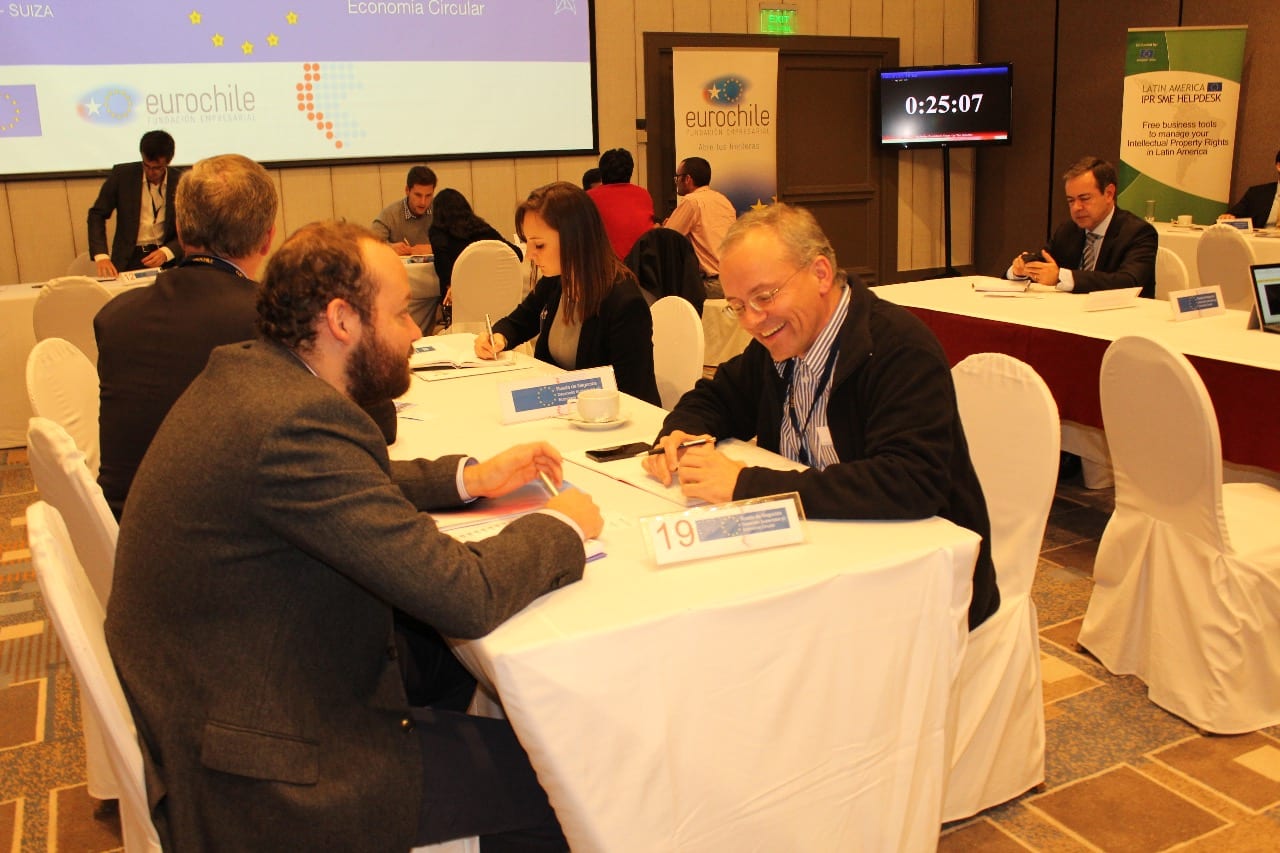
The 2020 prospect, due to Covid-19, forced us to take a turn in the way we work. Being part of the Enterprise Europe Network (EEN) allowed us to be co-organizers of 17 virtual brokerage events. There, we realised that the online activity was very beneficial and motivating because we had more than 250 Chilean companies participating in these initiatives. What was the reason we had so many Chilean SMEs participating in these activities? One of the reasons was that the entrepreneurs did not have to pay money for travel or accommodation. In addition, the entrepreneur could from his home- kitchen, office, living room or dining room- generate contact with a European counterpart to improve the productivity and / or competitiveness of his company, meet the future partner for an upcoming joint project, for knowledge transfer or simply to expand its contact network.

The virtual brokerage events were not the only activities carried out in 2020, we also executed a pilot mentoring program -whose participation was a success- with 19 participating companies and a signed cooperation agreement between a Chilean university and a Spanish one for the transfer of knowledge and student internship. This pilot program emerged from a webinar that we carried out on July 14 (“In times of pandemic, the importance of networking”) and whose objective was to show how important it is to work with networks and platforms, promoting associativity between companies, entrepreneurs and entities and both public and private in Chile and Europe. These 19 companies are still being followed up, because the work for us does not end when the entrepreneurs make contact, but rather it is maintained over time and we accompany the SMEs in all following processes.

Another very successful service was the uploading profiles to the EEN platform. Broadly speaking, this process works as follows: the entrepreneur interested in starting his internationalisation process or expanding his market must complete a profile –offer or demand- indicating a description of his company, what type of partner he is looking for and where in Europe. Then, this profile goes through a validation process in the European Commission in order to meet certain requirements already established. This process is slow, but once the profile is validated, it is placed on a virtual platform accessible to all network partners. In this case, we can give as an example an entrepreneur from the wine sector that received expressions of interest for his Chilean product and within weeks began conversations with a European counterpart.

The aforementioned are some of the services that we can offer to companies. We can also help you to find business opportunities in Europe, training your company team through workshops, find a European expert for a webinar, prepare an agenda and identify European entities for internships, among others.

The work is a lot, but very rewarding. It allows us to be in contact with companies, help them and accompany them in the different internationalisation processes. It also allows us to manage contacts and generate ties with entities -both national and international- in order to find work synergies and future collaborations. This 2021 we continue working, identifying opportunities and disseminating activities remotely. We are already co-organizers of 7 virtual brokerage events and we have the participation of more than 130 Chilean companies.

With regard to the above mentioned, we invite all those who are in the energy, environment, health, agri-food, circular economy, technology and science sectors to join these virtual activities and identify opportunities for their companies. Or we also invite you to contact us, Nina Morales, Manuela Caruz or Carolina Pérez, to arrange an online meeting and see how we can help you and learn more about our services.
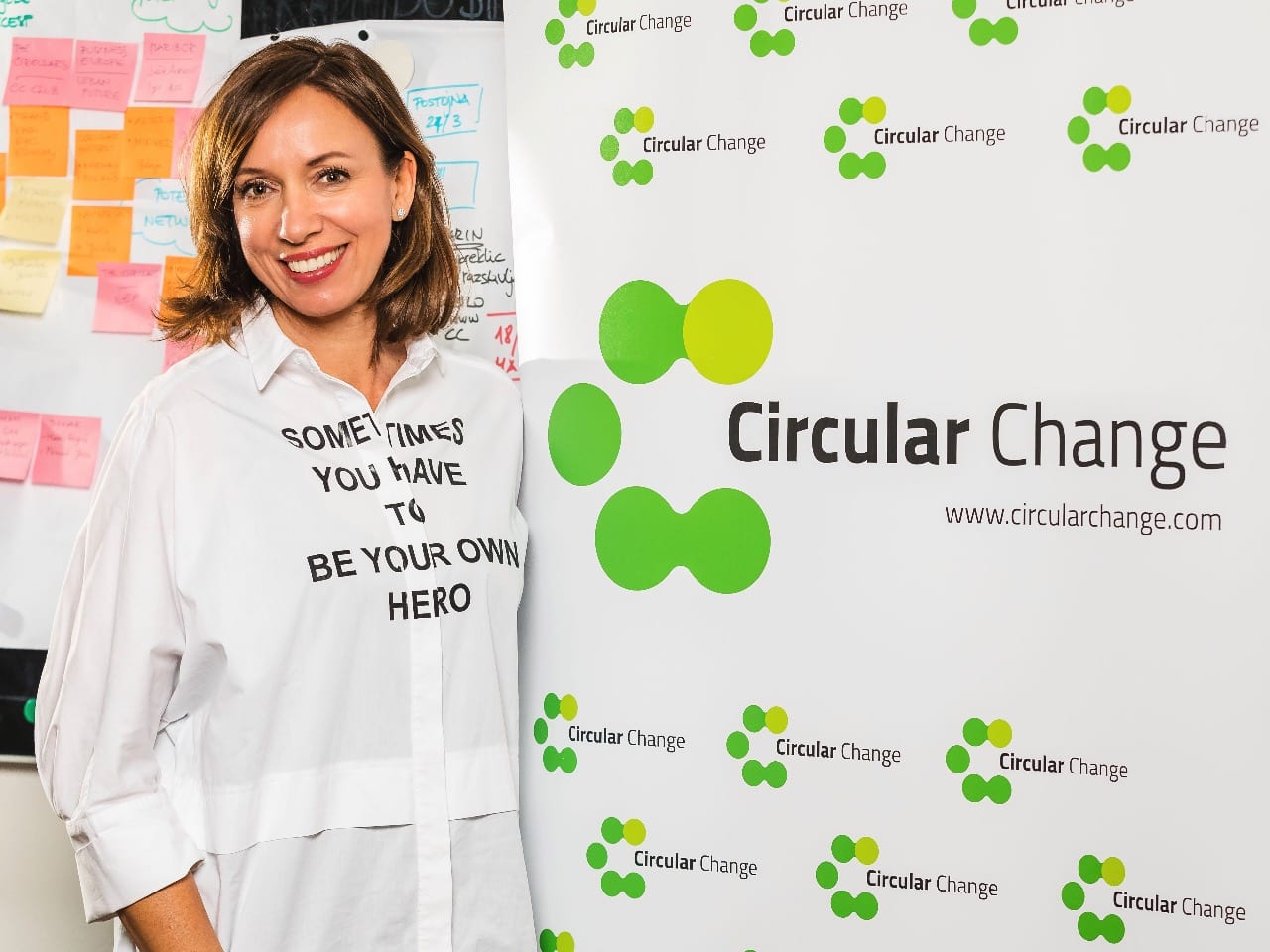
Ladeja Godina: “Chile, by showcasing the circular economy roadmapping process, will definitely speed up the process in other countries”

During 2020, Ladeja Godina was one of the main European advisers in the preparation of the Circular Economy Roadmap in Chile. She was part of the Eurochile Business Foundation team that led, jointly with the Ministry of the Environment, the construction and drafting of the of this document, which last February ended its public consultation process and today is in the stage of incorporating observations and final drafting.

Founder and executive director of Circular Change, and at the same time president since 2018 of the coordination group of the European Circular Economy Stakeholder Platform (ECESP), Ladeja Godina has also participated in the development of circular economy roadmaps for three European countries.  In this interview she talks about how the process of adopting this trend has progressed in her country and about the experience of the work in Chile.


How has your country’s experience been in the preparation and development of the roadmap towards the circular economy?

I believe Slovenia started very good with the process of transition few years ago; crucial points were the government’s documents presented in 2017 – Vision 2050 and Strategy 2030, which restated the importance of embedding circular economy and sustainability into the policy agenda. Between 2016 and 2017 our platform Circular Change, lead the process of preparation of the Slovenian National Circular Economy Roadmap. It was super challenging, since Slovenian government did not invest money into profound research and data analysis done by consultant companies, what is usually the case before the roadmapping process starts. With other partners in a consortium we started the process that was bottom-up driven. More than 15 workshops and engagement of almost 3.000 stakeholders (total population of Slovenia is 2 million) provided inputs needed for the document that has been primarily introduced at the 3rd Circular Change Conference in Maribor, Slovenia. The “Circular Triangle” – bridging Circular Economy, Circular Change and Circular Culture is in the core of the document. While promoting circular culture, we try to bridge the creative industries and systemic circular change, in order to bring creative people into the process of decision-making, innovating and designing. We need creatives’, designers’, communicators’ skills in order to help us raise our business solutions on a circular level.

What have been the main difficulties?

As already mentioned, due to the lack of profound research and data analysis, we had to rely on the contribution of different stakeholders. But it turned out as something very valuable, since the understanding of the potential circular economy transition is bringing, has been widely spread. After the introduction of the Roadmap, we expected the government to prepare concrete Action plan, but unfortunately that wasn’t the case. As we can see, some other European countries have progressed more than Slovenia in the last 2 years (Slovakia, Czech Republic, France, Poland); with more systemic approach, with public-private partnerships, effective support to projects and more “green&circular oriented” allocation of financial resources.

What are the productive sectors that have the least difficulties in implementing the changes?

Sectors, that are most often recognized as those with high potential for circular transition – at least in Europe – are food, construction, mobility, manufacturing, plastic, consumer goods, biomass … More long-term transition refers for example to mining industry and energy sector. But we shall take in account that all sectors are interdependent and interconnected, so we can not think about them separately or in silosis. It is of crucial importance to navigate the circular transition as a complex system, constantly monitoring the impact one sector has on the other, exploring synergies and discovering new possibilities for collaboration as well as for the industrial symbiosis. There are a lot of hidden potentials within existing value chains – that’s why we – within the European Circular Economy Stakeholder Platform – strongly promote the importance of exchange of knowledge and lessons learned. Implementing the changes is an ongoing process and should be considered as “work in progress”.

Why is it important for countries and companies to have a roadmap?

Circular economy roadmaps help nations to start their transformative process and navigate through the transition. The process of creation is probably equally important than the document as such. It enables different stakeholders to come together, co-create joined vision of circular future, exchange their experiences and practices, agree on priority areas, set the monitoring system … All that is needed to achieve a broad consensus on the implementation of circular economy principles. Particularly now, when we are facing COVID-19 crisis, a circular economy roadmap can serve as one of guidelines towards more resilience and thriving future. Taking into account economic, social and environmental aspect, showing the way where and how to create new jobs, how to recover economy and society, how to manage resources in a better, more sustainable way and how to address biodiversity. Aligned with SDG 12 – responsible production and consumption, circular economy roadmaps are opening space for an economy & society where the quality of life is assured for everyone and growth is not based simply on more production.

What is the deadline we have? 2030? 2040?

The deadline was “yesterday”. We are already consuming more resources than planet Earth can provide – we have put next generations in debt. This year the “Overshoot Day” – the moment each year when we humans have used up more natural resources that the Earth can renew in 12 months – came on August 22nd. It would take 1.6 Earths this year to meet the needs of the world’s population in a sustainable way (calculations were made by American NGO Global Footprint Network). For now, we only have one planet. So, we better take care of this one and stop destroying everything, what actually enables us, humans, to live on this beautiful planet. The Earth might survive. But the future of our civilization is very unsecure.

Our country is finishing the process of preparing its roadmap. In your experience, what are the main challenges it faces?

 For me, personally, the collaboration with Eurochile team in the roadmapping process is a true privilege. Despite the fact, that due to pandemic, I was not in a position to visit Chile, we are collaborating remotely and have established great relationship. I would not say that we have any particular challenges, since the whole process of creation is a challenge – in Chile or elsewhere. This is an adventurous journey and the team started it very well prepared. With very clear structure, vision, goals, milestones, timeline and super professional & passionate team. The level of engagement of different stakeholders and capability of integration of different interests in the process is amazing. What I admire a lot is the empathy of members of the team, their sensibility for content and facts that are unique in Chile, like strong emphasize on culture, education, heritage, for example, and collaboration foreseen for the implementation of circular economy between cities and rural areas. This is really great!

In practical terms, what does the adoption of this roadmap imply for the different productive sectors? How quickly should they adopt the changes?

 Once the roadmap is introduced, the implementation process starts. Of course, roadmap is not a magic tool – it is a tool-kit. In an ideal scenario, the action plan would follow, giving more precise guidelines to each selected sector. It is of crucial importance that the adoption of the roadmap is as wild as possible – as already mentioned, the implementation of circular economy is calling for a systemic approach and every single part counts. The whole ecosystem shall be designed in a way to support this transition. In recently published book, Prof. dr. Jacqueline Cramer (Amsterdam Economic Board), is very clearly showing the power of network governance for the implementation of circular economy on national level: “Network governance is about building a coalition of partners: people willing to contribute to transformational change and who need each other to realise this.” The adoption of changes starts with the first step – decision, that you are willing to start this journey. And this first step has to be taken by leaders on different levels, in different sectors.

What is the role that Chile could have in Latin America in this regard?

In Latin America we can already face a kind of “movement” inspired very much also by the circular economy roadmaping process in Chile. It is important having a lighthouse – someone- the others can follow. According to my experiences and engagement in Latin America, I can already notice the impact – Chile is invited to present the approach, to share experiences, to connect with other circular frontrunners. Brazil is also very active and I, as Slovenian, feel flattered being a part of this “circular community”, collaborating with Exchange4Change in Brazil and Eurochile in Chile. Let me mention our Ambassador, Gorazd Renčelj, who is great supporter of circular transition and is also contributing to the recognition of different initiatives and activities – at recent virtual EU LAC Conference circular economy has been in the focus.

With the current conditions of the globalized economy, how much progress can be made when the effort is not done jointly? (As is the case of Latin America)

Climate and health crisis are two parts of the same coin and we have learned, that we can address both only by joining forces on global level. The circular economy as a tool, to make transition towards more resilient economy a reality, shall be implemented in every country, on every continent. It does not mean that the practice implemented in Europe has to be “copy-pasted” in other countries. On the contrary, based on the values and principles of circular economy, each country shall find its own way to embrace challenges and find circular solutions. I have no doubt, that there are a lot of circular frontrunners in Latin America, but have not been recognized, enabled, empowered … Chile, by showcasing the circular economy roadmapping process, will definitely speed up the process in other countries.  By sharing the expertise in networking, stakeholder engagement and previously mentioned network governance, circular movement shall become as influential and attractive, as the rhythms of Latin America music.

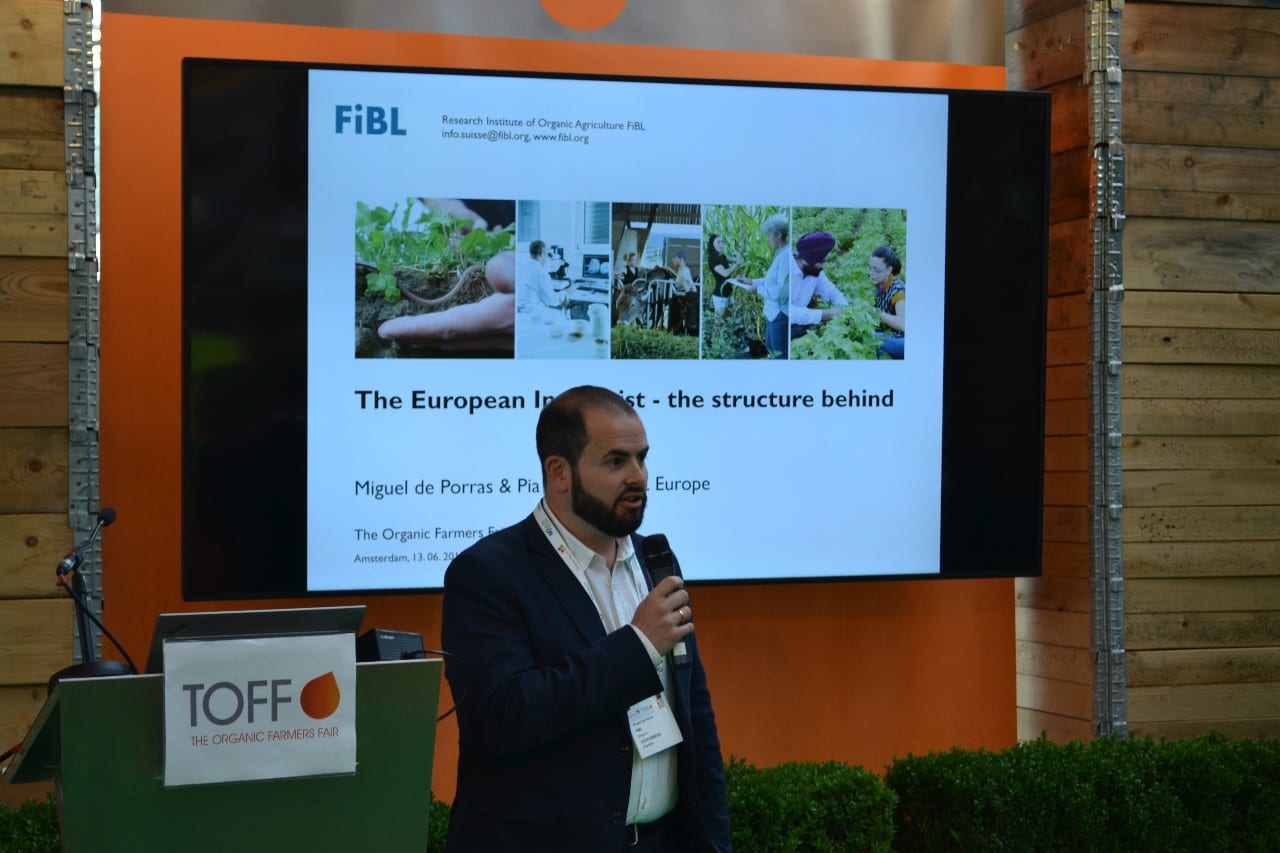
Miguel de Porras: “Agriculture must represent the vanguard in the transformation towards a more circular production”

Miguel de Porras, director of the Research Institute of Organic Agriculture of Europe, located in Brussels, is in charge of coordinating more than 300 researchers from all over the continent and disseminating scientific information on this booming production system. And it was the latter that was present in the Chile-Europe Circular Economy Meeting held last December by the Eurochile Business Foundation, with the aim of promoting the development of this trend in the country.

Today, he says, there is agreement among the scientific community about the unsustainability of our food systems and that the absolute need for their transformation is broad, if not globally. And this includes not only the carbon emissions registered by its production, but also aspects such as the loss of biodiversity, the loss of fertile soil and the degradation of fresh water sources, among others.

“If we consider all the dimensions of the environmental impact that our agri-food systems have, the urgency is extreme,” says De Porras. But in this, he adds, “we must consider that sustainability is not only an environmental aspect but also a social and economic one, and in this sense we also attend increasingly volatile markets and prices that erode the remuneration of farmers on a global scale and they cause the emptying and loss of social and cultural structures in many rural areas around the world ”.

Transformation is needed today, and the longer we postpone it, the higher the costs will be for our farmers and our societies at large. This transformation should undoubtedly take place in the agriculture sector, due to its direct link with natural resources, so that “agriculture must represent the vanguard in the transformation towards more circular production”, says the Spanish expert. “Circularity and the reduction of the environmental impact of agriculture are imposed no longer as an‘ideological ’option but as an economic necessity. Agriculture is called aimed to develop effective and sustainable economic incentives for the transformation and adoption of more circular models with less environmental impact”, he affirms. And organic farming will play a key role in this.

 What is organic or ecological agriculture?

It is one that respects the organic production regulations. These are regulations that strictly regulate the type of practices and inputs accepted in production systems that respect the environment. In Europe it is the, still in force, regulation 834/2007 and the future 848/2018 that will definitely come into force in 2022. In Chile the policy that regulates this type of production is 20.086, which has been recognized as equivalent to the regulations of the EU in the 2017 agreement, the first “new generation” agreement for trade in organic products. Another well-known regulation is the NOP developed in the USA. Compliance with these standards is normally certified by external control bodies that inspect the production standards in each farm or establishment. However, this complex system of regulation and control exists thanks to the visionary work of the organic farming movements, united around the umbrella IFOAM (International Federation of Organic Agriculture Movement). These movements agreed on the four fundamental principles of the organic farming movements: health, ecology, equity and precaution. The interaction between movements and regulations is complex, but it is essential to know these two dimensions of the definition of organic farming, so to speak, one referring to the “body” and the other referring to the “soul” of this type of agriculture.

What is the potential for the sector to adopt circular production models?

From my point of view, the question should not be what is the potential of this transformation, but rather, what is the potential of “business as usual” How far can we go? In Europe, the adoption of the circular economy is considered a horizontal priority that concerns all productive sectors. The development of an economy less dependent on inputs and raw materials from other territories, as well as an economy that revalues ​​waste and waste to re-integrate it into the production cycle, is a necessity, not an option. Even so, the potential is far from reaching its maximum; we still find absolutely irrational scenarios, both ecologically and economically. The circular economy is a broad concept to include many different practices, some more rational, efficient and effective than others, but in general making our economies more circular presents clear environmental and economic improvements for those who implement them. In agriculture, the closure of biophysical cycles, the protection and recovery of soils, the diversification of productions, the recovery of waste, etc. they are strategies that not only improve the environmental impact but also improve the competitiveness of our agricultural sector. It is not a question of abandoning agriculture to a semi-subsistence condition, but of investing where technologies and new developments can produce change, abandoning the aforementioned “business as usual” logic.

Could you mention some cases of successful application of this type of agriculture in Europe?

Undoubtedly, there are many examples of circular economy in the European agricultural sector, from the use of waste from the fishing industry to the production of  high phosphorous biofertilizers; in this field FiBL participates in the SEA2LAND project that will begin next year exploring this type of circular innovations. Another example that I would like to point out is the European list of inputs for organic farming. FiBL develops this list since 2017 built on different national lists. We analyze the composition of the inputs to guarantee farmers their acceptance in organic farming. Currently this list that covers the supplies marketed in 6 European countries (Switzerland, Germany, Austria, Holland, Italy and Croatia) is registering a real boom. We currently have almost 7,800 different products registered from almost 850 companies. Among them two Chileans. Here we talk about many other success stories in inputs that implement the ecological regulation and the logic of the circular economy.

Regarding circular economy models, does the size of agricultural production influence? Is it easier to apply it in small businesses?

I do not think that size is a requirement for the implementation of the circular economy. There are all kinds of possibilities to promote the circularity of our production models, from waste composting strategies at the domestic level, to complex industrial processes to revalue waste in large processing plants. The answer to this question depends on the type of innovation or technology we are considering, but from our experience in Europe it is clear that these types of innovations exist at all scales.

How does the implementation of these measures impact the final price of the product?

Most innovations in the circular economy in the agriculture sector produce two types of direct economic impacts: the reduction of the cost of production, or the creation of new products or new sources of income. Both impacts can cause changes in the final price of the product, but it will depend on the structure of the market and the competitive situation of the producer. However, if we proceed to consider the ability to add value to the product by reducing the environmental impact, the impacts can be much greater. This is the case of the different sustainable labeling strategies, where there are many diverse experiences, but where organic certification stands out as one of the most effective in adding value to the product by reducing its environmental impact. Eco-labeling is widely recognized by consumers, in Europe it is one of the best-known labels and whose presence is a clear attraction. Implementing the logic of the circular economy in agriculture has its economic logic, but its combination with environmental certification systems, such as that of organic farming, opens the way to large impacts on the final price.

What can we do as consumers to promote the implementation of sustainable agriculture?

Without a doubt, the first answer is to try to consume as local as possible. It is not an illusory claim to eat only something that you can produce on your farm and, try to reduce the number of kilometers from farm to fork is key. In this sense, in Chile, a global power in agricultural, Chilean consumers should make efforts to buy national production. In this context, consumers should try to find out about the origin of food and the conditions in which it is produced, trying to reward the most sustainable experiences at a social and environmental level. In order to put this into practice, it requires good labeling and marketing strategies. Another important aspect is to diversify diets; the more different foods we consume, the more incentive there will be to diversify productions. It is a simple principle that also has positive effects on our health, Chile is a country characterised by its agriculture.

What potential do you see in the development of the circular model?

The productive capacity of Chilean agriculture is astonishing, with great climatic diversity and different types of production. The potential of the circular economy in agriculture is vast, being able to represent the saving of millions in the country’s production costs with efficient planning of the use of waste. But, if environmental ambition does not stop there, I think there will be much more to gain, the consumer is more and more interested in sustainability and it is a process that has no going backwards. We can see it in the growth figures of the organic market that does not stop growing. The increase in ecological agriculture or agroecology in Chile, due to its productive capacity, can represent an important competitive advantage. But this productive transformation cannot be oriented to a traditional export model, it must not be satisfied with that, it must move towards increasing local consumption and regional supply. In this way, by developing both poles of the food chain, Chilean agriculture will be able to maintain its leadership and its resistance to the increasing changes and shocks of the agricultural markets.

Virtual Brokerage Events Eurochile 2021: more than 130 companies are already connected to our business networks

During 2020, the traditional brokerage events organised by Eurochile Business Foundation with the different organisations of the Enterprise Europe Network (EEN), in their role as partner and sole contact point for this network in Chile, turned towards the virtual world due to restrictions imposed by the pandemic. And this, far from diminishing the interest in participating in these encounters, turned into successful participation and generation of contact networks.

It is a global phenomenon, which also led to many of the virtual encounters scheduled during 2020 attracting participants from all over the world in search of contacts, knowledge exchange and technology transfer. The same happened in our country, where there are already 136 Chilean companies that are participating in these events.

For this reason, Eurochile invites all national companies to join these initiatives, which provide unique opportunities to access the European market. Today we have seven virtual events scheduled, considering the new ones for 2021 and the initiatives from last year that, given their success, were extended until the present year.

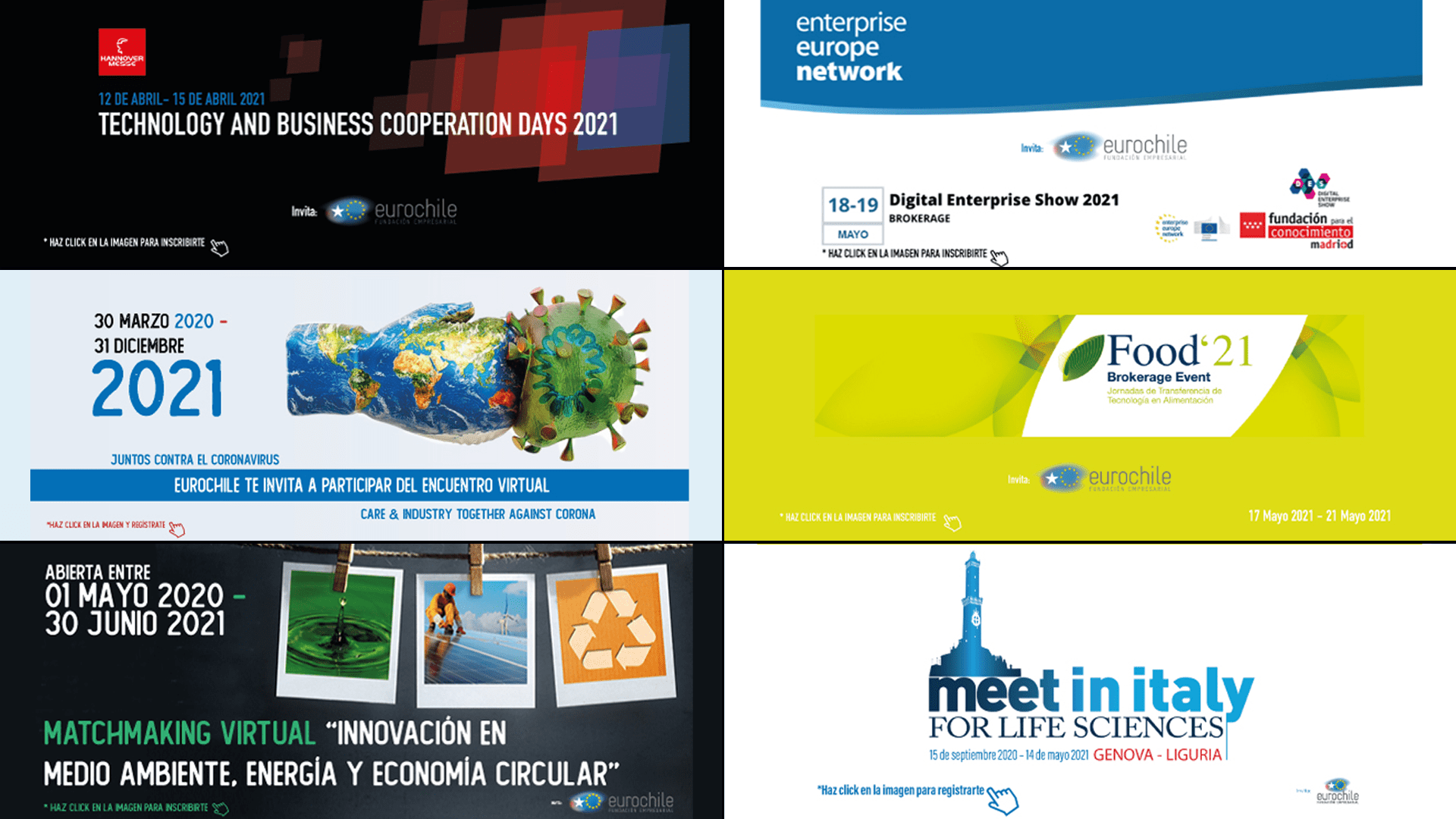
Among the events that have been held since 2020 are “Meet in Italy for life science 2021”, which has been taking place since last September and until May 14, 2021. This event is dedicated to the entire value chain of the life sciences, from research to business and development, manufacturing, distribution, supply chain, regulatory affairs, and professional services to consulting and investment aspects.

The objective is to provide visibility and international opportunities to companies, innovative start-ups and other operators in the life sciences sector, open spaces for discussion between public and private actors and promote business opportunities at multiple levels. To register in “Meet in Italy for life science 2021”: https://genova2021.mit4ls.b2match.io/

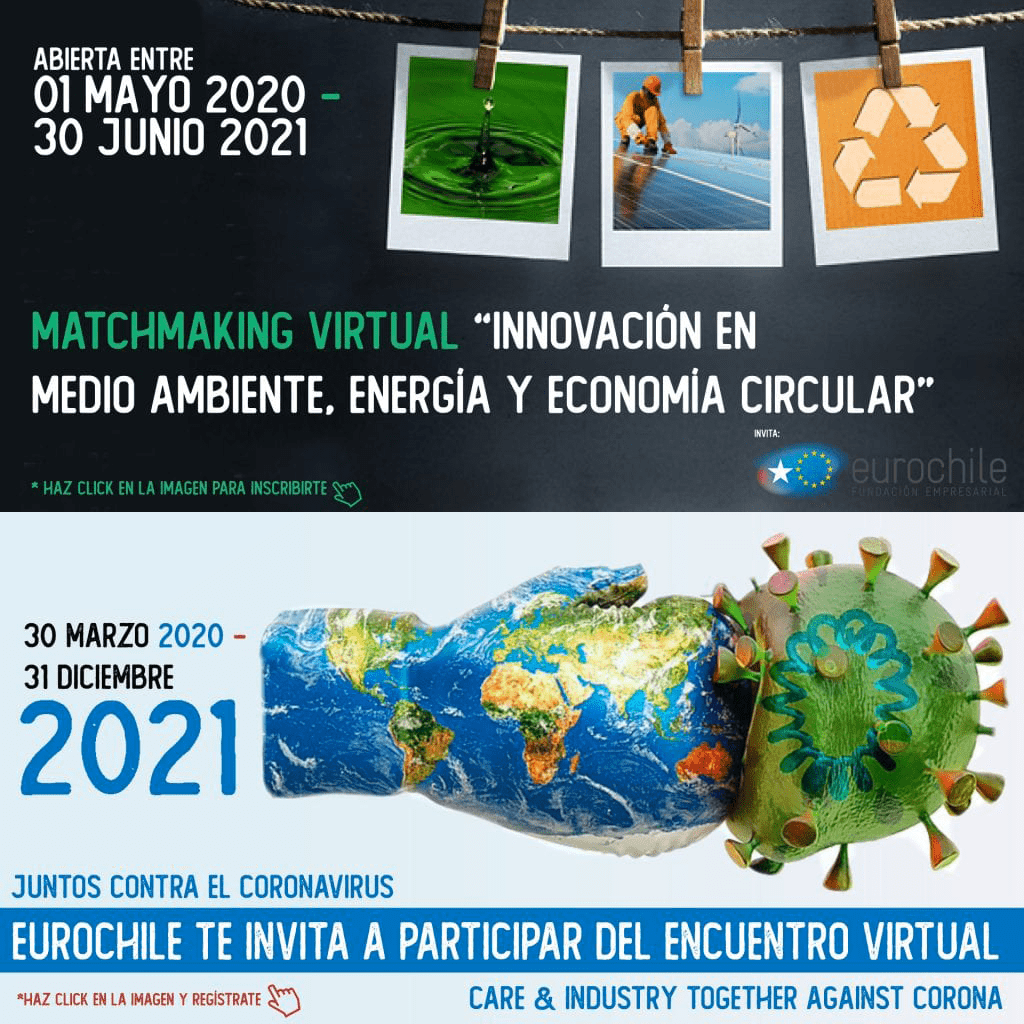
Also operating since 2020, the “Innovation in Environment & Energy & Circular Economy” will remain open until June 30, 2021. Its main themes are the circular economy, waste and recycling, renewable energy, water and energy efficiency. There, research organisations and companies are brought together worldwide to generate commercial contacts and technological cooperation in these matters. The registration link is: https://international-partnering-environment-2020.b2match.io/

Another event that has been extended due to the success is Care & Industry Against Corona, which began in 2020 during to the global advance of the pandemic and which will remain open until December 2021. The objective of this platform is to gather the available offers with the needs that arise in the fight against Covid-19, share different knowledge and approaches, and give a vision of personalised support to the challenges, bringing together the different actors who work in this matter both in Europe and worlwide.

It is a network made up of more than 165 organizations from more than 40 countries, where initiatives, offers and short-term needs are brought together. It encourages the interaction between health, industry, support organizations, government, academia, and others; and maximizes the reliability of the submitted proposals. Among the main thematic areas of the platform are consumer goods (prevention, diagnosis, treatment and rehabilitation); diagnostics (biomedical and medical technology); emergency medicine and rescue teams; hospital and care equipment; hygiene, sterilization and disinfection; images and information technologies. The link to register is https://care-industry-together-against-corona.b2match.io/how-it-works

Another platform that has been operating since last year, and that have extended their operating periods due to the success of the proposal, is the platform “Women Steering New Economies. Launched in November, it has already been announced that this initiative will be extended until April 30, 2021.

Supported by Eurochile, this event seeks to connect women entrepreneurs from Europe, Latin America and the Caribbean, to foster business opportunities in the energy, green solutions and technology sectors. This event is within the framework of the “Win-Win: Gender equality is good business” program, a strategic alliance between UN Women, the International Labor Organization (ILO) and the European Union (EU).

Its objectives are to strengthen the capacities of businesswomen from the “Win-Win” countries for the internationalisation of their businesses; promoting business opportunities in the energy, technology and green solutions sectors for women in the “Win-Win” countries and in Europe. The encounter is for women who run companies in the sectors of energy and circular economy, green solutions and technology and innovation for sustainability. Registration at https://mujeres-vanguardia-nuevas-economias.b2match.io/page-4581

New Events 2021

Among the new Brokerage Events scheduled for this year is “Technology and Business Cooperation Days 2021”, which will be held in virtual format between April 12 and 15. It is aimed at all companies in the sectors of Industry 4.0 and Smart Factory solutions, resource and energy efficient manufacturing technologies, sustainable mobility and measurement tools.

The objective is to provide companies with spaces for cooperation and networking, access new markets, generate alliances and agreements, and find international partners for future projects. To register: https://technology-business-cooperation-days-2021.b2match.io/

On May 18 and 19, 2021, the “Digital Enterprise Show (DES) 2021” will be held, which seeks to facilitate international cooperation, generate information exchange and seek solutions for sectors such as telecommunications, media and entertainment, Industry 4.0 , online retail, platforms and logistics, smart city and urban mobility, banking and insurance, health and life sciences, smart workplace, tourism and hospitality, energy and utilities.

This event is organized by the Fundación madri+d para el Conocimiento with the support of the Enterprise Europe Network and is aimed at start-up and spin-off, SMEs, large companies, universities, research centers and other organisations seeking commercial, technological or research partners.

The encounter will have two different forms of participation that will be selected when registering: face-to-face, participants will physically attend the event and have face-to-face meetings; and online, where the participant will attend the meetings remotely. The platform will be open until May 19 and companies can now register, although the meetings they request will be scheduled for May 18 and 19. To register: https://des2021.b2match.io/

Finally, between May 17 and 21, 2021, the X edition of the “Murcia Food Brokerage Event 2021” will take place, which this year will present the latest innovations in the field of food technology with the aim of providing companies from different countries an excellent opportunity to generate bilateral meetings in order to establish technological cooperation agreements.

Those interested can register now, and the invitation is intended for companies that operate in the areas of hygienic design of facilities and food safety, authentication of food products, rapid control systems, biotechnology, new food products (prebiotics, functional, etc.), circular economy, eco design, reuse of food by-products, active and intelligent packaging technologies, automation and control processes; monitoring of processes, sensors, communication and robotics; hydraulic technologies in the food sector and reuse of food by-products. To register: https://murciafood2021.b2match.io/

MICE Antofagasta Tourism Project: adjusting the implementation to the pandemic context

Francisco Javier Meneses, Director of Strategic Development of Eurochile

In January 2020, the Eurochile Business Foundation was awarded the “Internationalization of MICE Tourism” project in the framework of CORFO Nodos line. The focus of the project is the strengthening of capacities to offer, in the Antofagasta region business tourism services or “MICE” (Meetings, Incentives, Conventions and Exhibitions). It is a “supervised” instrument, and in this case the agent that presented the tender and must supervise the work of Eurochile is Gedes Limitada.

In this context, the work plan establishes a series of activities that aim to generate knowledge and skills in tourism companies in the Antofagasta region. A diagnosis of the offer and demand of MICE Tourism services is prepared, a plan of seminars and training workshops is designed, a business and marketing plan is drawn up, a dissemination plan is generated and it is put into practice, participation in an international fair and a business conference is planned.

It was planned that the execution of activities with the companies of Antofagasta would begin in March 2020, with a program that included European experts in this type of tourism participating in evaluations, training and consultancies. Regular meetings were considered in the main cities of the region with the beneficiary companies, business leaders and authorities of the region. Opening and closing seminars were scheduled with a hundred participants in a hotel in Antofagasta. Meetings and workshops were planned to strengthen joint work. The participation of four regional companies was planned in the FIEXPO 2020, an international specialised fair that would be held in June in Cartagena de Indias, Colombia.

Just on the date the project was beginning it execution, a state of emergency was declared throughout the country due to the Covid-19 pandemic. On that date, national and international trips were suspended, face-to-face meetings were prohibited, and offices were closed for several months. In parallel, there was a demand crisis on the tourism sector, including the companies participating in the project.

The previous situation made it impossible for professionals to travel from Spain and from Santiago to Antofagasta to carry out training and diagnoses. Nor would face-to-face seminars and meetings be possible. No physical promotional material could be delivered. Meetings had to be canceled to identify the business plan. There was option of filming or taking images of the region for dissemination materials. Finally, the cancellation of the FIEXPO Fair in Cartagena de Indias was likely, which was later confirmed.

Faced with this situation, the methodology of the project had to be completely adjusted. It was decided that the limitations imposed by the pandemic could be overcome since the products sought by the program are mainly intangible: design of a future management structure for MICE tourism; diagnostics, knowledge, skills development; generation of promotional material; business plans; marketing and dissemination strategies; participation in international networks; transfer of European experiences and generation of mutual trust for collaborative work. With a deep redesign and the collaboration of all the participants (CORFO and other public entities, Gedes Ltda, the beneficiary companies and Eurochile) it has been possible to execute the project in a way that only a year ago would have seemed utopian. This has required additional investments in equipment, software licenses for meetings and seminars, training and IT consulting for the teams involved, but it is an effort that sooner or later everyone will end up making.

To start the training plan, an opening webinar was held with 160 registered people and with exhibitions from Spain, Santiago and Antofagasta. The European expert in meeting and event tourism MICE, Raúl García, had bilateral online interviews with business leaders, tourism entrepreneurs in the region, beneficiaries of the node and regional authorities of CORFO and SERNATUR. The expert conducted two workshops, which the main theme was the European experience facing the Covid-19 pandemic. Workshops that were originally intended for a small group of beneficiaries could be expanded to more people thanks to online technology.

Regular meetings have been held between the Eurochile and the beneficiaries, without a doubt more often than planned face-to-face meetings. The management structure and the training, business, marketing and dissemination plans were agreed upon.

All the planned workshops were held, always with a number of participants several times higher than originally scheduled.

The Spanish expert in congresses and events, Carlota Herrera, who during 2020 also worked with the companies participating in the project, managed to make visits to the beneficiaries, conducting interviews and observing the facilities through cameras and online conversation.

All the experts have developed and sent their contributions and reports by email, and have received their feedback in an agile way.

Even FIEXPO 2020 was organised virtually. A virtual stand was hired, and in that space visits were received and meetings were held with participants from all over the world. It was also possible to participate in a virtual brokerage event organised within the framework of FIEXPO, generating valuable contacts for the project companies.

The project promotions have been made virtually, publishing the videos of the seminars, the news and opinion columns on the Eurochile website. Additionally, all the material has been disseminated through the social networks of Eurochile and of the public and private entities associated with the project. In the final phase of the project, the brochure, the logo and the promotional video are in the process of being prepared. All the content, the work with journalists and designers, in addition to the review and editing of the communication pieces, has been done online. Likewise, the products will be disseminated through social networks and web pages, ensuring a much greater coverage than printed material.

In summary, the execution of the MICE Node project has been a valuable experience on how a project that generates intangible services can be executed in a good way in a context as adverse as the one experienced in 2020. This has been possible thanks to the technologies and communications, to the adaptability of all the professionals involved and especially to the will of the beneficiary entrepreneurs, who have remained involved in the project despite the difficult times their businesses are going through.

Eurochile invites Chilean companies to join the brokerage event “Technology and Business Cooperation Days 2021”

As co-organizer of “Technology and Business Cooperation Days 2021”, which will be held virtually between April 12 and 15, Eurochile Business Foundation invites all Chilean companies in the sectors: industry 4.0 solutions and Smart Factory, resource and energy efficient manufacturing technologies, sustainable mobility and measurement tools, to join this brokerage event with the aim of generating technological and commercial links with European counterparts.

The purpose of this event is to provide companies with spaces for cooperation and networking, access new markets, generate alliances and agreements, and find international partners for future projects. To register for the event, see following link: https://technology-business-cooperation-days-2021.b2match.io/

Supported by the Enterprise Europe Network (EEN), the platform is already open for registrations until April 4, 2021. The process involves completing a profile in English with your company information indicating what kind of opportunity you are looking for.  The participation is free of charge and Eurochile will accompany you the entire process.  If you have any questions, you can write to the email mcaruz@eurochile.cl or contact the foundation www.eurochile.cl.

Within the framework of the restrictions imposed by the Covid-19 pandemic, “Technology and Business Cooperation Days 2021” will be organised as an online matchmaking event, which implies that all bilateral meetings will take place online through the event’s web platform. This does not require any additional software, just an updated web browser, a microphone and a webcam.

Among the advantages of participating in this brokerage event focused on innovation, is the possibility of obtaining new opportunities and competitive advantages through R&D, technological and commercial cooperation. It also allows you to present projects, products or knowledge, address directly potential business partners in previously scheduled meetings, initiate cross-border contacts and cooperations, and obtain the latest information on research results related to the industry, as well as know and share different points of view with researchers and experts. In short terms, it is a quick and easy way to meet potential cooperation partners.

Adaptation of the tourist service offers to the MICE Tourism market and its opportunities

By Ivonne Palma, Director of the Regional Development Area of ​​Eurochile.

MICE tourism (Meetings, Incentives, Conferences and Exhibitions), or business tourism, was the first segment to be affected by the Covid-19 pandemic, and will probably be one of the last to recover.

Many meetings and events have been canceled or postponed, so the segment has seen its development diminish, taking into account that one of the main characteristics of this type of tourism is precisely the displacement and assistance of large groups of people for their realization.

This new scenario should not be considered as a factor that implies the disappearance or the slowdown of MICE tourism; on the contrary, and as it has been observed throughout 2020, the resilience capacity of the tourism market has shown that the industry can rise from this enormous crisis, and that it is the path that MICE tourism should also take in this complex period of changes and adaptations.

This necessary “adaptation” of which we speak, is precisely the central theme of the workshop “Sales techniques of MICE Tourism adapted to tourist services”, carried out in November by the Spanish expert Carlota Herrera, who during 2020 worked with the companies participating in the MICE Antofagasta Tourism Internationalization Node project carried out by Eurochile.

In order to improve the sales and marketing of tourism services for the MICE segment, it is necessary to start by knowing the client, defining what type of client I have to attract and knowing their needs. Then, the strengths and weaknesses must be identified, look for the elements that make me different from the rest of the competition and then apply specific sales techniques for that target.

In this context, it is necessary to know how to search and capture MICE events for the type of tourism service I offer; I have to begin with the identification of the sectors  to which my services can be directed (technology, mining, medicine, scientist, etc.), and later identify what types of events can be held in the territory in which I work (seminars, incentive trips, fairs and exhibitions, among others). Finally, it is necessary to identify what is needed to attract these types of events and, of course, to know the tools that can be accessed to identify business opportunities.

Instances of work like these allow the transfer of skills to the business community so they can prepare for this new tourism reality, which should not to be viewed with pessimism but rather to face it with solid planning and management tools. This will allow companies, which work in the segment, be prepared and readjust the ways of doing this type of tourism, more in line with these new times.

Roadmap to promote the circular economy in the country is in the process of public consultation

After 10 months of work, since in March 2020 the Eurochile Business Foundation began the work of preparing the first roadmap to promote the adoption of the principles of the circular economy in the country, under the leadership of the Ministry of the Environment, at the end of December last year, the preliminary proposal of the document was officially presented under the title “National Road Map to the Circular Economy for a Chile without Waste.” From that date and until next February 2, it will be available for public consultation in order to receive observations and proposals that help improve it prior to the drafting of the final document and its approval by the Council of Ministers of Sustainability.

“Although the process of building the Roadmap has been particularly participatory to date, relevant actors are always left out, and therefore, through this process of public consultation, all interested parties are invited to review the document and share their observations and suggestions, seeking to incorporate as many visions and experiences as possible to further enrich and improve the proposal ”, explains Linnet Solway, director of the Area of ​​Technology Transfer and Circular Economy of Eurochile and who led the team of the Foundation in this task.

To prepare the document, a Strategic Committee of 33 representatives from the public and private sectors, academia, civil society and experts in circular economy was formed to lead the work and the preparation of the final document. Along with this, a series of thematic tables were held to gather opinions and ideas in which 144 people from different fields participated, which allowed the creation of a consensual document and a shared strategy.

Regarding this work, Linnet Solway says that “without a doubt” much progress has been made in the last ten months. And in this context, the work carried out by Eurochile in the entire process stands out, “from the preparation of a strategic diagnosis of the circular economy in the country, the preparation of the vision workshops and workshops of the roadmap, the analysis work and consolidation of the results and the iterations of the roadmap as a result of validation meetings. We also support the execution of the thematic tables and the coordination of the project as a member of the Executive Committee. And although the work has not finished yet, it has been a large road that we have traveled as a team together with the Ministry of the Environment and all the organisations that have participated in its construction”.

In the document launched at the end of December, finally, a vision is proposed to be achieved in the next 20 years, and this is that “the regenerative circular economy drives Chile towards a more sustainable, fair and participatory development that puts the well-being of the people in the center. This, through the care of nature and its living beings, the responsible and efficient management of natural resources and a society that uses, consumes and produces in a sustainable and conscious way, fostering the creation of opportunities for people and organisations throughout the country”.

And with this objective, seven specific goals are proposed to be achieved by 2040: generate 180 thousand jobs thanks to the circular economy; a 25% decrease in waste generation per capita; a household waste recycling rate of 65%; increase the country’s material productivity by 60%; that the generation of waste per unit of GDP falls by 30%; that the general recycling rate (household plus industrial) reaches 75%; and eliminate at least 90% of the country’s illegal landfills.

To achieve these objectives, four action lines were established, defined as Circular Culture, Circular Innovation, Circular Regulation and Circular Territories. These concentrate 32 specific initiatives, which totalize 92 specific actions to achieve the proposed goals. As noted, the document and its actions are in the process of public consultation on the website of the Ministry of the Environment to receive comments.

“In addition to the launch of the public consultation, the Ministry of the Environment is organising different webinars and workshops to disseminate the contents of the proposed National Roadmap to the Circular Economy for a Chile without Waste 2020-2040 and generate instances of exchange of ideas and opinions”, explains Linnet Solway.

What will be the next steps? “Once the public consultation is closed, the Ministry of the Environment and the rest of the support team will review the observations and comments that came from the public to assess their relevance and how the current proposal can be improved based on these suggestions. In parallel, we are working on the monitoring plan that accompanies the Roadmap, to support its future implementation”, she adds.

Innovation and together against the coronavirus: success in the call extends two Virtual Brokerage Events with Europe during 2021

Two European initiatives that had a successful participation during 2020 will continue to operate during this 2021. The virtual brokerage event “Care & Industry together against Corona”, will be open for several months more, until December 31, 2021; and “Innovation in Environment & Energy & Circular Economy”, has its deadline until June 30 of this year.

Both initiatives are integrated by different partners of the Enterprise Europe Network (EEN). Eurochile in the role of co-organiser is the only partner and contact point in Chile for the EEN, invites all Chilean companies to join the events. These are exclusive opportunities to access the European market and both instances are free of charge for the participants.

The first one is a B2B platform, created by the EEN and Flanders Care (an initiative of the government of Flanders) that connects offer and demand with solutions and proposals that help in the fight against coronavirus. Its objective is to bring together available offers with the needs that emerge in the fight against the pandemic, share different knowledge and approaches and give a vision of personalized support to the challenges of each region, bringing together the different actors that work in this matter both in Europe as outside of it.

To date, the event has gathered 947 participants from 42 countries and 50,959 profiles in the marketplace. Among the main thematic areas of the platform are consumer goods (prevention, diagnosis, treatment and rehabilitation); diagnostics (biomedical and medical technology); emergency medicine and rescue teams; hospital and care equipment; hygiene, sterilization and disinfection; images and information technologies.

To register and participate in this Brokerage Event, you must enter the following link: https://care-industry-together-against-corona.b2match.io/how-it-works, where you have to complete and describe a profile in English with the objective of giving visibility to your offer or demand, indicate what type of partner you are looking for and for what specific area. The profiles are reviewed and validated by Eurochile so that they comply with the standards and criteria requested by the EEN and the European Commission, otherwise they will not be activated or may be rejected.

Regarding the virtual event “Innovation in Environment & Energy & Circular Economy”, a platform coordinated by Bayern Innovativ, a German entity that is a partner of the EEN, has 1,202 participants from 55 countries – including Chile – with 1,990 profiles on its marketplace to generate commercial contacts and technological cooperation in areas such as circular economy, waste and recycling, renewable energy, water and energy efficiency. Their purpose, in a period marked by the pandemic and travel restrictions, is to provide a good opportunity for companies from around the world to meet and network.

For Chilean companies looking for new collaboration opportunities in different topics and sectors, it becomes an attractive opportunity in a sector that is at the forefront in Europe, where countries are aligning themselves under the recent “Green Deal” and where the topic of sustainability is gaining importance. For those who are buyers, it allows access to numerous qualified European suppliers; as a market director, it helps to find new clients in that continent; for product developers the platform helps to find partners to discuss new technologies or innovative solutions; while research organisations can find partners for European R&D projects. To register and participate, you must enter the following link: https://international-partnering-environment-2020.b2match.io/


For more information on both virtual events, contact mcaruz@eurochile.cl or www.eurochile.cl

The intense 2020 agenda: More than 250 Chilean companies participated in the 17 Virtual Brokerage Events co-organised by Eurochile

2020 came as a complex year for the realisation of fairs and brokerage events. The closure of borders and sanitary restrictions forced us to rethink traditional ways and innovate to continue advancing. The full potential of virtual technology emerged, helped us to keep connected, and the interest in the events increased. “Due to the Covid-19 crisis, the interest from European organisers  to carry out virtual activities increased. There is also a notable interest on the part of Chilean companies to participate and, without a doubt, this has been very fruitful for us as a Foundation, given that one of our objectives is to generate commercial and technological links between Chile and Europe ”, says Nina Morales, Director of Business Cooperation at Eurochile.

Today the balance is more than positive: more than 250 Chilean companies have participated in the 17 virtual brokerage events co-organised by Eurochile during the year, which have generated almost 190 meetings. This has increased their opportunities to access the European market, generate collaboration agreements, find partners for commercial and technological projects or simply generate alliances for the transfer of know-how.

“A positive factor is that Chilean companies have been able to participate virtually, without the need to travel and incur expenses to meet with their European counterparts. The encounters are unique opportunities, and this year they really have been, since we have been seeing results of agreements and collaboration agreements between companies and entities, which makes us very happy as a Foundation”, affirms Nina Morales.

The main tool for the success of this work is that Eurochile is, since 2008, the only member in the country of the European network “Enterprise Europe Network” (EEN), which operates with the endorsement of the European Commission and has 600 affiliated institutions in 60 countries, and has approximately 4,000 experts. It is a reliable and effective tool that offers business opportunities, technology transfer and first-hand information on European legislation and programs, opening up multiple opportunities to innovate and develop new businesses.

It is with the help of this network that Eurochile co-organises the events, which this year were aimed at different sectors as wind energy, recyclable materials in food packaging, smart cities, circular economy and agro-food, Covid-19 , environment, apple production and calls for the Green Pact, ICTs, Sciences and green solutions. All events are free, and the only thing that companies require is to upload their profile to the platform through Eurochile and fill in the requested data, and then you can generate your own meeting agenda.

For the Director of Business Cooperation of Eurochile, in this new health and economic scenario that we are experiencing “it is very important to identify new ways of working with networks and platforms, with the aim of generating and promoting collaboration spaces, creating a range of commercial possibilities and future projects as well as developing new relationships with national and international counterparts, in this case, Europeans”.

“During the months of confinement -adds Nina Morales-, as a Foundation we realised that now, more than ever, cooperation, the generation, construction and strengthening of networks, the identification of new markets and associative work are an added value for this new reality that we are experiencing at the national, regional and global level. In this context, Eurochile, as a business bridge between Chile and Europe- through the Enterprise Europe Network- happens to have a very important role in being a pioneer and knowing the challenges and new strategies that are being handled in the old continent”.

Full 2020 agenda

Of the 17 brokerage events co-organised by Eurochile in conjunction with organisations from the EEN network, the following stand out:  Food Connections 2020 (17.22 and 24 September) in Belgium, dedicated to agriculture and food; Match2Pack2020 (September 21-25) in Germany, dedicated to recyclable materials in food packaging; and PIC (Plant Inter Cluster), which was carried out in June. Between April and June, the Technology & Business Cooperation Days 2020 was also held on Industry 4.0, sustainable energy and mobility.

To these is added the Meet in Italy for Life Science 2021 (September 15, 2020 – May 14, 2021), a virtual encounter still in development dedicated to the entire life sciences value chain, from research to business and development, manufacturing, distribution, supply chain, regulatory affairs, professional and consulting services and investment.

In October the Sustainability and Circular Economy for Food Technology was developed (October 8-10, 2020), to support international cooperation between SMEs, Clusters, Research and Technology Centers and Universities on sustainability and circular economy in the agro-food sector. On the 13th and 14th of the same month, the Horizon 2020 Virtual Brokerage Event on the European Green Deal call was held, an event that presented the calls for the European Green Deal.

In November, it was the turn of the Smart City Live 2020 Brokerage Event, the traditional event focused on smart cities and new technologies that this time was held in virtual format. On the 19th and 20th of the same month, the Interpoma fair was held, an event dedicated to the apple from the production, cultivation, processing of the product to its distribution. At the beginning of December, meanwhile, it was the turn of the Green Days Pollutec 2020 in Lyon, France, and the WindEnergyMatch 2020, a platform to generate valuable contacts and identify new aspects of possible international collaborations in the field of wind energy. Between November 30 and December 4 it was the turn of DIGITAL ICT WEEK, to explore the latest trends in ICTs.

Added to this are two virtual encounters that have been running for a few months and remain open until December 31: Innovation in Environment & Energy & Circular Economy (May 30-December 31), focused on circular economy, waste and recycling, renewable energy , water and energy efficiency; and Care & Industry together against Corona (March 30 – December 31), a platform that seeks to bring together available offers with the needs that emerge in the fight against the pandemic, bringing together the different actors working in this area both in Europe and abroad.

Two other instances still in operation are “The Community for Hyperspectral Imaging for Industry” (until January 2021), a global network to connect the hyperspectral industry community and promote this technology; and “Women Steering the New Economies” (until March 18, 2021), whose objective is to strengthen the capacities of women entrepreneurs to internationalise their businesses and promote business opportunities in the energy, technology and green solutions for women.

One of the main events to close this year was the “Brokerage Event” within the framework of the “Circular Economy Conference”, held between December 9 and 11. The event brought together the main experts from Chile and Europe to analyse the advances that are being made in the circular economy, a global trend that today appears as one of the main responses to the global social and economic crisis caused by the Covid 19 pandemic and the climate change.

This work, says Nina Morales, will continue in 2021 with the same intensity, always within the framework of the European EEN network to support SMEs in the search for information on European regulations, support from experts from that continent, the search for partners that allow generating collaboration agreements, participation in national and European fairs, and the organisation of business missions and brokerage events, among others, to promote the exchange of experiences and knowledge that allow SMEs in the country to be more innovative.

“We invite entrepreneurs to participate in the meetings that are still in development, to be part of the Foundation. We are at your disposal to support you in connecting and linking with Europe. And for the year 2021 new encounters are coming, surely virtual. We will be informing about these in due course”, she adds.