English

Successful virtual encounter co-organized by Eurochile closed with more than 300 participating companies

Digital transformation represents an opportunity for companies in South America. Industry 4.0 is the engine of this transition, which gives space for the emergence of new business models that lead to new products and services, which generates impacts on various ecosystems, organizations and individuals.

In June, the virtual encounter Industry 4.0: Building Bridges between Catalonia and South America was held, where companies from Peru, Argentina, Brazil, Uruguay, Chile and Catalonia participated. The purpose of this event, within the framework of Industry 4.0, was to generate opportunities to strengthen and promote relations between the two continents within the framework of Industry 4.0.

The event lasted three days, brought together more than 300 companies and was divided into two formats. The first was a brokerage event with 20-minute meetings between the participants through the same platform; the second format was a set of 6 webinars on different topics that took place in the afternoons.

According to Nina Morales, Director of Business Cooperation at Eurochile, this virtual event was held within the framework of the Enterprise Europe Network, and Eurochile, in its role as co-organizer and only contact point for this network in the country, worked together with its partners from Argentina, Peru, Brazil, Uruguay and Catalonia, with the aim of promoting this instance to create opportunities between companies from both continents.

“We at Eurochile see these as unique opportunities for entrepreneurs in Chile. Industry 4.0: Building Bridges between Catalonia and South America had the purpose of connecting entrepreneurs to generate ties for future businesses, projects and exchange of experiences. In addition, in this event, companies had the opportunity to participate, not only in meetings but also in thematic webinars with exhibitors from both the private and public sectors”, indicates Nina Morales.

Both the webinars and the meeting sessions were aimed at companies that were inserted in Industry 4.0 in the sectors of Agriculture (livestock and fishing); Food (drinks); Construction (infrastructure); Energy (chemical and resources); Manufacture; Mining; Mobility (logistics); Health wellness); Sustainability (circular economy) and Retail.

According to the Director of Business Cooperation, Eurochile was in charge of organizing the webinar 4 “Success stories of digital transformation in SMEs” that took place on Wednesday June 9 and the moderation was led by the Director of Networks at Eurochile, Manuela Caruz. In it, speakers from Brazil, Catalonia and Chile presented their experiences in the digital transformation process and their formulas for success.

The objective of each invited company was to present their experiences in the commitment to digital innovation, for example, RepairCo, a Chilean company, through its partner and general manager, Andrés Moralés, spoke about “Implementation of the I4.0 for advanced remanufacturing of pumps for mining and other industries ”; the representatives of Catalonia Josep María Quintana, general director, ESINSA made his presentation on the “Creation of a tutorial platform and the digitized manual of the contents of control of the placement of the gaskets in the flanges during the technical stop” and Antoni Graupera i Garcia, manager of TAI Smart Factory on “Prototype with Augmented Reality for Manufacturing Guidance and for Quality Control in an MES System environment”; and Juan Antonio Jorge Silvera, CEO of GND Brazil, spoke on “Irrigation management platform for optimizing water and electricity consumption”. All these presentations can be seen on the event website link

Participation of SMEs in the transition to a Circular Economy

By Linnet Solway, Director of the Technology Transfer and Circular Economy Area of ​​Eurochile.

In Chile, Micro, Small and Medium Enterprises (SMEs) represent more than 98% of the business network. This is also the reality in Europe and in most countries of the world. With this, it seems reasonable to me to declare that SMEs make up the backbone of local, national and global economies.

On the other hand, the Circular Economy (CE) – this paradigm shift that means rethinking products, processes and business models to eliminate the concept of waste and maintain the value of materials for as long as possible – is gaining followers worldwide, within all levels of society. To date, the conversation has mainly brought together international organizations, national governments and large companies, but, little by little, SMEs are showing more interest and greater understanding regarding the benefits that CE can bring to their businesses: cost savings of materials, creating a competitive advantage and opening paths for new markets.

This awareness has been occurring for a few years in European SMEs (according to a study by Bassia and Dias (2019), 73.2% of the SMEs surveyed (out of a sample of 10,000 European SMEs) started or were in the process undertaking at least one EC activity in the last three years, and increasingly in Chilean SMEs. However, the implementation of advanced CE strategies within SMEs is slow, mainly due to their more limited organizational, technological and financial capacities, less access to (pre) financing for circular solutions (Rizos et al., 2016) and a lack of qualified human capital (Cantú Garza et al., 2021). In Chile, a survey of companies (not limited to SMEs) -in the framework of the construction of the national CE Roadmap- on the barriers to the implementation of CE in the business sector, shows that the greatest barrier identified is cultural and, secondly, a market barrier.

To overcome these barriers, a series of measures are being implemented, accompanying or even advancing regulatory changes. In the European Union, together with the instruments available through the Research and Innovation Framework Programs, the previous Horizon 2020 and the current Horizon Europe, the European Commission has been developing since 2017 a programme entitled “Promoting the circular economy among SMEs in Europe” which seeks to promote and support the adoption of CE in SMEs in Europe. In Chile, CORFO has introduced a variety of instruments with a focus on CE, allowing SMEs to develop and / or implement new or improved circular processes, products or services. Eurochile has also been contributing, together with European and Chilean partners, in closing information gaps, developing contacts and access to financing for SMEs, through a variety of initiatives such as conferences, brokerage events, support in project execution, and the creation of a Circular Economy Working Group.

However, in my opinion, there is a lack of a key actor that can drive this transition in an important way, acting directly on the market: I am referring to large companies. To really accelerate the process of CE adoption by SMEs, one of the main drivers is the demand for more circular products and services. While we, as citizens, can influence supply to some extent, large companies, by placing themselves in a leading position in the supply and value chains of each industry, can impact entire business ecosystems.

To take advantage of this opportunity, we need large companies to become aware of the driving role they can play, which goes beyond the implementation of CE strategies in their internal processes. The transition to a CE must be carried out in a collaborative and inclusive way, and for this it is critical that actors with the ability to guide the market work together with their network of collaborators and suppliers, to identify the needs of all stakeholders in this transition and co-build a common strategy towards CE.

What can SMEs offer? Those with an environmental and innovation culture, having greater flexibility than large companies, can respond quickly to the market to offer new solutions, products and services. In this sense, the CE offers a new scenario where pioneering SMEs, who assume an informed risk regarding the adoption and implementation of circularity strategies, have the opportunity to achieve leadership and profits in the medium and long term. In this process, they will have to break down a series of obstacles that in turn will open the way for other SMEs that want to follow in their footsteps.

Finally, SMEs can not only benefit from implementing CE  within their operations and business models, reducing their costs by implementing more efficient processes, but they also have the potential to participate, and even lead the transition to a CE at the local level and national.

It only remains to ask what is missing for large companies to assume that leadership, and how can we help them in that process?

Eurochile exposes on the advances of the circular economy in Chile and Europe

In recent weeks, Eurochile has had an important presence in forums related to the advancement of the circular economy and its future development of the country, through presentations made by its director of the Technology Transfer and Circular Economy Area, Linnet Solway. In them, not only the work carried out by the Foundation to advance this trend in the country was addressed, but also its role as a “bridge” to promote technology transfer, knowledge and commercial linkages in this matter between Chile and Europe, a continent that today leads its implementation at a global level.

The first of these was the International Environment and Sustainability Forum and Fair (FIMAS), organized by the Association of Companies and Professionals for the Environment (AEPA Chile), held on May 27 and focused on progress for a development model based on the circular economy.

There, Linnet Solway spoke about the process of preparing the new Roadmap for the Circular Economy, a process led by the Ministry of the Environment and where Eurochile guided the construction work and drafting of the proposal and final document coordinating the dialogue between multiple actors.

Solway explained to the attendees how the governance of the committee was formed and the participation of different stakeholders, a process that had more than 130 participants, more than 100 meetings and workshops, the support of 10 international advisers and the development of 11 thematic tables to address specific aspects of the Roadmap, which was finally submitted to a public consultation process that received more than 500 comments for the final document, which will be made official in the coming days.

All this process concluded in a vision that proposes -as a central key- that “by the year 2040 the circular economy should drive Chile towards a sustainable, fair and participatory development that puts the welfare of the people in the center. This, through four lines of action -circular territories, circular innovation, circular regulation and circular culture- each of them with specific objectives and goals for 2030 and 2040”, explained Linnet Solway.

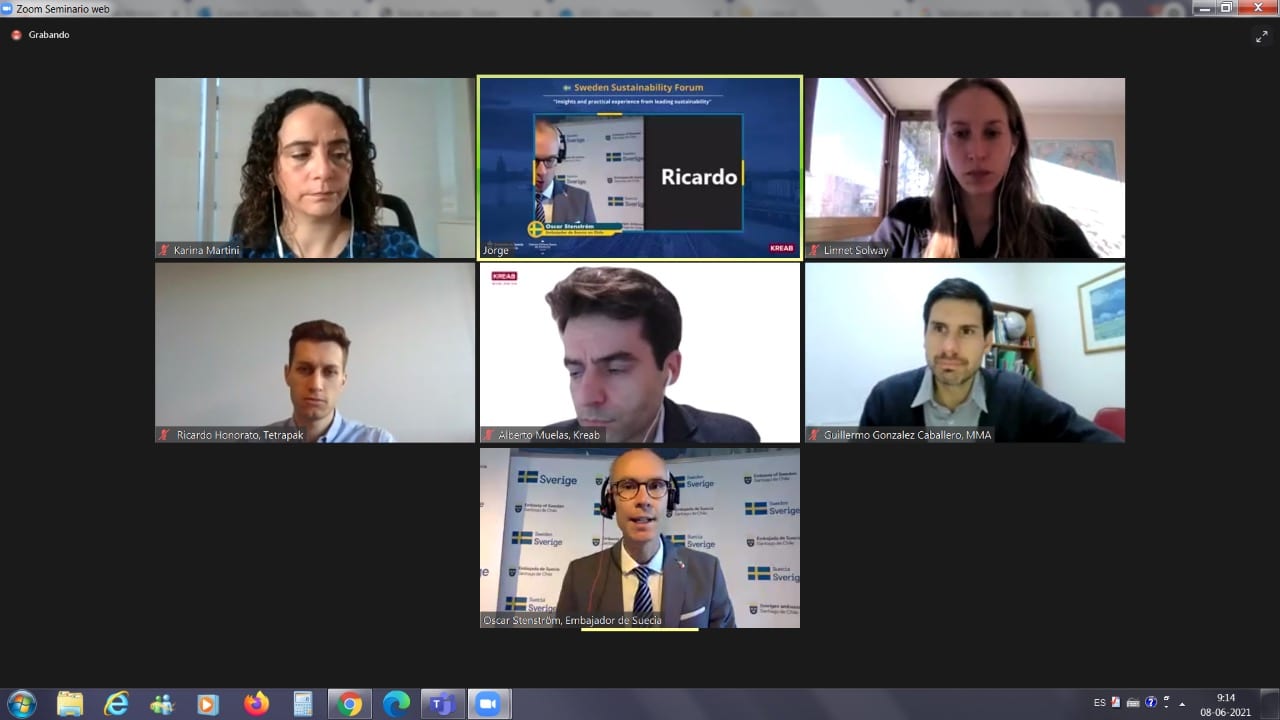
Subsequently, in a second international seminar held on June 8 by the Swedish Embassy in Chile, called “Sweden Sustainability Forum: Insights and practical experience from leading sustainability”, Linnet Solway spoke about the advances of the circular economy in Europe, mainly within the framework of the Green Deal launched by the European Commission (EC) at COP25 to address the climatic, economic and social challenges they are facing today.

She stated that within the framework of this strategy the second circular economy action plan of the European Union (EU) was presented, which updates the previous plan focused mainly on waste management and the end of the production chain, to focus in initiatives that affect the entire chain of the life cycle of the products; among them, empowering consumers to have better information, giving greater importance to eco -design and eliminating planned obsolescence.

Regarding the progress for its implementation, Solway explained that the European Commission “is working on a large number of initiatives, the most specific that comes into force now on July 3 is a legislation on single-use plastics that prohibits certain products, quite similar to the new law that was approved in Chile, and a labeling requirement to provide more information to consumers”. To this- she added- other initiatives will be included such as the delivery of more information by companies to consumers, better traceability in the life cycle of products to avoid greenwashing, the revision of the criteria on eco-design and the incorporation of new products to regulation, including building materials, textiles and furniture.

In parallel, she said, the European Commission is working on two initiatives that, although they are not part of this action plan, are instrumental for the EU to meet its climate objectives. The first one is the unification of a label on the environmental footprint of products; there are currently more than 200 environmental labels in the EU and 80 regarding carbon emissions.

The second initiative is the definition of an EU taxonomy for sustainable activities, which in essence is the creation of a list of economic activities that are considered as environmentally sustainable, and that allows to give information security to both companies and investors and citizenship. “This taxonomy seeks to unify the understanding of what a sustainable economic activity is and inform in the same way (…) This will guide investments in the EU, which can be guided thanks to this taxonomy,” she explained.

Circular Change expert held a workshop on the EPR Law for the members of the Eurochile Circular Economy Working Group

Within the framework of the activities of the Eurochile Circular Economy Working Group, in recent days a specialised workshop was held called “Implementation of the EPR Law, from Europe to Chile”, dictated by the international expert Marco Segovia, an environmental engineer who is part of the Circular Change organization of Slovenia and with extensive experience in the implementation of Extended Product Responsibility and circular economy systems.

The workshop, lasting almost two hours, was attended by all the companies that are part of the Working Group and was presented by Ladeja Godina, founder and executive director of Circular Change, and president of the coordination group of the European Circular Economy Stakeholder Platform (ECESP). In addition, Godina was one of the main international advisers for the Eurochile team in the preparation of the Roadmap for the Circular Economy.

During his presentation, Marco Segovia, revealed some key aspects for the implementation of the EPR Law that today is beginning to be installed in Chile, among them the need to consider that it is a system that is not static, but dynamic, which must be able to adapt to the changes and complexities that arise in its development.

“If you plan as a static system you are not building it for success, because it is going to fail, it is not going to work well. It must always be accompanied by periodic planning and re-planning, monitoring and traceability, which can help us improve the system that we have as a basis regarding what is happening within it, but also outside it”, he affirmed.

Among the obvious reasons for the implementation of the EPR are the reduction of the environmental impact of waste, and also a social impact in this matter. But there are others that are deeper and are not being mentioned so much, he stated: “Implementing the EPR and the circular economy helps us to give a holistic approach to the value chain, it helps us to understand it better, to optimize resources, and create opportunities and new business models, which allow us to create new markets”.

How management systems work in Europe

To illustrate this, he explained how some of the EPR systems in Europe are working today, where there is a wide diversity of modes of operation between different systems, priority products and countries. In the case of Germany for packaging, for example, the cost structure covers the entire chain. They are in charge of management, financing and rates, establish agreements and contracts with waste managers and municipalities, and periodically have to communicate data to a state agency. Like Chile, this system is based on sanctions to regulate the system, which can be up to 200 thousand euros if they do not fulfill their function.

“In the German strategy what we can see is that there are many competing management systems. And since it is a competitive market, producers can choose which management system to go to based on the market, and how much they should pay you. If one looks at the German case, what has happened since the 90s until now, is that they have known how to adapt and establish a continuous progress of the system. In the 90s the first system was generic in terms of material type, for example, and there was a single management system where the main focus was on separation. This has shifted in 2020 towards a more focus on ecodesign and quantity effectively recycled, with more competing management systems and with specific markets for each value chain. And we can see that now in almost all the countries of Europe, where there is a more information for each type of material”, explained Marco Segovia.

Going in that direction, said the Circular Change expert, the criteria have become severe, with more producers having to join the system, and it has been pointing towards ecodesign and prevention with progressive objectives, such as it also has the EPR in Chile. This has allowed the collection rate to go from 20% to 60% in the 90s -depending on the type of material- to values ​​that today exceed 80% in some cases”

“It is a case to watch closely,” he added, “because it has had progressive results, they have been able to implement the lessons learned in recent years, and the change from one management system to multiple competing systems, plus other additional measures, has allowed reducing the costs of collection and recycling, and also the amount of waste. So, it has also been successful in terms of prevention in the generation of waste”.

The case of Italy is different, where there is currently a centralised management system within which there are specific sub-organizations for each value chain. “What we can learn from this model,” Segovia affirmed, “is that the management system and the association of Italian municipalities signed an agreement that has been reviewed over the years and has allowed a successful dialogue between the public and the private. In this system, producers cannot choose in which system to pay, but for each product they have a specific consortium”.

“The important thing about this system – he added – is that there is good public-private cooperation, and it also includes citizens. And there is a surveillance and control body, where there is a total representation of the system. In this type of system there has also been a lot of progress. Since it was created, the paper product -for example- has gone from 30% recycling to 90%. And there is also a large population coverage, almost 100% (…) One of the things that differentiates this type of system is that there is a lot of participation, from schools, from youth and with great inclusion of citizens, because a lot is invested In communication. This has also helped to obtain a high quality of the recycled material”.

Among the risks presented by this type of centralised systems, he said, is the one that depends on the capacity of operation and management of the municipalities, and that -as in Chile- there are wide geographic and demographic differences in the territory, so that in some areas its implementation is difficult.

REP is just one of the instruments for the circular economy

Does this imply that there is one system better than another? No, Segovia said. The truth is that they are not comparable, because it must be taken into account that in each country the local context is very different economically, socially, environmentally and geographically. For this reason, she said, the most relevant thing is “to personalize and adapt the solutions to the specific case of each country, or each region, and also each value chain. In the case of Chile, for example, it is important to define which indicators to use to determine that the system we are using is the system we actually want”.

However, there are some factors and experiences that serve as considerations when defining the implementation of a system. For example, in the case of a system based on competition between players, it can help reduce monopoly risk, while providing greater market flexibility and driving efficiency and cost improvements. A centralised system, on the other hand, may be better in other cases because economies of scale are developed; it has greater simplicity and supervision, and potentially greater transparency.

There are also other factors – he added – that can affect the implementation and results of the EPR Law, such as user behavior, citizen participation, effective communication, and the impact and cultural evolution, as well as taking into account the cost of the system to the citizen.

Despite the advantages of the implementation of EPR systems in Europe, and the success that they have had first in reducing the impact of waste and today in preventing its generation thanks to tools such as ecodesign, Marco Segovia reminded those attending the workshop that “for the transition to the circular economy we have a group of instruments, and the EPRis only one. For a successful implementation of the circular economy we also need many other measures that help us achieve the objectives we want, and we have seen this in the Roadmap of the Circular Economy of Chile”.
Circular Economy Working Group convened a seminar with Spanish experts to see progress and implementation of this trend

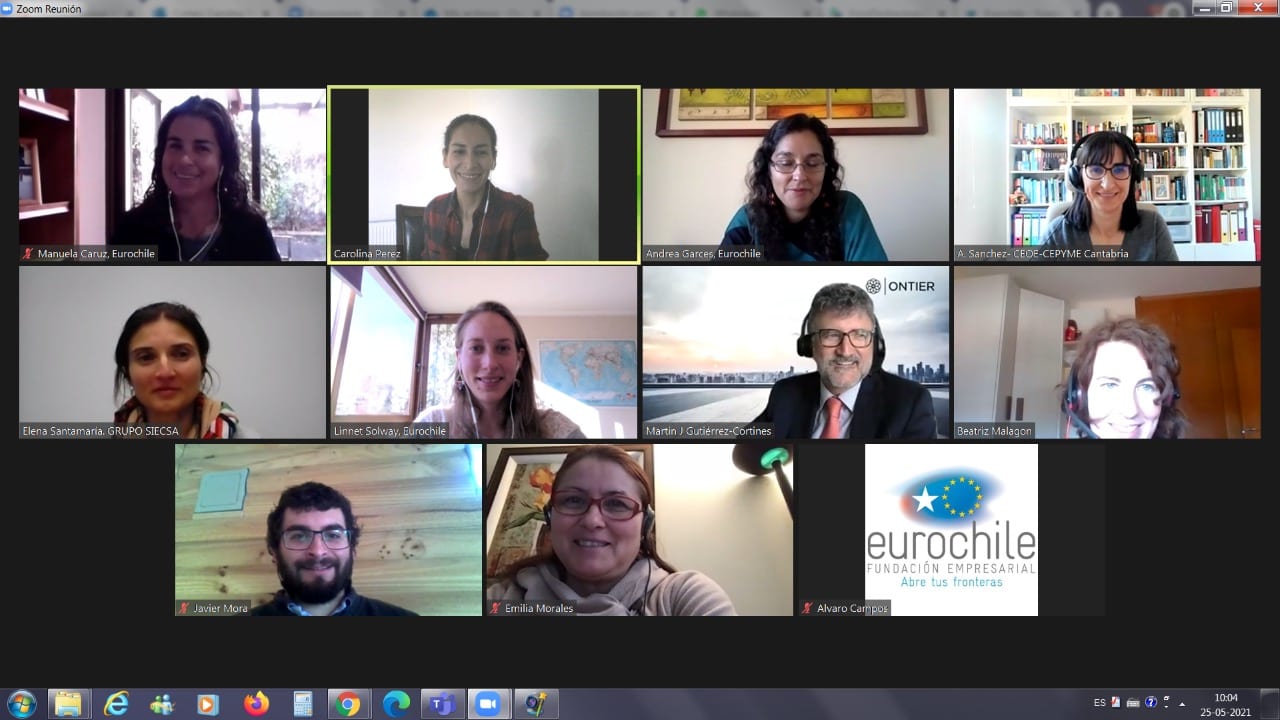
Within the framework of the activities of its Circular Economy Working Group, created as an instance to promote the adoption of this trend in national SMEs, Eurochile Business Foundation held a webinar with Chilean companies and Spanish experts to analyze the progress of this model globally and learn about successful adoption experiences in companies, and open the possibility of new partners to join the group.

Created in 2019 as a platform to link business that seeks to promote cooperation and advance the transition to a circular economy in Chile, today it has eight partner companies representing a wide variety of areas, including smart agriculture, consulting, management waste, EPR and recycling law, start-ups, engineering and design. Today, its work is focused on three major objectives, says Linnet Solway, director of the Area of ​​Technology Transfer and Circular Economy at Eurochile.

“The first,” she explains, “is to support circularity strategies in Chilean companies through access to knowledge, new technologies and the search for financing.

The second objective is to create and make visible a network of companies for the circular economy that invites them to be part of a circular business value system and create a collaboration network -both with the different actors in its value chain or with other industries- to achieve a truly dynamic ecosystem to implement the circular economy. And finally, to connect Chilean and European companies committed to the circular economy, promoting cooperation and exchange of experiences between both parties”.

In this, Eurochile plays a key role as the only contact point in the country of the Enterprise Europe Network (EEN)- which operates with the approval of the European Commission- and which is the largest support network for all types of companies with international projection and -above all- innovative potential. “It is a network that works mainly through the uploading of profiles to this virtual platform, where counterparts of technological and/or commercial supply or demand are sought”, explains Manuela Caruz, Director of Networks at Eurochile. Since 2020, its main lines of work have been sustainability, digitization and the resilience of companies within the framework of the new objectives set by the European Union for recovery.

“We are three thousand people spread all over the world, with a presence in more than 60 countries. We combine experience in international business with a very deep knowledge of the local company to support them in their internationalization process, as well as promotion of business and technological cooperation in research and development programs. Our main objective is to support SMEs, but universities, business associations, chambers of commerce and technology centers also participate. A very important aspect is to promote business and technological cooperation in research and development programs”, adds Adela Sánchez, director of the European Projects Office at CEOE CEPYME of Cantabria, Spain and project manager of the EEN network.

All this is an additional value to the companies that join the Eurochile Circular Economy Working Group, which among its different activities considers the exchange not only between its partners and national actors, but also with international experts to exchange information on the implementation of the circular economy, as well as access to the different Eurochile business cooperation services”.

“What we seek is to support companies to have well-defined points to move towards a circular economy; that they are connected with the circular ecosystem, that they have knowledge of concepts and strategies related to this trend, and that they finally become companies with a differentiating value offering”, says Linnet Solway.

Circular economy: insight from European experts and companies

The webinar carried out by the Eurochile Circular Economy Working Group, which brought together 45 participants, also featured a presentation by the Spanish Martín Silvan, Legal Counsel of the Department of the Environment of ONTIER, Spain, on theory and practice of the circular economy.

For Silvan, many of the circular economy proposals – such as taking advantage of resources, reducing waste, being efficient – are common practices in any business activity, and almost a requirement to have some success. The difference is that today, a series of methodologies and processes have been established as regular procedures which have broadened the range of possible actions, as well as clear objectives that can also be measured and quantified. “We are going to use all of this for one purpose, which is to make our system sustainable,” he says.

This process, he adds, has strengths and weaknesses. Among the first, that the current economic model continues to be based on the fact that resources are unlimited, so a first step is to overcome this concept. To this are added others such as resistance to change, the appearance of “opportunism” that can give rise to businesses that seem to be circular, but are not; and also the fact of “forcing the concept” as it happened with sustainability, a concept that ended up being used for everything. Abusing the concept of circular economy has the danger of emptying it of content.

“Among the strengths,” Silvan adds, “the first is that today we have no other, so we are forced to do so. In this case, the need will lead us to virtue, which is nothing other than sobriety and efficiency. We have to do it, the limits to growth exist and we have to adjust to that reality, and ignoring reality is not usually a good tactic”.

Added to this is an enormous disruptive strength, which has taken a huge step in terms of R+D+i in which situations that a few years ago were impossible to address from the point of view of circularity, today they are. And this in all phases, from design to recovery, from use to reuse. Another strength is the rise of entrepreneurship that puts new products and new services into circulation, as well as an increase in the efficiency of processes: doing the same, or more, using much fewer resources.

The presentation of Martín Silvan was followed by two Spanish companies, which gave a view of the possibilities of the circular economy in the industry. The first of them was presented by Beatriz Malagon, director of the Mataporquera factory of the Cementos Portland group, regarding the incorporation of the circular economy in its cement and clinker manufacturing process. This has been done mainly through the replacement of fossil fuel in its furnaces with a fuel derived from waste (energy recovery), which has increased both the competitiveness and sustainability of the company, also supporting its energy transition plan and climate neutrality.

The second case was presented by Elena Santamaría, head Integrated Management Systems, Quality and Environment department of the SIECSA Group of Cantabria. In one of its subsidiaries, a construction company, they are incorporating the circular economy from two main lines. The first is the recovery of iron and steel aggregates from a steel factory in Cantabria to incorporate them into construction, and the second is the management of construction and demolition waste. To do this, they have a mobile recovery plant that moves around to recover the waste generated on site, and reuse it there.

This has allowed that, of the aggregates used on site in 2020 by the company, 32% correspond to reused material and 44% to recycled material, leaving only 24% corresponding to quarry aggregates, or natural aggregates.

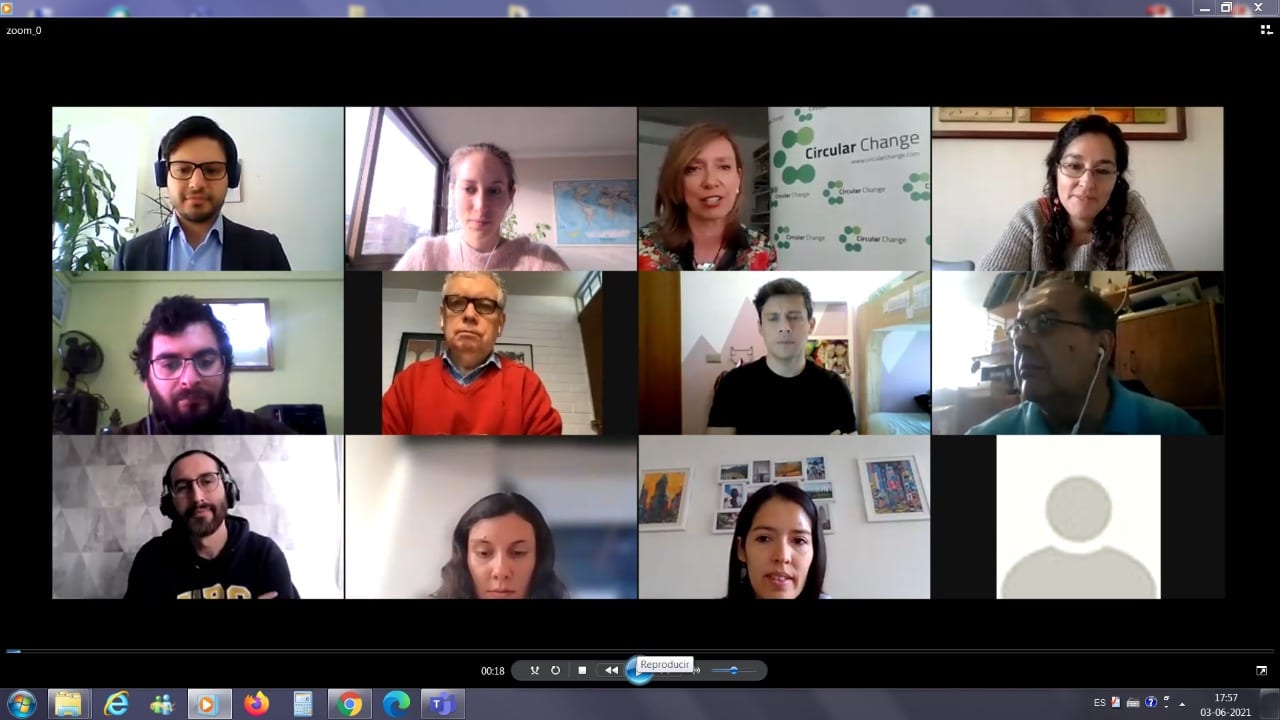
Finally, the virtual meeting concluded with a speed dating, a networking activity that allowed participants to meet in smaller groups to generate contacts with other companies and talk about their experience in this transition towards the circular economy.

Eurochile co-organizes virtual seminar to connect companies in Chile and Catalonia in Industry 4.0

Between June 8 and 10, the virtual encounter “Industry 4.0: building bridges between Catalonia and South America” ​​will take place. This event, which Eurochile is co-organiser, aims to explore the opportunities the digital transformation of industries, or “reindustrialization presents for the region.”

It is a transition scenario in which the so-called Industry 4.0 acts as a driver to enable new business models, and the adaptation and increase of resilience of current companies through a commitment to digital innovation.

According to Nina Morales, Director of Business Cooperation of the Foundation, the event is part of the activities of the Enterprise Europe Network (EEN). Eurochile is the only contact point in the country and the objective of promoting these instances of exchange, she affirms, is to promote and create opportunities that can strengthen relations between entrepreneurs from both continents.

“Building bridges between Catalonia and South America: Industry 4.0 is an initiative that aims to unite efforts and ties between Catalonia, Argentina, Peru, Brazil, Uruguay and Chile. However, the purpose in the case of Chile is for the meetings to be held only between Catalan and Chilean companies. That is the main focus. There will be three days of bilateral meetings, with the objective that the companies establish a first contact with potential partners to generate possible international technology cooperation and technology transfer agreements”, adds Nina Morales.

The activities of the event are divided into two formats. The first is the “Brokerage Event”, one-to-one 20-minute meetings between Chilean and Catalan participants, the objective of which is to find partners for eventual agreements. This will take place through the event platform during the three days and will be open 24 hours a day. Participation in the Brokerage Event is free of charge.

The second part is a series of webinars on Industry 4.0 during the afternoons, focused on topics such as international business technology collaboration programs, local support programs for Industry 4.0 or on Low Carbon Business Action Latam + (LCBA), among others. Registration for the event can be made at this link, where it is also possible to know the full schedule of activities as well as have a tutorial to correctly register for the seminar.

As it is an event in virtual format and with meetings that will be held 24 hours a day, it is important to keep in mind the time difference with Europe. In addition, on Wednesday June 9, Eurochile is in charge of organising the webinar “Success stories of SMEs Industry 4.0”, in which companies will be invited to present their experiences in the commitment to digital innovation, on how to cope with this issue and the guidelines to solve technological problems in an intelligent, dynamic and collaborative way.

According to Nina Morales, in this virtual encounter, both the Brokerage Event and webinars, Chilean companies can participate. So all companies inserted in Industry 4.0 in the sectors of Agriculture (livestock and fishing); Food (drinks); Construction (infrastructure); Energy (chemical and resources); Manufacture; Mining; Mobility (logistics); Health wellness); Sustainability (circular economy and Retail are invited to  register and participate.

“There can only be one participant per company,” she adds, “and the representative must complete a profile with certain requirements for it to be activated and visible to all other participants. Mainly, the profile must indicate personal information, company, country, area of ​​activity and technology. A mandatory requirement for the profile is the Marketplace in which the offer, product, service, cooperation project or request, among others must be indicated. This part is crucial, it is essential so that the counterpart can find a match with a potential partner”.

Additionally, it is necessary to indicate a range of attendance hours for the availability of meetings. The registration platform has been open since May 3 and has a registration closing date of June 3, but the meetings will take place on June 8, 9 and 10. If help is required to complete the profile or any additional questions about the event, you can contact Manuela Caruz, Director of Networks and head of the EEN at Eurochile, mcaruz@eurochile.cl

Enterprise Europe Network, the network that opens opportunities for collaboration with Europe in times of pandemic

The pandemic has not only brought a series of complexities and challenges for small and medium-sized companies in Chile and around the world. In a scenario in which processes, business models and strategies had to be redefined, to the point of even reinventing in many cases; the need to seek answers to common challenges has opened a series of opportunities for cooperation and internationalisation, to seek new partners and develop new business alliances, while the change in carrying out forums and seminars to the online format has allowed many companies to participate in events that previously required trips abroad.

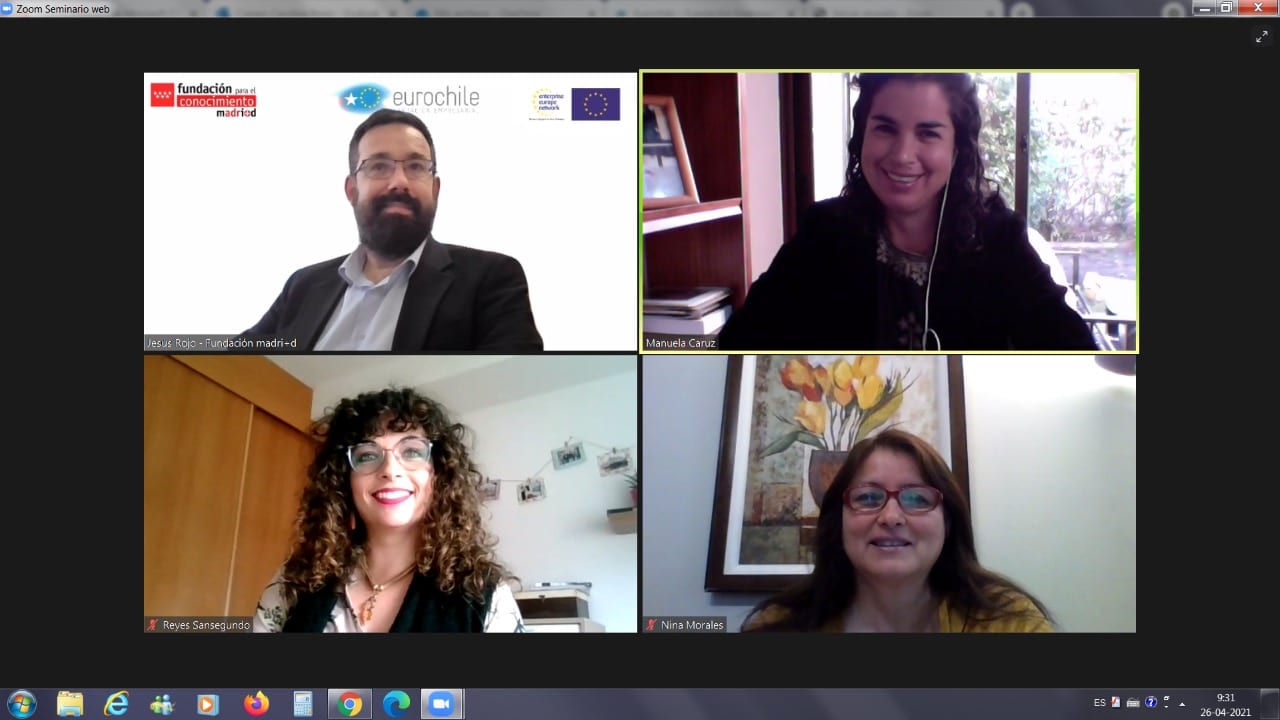
With the aim of providing tools to take advantage of this new scenario, the Eurochile Business Foundation held the seminar “Opportunities for cooperation with the European Union in times of pandemic”, organised jointly with the Fundación para el Conocimiento madri+d of Spain and the network Enterprise Europe Network (EEN), the largest support network for SMEs with international view and which Eurochile is the only contact point in our country.

“Eurochile has been supporting SMEs for 28 years and it has belonged to the EEN since 2008. It is the only member in Chile of this network that operates with the endorsement of the European Commission. This network is a tool that allows us to support business cooperation inserted in our mission to create, promote and consolidate economic, commercial and technological links between medium and small companies and Chilean institutions, and nations from the European Union – both public and private-, being a facilitator of the internationalisation process of the SMEs”, explains Nina Morales, director of the Foundation’s Business Cooperation and Institutional Affairs Area.

In recent months, she adds, Eurochile has worked with the EEN to identify opportunities for SMEs, which led to the realisation of this seminar to showcase the network’s offer and opportunities during 2021; how to access the network and how to take advantage of it, considering that the EEN is the key for the exchange of experiences that allow SMEs to be more innovative and generate new business.

“In the current scenario, we believe that it is important to identify and generate spaces for cooperation, as well as to foster and promote relationships with national and international counterparts, in this case Europeans. Last year we were co-organizers of 17 virtual brokerage events in different sectors, with more than 250 registered Chilean companies. This year, within the framework of the network, we want to continue with this work of identifying opportunities for our companies, which means that we are already co-organizers of 7 brokerage events”, says Nina Morales.

New opportunities in Europe

To explain the scope of these cooperation opportunities, the seminar featured a presentation by Jesús Rojo, head of the Technology Transfer and European Programs Area of ​​madri+d, a public foundation whose purpose is to help companies, citizens and entities who work in R+D+i to carry out their research and technological innovation projects.

According to Jesús, although Covid-19 has become a challenge for Spanish, European and Chilean companies, it has also facilitated international cooperation between companies and being able to seize these new opportunities arising from the pandemic, “which in principle has been very negative for our customers, but it has been a turning point for Spanish companies to turn to new markets, new services and new products”.

In his presentation, he explained the way in which the EEN works with its clients, which he considers a follow-up from day one until they manage to develop all their capacities and financing opportunities for their R+D+i activities. “This journey with our clients has no end, because as we continue working with them we help and advise them on new opportunities, all developed according to their needs,” he explains.

Today, he adds, the EEN not only works on internationalization, but also provides advisory services on exports, international trade, intellectual property, mentoring in European programs, etc., covering the entire spectrum of research, innovation and technological development. .

A personalized action plan is developed for all clients through the elaboration of technological and commercial profiles. Financing opportunities are sought for them with European partners or from other countries; expressions of interest from other countries are monitored and also networking events are added.

And to the usual actions of the network, he adds, at madri+d “we have added this year as pilot program -because from 2022 it will be mandatory for all partners of the EEN worldwide- sustainability services, digitalization and resilience, and that are aligned with European Commission policies such as the 2030 Agenda, the Green Deal, Digital Europe and, in terms of resilience, being able to overcome the crisis we are experiencing through programs such as Next Generation, which is the great European recovery program ”.

“All this is reflected – Jesús Rojo adds – in different activities and services that we offer: marketplace, brokerage events, communication activities, workshops and other advanced services. I think this Horizon Europe funding programme is a good opportunity for Chilean companies, which begins in May with the launch of the new calls. It is the largest research and innovation programme in the world, with a budget of approximately 100 billion euros, where Chilean companies will be able to benefit from these funds”.

How to join the EEN and take advantage of its benefits

In this context, Reyes Sansegundo from the Technology Transfer and European Programmes Unit at madri+d encouraged national companies to participate in the events that the network is organizing for 2021, “because the brokerage events are unique opportunities, you will have the opportunity to go to many places without leaving your chair. Take advantage, because it is free and it is something that has never happened, and you can try to get something good out of the pandemic”.

Among the events that stand out this year is “Care & Industry together against Corona”, launched in 2020 in view of the global search for solutions to the common challenges arising from the Covid-19 pandemic. It is a collaborative platform that aims to bring together different initiatives and actors that are working on Covid-19 solutions.

This platform already has more than 997 registered and approved participants that everyone can access. “This is public, anyone can enter, and we are 42 countries participating in this platform and 80 meetings have already been held to try to find that matching and solutions focused on the different Covid issues. As for Chile, they have been very active within the platform thanks to Eurochile, which is co-organizer of this event, giving support to its 23 clients that are already active as of December 2020,”she stated.

This platform operates as a catalog for surveillance and search of companies or institutions that are working on vaccines, diagnosis, testing and clinical trials, or therapeutic issues. And it works like any event of the EEN within the framework of the B2Match platform, so its operation also applies to the 114 events scheduled in it for the next few months.

How to take advantage of it? As Reyes Sansegundo explains, the first step is “to complete basic information in English -because we are always in an international environment-, and the platform will give you to choose a series of keywords to identify your technologies or products, and it will ask you for a brief description of what the company does. There is also a specific section of the marketplace, where you have to include all possible information and say what kind of collaboration you are looking for, or what you offer, what is your star project, so that it stands out from other profiles ”.

Then, she adds, as the profile progresses, an option that says ‘support office’ will appear. “In this case, you should always select Eurochile, and if they do not appear in the list, contact with them, because that is the job of the EEN partner to accompany you during the process and also to clear up doubts.  That is why it is important that as advisers we know you and your interests. Once this is done, Eurochile will receive a new registration message, and after verifying that all the previous points are correct, your profile will be approved, and there the work of requesting meetings or receiving meeting invitations begins”, she explains.

Climate Change, Circular Economy and Tourism

By Marilú Mansilla, Eurochile Technical Assistant of Projects.

The Tourism industry is one of the most affected by the Covid-19 pandemic that the world is experiencing today. Indeed, the confinement measures necessary to control the virus have produced a deep crisis in an industry that, by definition of the World Tourism Organization (UNWTO), is a social, cultural and economic phenomenon related to the movement of people to places that are outside its usual place of residence, for personal or business reasons. Globally, tourism activity fell by 75.1% in 2020 and although it rebounded in early 2021, it continues to suffer from the outbreaks of the pandemic.

However, this health crisis should not blind us to the climate crisis that we continue to experience, and which we must also take responsibility for. In this area, there are challenges that must be addressed by all actors: tourists, hosts and the tourism industry. The industry covers the entire business designed to meet tourist demand and varies strongly depending on the destination. In the Chilean case, the tourism industry is 75% made up of SMEs.

The impacts of tourism on the environment are significant. Before the pandemic, it was estimated that the industry generated 1.5 kilos of garbage per person per day in the destination, in addition to sewage waste, erosion and degradation of the environment due to tourist activities, deterioration of the habitat of the flora and fauna, among others. These are negative externalities that remain in the destination, and if no one takes charge of correcting or mitigating them, the economic, social and environmental damage will be irreversible.

In this context, the current contraction in the tourism industry offers a great opportunity to rethink the way this activity is being carried out. This is especially seen in some destinations that have historically been more saturated. It is necessary to work for the development of sustainable tourism, and in this matter the Circular Economy emerges as a practical solution.

The circular model can be the basis to approach the recovery and reactivation of this sector. The Circular Economy emerges as a practical solution to the needs of sustainable tourism, especially from the action of companies in this industry, incorporating sustainability criteria and at the same time generating positive effects that make their business models more profitable. In other words, moving from a linear model to a circular offer makes it possible to simultaneously improve the environment, people’s quality of life and the profitability of tourism companies.

According to Chile’s National Plan for Adaptation to Climate Change, SMEs are the ones who will have the greatest difficulty in diversifying and adapting their business to climate change. For this reason, this segment of companies should be the priority target of policies and programmes that promote the incorporation of the Circular Economy in their processes, making them more efficient and also capable of adapting to climate change and the requirements of some consumers (especially foreigners) increasingly aware of their water or carbon footprint.

For this, it is necessary to disseminate and facilitate the development of circular business models, circular value chains; promoting manufacturing models, sustainable manufactures, based on the reduction of consumption; the reuse of components, clean production systems and the use of renewable energies. It is no longer enough for companies to incorporate elements such as waste sorting or energy saving systems if they do not apply real changes in their way of operating. We are not expected to achieve zero impact, but rather to incorporate solutions that deliver a positive impact on the system and thereby generate sustainable and circular tourist destinations.

In this work, Europe is ahead of us. In 2015, the European Commission launched the plan “Closing the loop: an EU action plan for the Circular Economy” formally initiating Europe’s transition to a Circular Economy, thereby promoting sustainable economic growth. Thanks to this, several initiatives have been generated from which we have learned; thanks to Eurochile’s contact with business and technology entities from Europe. In our country, the Foundation has worked hard to promote the Circular Economy in Chile, carrying out initiatives such as a technological diffusion program on Circular Economy, specialised seminars and workshops on this subject, and working with SMEs through the life cycle assessment methodology. In addition, the Foundation is in charge of the process of preparing and writing the document of the Roadmap for Circular Economy in the country led by the Ministry of the Environment.

We know that there is still a lot to work on, we do not yet have a specific Circular Economy roadmap for the tourism sector in the country, and many of these concepts are still unknown to most SMEs. However, we are under the unique possibility of, with the support of entities such as Eurochile and the commitment and effort of companies and public entities of national and regional development, to advance on this route and transform tourism into an increasingly efficient industry, sustainable and circular.

Eurochile presents its experience in circular economy at the LAC Days 2021 organised by Slovenia

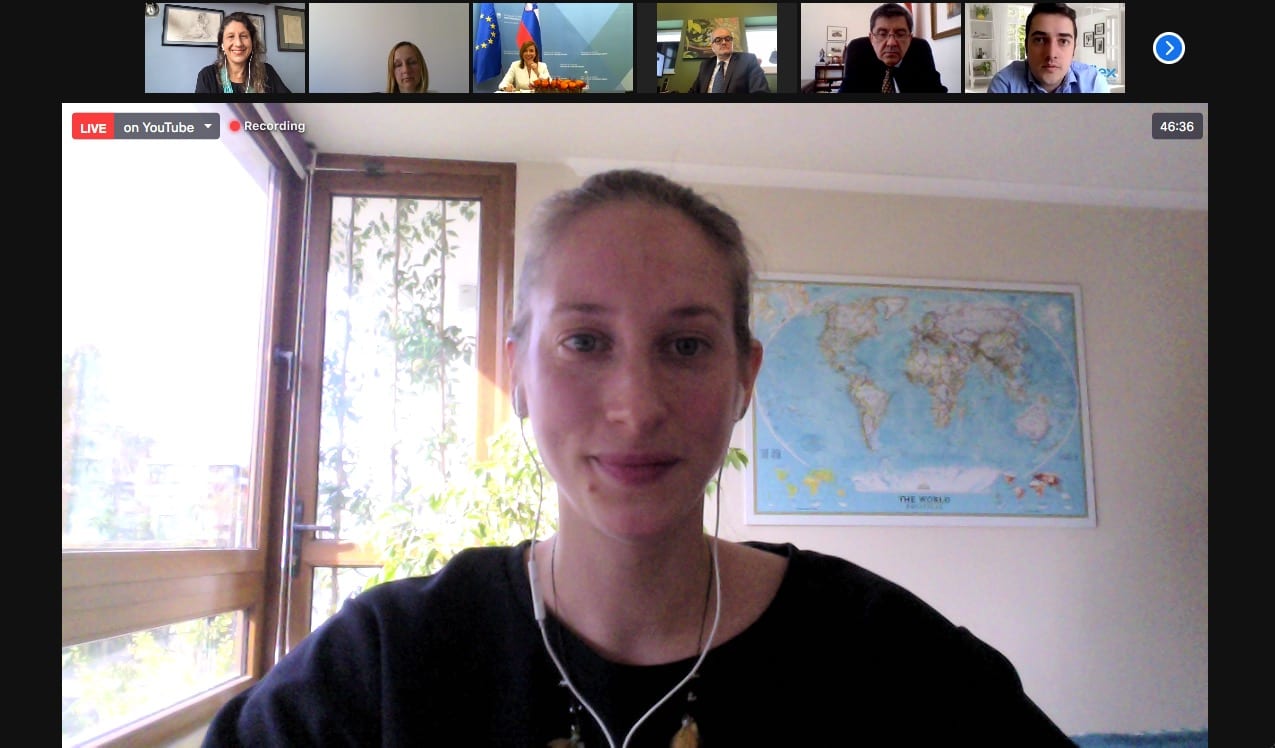
Since last April 19, the third international conference “Latin America and the Caribbean Days” or “LAC Days”, organised by the Ministry of Foreign Affairs of the Republic of Slovenia within the framework of the Bled Strategic Forum, has been taking place in a virtual format. The objective of the LAC Days is to strengthen bilateral and bi-regional cooperation between this European nation and the region, as well as to generate links between its companies and institutions on cultural, economic, environmental, science and research issues, among others.

This year, among the topics to be discussed in this conference, a special emphasis was placed on the green transition and recovery, including a special session for the circular economy, moderated by Ladeja Godina, where Eurochile Business Foundation had an outstanding participation in its leadership role and articulation of the Roadmap for the Circular Economy recently prepared by our country, represented by the director of the Area of ​​Technology Transfer and Circular Economy of Eurochile, Linnet Solway.

In this session, together with representatives from Slovenia and Brazil, advances and good practices were analysed to promote the circular economy in both regions, exploring the different dimensions of this transition from the perspective of national and international networks, research and innovation; the contribution to a highly ambitious Green Deal and the role of network governance. Also how to address the challenge of plastics in its different contexts and how the systemic approach enables the connectivity of key points to drive this transition within countries and globally.

In her presentation, Linnet Solway highlighted the key milestone for Eurochile – “and more importantly, for the country” – that Chile is on the final stage of publishing the final version of its Roadmap for the Circular Economy thanks to the work and support of many national and international actors, among them Circular Change, led by the Slovenian Ladeja Godina. But more than the document itself, she added, what was most relevant was the shared process for its construction and elaboration.

“This participatory process allowed leveraging and giving direction to the impulse of the circular economy in the country. It required articulating key actors from different sectors, representing the different levels of society, and it allowed creating a space for participation and interaction between all these actors for decision-making and reaching consensus in a process – in my opinion – quite unique for Chile. And all this in the context of the pandemic: we did not meet in person even once, “said Solway.

To this, she added, two other very relevant milestones for the advancement of the circular economy in Chile were added in recent months in the country: the entry into force of two EPR Law decrees (one for tires and the other for packaging) that establish the collection and recycling targets that producers must meet starting 2023; and the approval, by the Chamber of Deputies, of a bill to ban single-use plastics, currently in its final phase of approval in the Senate.

“It is difficult to say wether the pandemic has accelerated the discussions and the implementation of the circular economy in Chile – there was already a momentum  going on before COVID – but without a doubt, interest continues to increase and reach more and more actors in society, and lot of new initiatives are seeing the light of day every week. So that’s really exciting,”added Linnet Solway.

All this, she said, also imposes a series of challenges for the materialization of this trend. In this regard, she advanced the three priorities that Eurochile will work on for 2021, and during the next few years, related to the implementation of the circular economy: working with SMEs and defining which circular economy is suitable for them, how they can participate and support this transition -especially- from the Eurochile Circular Economy Working Group; bring the circular economy to the local level, to the regions of the country; and articulate value chains and systems in the territories, focusing on promoting the circular economy as a competitive framework for the recovery, diversification and re-activation of the local business ecosystem.

The LAC Days 2021, which close today, had a wide audience in Europe and Latin America, bringing together representatives of European Union institutions, research centers and associations, science and academia, the business community, culture, the diplomatic corps and politics.

Eurochile concludes successful execution of project to transform the Antofagasta Region into an international destination for business tourism

After almost 10 months of work, Eurochile Business Foundation concludes the execution of the project “Nodo de Internationalizacion Turismo MICE Antofagasta”, which began in June 2020 as a pilot project of renewal of the tourism sector through the dissemination and transfer of European experience during the global coronavirus pandemic. The objective is not only to make the region an attractive destination for conventions and other professional events, but it also aims to jointly promote Antofagasta as a destination for meeting tourism.

Known internationally as MICE (Meetings, Incentives, Conventions and Exhibitions / Events), and unlike tourism for leisure or pleasure, this type of travel is motivated by events organised for professional reasons. And during the execution of the project – carried out jointly with Corfo Antofagasta and Gedes – several milestones were completed to achieve all the proposed objectives, despite the restrictions imposed by the pandemic that forced to take full advantage of virtual work alternatives.

“The main achievements are related to the ability of entrepreneurs and the capacity to work together. Meeting tourism requires many services, and a collaborative and articulated work is necessary to reach demanding clients”, explains José Aravena, executive director of Eurochile .

“This involved – he adds – carrying out training sessions, work meetings, analysis of offer and demand, international contacts, participation in an international virtual fair, and business planning and commercial strategies. Although the pandemic has hit the sector hard, we hope that in the near future the tourism companies that participated in the project will be more prepared to work jointly and organize business events, both national and international”.

To promote the work of these companies, the project had a training stage with Chilean, Latin American and European experts; an organisation phase of a collaborative structure; the realisation of business and marketing plan proposals; the compilation of data on regional offer of services and potential clients, as well as the realisation of individual consultancies to improve their services with the support of Spanish experts.

In this context, the companies had also the possibility to upload profiles to the international Enterprise Europe Network (EEN) to search for partners and expertise in Europe; the design of materials such as a promotional video, logo and brochure; participation in virtual international fair and brokerage event; and a communications strategy with digital publishing.

Support from European experts

“We worked directly with European experts in business tourism. They contributed their experience in the execution of events, organisation, marketing, alliances with local authorities, tourism quality standards and protocols that were established in Europe so that the sector could adapt to the Covid-19 pandemic”, explains José Aravena.

In this regard, the executive director of Eurochile highlights that through exhibitions in seminars, virtual visits to each of the companies and meetings with regional authorities, “the project had the valuable contribution of two Spanish experts: Raúl García López , former director of the Madrid Convention Bureau, the Oviedo Convention Bureau and the Madrid Promotion Congress Department; founder of aprendedeturismo.org; Carlota Herrera, director of operations at Kenes Group Spain, part of the Kenes Group, a multinational company specialised in organising conferences”.

For Luis Alberto Gaete, regional director of the Corfo Antofagasta Committee, “having foreign experts was very important, mainly because of their experience and because they were ‘ahead’ in the advance of the pandemic, so they could inform of the actions they were taking which was very essential for the business group”.

This, he explains, because the health crisis has affected tourism worldwide, being one of the productive sectors with the greatest losses. “We are hopeful that the reactivation will arrive soon, that travel and events can be carried out, especially since the region is an important point for at least four major industries worldwide, and MICE tourism companies have prepared for the new normal that it will accompany us for years, and that will allow them to attend tourists in the best way, “he says.

In this sense, says the regional executive of Corfo, “this project strengthens the work that began with the Business Tourism PTI and that this group of companies took to incorporate new tools that allow them to consolidate in the sector. In addition, the project managed to deliver new tools, incorporate them into the international segments of MICE tourism and update them just at the right time. We envision that the industry after this pandemic is going to grow again at the rate it was doing before 2020, and regions like Antofagasta could monopolize a special percentage of the segment”.

In the success of this project, adds José Aravena, the role of the partners was key. “Corfo Antofagasta, in addition to providing financing for the project, collaborated in the dissemination of activities, gave support and advice on promotion materials and participated in meetings, workshops and seminars. Among the public sector, the contribution of SERNATUR was very important. They provided contact information, tourist information, contact networks and material.

The experience of the participating companies

For the companies participating in the project, the experience allowed them to understand in greater depth what a Nodo MICE means, as well as the challenges and opportunities that arise, says Mary Paz Herrejón, general manager of Envision Consultores.

“It helped us to understand and know how to manage it, how to undertake it, how to develop it and put it into practice. It was an experience that is very useful because I did not have a better understanding of what a Nodo MICE was, and I did not know how business tourism works in Chile,”she adds.

In this regard, Alicia Reyes, manager of the Convention Bureau Antofagasta (ACB), affirms that after ending this project, “as ACB we have acquired relevant knowledge in order to better promote our destination -Antofagasta. Likewise, I believe that the associativity generated between the companies in this initiative is essential to deliver proposals in accordance with what the MICE market requires at a national and international level, since we have a varied offer of services and with the own standards that this sector demands”.

In that sense, she adds, “the project has allowed us to be all aligned with the concepts and purposes of MICE.  It allows us to have better coordination and collaboration between local service providers in order delivery our proposals adapting them to the needs of the clients. In this context, we will be having greater possibilities of realizing of events in our region with the benefit for the companies associated with to the project”.

Regarding the most relevant activities of the project, Mary Paz Herrejón highlights that “the workshops were the ones that helped me the most. The workshop given by Carlota Herrera gave me many ideas and advice to position myself. I hope with all my heart that all this common effort can be successful and make Antofagasta a world destination for MICE tourism”.

In this regard, Alicia Reyes affirms that each activity carried out within the framework of the project was highly valued, as there were always interesting tips to acquire. “Being aware of the experience of other destinations with greater experience is always interesting to know. In this sense, the technical visits and advice carried out by the Spanish experts Raúl García, with vast experience in the Convention Bureaus of Madrid and Oviedo, and Carlota Herrera, director of operations of the OPC Kenes Group, were very attractive. Spain is one of the world leaders in the MICE industry, so everything they contributed to us during their speeches was very well received and valued by us”.