English

Miguel de Porras: “There is a scientific consensus that our food system is broken”

The Spanish expert, Miguel de Porras, with extensive experience in organic farming, leads the most important research network on organic food and agriculture. The work of this director includes, among other things, the coordination of approximately 300 European researchers focused on a wide range of scientific disciplines applied to organic and sustainable agricultural practices. FiBL, founded in 2017 and headquartered in Brussels, Belgium, represents four national research institutes from Switzerland, Germany, Austria, and France, and the Hungarian organic agriculture research institute ÖMKi at the European level.

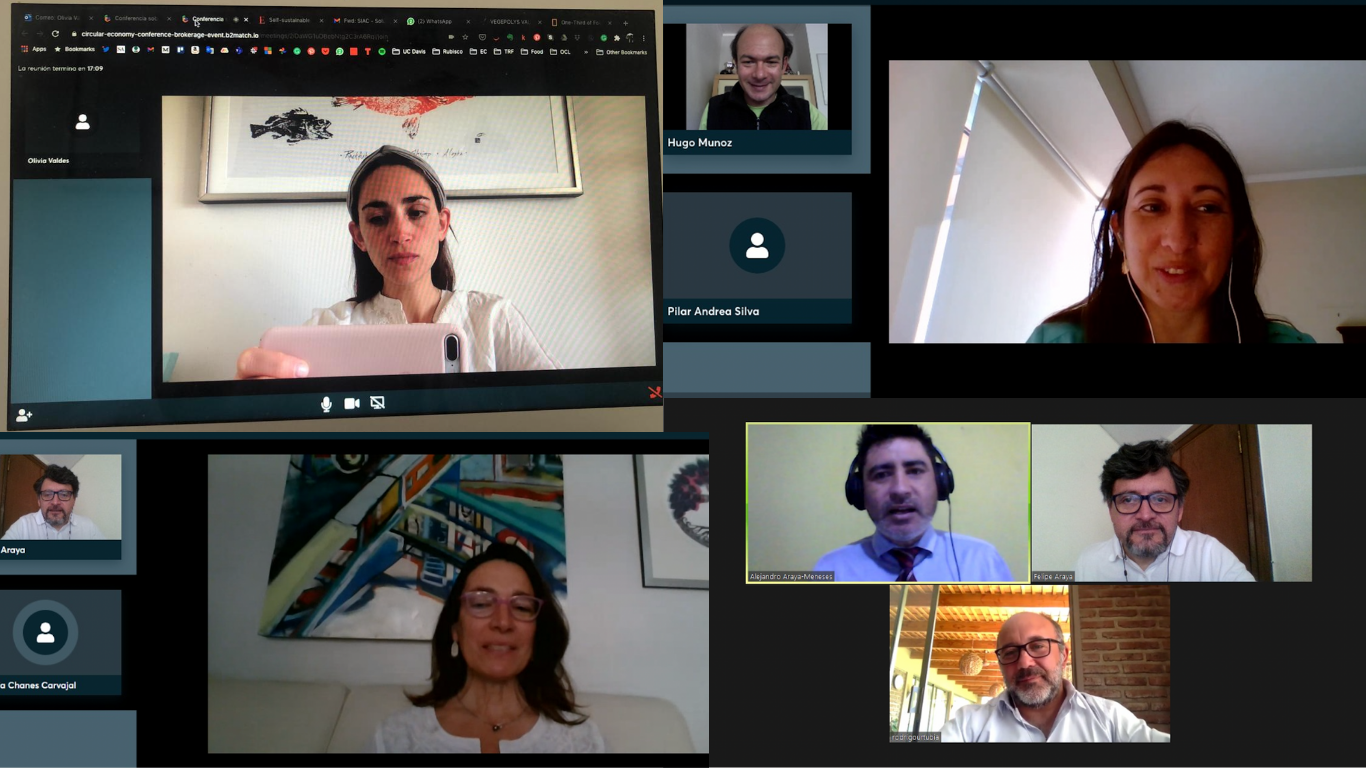
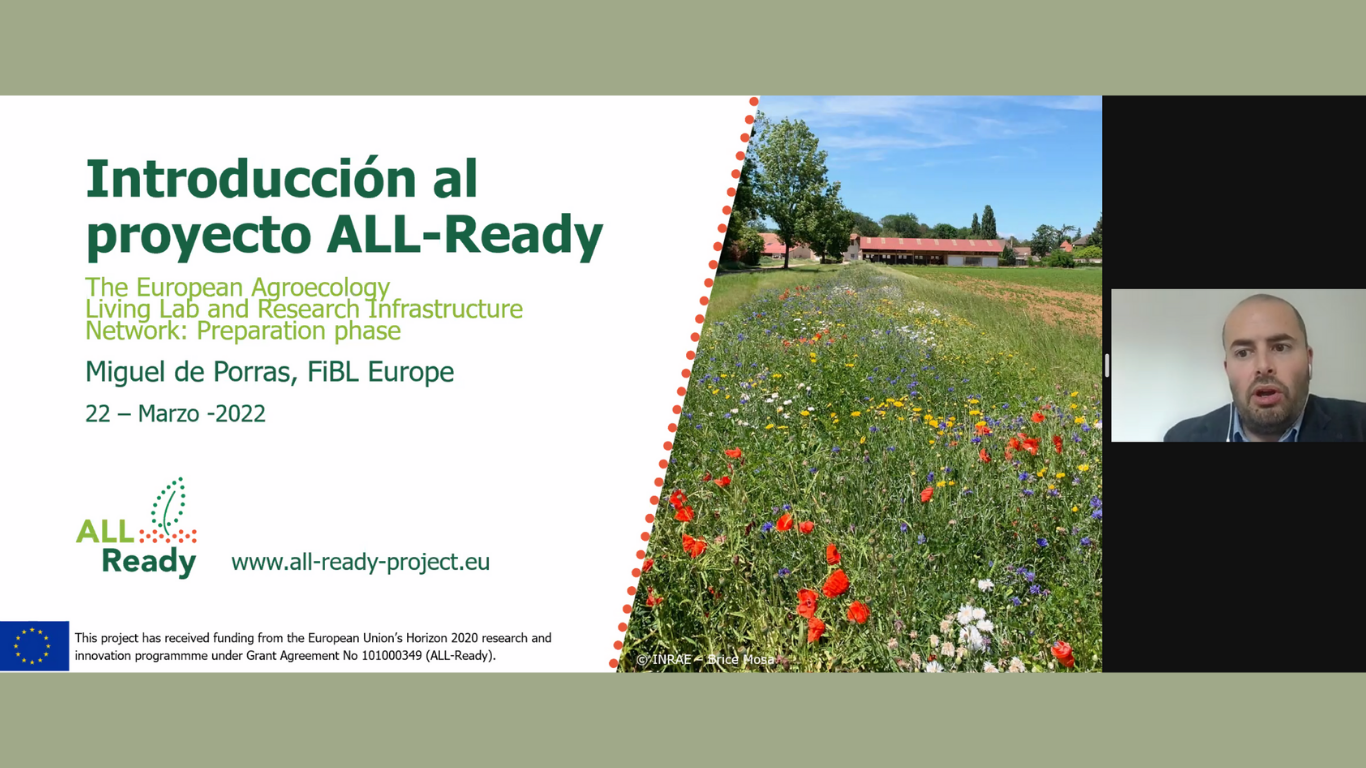
During his presentation -online from Brussels- at the conference held at the O’Higgins University in Rancagua on March 22, de Porras mentioned the serious consequences of climate change and the need to modify the way in which it is produced and consumed, which has meant that countries around the world, mainly in Europe, have developed different sustainability plans to respond to current conditions.

“There is a scientific consensus that our food system is broken. We cannot continue with the usual practices and we need to build sustainable agricultural production systems that are resistant to the shocks we are facing,” said Miguel de Porras, who presented the work developed around agroecology and the living labs and research infrastructure project.

To do this, he says that the All-Ready project was implemented, which promotes agroecology as an approach that instead of tending towards monoculture and the reduction of species, what it proposes and encourages is the use of diversity for agricultural production. “Plan, create and use diversity, using adaptive management that takes into account the context”.

Specifically, the European Union promotes the living labs program “because it understands that science with impact is needed, which is not done in a laboratory but rather by incorporating actors directly into the process, integrating research activity with the creation of direct impact on the ground. Agroecology requires the involvement of farmers, because it is about doing research directly with them”.

This methodology implies identifying the problems and integrating the knowledge of the farmers. “In a co-creation process with academics, actors or end users are involved and experiments are performed in a real-life context. It is not about simulating in a laboratory but about working in a real environment, that is, on the farm”.

The project is in the planning stage and involves 27 countries. It is estimated that its application will begin in early 2024 and the European Union has proposed to invest around $700 million euros.

However, there is already a pilot plan implemented in Hungary, which has promoted the recovery of traditional tomato, establishing a network of farmers throughout the country where crops are tested and which included a tasting contest that involved consumers. The winning samples have been reproduced and sold on the market as organic varieties of traditional tomatoes.

“It was shown that, involving farmers from the beginning, you can end up with a product with commercial capacity and that can guarantee long-term sustainability,” said Miguel de Porras.

Successful Outcome of Eurochile 2021: Co-organization of 27 matchmaking events and more than 370 participating Chilean companies

With the aim of promoting and encouraging Chile’s connection with Europe and supporting Chilean SMEs in their internationalization processes, Eurochile co-organized 27 matchmaking events, which gathered more than 370 national companies. “Given that during 2021 sanitary restrictions were maintained both in Chile and in Europe, companies kept their interest in joining initiatives such as these with the aim of connecting with international counterparts and identifying opportunities,” says Nina Morales, Director of Business Cooperation at Eurochile.

The year 2021 was less complex in terms of the pandemic, however many of the European fairs and matchmaking events were forced to maintain the online format to continue connecting companies and organizations from different countries. “Without a doubt, this was beneficial for our companies, because they did not need to spend on travel and accommodation expenses to meet with European counterparts. We have always affirmed that matchmaking events are unique opportunities and we continue to affirm it, adds Nina Morales.

The foundation is part of a European network called Enterprise Europe Network whose objective is to be a main and reliable tool for SMEs in technology and commercial transfer. This initiative is from the European Commission and exists in more than 60 countries worldwide with more than 600 partner entities. Eurochile has been an exclusive member of this network since 2008, it is the only contact point in Chile and allows it to be a connecting bridge between Chile and Europe, and facilitate the internationalization processes of SMEs; generate collaboration agreements; participation in national and European fairs; organization of business missions to Europe and reception of European missions in Chile; preparation of meeting agendas and organization of business meetings or matchmaking events. All this favoring the exchange of experiences and knowledge that allow SMEs to be more innovative, competitive and productive.

In this context, the director of Business Cooperation adds that, “these activities are big and important spaces for collaboration, they create endless opportunities in business and future projects. For example, throughout these 27 online meetings, Chilean companies were able to meet with hundreds of European companies to develop new relationships and first contacts for future potential alliances”.

The 2021 events were aimed at different sectors, such as: technology, food, energy, circular economy, cosmetics, fashion, nanotechnology, textiles, Covid, among others. “Given that the Enterprise Europe Network is a transversal platform, the activities are aimed at various sectors and allow the participation of different actors from the academia, research centers a SMEs, among others. These instances bring the participants together on a virtual platform for 20 minutes; those are brief moments – a first contact – where both parties present their demands, offers and/or projects and exchange opinions with the aim of identifying beneficial opportunities” says Morales.

Of the 27 events carried out,  only one remains in force in 2022 and is focused on the transfer of good practices in circular economy. “Circular SMEs Across Europe- Good Practices from Barcelona to Bottrop” is a meeting that takes place in virtual format that began in June 2021 and remains open until November 2022. To date, more than 261 participants from more than 30 countries are registered, it is a free and transversal event aimed at all sectors. To learn more about this meeting and register: https://circular-economy-smes-across-europe.b2match.io/

Circular Economy Conference in the O’Higgins Region: specialists share regional and European experiences to respond to the effects of climate change and water scarcity in the agricultural sector

The conference, which brought together an audience of more than 100 online and 30 in-person attendees, had as speakers the director of the Research Institute of Organic Agriculture in Europe (FiBL), Miguel de Porras, who presented the living laboratories and infrastructure project research; the General Manager of the Belgian innovation cluster Wagralim, François Heroufosse, who addressed how the beer industry has reused its waste; and the director of the Center for Advanced Studies in Fruit Culture of O’Higgins (CEAF), Mauricio Ortiz, who referred to the genetic improvement programs that work to face the consequences of climate change in the region.

“As countries with greater progress in sustainability have shown, this is a systemic challenge. The circular economy is about a production that reduces the use of virgin raw materials and consumption, innovation and intensive use of technologies” expressed Vicente Caruz, president of Eurochile, who valued the possibility of having the participation of national and European cases because “environmental sustainability and climate change are global problems that cannot be solved by a single actor. Coordination and collaboration between countries is essential, as well as the diffusion and transmission of technologies and experiences”.

The O’Higgins Region contributes 20% of the agricultural GDP in the country, concentrating 27% of fruit crops, 14% of vegetables and 34% of corn. Among its main products it has 47% of cherry plantations and 71% of nectarines; In addition, it has almost half of the harvest of onion, melons and watermelons in the country.

In this sense, the Governor of O’Higgins, Pablo Silva, pointed out that “one of the main sources of economy in the area is agriculture, which is very diverse and ranges from large monocultures to small farmers. We consider it important to collect the experiences that are developed, especially in Europe where they are one step ahead; but also, of our small farmers who have the wisdom to work the field day by day. In this context, we appreciate this instance of knowledge, good practices and experiences so that we can work and develop the circular economy”.

The conference was attended by the Belgian ambassador, Geert Criel, who highlighted the importance of regional governments in the development of the circular economy, “because they are the ones who lead its design and implementation” stressing the need to have the participation of different actors. “First of all, the regional governments set the strategies and offer financing for the development of innovative projects. Then we have private enterprise, a key player without which there could be no lasting change in the economy. Thirdly, innovation and knowledge and, in our country, we have considered it relevant to associate with universities and research centers. Finally, citizens and civil society organizations whose participation is crucial to guarantee the success of the circular economy”.

Shared experiences

The director of the CEAF, Mauricio Ortiz, indicated that agricultural activity is not only affected by the drought of more than 12 years that plagues a large part of the central zone of Chile, but that there are other elements that must be considered, such as the accumulation of hours of cold during the winter, and the increase of temperatures that are experienced during the summer.

To contribute to maintaining the productive capacity of the area, CEAF implements the development of genetic improvement programmes – through rootstock of roots – that seek a better adaptation of plants to local conditions. This has been carried out in stone fruit trees, cherry trees, walnut trees, among other trees, whose production trials are located in the towns of Rayentué, El Tambo, Águila Sur and the El Carmen Agricultural School.

François Heroufosse, the manager of Wagralim, the Belgian Agro-Food Innovation Cluster, spoke about the experiences of the beer industry in his country using the grains discarded from production both in livestock feed and in products such as cookies and pasta.

In the potato industry, they transform by-products into fermentation products to create protein for livestock feed. Or in the production of chicory, whose roots are used to produce polymer that will be used as gas and water to generate energy; in addition to the refinement – through biorefineries – of minerals that can be returned to the agricultural process.

The event concluded with a panel with: Francisco Duboy, president of the Association of Producers and Exporters of O’Higgins (ASPROEX), Elba Vivanco, director of the Climate-Smart Agriculture Project for the Nilahue Valley. Farmers Association of Lolol and Álvaro Alegría, Manager, from Horticrece who discussed the different experiences of the Nilahue Valley programme and also the production of vegetables in the region with sustainable added value.


Raffaele Cattaneo: “Local governments have a fundamental role in the fight against climate change, because policies against climate change and ecological and energy transition are “glocal” policies”

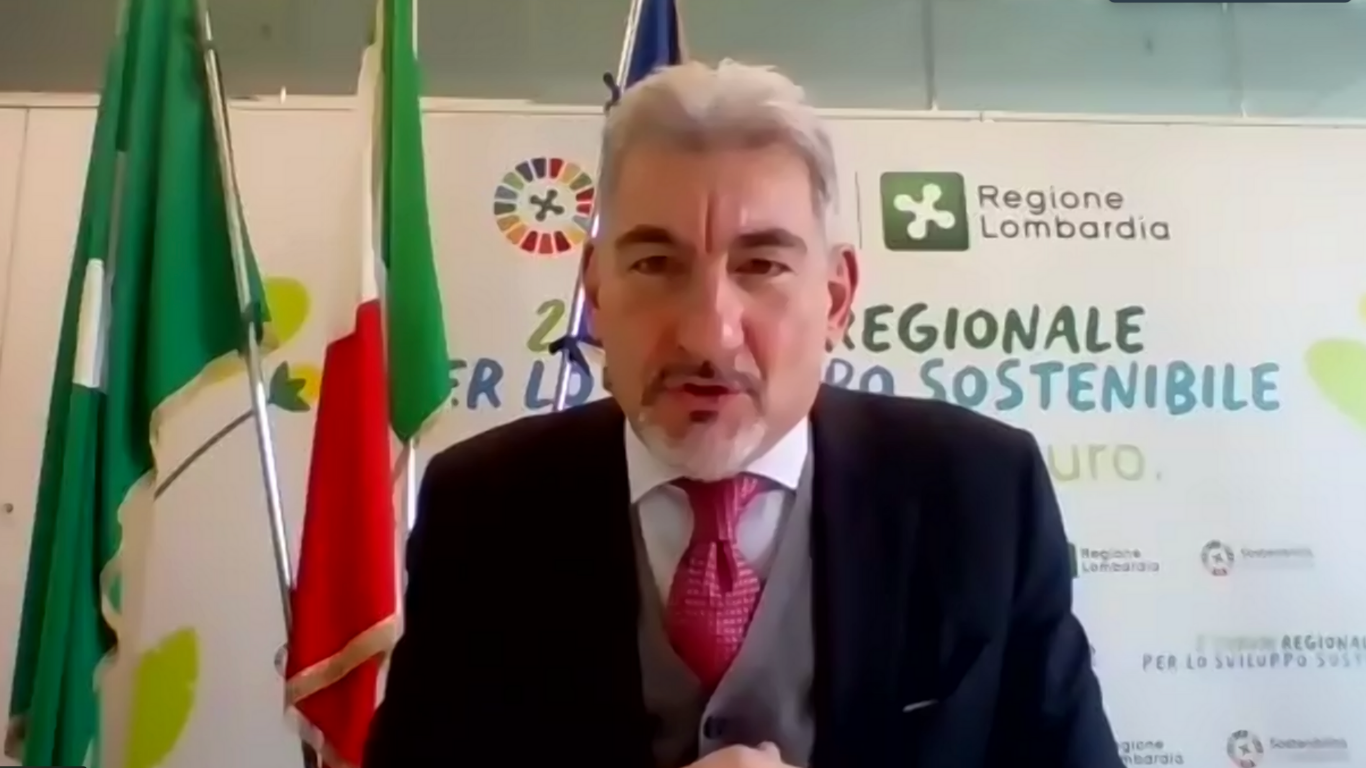
The reasons that have led the Lombardy region to lead the implementation of a sustainable development model in its country and in Europe were part of what was stated by the Minister of Environment and Climate, Raffaele Cattaneo, at the conference: A Sustainable and Circular Industry for the Biobío Region; organized by Eurochile and the regional government on January 20 at the Corporación Desarrolla Biobío.

This region has 16% of the Italian population – around 10 million inhabitants – and contributes 21% of the Italian GDP, generating approximately five million urban waste per year and 32 million from productive activities; but the region recycles and recovers more than 90%.

These figures position the region as one of the most successful in the implementation of the circular economy, because “we have been the leader in traditional industrial development, but as a regional government we have decided that now we must become the leading region in the sustainable development model, where sustainability is not only an environmental issue but mainly an economic and social development model”.

He affirmed that “the first policy that we must have is a clear vision that sustainability must be linked with development, ecology with the economy. We can say that the environment is the new name for development and for this we need a change of mentality: that development will be respectful of the environment, or it will not be, that sustainability is not optional, but mandatory”

Cattaneo said that “this cannot be done only from the institutional political perspective, but we need to involve the companies and their unions; in addition to the cooperation of citizens and a clear vision of the importance of the circular economy”. And in this context, he said that his first initiative was the formation of the Observatory on ‘Towards the circular economy and energy transition, of which more than 50 organizations are part, divided into eight thematic panels. These are organizations of agriculture, industry, commerce, services, workers, consumers, universities and research centers.

Creation of the Market Inerti platform

Within the experience of Lombardy, Cattaneo said that “we saw that a large part of the waste from the construction and demolition was being recovered, but there was no market that would allow its effective reuse. We asked the companies what they needed and they told us that they needed to know the characteristics of these materials, where, how to use them and how much is available”

In this context, they jointly built the Market Inerti computer platform, an effective meeting point between supply and demand, which has allowed significant growth in the actual use of recovered waste, where less than 1% reaches landfills.

“In the last 25 years we have gone from less than 20% to more than 70% of this collection” he details, resulting in 62% of waste beginning its path of reuse as material and 27.5% of urban waste are used for energy recovery. Regarding waste from productive activities, he indicates that the percentage of recovery as material is 81%.

“This means that in our region the base of the circular economy is already a reality, but that it would not have been possible without the existence of an industrial system that has invested in waste recovery plants, and that they can be opportunities for economic development. ” Explain.

Currently, Lombardy has 13 incineration plants, 68 recovery plants for the organic fraction to produce compost and 15 anaerobic digestion plants that produce natural fertilizers.

The importance of local governments

In his presentation, Cattaneo argued that “local governments have a fundamental role in the fight against climate change, because policies against climate change and ecological and energy transition are “glocal” policies: they need a global perspective – such as the 2030 Agenda. – and local actions, which is where they are implemented and without them the global objectives of the United Nations cannot be achieved”

The United Nations maintains that between 70% and 80% of the actions against climate change must be faced at the local level. “That is why the role of the regions and municipalities is so vital and, in this sense, it is important to share experiences and cooperate, as we hope to do together with the regional government of Biobío.”

Paul Gleeson, Ireland´s ambassador, presented innovative initiatives for the application of the bioeconomy in agriculture and the dairy industry in Puerto Montt

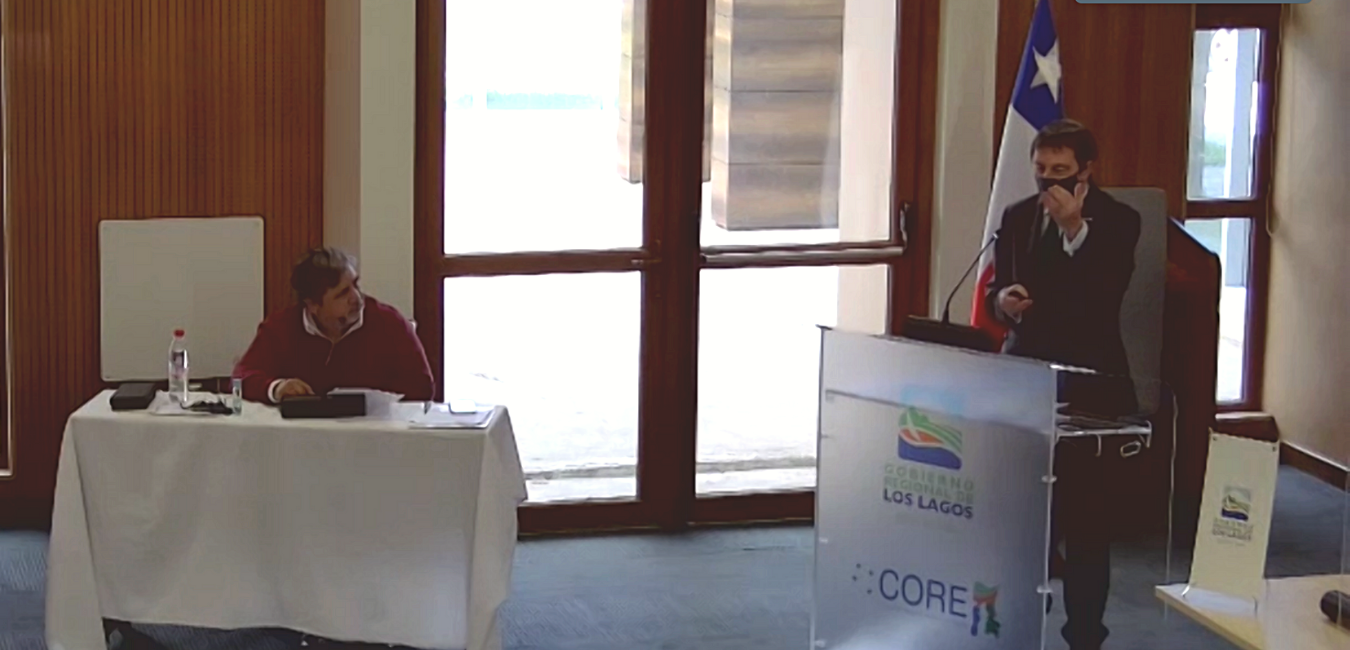
Regarding the similarities of the agricultural and dairy industry between our country and Ireland, its ambassador in Chile, Paul Gleeson, spoke about the path traveled in the application of the bioeconomy, in a circular economy conference held in the Los Lagos region.

Ireland is the largest exporter of beef in Europe and the fifth largest in the world, with a great reputation for its grass-fed cattle. 62% of the land is used for agriculture, with a total of 140 thousand fields; and ranks among the top of global food safety and food security.

With this information, the ambassador argued that sustainability in production processes is possible, but that a major public-private agreement is required to push this change of perspective, necessary to achieve the carbon neutrality goals by 2050.

Regarding Chile, he stressed that “we have great similarities in terms of the path that Ireland has traveled in the 1990s” and was emphatic in pointing out that “it is not about destroying the existing processes to start from scratch, but rather it is about seeking bioeconomy solutions in the different stages of the production processes”.

He explained that “when we talk about the bioeconomy, we talk about developing sustainable carbon cycles, not only drastically reducing fossil carbon uses, but also increasing carbon removal, recycling and reuse. Not just using the land to make food and disposing of waste material, but reusing the waste for other purposes, and even reducing it from the start.”

In this line, he highlighted two initiatives carried out in his country. The first is the collaboration between Biorbic, a world leading research center and Carbery, one of the largest dairy processors, “who together are capturing carbon from the soil to reduce the use of fertilizers, testing different types of food that change the digestion of animals and reduce emissions. They use renewable energy and study biodiversity on farms to better understand global emissions. We estimate that with these approaches, emissions from these animals and their manure can be cut in half by 2025, and total emissions from farms by more than 80%.”

The second refers to the one carried out by Glanbia, an Irish nutrition group that operates in more than 30 countries through its AgriChemWey program “which aims to establish an industrial-scale biorefinery – the first of its kind – using dairy waste to add value to high-end biobased products. Like oil, biological materials can be refined with significant results for the environment and for the world that we are leaving to our children and grandchildren.”


Irish presence in Chile

Gleeson said that agriculture is one of the areas where greater collaboration can be achieved between Chile and Ireland, due to the importance of this productive activity for both countries.

In this context, he highlighted the presence of Irish companies in our country, such as “the significant investment in the production and export of fruit, with the company Total Produce, which is the majority shareholder of Dole and has a 50% stake in the exporter El Parque”.

He also pointed out that “Irish agritech companies are doing well in Chile” and Samco is one of them, “which has had great success in Osorno with its maize planting machinery, which applies herbicides that allow farmers to obtain higher product yield and better quality per ha”. The other is Ireland Genetics “which works successfully on the improvement of bovine genetics and offers comprehensive consulting services around the best profitability of cattle and dairy products; as well as in matters of animal welfare, sustainability and clean agriculture”.

Circular Economy Meeting in Puerto Montt: regional and international experts addressed the possibilities and challenges to implement the bioeconomy in the Los Lagos region

With the aim of addressing European advances in strategy and sustainable growth and the alternatives that exist in the region for its development, the Eurochile Business Foundation and the Regional Government of Los Lagos, with the sponsorship of the European Commission, carried January 28, the Circular Economy Conference, The Bioeconomy: a green and circular growth strategy for the Los Lagos Region.

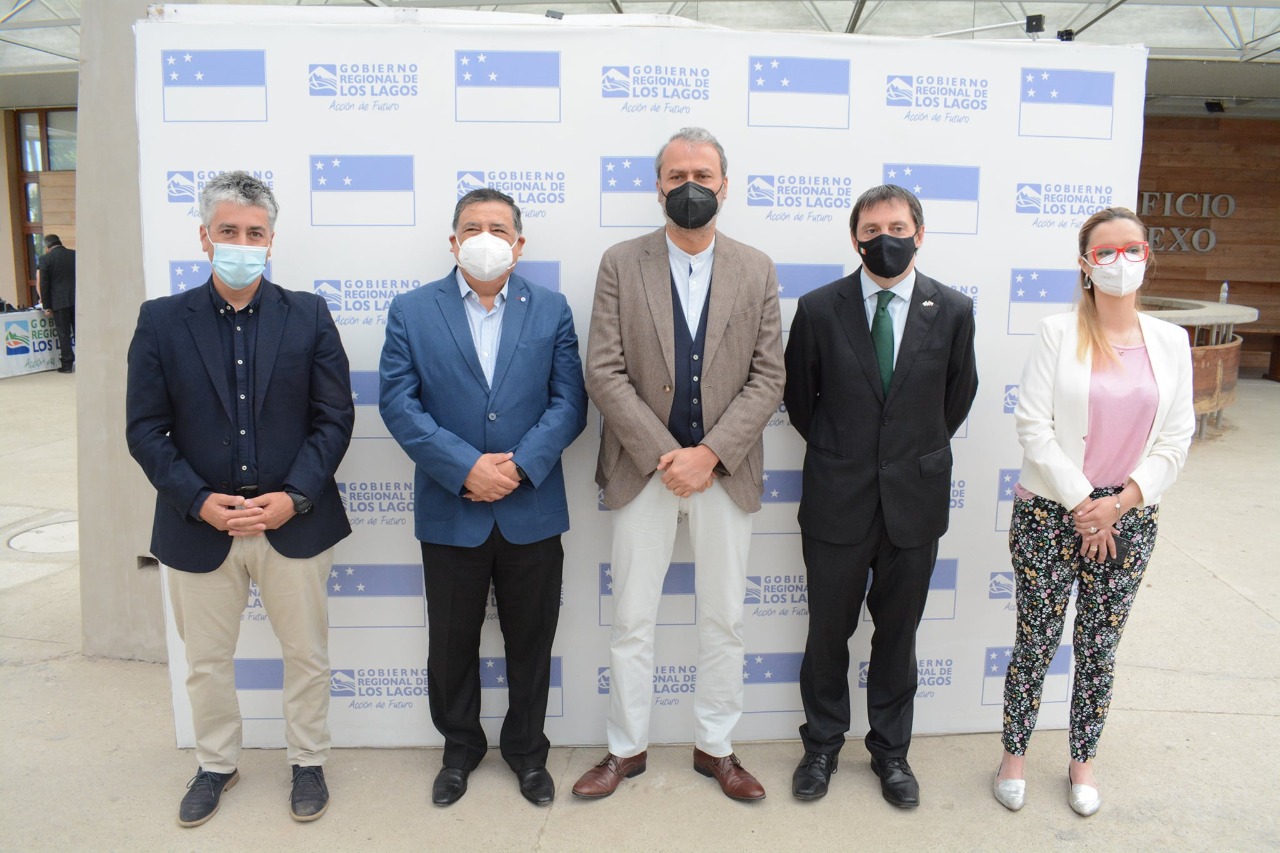
The activity carried out with an audience of more than 100 virtual attendees and 79 with- in person participants, included a presentation by the Irish ambassador to Chile, Paul Gleeson; in addition, the event counted with the presence of the governor of the region, Patricio Vallespín; the manager of the Association of Agricultural Entrepreneurs of Llanquihue, Rodrigo Mardones; the regional director of Corfo, Rodrigo Carrasco, Alejandro Buchman from the i-mar center of the University of Concepción and the executive director of Red Pyme Mujer, Bárbara Baxa; among others. Also, different authorities from the region attended: the Mayor of Chaitén, Pedro Rony Vásquez Celedon; the Mayor of Puerto Octay, Gerardo Gunkel Arriagada; the Mayor of Puerto Varas, Tomás Garate Silva and the Councilor for Chaitén, Bernardo Riquelme Muñoz.

During the presentation, Ireland’s ambassador, Paul Gleeson, pointed out the similarities that exist between the two countries, “sharing the role of agriculture for our economies and the way in which these paths of agricultural development intersect. We have significant Irish investment in the production and export of fruit and vegetables, we have also seen the arrival of Irish agro-technology companies, for example in the planting of corn, allowing farmers greater and better production; and in the bovine industry, offering consulting services for a better profitability of cattle and dairy products”.

Ireland is a leader in implementing the bioeconomy in agriculture and the dairy industry. This includes areas such as animal management, land management, maintaining profitability and improving traceability. “The bioeconomy includes all our terrestrial and marine ecosystems: agriculture, forestry, fisheries and aquaculture, and the industrial sectors that process biological resources. The sustainability of those processes is made possible by circularity, and we estimate that with these approaches, for example, emissions from animals and their manure can be halved by 2025, and that total emissions from farms, by more than 80%” said the ambassador.

The manager of the Association of Agricultural Entrepreneurs of Llanquihue, Rodrigo Mardones, pointed out that “the knowledge and understanding that we have had about the impact of agriculture and the moral obligation to do something about it is important,” and In this context, he explained that “today we have technology that can reduce methane emissions from livestock. Chile and Brazil have recently authorized the marketing of additives that allow these emissions from cattle to be rapidly reduced. Regionally, we are carrying out studies with some universities to advance precisely in this line with the use of algae”.

At the event, the president of Eurochile, Vicente Caruz,  stressed that “this meeting is one more step in our task of massifying the importance of the circular economy for sustainable development”; and for this, he affirmed that local governments have a fundamental role because “without decentralization, without regional and local actions, without inclusive and massive participation, it will not be possible to meet national and international environmental and climate objectives. The functioning of the regional governments, added to the leadership of the governors, is an important step to advance towards the implementation of measures and policies that promote this sustainable development”.

In turn, the governor of the Los Lagos region, Patricio Vallespín, indicated that “the circular economy and the bioeconomy is no longer a challenge for the future, but a requirement of the present, where from the government and the regional council we are building new views because if we don’t make a qualitative leap in this matter, this development won’t work”. In this sense, he explained that “we have already defined the Innovation Committee of our region, with representatives of the universities from the region; and with recently approved resources for the Los Lagos and Los Ríos regions to build an innovation strategy. And we will also become the only region in the country that undertakes a pact for a sustainable and inclusive region, with challenges and commitments from the productive sectors, where the circular economy will be an important part.”

For more information about the Circular Economy Meetings write to economiacircular@eurochile.cl

Eurochile and the Regional Government of Biobío organized a successful circular economy webinar in Concepción with authorities from Italy

The need to complement economic development with a sustainable perspective that allows taking on the enormous challenge against climate change, was one of the key elements that was analyzed on January 20 at the Corporación Desarolla Biobío at the circular economy conference, organized by the Eurochile  Business Foundation together with the Regional Government, with the support of the European Commission: A Sustainable and Circular Industry for the Biobío Region.

Regional and international authorities and experts participated in the event, addressing European advances in sustainable industrial development and the alternatives that exist in Chile for its promotion, specifically in waste treatment; where the active participation of all the agents involved in the processes is key when promoting effective change.

“With integration and union, with a modern vision of progress and the extensive and intensive use of the tools of scientific and technological progress, we will be able to deal with the enormous and complex challenge that lies ahead. Integral, economic, social and political sustainability is a necessary condition; and the circular economy is an important tool for companies to redesign and adapt their production and service models,” said Vicente Caruz, president of Eurochile.

The activity- carried out online and with-in person-  with more than 100 virtual attendees, was attended by the Ambassador of Italy, Mauro Battocchi, who stressed that “the circular economy is not contrary to economic growth, but rather promotes it. The turnover of this sector in Italy reaches 88 billion euros and more than half a million people are employed in the sector”. This makes it one of the countries that is at the forefront in terms of waste management in Europe “with a recycling percentage of 67%, above the European average that reaches 55%; and for example, 83.3% of the waste that comes from the paper industry is treated”.

Raffaele Cattaneo, Minister of Environment and Climate, Lombardy, Italy, shared the experience of the region that recycles and recovers 90% of its waste, highlighting that “we have been a leader in traditional industrial development, but as regional government, we have decided that we must now become the leading region in the sustainable development model, where sustainability is not only an environmental issue, but mainly an economic and social development model.”

The regional governor of Biobío, Rodrigo Díaz Wörner, explained that “we are an industrial region: metalworking, wood and fishing, and over time we have developed a strong activity in services, engineering, logistics and technology; and in recent years we have had a growth in terms of food exports”, noting that the challenge that arises is “how to combine the generation of economic activity that gives employment to the people who live in our region with the need to look more beyond our regional limits and how we take care of the planet, to reduce the risk that climate change means”.

In this context, he indicated that “in the regional government we have made decisions that seek to maximize collaboration spaces between all the agents in the processes, with a view to the sustainable development goals to which the United Nations has called us. We are convinced that by cooperating with the business world, academia, society, public entities, and learning from other countries that have traveled a path before us, we can extract knowledge that we can apply to our territories”

The Director of the Center for Environmental Sciences EULA of the University of Concepción, Alejandra Sther, stressed the need to lower the national policies imposed on circular economy and sustainable development to the regional level, stating that “we should generate a regional roadmap with goals and specific activities to be carried out in a collaborative and participatory manner among all sectors: civil society, academia, public and private sectors; so that the regional government has an input on which to base itself to allocate resources, that the projects that serve to meet those goals have a greater possibility of being financed”.


For more information about the Circular Economy Meetings write to economiacircular@eurochile.cl

Eurochile held a successful circular economy meeting in which economic, social and environmental advances in Europe were highlighted

Once again, the Eurochile Business Foundation fulfilled its objective and mission: to connect Chile with Europe and transfer knowledge and good practices. The Circular Economy Conference: Promoting the sustainable growth of Chilean and European SMEs closed  with a call for the creation and deepening of networks and alliances. This activity, organized in December 2021 by the Eurochile Business Foundation was sponsored by the European Commission and is part of a Cycle of Conferences that the foundation organizes on Circular Economy.

The Conference -carried out virtually- consisted of a webinar in the morning and thematic panels in the afternoon with presentations of success stories from the agricultural, tourism and construction sectors. The event brought together authorities  from Chile and the European Commission; and also experts from renowned international organizations such as Circular Change (Slovenia), HIDRIA Ciencia Ambiente y Desarrollo SL (Spain), The Research Institute of Organic Agriculture, FiBL (Belgium), Aclima (Spain) and Fundación Madri+d (Spain)  that provided numbers and examples of successful cases of application of this model, which is already becoming a worldwide trend.

The main objective of this encounter was to promote, contribute, deepen and highlight the role of local networks at a national and international level, to contribute to the conversation on the sustainable development of the territories and productive sectors of Chile, considering that the circular economy has positioned itself as a fundamental tool to address environmental, social and economic challenges.

With more than 200 virtual attendees from countries such as Spain, Portugal, Ecuador, Argentina, Colombia, France, Peru and Bolivia, the president of Eurochile, Vicente Caruz, highlighted that “today we have recently shared quantified concepts and objectives that mean a great advance . We need connections between the public, private, external sectors, regions, financing, and we also need competition. We need the networks in action and the link between all the actors for the advance towards a sustainable economy”.

In the same context, the Ambassador of the Delegation of the European Union in Chile, León de la Torre Krais, stated that in order to “build a climate-neutral and competitive economy, it is necessary to act in all sectors of the economy with actions such as investment in technologies that respect the environment, support industry to invest in innovation, deploy cleaner, cheaper and healthier public and private transport systems, decarbonize the energy sector, make buildings more energy efficient and promote the circular economy” .

Throughout the different presentations of the conference, the scope of the application of the European Green Deal was addressed, as well as the different climate commitments that countries have adopted, where the circular economy has gained special relevance, because, as Javier Arribas -Quintana, senior expert at the European Commission’s Directorate General for the Environment explained, “not only makes sense from an environmental perspective, but also from an economic and social point of view. To illustrate this, between 2012 and 2018, the number of direct jobs linked to the circular economy in the European Union grew by 5%, reaching 4 million”.

This impulse is also explained by the measures and actions that governments have adopted in Europe, such as, for example, the carbon credit system, which as Nicola Ardito from the International Relations Unit of the General Climate Directorate of the European Commission described, “has established the creation of two funds, the one for innovation and modernization; the first is to develop innovative technologies and the other is destined for the member states with the lowest income. The resources of these funds depend on the prices of the proceeds from emissions, and a conservative estimate is 40 billion euros for the two funds between 2021 and 2031”.

Finally, the speakers agreed on that collaboration between all the actors is the key to the transition towards a sustainable model. “The support of governments that must support this circular transformation is needed. They are responsible for giving us the initiatives, adequate regulation and metrics to support this transformation; and on the other hand, there is the governance of the network. The importance of connecting so that those transition agents who work on the ground can work with the governments. Only with the collaboration between all the actors can we run this marathon and apply this circular change” concluded Ladeja Godina, President of the European Circular Economy Stakeholder Platform (ECESP).

Thematic workshops

In the afternoon, three thematic workshops were held – led by professionals from Eurochile – with the participation of leading international experts and national representatives from the private and public sectors. Its objective was to approach practical aspects of the circular economy in different topics: advances towards a green and circular Public Infrastructure, promoting the incorporation of Circular Economy strategies in public infrastructure projects; development of a sustainable and circular agriculture for Chile, analyzing the benefits, challenges and what are the best strategies to promote this transition; and strategies for circular tourism, support for the tourism sector in its transition towards a circular model and the incorporation of CE action plans in destinations.


For more information on the Circular Economy Conference: economiacircular@eurochile.cl

Enterprise Europe Network: the European network that connects, supports and facilitates the internationalization process of SMEs

Since the foundation we see internationalization and bonding as a necessary process for the development of Chilean SMEs that requires a space – networks and platforms – for the transfer of technologies and knowledge, business promotion, generation of alliances and implementation of projects. SMEs -at some point in their development- need to improve their capacity and level of productivity, competitiveness and associativity in order to strengthen their businesses and companies and better coordinate their resources. To do this, Eurochile’s role is to make its different networks with which it works available to SMEs.

Since 2008, Eurochile has been a partner of the network- Enterprise Europe Network- which we identify as the backbone of the foundation, everything we do is within the framework of this network and allows us to fulfill the mission of the foundation of connecting Chilean SMEs with Europeans and vice versa. The network connects, supports and facilitates internationalization processes through: brokerage events, connections with Europe, uploading profiles, internships, search for experts, alliances, technology-commercial and knowledge transfers- participation in European projects, webinars, among others. It should be noted that we are the first in Latin America and the only entity in Chile to have this network.

The Enterprise Europe Network (EEN) is the world’s largest network – virtual and transversal – for the internationalization of SMEs. It exists in more than 60 countries and has more than 600 partner organizations and more than 4 thousand professionals involved. It is a tool that allows Eurochile to support Business Cooperation, inserted in its mission to create, promote and consolidate economic, commercial and technological links between small and medium-sized companies and Chilean institutions and those of the nations that make up the European Union, both public and private, being a facilitator of the diffusion process of SMEs.

The foundation is the exclusive partner and sole point of contact in Chile of this network that operates with the endorsement of the European Commission, allowing the generation of collaboration agreements, participation in national and European fairs, organization of business missions to Europe and reception of European missions in Chile, preparation of meeting agendas and organization of business meetings or brokerage events. All this favoring the exchange of experiences and knowledge that allow SMEs to be more innovative, competitive and productive.

The creation of the Enterprise Europe Network was simply a response to the need of SMEs to diversify their markets, expand research and development range, create their own contact networks, obtain information on markets and their regulations, receive assistance and information on European programmes and generate more dynamism between parts of the different countries. At the beginning, only the 27 countries belonging to the European Union had access, but over time, this network, which is promoted by the Directorate General Enterprises and Industry of the European Commission, began to spread to other countries and continents. In Latin America we have partners in Peru, Argentina, Mexico, Uruguay and Brazil.

Who is part of it? Mainly chambers of commerce, development agencies, universities, R&D institutions, business associations, foundations, science parks, innovation agencies, public and private organizations, among others.

Who can access the EEN network? The services and activities offered within the framework of the EEN are mainly aimed at companies – SMEs – but research centers, universities and public and private organizations can also participate. It is important to bear in mind that the network is not only to generate contact for future business, here the transfer of technologies and knowledge is combined with the possibilities of connection for future projects or alliances.

How can you access the services? The network offers a unique opportunity to connect with other SMEs. To find out what service the company or organization needs, a meeting is first generated to find out the needs, problems and potentials of each one. In that same instance,  we present the work carried out by the foundation and who are the professionals in the different areas who are there to support. The idea is to work together with the company / entity, because it is they who finally know their potential and needs. After that a more personalized work begins to support the company with follow-ups.

Eurochile’s job is to provide companies with information regarding the network, support and guide them in their identification of needs, offers or demands. The network offers unique opportunities to new European markets, possibilities to develop technology transfer projects and international cooperation, but it also offers the opportunity to support the approach to programs such as Horizon Europe, the successor to Horizon 2020.

We invite you to get to know the network in the following link and, if you have any questions and want to know the different services, do not hesitate to contact Manuela Caruz, Director of Networks at Eurochile mcaruz@eurochile.cl

Circular economy applied to engineering: the successful work experience between ICP Ingenieria and Eurochile

In 2020, within the framework of the development of the Circular Economy Working Group created by Eurochile and of which it is part of, the company ICP Ingenieria – dedicated to the design of engineering projects and civil works – decided to apply the ecodesign methodology in its work, based on the creation of a protocol of good practices in circular economy for this industry. The objective was to identify instances within the design of the proposals where this methodology could be implemented to provide added value to their proposals and to their clients.

The project focused on the application of the ecodesign methodology for a diversion gate of a hydroelectric plant, reusing previously used infrastructure. After a development of eight months -between September 2020 and April 2021- the work turned out to be a success.

The applied methodology consisted of identifying qualitative elements, such as the relevant actors -and what these relevant actors need-, and quantitative elements such as the identification of processes and their quantification to develop a life cycle analysis. All of the above made it possible to identify the environmental critical points, where efforts should be focused, and then the environmental and functional design requirements that together define the so-called “eco-briefing”.

The work included the entire chain.  Among the relevant actors, for example, it includes both the project’s client and the equipment manufacturers, the transportation and installation companies and their workers, and the communities where the projects are developed.

During the implementation of the project, from the beginning of the execution to the obtaining of the proposals to be implemented by ICP Ingenieria, Eurochile was delivering the ecodesign methodology through workshops, which addressed qualitative and quantitative components that allowed the development of the implementation proposals.

After the eco-briefing, activities were developed to identify the best circular economy strategies, which respond to environmental and functional requirements, giving rise to three initial ideas that were evaluated to later choose the most suitable one.

Finally, the idea that prevailed was the creation of a protocol to ensure the reuse of disused parts and equipment from other projects. In addition, the environmental evaluation was carried out, achieving a 20% improvement in environmental performance by only recovering the diversion gate (already carried out by ICP), with a maximum potential for environmental improvement of approximately 70%, by using only parts and equipment made of reused steel.

In parallel, a technological prospecting study was also carried out to identify what experiences abroad, especially in Europe, have been implemented to reduce the environmental impact of the construction of this type of engineering works. The experience of the life cycle analysis of the Storåselva power plant in Norway was specially reviewed. It was possible to recognize that the optimal way to address the improvement of the environmental performance of the materials used is by applying circular economy strategies to them instead of exchanging them for others.

Regarding the most relevant circular economy strategies identified in the project, there are the reuse of the parts and equipment with the highest environmental impact, the planning of the design so that the projects are adapted to the parts, and the equipment existing that can be reused. Now, the idea is to give continuity to the project and implement the proposals, for which they are defining alternatives.