English

Circular economy and ecodesign, keys to sustainable development

Opinion column of Javier Mora, project assistant in the Circular Economy and Technology Transfer Area of ​​Eurochile.

From the 1990s until the beginning of 2020, Chile had been developing economically at a constant rate, observing an average GDP growth of around 4.5% for that period. This economic growth has been related to the creation of new companies, new products and services, which has meant an increase in people’s quality of life and prosperity in general for the country.

But to maintain the growth and nourishment of the productive system, for the creation of products and services, new raw material is permanently required, which results in a linear relationship between economic growth and the increase in the use of resources. And this is especially relevant in the context of the current environmental crisis due to climate change, so in this new scenario urgent measures are required to transform the current form of production, which consists of extracting materials, manufacturing a product, using it and dispose it. Today it is necessary to combine economic growth with the fight against Climate Change and environmental deterioration. For this, it is essential to decouple economic growth from the use of virgin raw materials.

This is where the Circular Economy comes in, which proposes a change in the form of production and is based on three pillars: eliminating waste and pollution from design; that materials are kept in the production cycle for as long as possible, maintaining their value; and regenerate natural systems. This new way of producing -for example- has been considered fundamental for the implementation and development of the European Green Deal and essential to achieve the carbon neutrality goals of the European Union.

One of the practical elements to implement the circular economy is ecodesign, a tool that allows improving the environmental and functional performance of products and services. This is achieved by sequentially applying instruments such as life cycle assessment; the identification of environmental hotspots; and the definition of functional and environmental design criteria. Then, based on the results of this analysis, the strategy that best responds to these requirements which can be the reuse, remanufacturing, change of materials, dematerialisation, design for recycling or some other strategy of the Circular Economy and / or innovation. In this way we can have better products and services that meet consumer needs and at the same time reduce the materials that are needed, which will reduce the environmental impact inherent to the product or service.

In Chile there are already advances in this matter. One of them is the Extended Producer Responsibility Law (REP Law), which seeks to reduce waste that reaches landfills and illegal dumps, and which is recognized as one of the main drivers of the Circular Economy in the country. This law identifies ecodesign as an important tool to meet its objectives. Another important milestone in this matter is the preparation of a Roadmap for the Circular Economy in Chile, which is currently being prepared by the Ministry of the Environment and a group of relevant actors from the productive sectors, academia and representatives of citizens, whose construction is led by Eurochile. In this document, ecodesign is also identified as an important tool to comply with the circularity goals that will be defined, so work is being done to establish concrete initiatives in this line.

How does this affect the improvement of a product? A concrete example of the application of ecodesign -for example- is to use the methodology to improve a system of containers and packaging of beverages, such as a juice or mineral water. This is done, first, by defining a strategy that responds to functional and environmental requirements to reduce the amount of glass or plastic in the main container, as well as the cardboard used in the secondary container. The result is a decrease in the amount of waste generated, making it easier for the producer to meet the collection and recycling goals indicated in the REP Law. In addition, it is possible to increase the efficiency of production and improve competitiveness, in a market with consumers concerned about the environmental qualities of the products they consume.

At a global level, the European Union is currently leading efforts in this area, which is materialised in an infinity of eco-designed products and services, as well as the existence of countless European innovation centers focused on eco-design. And today, when Chile leads the advances in the adoption of the circular economy and its tools in Latin America, Eurochile is working intensely to connect Chilean SMEs with the knowledge and innovation existing in Europe on this global trend.

For 27 years, Eurochile’s main role has been to build bridges between SMEs and entrepreneurs in Chile and Europe, and we are doing so today with the circular economy. Mainly, because we are convinced that the circular economy, together with ecodesign, will help introduce new forms of production that are not only more environmentally friendly, but also more efficient and with greater added value, which respond to the needs of the climate crisis and the new consumer demands of people. And just as it was defined in the European Green Deal, we also believe that it is a powerful tool for a truly sustainable economic reactivation after the coronavirus crisis.

We are already working on it, not only through leadership in the construction of the Roadmap for the circular economy promoted by the Ministry of the Environment. From Eurochile’s Circular Economy and Technology Transfer Area, we created a Circular Economy Working Group in 2019, which brings together small and medium-sized companies in the country that seek to incorporate tools such as eco-design or life cycle assessment in their processes and products. . And that work is already beginning to give concrete results. Recently, the project of one of the members of the group, the company ICP Ingeniería, was awarded the fund “Súmate a Innovar en Ecodiseño de Corfo”, the execution of which has already begun with the support of Eurochile. We want many more SMEs to join this trend, and help change the path that we have taken until today. Count on our support, the invitation is open.

We are still connected: More than 140 Chilean companies participate through Eurochile in 12 major European events

Although the serious restrictions of travelling at global level and the health regulations due to Covid-19 have impacted on the realisation of large face-to-face events, it has not prevented them from being held, even more given the need to reactivate commercial relations in the world to face the economic effects of the global crisis. In fact, many of these events have been activated virtually in order to give companies a unique opportunity to access the European market, generate collaboration agreements, find partners for commercial and technological projects or simply generate alliances for the transfer of know-how.

And in this scenario, today Eurochile is co-organiser of several Virtual Brokerage Events that seek to support and promote the development of commercial and technological collaborations between Chile and Europe. These platforms are integrated by different partners of the Enterprise Europe Network (EEN) and Eurochile, the only partner and contact point in Chile for this network, is inviting all Chilean companies to join these initiatives, being these exclusive opportunities to access the European market.

“Eurochile participates every year in fairs and business conferences. The difference this year is that all the face-to-face events became virtually. For us this has been very positive, because we have had much more participation of Chilean companies in these activities since they do not have to travel or leave their companies. Many of the companies have had to reinvent themselves, so these virtual meetings have been a unique opportunity for companies”, explains Manuela Caruz, Director of Networks at Eurochile.

This phenomenon of “virtualisation” of events, she adds, has allowed many people to connect from home, favoring those who in previous years could not travel due to time, agendas or resources, which has increased the number of national participants. “This year, the events have been very relevant in all sectors. We have more than 140 Chilean companies participating. That is very positive”, she says.

This new normality, explains Manuela Caruz, is showing that it is no longer necessary to travel in order to interact with European counterparts. “To participate in a virtual meeting, you can do it in a practical and easy way from your home. For companies they are very good opportunities. Obviously, you do not see immediately the results of the meetings held in these events,  but rather in the long term. But we already know of some entities that participated in virtual meetings that had their first contact and are in deeper conversations for the development of projects and technology transfers”.

12 major events, accompanied by Eurochile

Far from decreasing, the pandemic crisis that has occurred worldwide has meant a greater interest and boost on the part of the European organisations to organise this type of event, changing the face-to-face activities to a virtual format. Today, the platforms that Eurochile is co-organising are aimed at different sectors, including wind energy, recyclable materials in food packaging, smart cities, circular economy and agri-food, Covid-19, environment, apple production and calls of the Green Deal.

The large number of events in which Eurochile is participating in the last part of the year, explains Manuela Caruz, is related to the permanent role of the Foundation of acting as a bridge between Chile and Europe, to support companies in their internationalisation processes, commercial and technological links and making our networks available to companies to achieve their objective.

“The Business Cooperation team is constantly monitoring and looking for initiatives and opportunities that can favor and support companies. Now, with the health situation we are living in, we believe that these virtual meetings are truly unique opportunities to find partners for collaboration and knowledge exchange”, she explains.

Of the 12 meetings that Eurochile is co-organising jointly with organisations from the EEN network, some have just concluded and others are the process, but most of them are scheduled for the third quarter.

Among those that have already concluded are Food Connections 2020 (17,22 and 24 September) from Belgium, dedicated to agriculture and food; Match2Pack2020 (September 21-25) from Germany, dedicated to recyclable materials in food packaging; and PIC (Plan Inter Cluster), which was carried out in June.

For the remainder of the year, the Meet in Italy for life science 2021 (September 15, 2020 – May 14, 2021) is scheduled, a virtual meeting dedicated to the entire value chain of life sciences, from research to business and development, manufacturing, distribution, supply chain, regulatory affairs, professional and consulting services and investment.

In October, the Sustainability and Circular Economy for Food Technology event (October 8-10) will take place, which seeks to support international cooperation between SMEs, Clusters, Research and Technology Centers and Universities on sustainability and circular economy in the agri- food sector. Between the 13th and 14th of the same month, the Horizon 2020 Virtual Brokerage Event on the European Green Deal Call will be held, an event that will present the calls of the European Green Deal, the ideas and expectations of the European Commission, while offering an experience of unique international networking to expand networks of contacts and generate alliances through meetings.

The following month there will be two events: between November 17 and 18 – Smart City Live 2020 Brokerage Event- the traditional event focused on smart cities and new technologies that this time is held in virtual format. It will focus on success stories in the face of Covid-19 and how it has impacted and redefined the new normal for citizens, as well as the visions to face post-pandemic challenges. Later, Interpomma (19-20) will be held, an event dedicated to the apple from the production, cultivation, processing of the product to its distribution.

Finally, December will open with the Green Days Pollutec 2020 (December 1-4) in Lyon,  event that offers a wide range of activities, such as bilateral meetings and meetings with experts for companies to boost their businesses and find international opportunities in the environment, energy and circular economy sectors. On those same dates (3-4 December) the WindEnergyMatch 2020 will be held, which offers companies and research centers along the value chain of the wind industry a platform to generate high-value contacts and identify new aspects of possible international collaborations.

To this are added two virtual encounters that have been running for some months and that remain open until December: Innovation in Environment & Energy & Circular Economy (May 30-December 31), a virtual meeting whose main themes are the circular economy, waste and recycling, renewable energy, water and energy efficiency; and Care & Industry together against Corona (March 30 – December 31), a platform that seeks to bring together available offers with the needs that emerge in the fight against the pandemic, share different knowledge and approaches, and provide a vision of personalized support to challenges of each region, bringing together the different actors that work in this matter both in Europe and outside it.

All these events, with the exception of Interpomma, are free of charge for participants. The registration process in them requires completing a concise and clear profile in English of the company, what type of partner you are looking for and indicate your offer or demand.

“It is important to mention that if the participant does not complete the profile upload process, they will not appear on the platform and they will not be able to participate. All profiles are reviewed and validated by Eurochile with the aim of complying with the standards and criteria requested by the platforms. Once this process is completed, the participant receives an email confirming their participation”, explains Manuela Caruz.

For more information, contact mcaruz@eurochile.cl or www.eurochile.cl

Innovation 2050: International and national experts spoke about the latest trends in circular economy

In the face of sustainability challenges, particularly climate change, the circular economy has become a key issue in those societies that seek to advance towards models of sustainable growth and well-being. In this context, the UC Anacleto Angelini Innovation Center, the Eurochile Business Foundation and Triciclos held the Innovation 2050 seminar specifically focused on this topic.

Over four days, six main exhibitors were highlighted, two practical workshops were held, three conversation panels and more than a thousand attendees gathered for the event, who were able to hear the interesting vision of international experts such as those of the Ellen MacArthur Foundation, Ken Webster , Michiel de Smet and Jocelyn Bleriot. They were also joined by Ladeja Godina, from Circular Change and international advisor to Eurochile in the construction work of the Roadmap for the Circular Economy in Chile.

“As the Eurochile Business Foundation, we are committed to pushing the circular economy agenda in Chile, connecting SMEs with the opportunities presented by this new paradigm of sustainable development. We want to make our 27 years of experience available to the country as the bridge with Europe and connecting key players, to create a roadmap that consolidates Chile at the forefront in this matter ”, commented José Aravena, Executive Director of Eurochile.

For his part, Conrad von Igel, executive director of the UC Innovation Center, highlighted that “in our desire to be a catalyst of ideas and trends for Chile and the region, we seek to address issues that are relevant to our environment, such as the Circular Economy, which is valued as a discipline in order to generate innovative solutions based on people’s needs”.

To provide a context on circular economy, the head of Innovation at the Ellen MacArthur Foundation, Ken Webster, made the first presentation of the day, highlighting that “it is important to replace the extractive economy with a circular economy, based on a social pact, to build a future that seeks the good of all”.

Francisco Pizarro, deputy director of R&D at the UC Innovation Center, commented that “the circular economy proposes a radical systemic change that points to eco-design, industrial symbiosis, the economy of functionality, reuse, repair, remanufacturing and recovery. This approach promotes innovation and long-term resilience and enables the development of new business models”.

Circular Economy: more resilient business models

The second day focused on the long-term circular economy, so Gonzalo Muñoz, High Level Climate Action Champion COP25 and founder of TriCiclos, explained that “the linear economy has reached its limits, where exhaustion has already begun to be seen in a series of natural resources and fossil fuels, as well as the space available to dispose of the garbage that we generate”.

“With increasingly stricter regulation and new consumer practices, the circular economy is becoming a smart way to develop business models that are more resilient to future changes,” said Michiel de Smet, leader of the finance program at the Ellen MacArthur Foundation.

The last day of exhibitions was mainly dedicated to reviewing models and strategies for a circular economy starting with Ladeja Godina, founder and CEO of Circular Change, who referred to the circular economy as the oldest concept on earth, in which nature it is an organized bioeconomy on the principles of the circular economy where nothing is lost and everything has its purpose.

For his part, Jocelyn Bleriot, head of Institutions, Governments & Cities at the Ellen MacArthur Foundation, stated that “for the moment, we cannot install the circular economy overnight. There are many rules that are simply contrary to it, they were designed to serve the industrial or linear model. Now that we want to transition, it’s important to sit down and see what needs to be unpacked and dismissed. ”

In this context, the head of the Office of Circular Economy of the Ministry of Environment, Guillermo González, and the director of the ​​Technology Transfer and Circular Economy area of Eurochile, Linnet Solway, presented the progress in the construction of the Roadmap for the Economy Circular in Chile, which seeks to set a series of specific short, medium and long-term goals to promote this trend in the country with an horizon to 2040.

There, Linnet Solway explained that Eurochile’s decision to address this issue is part of the Foundation’s role in promoting the transfer of technology and knowledge from Europe, and the establishment of commercial links with the countries of that continent.

“We are always looking at the most promising themes and with the greatest future for Chilean-European cooperation. Today, with the Green Deal presented by the European Union and the action plans they have on circular economy, they are undoubtedly installed as leaders in this matter. Therefore, as a foundation that seeks to promote the sustainable development of the country, we really see in the circular economy a great opportunity for everyone: for the country, for SMEs and institutions. It is an opportunity on many levels, “she said.

And regarding the progress existing to the date in the construction of the Circular Economy Roadmap for Chile, she presented the strategic diagnosis on the circular economy in Chile, which was the starting point for the work of the Roadmap, and shared part of what has been done so far.

“We have just finished the work on the theme tables, a very intense activity that has been carried out since the end of June until now, where we have worked on 11 different themes with 130 actors to raise initiatives and ideas to generate the action plan. This participatory process is what is giving, and is going to give, a lot of value to this roadmap”, explained Linnet Solway.

“Hybrid” events, key to the recovery of the meetings tourism sector

Tourism has undoubtedly been one of the sectors hardest hit by the coronavirus pandemic at a global level, to the point that in the middle of the year the UN estimated the losses of this industry at a global level at 3.3 trillion dollars of the health crisis. And although today there are incial signs of recovery, the situation is far from normalizing, in a scenario where one of the most affected products has been meeting or convention tourism, known as MICE tourism (Meetings, Incentives, Conferences and Exhibitions).

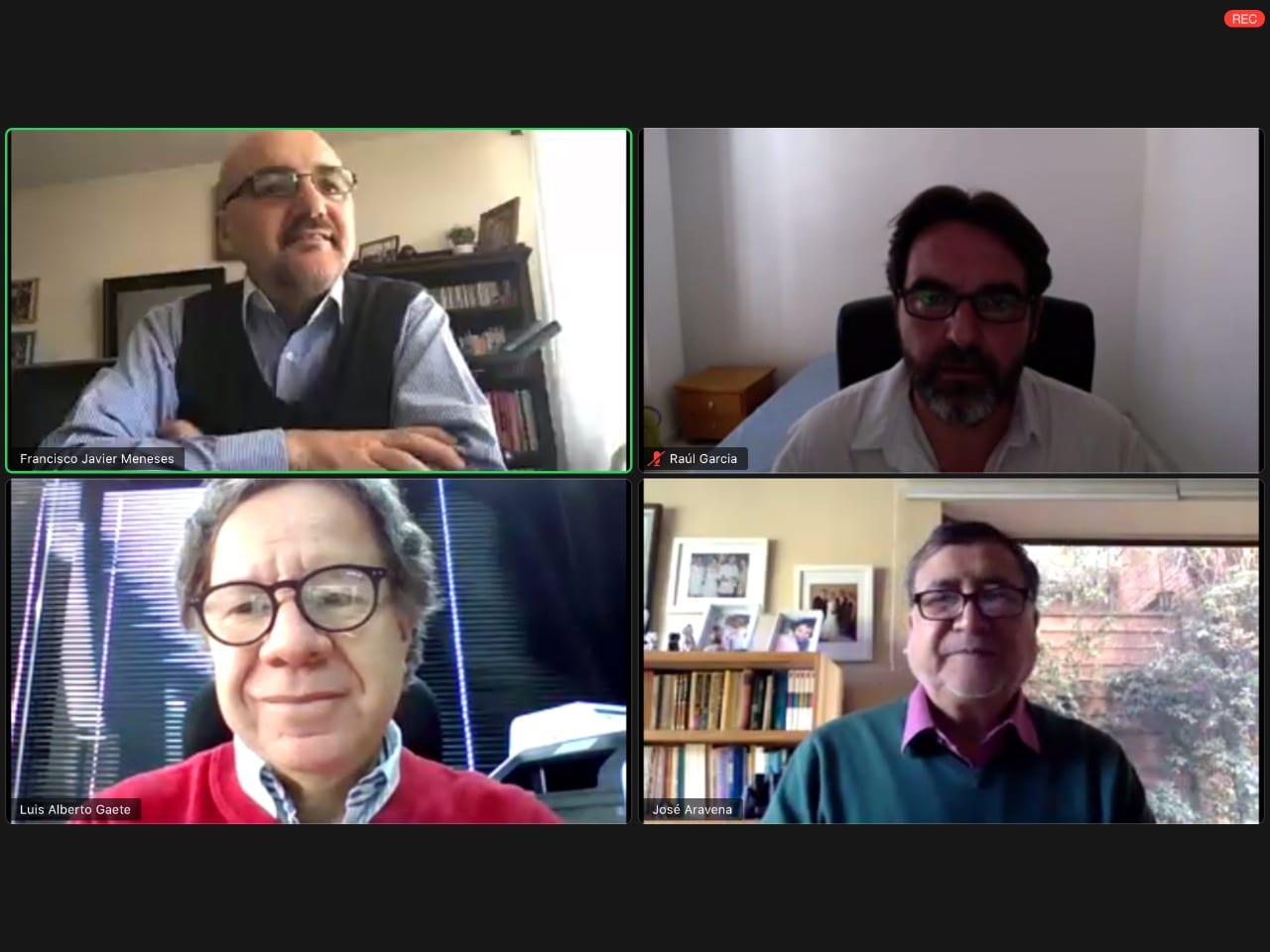
To analyze the situation of this activity at an international level and the prospects in Chile, Eurochile organised the webinar “Development and management of MICE Tourism: how do tourist destinations adapt to face COVID-19?”; a seminar framed in the project “MICE Tourism Internationalization Project Development Phase”. This initiative is co-financed by the Corfo Antofagasta Regional Productive Development Committee, through its NODOS program for competitiveness, managed by GEDES and executed by Eurochile Business Foundation.

On the occasion, the regional director of Corfo Antofagasta, Luis Alberto Gaete, stressed that “this is a primary issue to address given that tourism is the sector most affected by the pandemic. We need a safe return post Covid-19, which is what we are all waiting for, precisely to know the challenges that are presented and to adapt to the new way of tourism that is coming”.

For his part, the executive director of Eurochile, José Aravena, highlighted Eurochile’s role in promoting cooperation and technology transfer between Chilean companies and institutions and member countries of the European Union for 27 years, and which in this area it has involved carrying out a series of projects aimed at tourism -with the support of Corfo- from Arica to Puerto Williams.

“We identify us with sustainable tourism, and we believe that a project of this nature, which is a project for the future because we are preparing for what we believe will be MICE tourism in a not too distant future, but making contributions and adjustments to get in tune with the new reality that the coronavirus has brought”, he said.

The main presentation of the seminar was given by the Spanish Raúl García López, strategic expert on tourist destinations and project consultant, who stated that in a difficult time like this, the most important thing is to redefine the strategy of all tourism companies, particularly the business tourism, “which was the first segment to be affected, and probably the last to recover.”

He pointed out, that it is estimated that this year in Europe MICE tourism will fall between 36% and 77%, while those attending these types of events will decrease by 58%. These negative effects are expected to continue in 2021 and 2022, so a more stable recovery is expected until 2023. In just 3 to 4 months, in Spain, more than a thousand events were canceled and others were transferred to fall. This has been influenced not only by the fact that many countries are restricting events with large numbers of attendees, reduced air mobility and people’s fear, but also the outbreaks of the COVID-19 that have been registered in cities such as Madrid, Paris or Barcelona.

In his presentation he made it clear that there are key factors that are necessary for MICE tourism to face the pandemic, among them are: leadership, financing alternatives, support for local industry, more public-private collaboration, digital transformation, repositioning of brand and sustainability.

Until there is an effective treatment or a vaccine – which in principle would not arrive until next year – he said, many people will not want to attend face-to-face events. Recovery will depend, in each country, on many variables; among them, the evolution of the pandemic. “In Spain we were sure that business tourism was going to restart in September and October, and many congresses had proposed those dates, but there have been many outbreaks and the number of people who can meet is being restricted, which limits a lot” said the Spanish expert.

“Given all these circumstances,” he added, “we will have to see how the confidence of those attending events evolves to see if we are really going to be able to have physical meetings in the medium term, or if for the moment we are going to have hybrid or virtual meetings. What we have to be clear about is that we must be prepared for different scenarios, we will have to prepare our action plan depending on how the pandemic evolves in the coming months”

Although the future is still uncertain, said García López, there are some things that are already known: in the next 12 months the meetings will be smaller, of shorter duration and at a shorter distance from the place of residence. In the case of companies, they will want to hold meetings near their headquarters.

Today, health security and cleaning are at the top of the list of needs for any event, and this will imply having contingency and health care plans in the event of Covid-19 infections. Physical meetings will continue to take place, says the Spanish expert, because human contact is key for knowledge exchange, networking and business relationships. “We have to think that the sector is hibernating, but that it will recover. Meanwhile, we have to consider that the meetings, when the economy reactivates and the confinements are lifted, they will be more local, smaller, hybrid or virtual, “he said.

While physical meetings are difficult to develop due to all the limitations to meet, travel and reactivate the tourism sector, says Raúl García López, the option that many companies are taking is hybrid meetings. “Technology already allows us to develop these events, where a face-to-face part is combined, a physical event with people, mixed with attendees from all over the world who connect virtually to this meeting.”

This is not transmitting a conference by streaming so that people can see it, but it must contribute something more in topics and subject-matter. “In the end, when you have an attendee sitting in an armchair in a convention center, you have their full attention, but if the virtual assistants are at home we have to face a lot of distractions, so you have to have much more interesting topics to keep that attention, and activities or tools that allow these remote assistants to have interactivity”, explained the Spanish expert.

The important thing, he added, is that the virtual assistant feels as if he were in the meeting itself. “The key to hybrid meetings, then, is good subject- matter and technology applications that help generate a meaningful experience. If not, people will prefer not to attend”.

This also has advantages for the event organisers. On one hand, it has lower costs, you have to rent less space and there are fewer people traveling; there are larger audiences because even if a physical event is held at a time when there is no Covid-19, there are many people who for different reasons cannot attend, while virtually there are many more people who can connect. In addition, they are naturally linked to social networks and events have a much longer life, because while in a normal event people go home at the end, in a hybrid event you can keep in touch with the attendees by sending them the presentations or videos of these, surveys, and in that way, extend the life of the event beyond its end.

They are also more friendly platforms with the new generations, and can generate a new income channel that still needs to be refined. “It is true that a large part of the costs of the events are covered with sponsors, and now that we have hybrid events we will have to think well how these sponsors are given visibility so that all attendees can know the messages they want to send,” said the Spanish expert.

To this is added that many sanitary measures will have to be adopted to avoid COVID-19 infections when the meetings return to be face-to-face, and the attendees of these will have to be informed to offer them peace of mind about the safety of their health, as well as the rules to comply with. Inform if they have to attend with a mask, for example, and seek to perform outdoor activities to reduce the risk of infections, and there will be a greater digital transmission of events through streaming but also virtual reality, internet of things and holograms as featured items.

Creativity, García López said, will also be key when the sector is reactivated and connecting with people in a more emotional way, because there must be compelling reasons for someone to make the decision to travel and be in a meeting room with people who you practically do not know. “We will have to be more creative, organise more dynamic and participatory sessions, but transmitting confidence and security will be key,” he said.

Along with Eurochile, 19 companies from the country participated in the PIC Week 2020

In June of this year, 19 Chilean companies participated in the PIC Week 2020, the most important event of the plant production industry in Europe and which this year was held virtually due to the global coronavirus pandemic. Remotely, they were able to access a complete agenda of activities during the week that the PIC (Plant InterCluster) event lasted, in which it seeks to promote innovation in plant production and create a common strategy to facilitate the international development of the industry.

During those days, at the event organized by the Enterprise Europe Network (EEN) and Vegepolys Valley, among others –both with strong ties to Eurochile-, the latest European proposals related to the industry were analysed as well as the advances in the field of improvement of crops and technology, but Chilean companies were also able to access the search for technology, R&D and suitable partners for their own projects and initiatives.

“The organization of such event, with various clusters, was the opportunity to show that it is possible to set up business, technology and research conventions virtually, and make them profitable and enjoyable for companies”, says Emilien Oumehdi, commercial manager of the EEN in Auvergne Rhode Alps.

“I think the event – he adds – managed to reach an interesting number of cooperation contacts that could lead in the near future to commercial agreements. The situation of the industry is uncertain, all major countries in Europe are preparing a recovery plan for their industries with the ambition to relocate when possible strategical supply chains in Europe”.

According to Manuela Caruz, Director of Networks of Eurochile Business Foundation, among the 19 participants from Chile in the event are companies, organisations and universities with several years of work in this area, and knowledge of how to interact with foreign counterparts. For this reason, she adds, although it is still in the monitoring and information gathering stage, “there is a fair percentage of companies that found opportunities for cooperation. They always start by identifying areas of possible joint work, and then ground it down to something more specific. Now, with the pandemic, companies may need new contacts and alliances in other areas to reinvent themselves”.

In this sense, says Oumehdi, although the plant production industry has not been so affected on the continent, “Europe is seeking to make the entire industry ‘greener’, which means drastically reducing greenhouse gases and the use of pesticides, for example, to prevent most damage to the environment”.

This implies, he adds, that there are changes that will permanently affect the sector such as moving towards more sustainable transport, the use of renewable energies, the reduction of water consumption and the development of digital technologies to mitigate climate impact, among others.

For Juan Pablo Martínez, a researcher at the Agricultural Research Institute (INIA) and one of the Chilean participants in the event, the objective of participating in the PIC Week 2020 was precisely to enhance and improve the competitiveness of the food product through research and technological innovation in agriculture systems under the context of climate change and a circular economy. And along these lines, during the event they already contacted the representative of Vegepolys projects for Latin America.

Possible areas of cooperation

According to Martínez, the main areas of cooperation between INIA and Vegepolys would focus on topics such as varietal innovation in tomatoes, the development of state-of-the-art greenhouses with the concept of circular economy, and the identification of chemical attractants and native natural enemies for develop environmentally safe strategies to reduce the impact of the pest on fruit production in Chile, among others.

“The main result – adds the INIA researcher – is to visualize the applied research that is being done in France through the Vegepolys cluster, and the possibility of generating cooperation with public and private institutions in the field of research, development and innovation. The potential to scale our research with agricultural companies as is done in the French cluster”.

For Emilien Oumehdi, today the greatest possibilities for cooperation between Chile and France are mainly related to the agri-food, plant production and mountain sectors. “France has very interesting companies participating in the planning of the mountain area to value agriculture and tourism, especially in the Alps and Pyrenees”, he says.

Also, he says, national research institutes in the agricultural and plant production sector are working on the use of digital technologies to help limiting global warming effects on land/soils, to fight against known plants or new diseases and limit the use of pests that are damaging the environment. “On all these areas I believe that the cooperation between Chile and France could be very interesting and lead to win-win cooperation projects for all, both in rural and urban areas,” he says.

Today, says Manuela Caruz, “given the health and economic situation that we are experiencing as a country, Chilean companies are looking for reinventions, as well as new opportunities for collaboration in different topics and sectors.” That is why these meetings and brokerage events held within the framework of PIC Week 2020 were focused on a very specific sector such as plant production, in order for the companies and organizations that participated to seek new common strategies for a good development and promotion of this sector.

“This type of event – she added- allows them to seek new opportunities in these sectors to expand or improve their field, either in know-how or technology.” We have realised that with the current situation, these types of activities, virtual events, are becoming more necessary because the needs and priorities of companies today are different”.

Freek van Eijk: “If you are not yet working on the circular economy, now is the time to start”

We, as a planet are facing some major challenges today. Climate change, loss of biodiversity, “the plastic soup” and providing access to resources for our industries are just a few of them, to this we can add COVID-19 that has made the dependencies and interconnectedness of supply chain painfully clear, says the director of Holland Circular Hotspot, Freek van Eijk.  In this context, he adds that today’s crisis is a ‘wakeup call’ for other risks just beyond the horizon that are Climate and resource related.

After participating in the seminar “Chile’s Road to the Circular Economy: European Strategies and Visions”, organized by Eurochile July 23, in this exclusive interview the director of Holland Circular Hotspot deepens into the scope of the current scenario and the changes that is generating, and in explaining why the circular economy offers an answer to these problems.

We are close to reaching irreversible tipping points and floods, droughts, forest fires, sea level rise and desertification are going to hit us hard and lead amongst other to more migration and resource related tension. Doing more of the same cannot be the answer!, he affirms.

You have said that the circular economy is the best alternative for our future, both economically and socially. What makes it the best alternative?

A transition to a Circular Economy (CE) definitely makes more sense in these circumstances. A CE is often explained as a way to keep resources in circulation much longer and at the highest possible value. For me and many of the CE practitioners, it is not only about keeping materials in the loop but also about renewable energy, preservation of biodiversity, social inclusiveness and new coalitions. It is another way of designing, producing, consuming and dealing with waste. It is a new economic model, a system change with a fantastic spin-off to sustainability. It means working on the Sustainable Development Goals and Climate Goals, not as a cost but as a business model.

Today is all about circular economy but in the Netherlands they have learned by doing, how has this process been and what role do entrepreneurs play in this, the disruptive models that start on a small scale?

Working together is in the Dutch DNA, we just had to in order to literally “keep our feet dry”.  The Dutch live in a challenging delta area and had to be innovative and collaborative to make our densely populated and early-industrialised country a vibrant and liveable place over the last centuries. These traits make that our country today is a perfect living lab to pioneer city solutions for global challenges. The first circular movers were forward looking multinationals and start-ups.

Former DSM CEO Feike Sijbesma (among the largest Dutch companies in the world, also present in Chile) said “we cannot be successful or call ourselves successful in a society that fails”. As a multinational you know that R&D can take at least 2 years, permitting and building a new plant can take another 2-3 years. A plant is likely to be in operation for the next 20 to 30 years. You don’t have to be a rocket scientist to know that in 20 years we will live in a society where the societal acceptance for pollution and injustice will be quite different. It is about your future licence to operate. Pollution, including CO2 will have a price. This is about your future markets and you have to anticipate today as first movers will have the biggest advantage.

In this, companies that start on a small scale, but with great ambition, have also played an important role.

Like in every country there is also a new, well-educated, connected and impatient generation with fresh ideas on how we can do thing different and better for us and the planet. They created a circular bottom-up movement with recognisable local and scale-able solutions.

This involvement of entrepreneurs is crucial as they (big and small) are the main actors of a transition to a Circular Economy. They show guts, take risks, invest and accelerate. But they cannot do it alone, we need all actors on board.

When the Dutch government noticed this movement from large and small companies in 2016 they decided for our “moonshot” circular economy ambition. The Dutch ambition is to become a fully functioning CE by 2050, including a 50% reduction of non-renewable raw materials by 2030. This seemly unreachable target, to me is inspirational and I believe we will get close. Now that this Dutch ambition was agreed on, it helped companies make the right investment decisions for the future, as it offered a clear direction of where the market needs to go.

How are these models later transferred, that different way of doing things, to the market in general?

Companies often start small with waste and resource management. Pretty quickly you will realise that just working in your own back garden there are limits to optimization. You have to work upstream and downstream in your value-chain to make a real impact. If your supplier would for example redesign his product you might be able to do much more. It is about circular value chains and circular ecosystems. But if you focus on resource optimization only you will soon find out that there are circular and digital models from start-up’s on the market that are disrupting your market. Maybe a bad circular example, but remember how AIRBNB has changed the hotel market and in less than 4 years and today is more valuable than the Hilton Group without owning a single apartment!

You have to keep moving towards new circular business models with for example circular supplies, sharing platform models, products as a service, product life extension or resource recovery.

It makes sense for business to go circular. Isn’t saving resources, energy or water in production not directly lowing your costs?  Besides, as the CE is collaborative, by working intensively together and mutual dependency in a chain you also reduce risks.

What is required for the transition to the circular economy to be complete?

To make the transition to a complete circular economy actions are required from all stakeholders and new cross-sectoral partnerships are inevitable. Government sets the ambition, conditions and allow experimentation. Cities and regions are the place of action. Knowledge institutes develop new insights, enable valorisation of their knowledge and create awareness. Awareness and collaboration is key: the transition towards a CE is probably 80% about social innovation. Local entrepreneurs show guts, take risks, accelerate and are the main actors of a scale-up. Involvement of citizens/consumers and the leaders of tomorrow, is crucial. Resource flows are international and the challenges are global; to create a full circular economy, we need to go beyond national borders, working together with pioneering partners on a shared mission.

What role do multinationals, industrial sectors play in this, thinking that they are the ones that can carry out the change towards a circular economy on a larger scale?

Forward looking multinationals were among the first movers in the Netherlands. Now during COVID-19 we see an unprecedented economic support package from our government. The amount of open letters from business leaders and from the knowledge community warning not to recreate the old but to use the crisis to create a new normal has positively surprised me. There is also action. In the case of the multinationals, the Fossil Fuel Giant Shell stepped up its climate goals. On April they introduced a net-zero emissions target, adopting new measures to reduce their carbon footprint despite huge financial pressures from the coronavirus pandemic and oil price collapse. It plans to become a net zero-carbon company by 2050 or sooner. Philips is on track to generate 15% of global sales from circular products and services in 2020. DSM want that 30% of the raw materials its sources for resins to be biobased or recycled.

Do you think this will maintain once the crisis is over?

After COVID-19 the need for more resilience and circularity will only increase. A multinational has market power and they can impact their (global) value-chain. Let me give you an example. At the WEF in Davos leading brands have taken a commitment to make their plastic packaging either biobased or recyclable. Coca Cola for example aims to make our global packaging 100% recyclable by 2025 and plans to collect and recycle a bottle or can for everyone they sell by 2030.  For countries were still more than 90% is landfilled this is a highly relevant commitment.

So that this reaches a large scale of people, changes in legislation, incentives, and regulations are also required. How has this been approached in the Netherlands, what role do governments have in this?

As mentioned earlier Government sets the ambition, conditions and allow experimentation and Cities and regions are the place of action. Bringing public and private stakeholders together, the Dutch set up 5 transition agendas, focusing on the market segments biomass and food, construction, manufacturing, plastics and consumer goods. For these market segments four year plans were developed with goals, milestones and responsible actors. This clear focus allows attracting a critical mass of stakeholders that are needed to scale-up. Furthermore, conditions for change were created by choosing a set of interventions using market instruments, providing access to financing, stimulating innovation, tackling the behaviour component and international collaboration. Holland Circular Hotspot is pivotal in the last item.

And how can local governments contribute?

In the Netherlands a lot of Cities have mapped the potential for circular development in their region and have set-up a roadmap for action. For cities it is important to involve businesses from the start and give room for experimentation and to understand the barriers to circularity and start addressing them. They can facilitate interdisciplinary and cross-sectoral collaborations by organizing workshops and giving a platform to frontrunners and showcase best practices in their city. By circular procurement they can also lead by example. Public procurement is typically 20% of GDP. To involve the young generation, the leaders and consumers of tomorrow, it is important to introduce and mainstream circular thinking into all education and trainings

You have said that the coronavirus is the wake-up call we needed. Has there been a change, a major advance towards the circular economy after the crisis?

COVID-19 has made the dependencies and interconnectedness of supply chain painfully clear. Today’s crisis is a ‘wakeup call’ for other risks just beyond the horizon that are Climate and resource related. We are close to reaching irreversible tipping points and floods, droughts, forest fires, sea level rise and desertification are going to hit us hard and lead amongst other to more migration and resource related tension. Doing more of the same cannot be the answer!

We are experiencing a global crisis due to COVID-19. Business is taking in a heavy beating because of the lockdown and disrupted supply-lines. Businesses reopening after lockdown might find more border restrictions and possibly a greater customer preference for local over global products and services. They will have to work on resilience in their supply chain and source closer to home to ensure continuity.

CEO Frans Muller from Supermarket chain Ahold Delhaize expects that sustainability will get momentum due to the crisis. Recently he mentioned that Corona has created more awareness and critical attitude at consumer level on items like food spillage, energy, deforestation, logistics and companies will have to act to this trend. There is a direct fit with circular economy where resources are renewable or circle as long as possible at their highest value, where biodiversity is respected, where the energy is renewable and social equality is part of the system.

During COVID-19 we see an unprecedented economic support package from our government. The number of open letters from business leaders and from the knowledge community warning not to recreate the old but to use the crisis to create a new normal has positively surprised me. There is also action.

In short there is economic need to make our economy more resource resilient and sustainable. For companies it might not only be an opportunity to be more resilient, but also to be ‘a force for good’. In post COVID-19 times shareholder value should not be the only corporate value. The pressure from investors to include environmental, social, and governance factors in valuing a business is likely to expand to incorporate resilience to outside shocks. “If you are not yet working on the circular economy, now is the time to start.”

It seems that the circular economy has not yet managed to leave the waste part to fully enter the design of products and changes in the value chain towards a service economy. There are examples, sure, but not a massive change. What can be done to advance in this matter?

The Dutch started with waste management around 1875. We had an initial focus on public health and hygiene with a focus on collection with public landfills for residual waste and private collectors for valuable. Around 1975 we moved to a focus on environmental protection. This was all about control and technical fixes with for example leachate control for landfills, flue gas cleaning for incinerators. Later in the 1990’s we moved to a more integrated policy and diversion from landfilling. This was about professionalizing, recycling, solving institutional & responsibility issues, setting up Extended Producer Responsibilities systems, landfill bans & taxes. Today we landfill less than 2% of our waste and it is all about Circular Economy (CE). From the initial 3 R’s; Reduce-Reduce Recycle, we now focus on 9 R’s. We make and use products smarter by Refuse, Rethink and Reduce. In the use phase we focus on Product and parts life extension by re-use, repair, refurbish, remanufacture and repurpose. Today’s focus is predominantly on Valorisation of materials, recycle and recover. In a circular economy that should be the last step.

Countries like Chile do not have to wait 150 years to start with circular economy. Dealing with waste is dealing with the past. Nothings stops you from keeping products and materials in circulation today and by working on design you are working on the future.

Waste management is a logical and understandable first step and can be a catalyst for a circular economy.  Waste managers will have to refocus; from volume to value.

Chile is still a country whose economy depends on its natural resources, like many Latin American countries. What opportunities are there in the region, and in this country, to move quickly towards a circular economy?

There are quite some countries, both developed and developing, that have abundant natural resources. In a linear economy where externalities are not priced in, the (negative) impact of production, like mining or agriculture, is in the resource country and the resource wealth is being exported to other countries that are taking the benefits of it or adding value to it.

The ‘OECD Global Material Resources Outlook to 2060’ projects a doubling of global primary materials use between today and 2060.

With a world that has experienced broken supply lines in 2020 because of COVID-19 and is turning circular and either virtualizing, localizing, substituting, dematerializing, reusing, repairing and remanufacturing and recycling materials these projections might see changes in demand patterns. The future will also see demand of new materials for a circular and low carbon economy. Furthermore, the resource exporting countries are not benefitting from the value created from their product. In short there will be a need for mining for a long, long time but the business model needs to be future proof.

From environmental impact of production perspective, it makes sense to minimize environmental impact in your own country and also increase operational efficiency by circular and restorative principles. Recycling water and valorizing waste streams are examples.

Responding to customer and societal demands for lower-impact products is another potential strategy to follow. There is a trend in certified organic food, there is a trend for responsible copper.

What potential do you see in Chile in this area?

In the world there will be a need for mining for a long, long time but the business model needs to be future proof. Also in Chile, recycling water and valorising waste streams are necessary first steps. From long term economic perspective, it makes sense to build in more resilience to the economy and keep more of the value at home for example by stronger collaboration with manufacturing or processing industry and embracing Circular Economy models. A moonshot idea for Chile might be to make better use of the huge sun-beaten desert in the north. Isn’t it a perfect place for both solar and wind energy? Couldn’t this green energy be used for green hydrogen production? Hydrogen is an energy carrier and a chemical building block for industry. The desert is close to the raw materials from the major energy-hungry mining sector and logistically convenient, not too far from the ocean linking it to export countries like China.  As we are developing a hydrogen strategy in the Netherlands as well (in our case linking hydrogen production with offshore wind) sharing ideas and insights could be worth-while.

And in terms of waste management?

Waste Management can be considered urban mining. In this field Chile will have to catch up. Bottom-line waste management is a nett cost for society but if set-up properly waste management can be highly more efficient and catalyst for the circular economy by eliminating waste by design, keeping products and materials in the loop and by giving waste a new life. It took us 150 years to set-up waste management, making quite some mistakes down the road. Now we only landfill 2% of our waste. We gladly share our hard learned lessons!

To this is added today climate change, which is affecting sectors such as agriculture and industry. How can the circular economy help in this area?

Recycling of water, management of water balance, recovery of nutrients and energy is important for the industry; industrial symbiosis might help. In agriculture recycling of water and nutrients and water efficient irrigation systems are equally important. Treated wastewater can be reused or reintroduced in its environment.Circular water is also about the right amount of water in the right quality in the right time for the right application.

Circular Economy strategies are focused on minimizing food waste, recovering, reusing and cascading organic residues. Tackling organic waste by composting and digestion can solve waste, soil and air quality issues and is something that can happen locally and be scaled. You can additionally look to newer higher value applications as biobased materials or chemicals.  Anticipating consumption patterns and diets and producing for example non animal based proteins is another way forward. If the countries where Chile is exporting its products to see an increase in demand in certified healthy, organic and biological food that is also packed in reusable, recyclable or biobased packaging than it is worth grabbing that opportunity.

What happens if we do not act today, if we do not make the change?

Both the business and societal cost for Chile of not acting will be much higher than acting today. First movers will have the biggest market opportunities. Former Unilever CEO Paul Polman called Climate Change the biggest business opportunity of the century.

What is your vision of the Eurochile seminar in which you participated regarding the work that our country is doing in circular economy?

Eurochile managed to get a fine and inquisitive audience together in a compact and content rich webinar programme. The momentum was well timed as Chile, according to me, is ready for Circular Economy. The work that Eurochile is doing on a Circular Roadmap towards 2040 is highly relevant in this perspective. We hope that the Dutch Embassy, Holland Circular Hotspot and a myriad of Dutch Entrepreneurs can walk alongside Eurochile on this road and offer inspiration.

Digitalisation an opportunity for SMEs

By Francisco Javier Meneses M., Director of Strategic Development of Eurochile.

The quarantines established in most of the world’s cities have forced a drastic change of practices in companies. This is very marked for those sectors that have not been declared as essential. Seeing their customers and workers in confinement, most of these companies had to close or start connecting with them through digital systems.

Commercial organisations that already had online sales systems were able to adapt quickly and even increased their income and profits, to the detriment of those that did not have these systems. Similarly, companies that were able to coordinate work from home were able to continue operating and providing services, while others had to suspend their activities.

Obviously, adaptation is very different depending on the productive sector. There are activities – such as hotels, restaurants, aviation or construction – that have a great need for attention and face-to-face work and for them the hit has been stronger. On the other hand, others – such as financial services, telecommunications or education – have been able to adjust more easily to the new conditions. However, within each sector there are also differences, derived largely from the degree of digitalization of each company.

That a company is more or less “digitalised” refers to its ability to generate, store, process and transmit information using combinations of bits by electronic devices. A company can use digital tools in different areas of its management, such as internal operations, financial and accounting administration, purchase and sale channels or its promotion and marketing systems. In all these areas, digitalisation is understood as a media to achieve a more agile, efficient, timely management and closer to its customers, and in this way positively affect the profitability and sustainability of businesses.

The Encuesta Longitudinal de Empresas carried out by the INE (Instituto Nacional de Estadísticas) in 2017 is representative of Chilean companies that sell 800 UF (Unidad de Fomento es a financial Chilean unit, created in 1967) or more per year and, yielded very interesting results regarding the digitalisation situation of Chilean companies in that year. Although two and a half years have passed since its application in the field, there are elements from that survey that are still being verified when working with companies in the territory.

The first observation is that already in 2017 practically all the companies surveyed (92.5%) had a computer, tablet, smartphone or servers connected to the internet to carry out their work. This figure varies between 87% micro, 96% small, 98% medium and 99% large. Therefore, the access to computers or Internet is not the great limitation for digitalisation. Although this survey does not cover informal micro-businesses, or those that sell less than 800 UF, the high penetration of smartphones in the Chilean population would allow us to say that even that segment with the lowest sales has a connection.

Despite the wide availability of computer equipment connected to the Internet, the vast majority of Chilean companies declared that they only use these devices with very basic programs (spreadsheets, texts), and that the Internet is used almost exclusively to search for data, exchange emails and to do paperwork (mostly at the SII (Servicio Impuestos Internos)). Here we can clearly see a large gap in companies according to size. The larger the company it is, the more likely that it uses other types of management support programs, carry out procedures with other institutions, have a website, interact with its clients, or carry out market intelligence through the internet.

Two aspects in which the COVID-19 will mark a before and after, is in the use of social networks and in e- commerce. In the data from 2017, it is evident that at that point only 26% of those surveyed used social networks in their business management. In micro and small companies, this figure barely reaches 25%, in medium-sized companies 30% and in large companies it reached 44%. At the same time, only 37% of large companies, 32% of medium-sized companies, 26% of small companies, and 20% of micro-companies carried out e- commerce. However, the need to communicate and buy from home has massively expanded the use of tools by consumers, and an adaptation has been generated through e- commerce, which is stronger in large commercial companies and in the informal trade, emerging service enterprises and small businesses in the neighborhoods.

This new situation – which has been very hard for companies that, due to their sectors or their own capacities, have not been able to follow this trend – will not be totally reversed when the pandemic passes. The relationship between companies and digital media changed forever. Both to interact with their collaborators and to interact with customers and suppliers, there are many benefits that companies and households have already known, taken advantage of and will want to deepen.

As we have pointed out, the main barrier is not in access to equipment or internet connection, already widely available in 2107. The gap will be -skills. The consulting company RocaSalvatella points out that, to be properly digitalised, the organization must develop eight skills: information management, digital communication, networking, continuous learning, digital knowledge, customer orientation, network leadership and strategic vision. Each of them involves a cultural change, and requires modern leadership. Obviously, each company will do it according to its own reality.

The challenge then will be that digitalisation is an opportunity for most companies, and not a new gap of inequality and exclusion. To this end, it is necessary that the public programmes currently available – and that are part of a digitalisation strategy for SMEs – are expanded and massified based on this new reality. It is essential that, for these purposes, the collaboration of institutions with experience in field work with smaller companies, capable of articulating the requirements of the territories with the development of new and better skills, is sought.

In periods of growth, it is difficult to introduce big changes. The current crisis, which has already caused the loss of 2 million jobs nationwide, will undoubtedly be the opportunity to transform the Chilean economy with a culture of digitalisation. This will allow for greater efficiency and inclusion; greater opportunities for SMEs to access markets, more alternatives for consumers, a  more solid network of clients and suppliers, more productive organizations and more opportunities for all.

Eurochile invites you to participate at the Virtual Meetings to access the European Market

Due to the COVID-19 pandemic and the outbreaks that are emerging in Europe, many of this year’s events will be held virtually in order to provide companies spaces for collaboration and networking.

The Eurochile Business Foundation is co-organizing Virtual Brokerage Events with the aim of supporting the development of technological and commercial links between companies in Chile and Europe.

These Virtual Meetings are a unique opportunity to access new markets, generate alliances, collaboration agreements and find partners for commercial and technological opportunities for your company.

We invite you to participate! You just have to register and complete a profile in English with your company details and indicate what type of opportunity/collaboration you are looking for.

Eurochile will accompany you throughout the process.

For more information, contact mcaruz@eurochile.cl or www.eurochile.cl

The events are free of charge.


Smart City Live 2020 Brokerage Event

Date: 17-18 November 2020

This year, the traditional Smart City fair, focused on smart cities and new technologies, is going to be an online event. This new edition will consist of a full day of broadcast television show with interviews, debates, success stories focused on COVID-19 and how it has impacted and redefined the new normal for citizens; the second day includes workshops and side events that will bring together key figures and global institutions that will give their vision of how to face post-pandemic challenges.

This is the opportunity in 2020 to connect and meet with industry leaders, private and public sector stakeholders in order to identify new ideas in energy and environment, mobility, economy, infrastructure and construction, security, new technologies, among others.

The platform to register opens on August 3, it has no cost and, you can do it through the following link:

https://smartcity2020.b2match.io/ 


Interpoma

Date: 19-20 November 2020

Interpoma, the only trade show in the world dedicated exclusively to apples.

To register and participate, enter the following link:

https://www.fierabolzano.it/en/interpoma/home


Green Days Pollutec 2020

Date: 1-4 December 2020

Boost your business and find opportunities in the Environment, Energy and Circular Economy sectors at the virtual international brokerage event Green Days.

To register and participate, enter the following link:

https://green-days-pollutec-2020.b2match.io/


WindEnergyMatch 2020

Date: 3-4 December 2020

The international brokerage event WindEnergyMatch 2020 offers companies and research centers along the entire value chain of the wind industry a platform to generate valuable contacts and identify new aspects of possible international collaborations.

Two whole days of fair and virtual meetings focused on the areas of services, suppliers, new materials, raw materials, wind turbine manufacturers, financing and insurance, project planning and development, energy storage, materials processing installation. This event has no cost.

To register and participate, enter the following link:

https://windenergymatch-2020.b2match.io/


Cooperate without competing for the reactivation of tourist destinations

The Tourism Industry is reinventing itself in front of a world that finds itself in a totally different scenario from the one we were used to. There is much uncertainty and questions about what this “new normal” will be like after the pandemic. For the industries that have been completely paralyzed, specifically for Tourism, the main challenge is to work on a redesign of their products and promotion and marketing strategies, in a collaborative and associative way between companies and public entities.

In this regard, we reaffirm the fact that Europe is ahead of us. While we in Chile are just beginning the implementation of the deconfinement plan -step by step-  and we are preparing the Tourism Industry with protocols that have begun to be disseminated, Europe has already implemented them and has advanced in their adaptation to the reality of each sector and territory to save the European summer.

As Eurochile we have closely followed what is happening in Tourism in Europe. We have seen that the “new normal” requires hard work and efforts of coordination and balance between the public and private, and between the territories that integrate a tourist destination to provide guarantees and security to the tourist who will visit the destination. For this, it is essential that from the business sector there are speakers who represent them in the instances of coordination with the public sector, to specify and implement in an organized way the support, product design, promotion and marketing strategies.

The areas of Europe that have managed to save part of the European summer, and to reactivate themselves to a certain extent, have done so based on the principles of associativity, union and coordinated work between public and private sectors. This is the case, for example, of Asturias in Spain, specifically the Clúster de Turismo Rural of Asturias, which faced with the need to save their businesses, entrepreneurs joined even more, took advantage of training and improving their management. They were organised and coordinated with the municipalities to support each other in financial, promotional and advertising matters and in the creation and redesign of products. Their reactivation strategy was not based on prices, because they had costs to pay to implement the protocols, security measures, etc. Its promotion strategy has been aimed at motivating tourists to go to Asturias to reinvent themselves, to renew themselves together with nature and, they have focused on family groups, being flexible in canceling reservations. All the promotion has been done digitally, and they have done the same with brochures, maps, etc. They lived through a

moment of total uncertainty, just as Chile has been living, but there was a single voice, a single speaker who represented them, managing to put problems in common to solve them jointly.

Currently, in Chile we are still living a stage of uncertainty, especially in the economic sphere, and knowing and learning from the experiences of companies and destinations that have already gone through the same thing and have managed to advance in their reactivation, motivates us. It is reaffirmed that associativity and public-private bonds are key to getting out of the crisis. It is impossible for an entrepreneur to promote himself only in one market, and less now; the entrepreneur must be part of a destination, and all the actors of that tourist destination must be promoted and sold as one. You must cooperate without competing to create and develop a tourist destination.

A European vision for the circular economy: Collaboration, governance and leadership appear as the keys to implement this trend

The circular economy will play an important role to face the enormous and complex challenge that our country and the world face today, “to design and implement an urgent recovery that is sustainable and, at the same time, acceptable and effective from the social point of view, economic and political. The economy and society of the future will require innovation, circularity and associativity, and we also hope it will be globalized and supportive”.

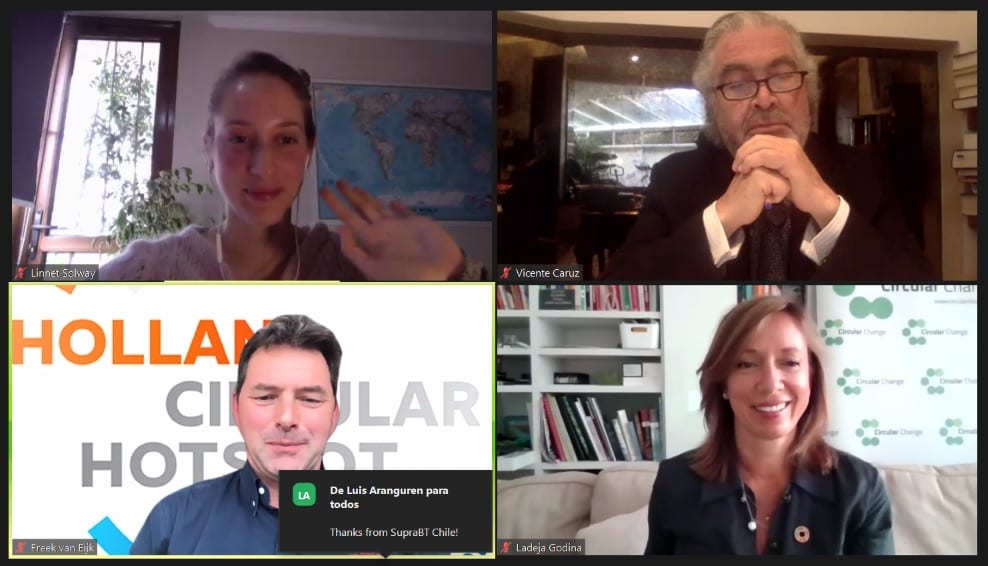
This is how the president of Eurochile Business Foundation, Vicente Caruz, synthesized -in the opening of the webinar- the objective that inspired the seminar “Chile`s Road to a Circular Economy: European Strategies and Visions”, which was held July 23th. And today, added Linnet Solway, Director of Technology Transfer and Circular Economy at Eurochile, “without a doubt this model becomes even more relevant in the framework of the reactivation and reconstruction of the economy, to better rebuild and at the same time advance to a new economy and society”.

How to do it, and where to focus on this task, was presented by the keynote speakers at the seminar, Freek van Eijk, director of Holland Circular Hotspot; and Ladeja Godina, chair of the Coordination Group of the Platform of European Stakeholders of Circular Economy. They did it from the European vision and the advances of the continent in this matter, but also with a look at Chile, in particular Ladeja Godina, who today advises Eurochile on the construction of a Roadmap for the Circular Economy in the country, work led by the Ministry of the Environment.

And throughout the seminar, both experts agreed on a fundamental point: collaboration will be the key to advancing this trend in the world, where the current crisis scenario also presents a great opportunity for change.

This is what Holland Circular Hotspot does, said Van Eijk: “We want to make sure that this goal is achieved, share experiences, tools and knowledge that we have acquired in the circular economy (…) We want to try to organize solutions that imply profits for all, for the Netherlands, for the world, and help meet climate goals “.

Opportunity in crisis

And in the current coronavirus scenario, in which the economies entered into crisis and there is a complex scenario mainly for small companies – for whom this is about their survival”, it is also“ the wake-up call that we needed. The call to rebuild in a better way, from transnationals to NGOs, this is a key moment to prepare for the future.

Today we see some progress raised, and it has been seen in large companies from Shell to Apple, which in recent weeks have increased their circular economy ambitions. And in the case of Europe, for an economic recovery plan framed in the Green Deal, where the circular economy also plays an important role.

“The circular economy is a system change,” he said, “it changes the way we produce and consume. It is then about design, consumer participation, having sustainable production processes, and also with a focus on value chains. Normally you start with waste treatment, but the idea in Europe is to have less waste and more value every time. This has to do with the economy, it is key to establish clear priorities for future innovation. And we cannot do it alone in Holland, or Europe, this has to be a global effort. It is about collaborating with each other and along the entire value chain”.

Today in the Netherlands the circular economy is a national priority, with an agenda established in 2016 that seeks for the country to be completely circular by 2050 and that in 10 years it has reduced the use of non-renewable raw materials by 50%. But, having an ambition is not enough to achieve it, said Van Eijk, it is necessary to attract a critical mass of actors and involve them, and for this they are working in five areas with potential and willing to make this transition: biomass and food, plastics, construction, manufacturing and consumer goods.

“And even this is not enough, you have to change the system, intervene with legislation and smart market incentives. It is not only eliminating plastic straws, but also giving financing, promotion and opportunity to other products to enter the market. Give investment and development an opportunity to think about the challenges of the future, which are different from the ones we face; and also how we change our own behavior. We learned in the Netherlands that it is essential to have the perspective of the companies so that this becomes massive”, he said.

And to explain this, he gave a series of examples that are being carried out in the Netherlands. From products such as Fairphone, a mobile phone that in its design stage reduces its environmental footprint by 80% and it is also built in a modular way to reuse its parts. Or the Ahrend company that offers office furniture giving new life to products, since it reuses office chairs -for example- as raw material for others.

“What I want to tell you is that the circular economy is something that is happening now, and it is not only in the Netherlands, but also in developing countries. This is an opportunity after Covid 19 because it has to do with resilience, with future markets, with continuity. But they are very big challenges, in the Netherlands we are only 25% circular and we want to reach 100%, so we are advanced but we are still very far from the goal. That is why we need all the help, the commitment of a large number of people, and I hope that together we can achieve it”, invited Freek van Eijk.

Towards a roadmap in Chile

This collaboration will also be essential in the construction of a Roadmap for the Circular Economy in Chile, Ladeja Godina stated, who said that “the process is the most important part of this path. The documents are important, but what happens in this journey is what defines us and what remains, and that is why the commitment of the interested parties and the leadership of the government, are key”.

To do this, she added, it is not necessary to wait for a good moment to come; we have to decide now the principles that are part of the circular economy and sustainability. “What keeps us awake? – asked Godina-: Everything that bombards us today in the media, on the one hand the coronavirus crisis that we do not know well how to deal with it. This is a challenge for all of us, in past decades we relied on science and technology and now suddenly, having that, we still cannot understand this virus and we have to put it under control. On the other hand, we seek solutions to better manage our planet because limits exist, and the climate crisis exists. That is part of the problem, and now we face this daily threat caused by the coronavirus. These two simultaneous threats require very good crisis management”.

That is what Europe is seeking to implement in its plan for reactivation after the coronavirus crisis, in which it has committed a large amount of money. However, Godina said, today “the big challenge is how we are going to use this money. If we will have enough knowledge and wisdom to invest it, or we will spend it in a way that does not ensure the future”.

In this context, Ladeja Godina showed part of what they are working on from the Platform of European Stake holders of Circular Economy, made up of 24 members representing different organizations and which seeks to become the “network of networks” with regard to the circular economy. And for this, she said, they are working on finding the accelerators of change, the circular pioneers in different countries.

“You can visit our website and bring up your own discussion topic; you can find partners for your projects, etc. This platform is not only from European countries; in these three years we have managed to reach the whole world, and it is wonderful that people from different parts of the world are interested in collaborating. Now there is an open call for the next mandate of the coordination group, and we are looking for more organizations to join us”, she invited.

When one is a “change maker”, said Ladeja Godina, it is important to gain visibility, achieve diffusion, because having the opportunity to present and explain what has been achieved it is possible to find the right partners. “By having an open discussion on these issues, and by engaging different stakeholders, you can focus on the areas and opportunities that are shared at the city, country or regional level,” he added.

What are the keys to moving towards a circular economy? In this regard, Ladeja Godina raised three key lines. The first of these is stakeholder engagement and collaboration. Understanding that it is impossible for everyone to win at the same time, what is required is not to compete “for the pieces of the cake”, but to “make the cake bigger.”

“That is the art of collaboration. In the crisis situation we are living in now, it becomes more important to understand this, and in my personal opinion, as we now feel more fragile we are also more humble and we are also more willing to collaborate in this way, and give each other opportunities. This sounds great, but in practice it is often the shareholders who dictate the decisions, so it is important to give everyone space at least in the process. Now that Chile is working on this roadmap, we can see the engagement of the different stakeholders. It is important to look for these actors, to collaborate with them, because they are important in the discussion”, he said.

A second aspect is governance, because today this discussion is taking place in all sectors and we cannot focus on a single segment, we have to work at a systemic level.

“When we talk about the governance of the circular economy we have to think about how to involve everyone, how to achieve their commitment, and how to work with all stakeholders on this overall vision. That is why it is important to do that first and then focus on concrete actions, because without these two visions – the general and the concrete – we can lose ourselves, and from there have specific goals that can be measured to advance in this transformation,”he explained.

“To simplify,” he added, “the circular economy is about good management, how to preserve value.” Sometimes we get really complicated trying to explain what it means, but the truth is that it has to do with common sense, with how to maintain value for as long as possible. And how to think about that at all levels when making decisions”.

And the third key aspect in this transformation is leadership, she stated: how do we stop competing and how do we collaborate.

“Jacinda Ardern is a great example – I think we all agree – of what a leader can do, because she is always thinking about the welfare of society. Of course, economic well-being is important, but human beings are social beings, and without this collective spirit and shared values ​​we cannot achieve results,”Godina said.

Although in Europe there is a very clear policy framework in the European Green Deal, which is guiding this circular transition, it is important to define how these solutions will be implemented, how the recovery of our economies will be achieved, but not going back to where we were. And in this, leadership also includes personal actions. “We should produce and consume less, reuse, repair. We do not have to wait for someone to guide us, we do not have to wait for a messiah, but all our daily decisions matter, because we can all contribute to a better world, “she said.