English

Post-pandemic tourism: the European view of the recovery of the sector after the reopening

Since 2018, Eurochile has been working with municipalities in the Arauco Province, entrepreneurs and tourism chambers in the area to strengthen existing institutions; develop new exponential tourism products and create innovative proposals for tourism development in the area.

To give continuity to this work, and to adapt it to the new scenario of economic crisis generated by the coronavirus pandemic -which has strongly impacted this sector – Eurochile is seeking to expand to other communes in the province and in recent weeks the foundation carried out two workshops to transfer European knowledge and experience on how to face the problems generated by Covid-19 on that continent, and how they are facing the recovery.

The first of these, held June 23, was an exhibition by Luis Baldó, Spanish expert in tourism and cultural planning of the territory and management of tourist destinations, and Trini Fernández, head of Tourism at the Ayuntamiento de Cudillero (Asturias).

According to Baldó, the first subsectors that are expected to gradually emerge from the crisis are those related to nature, lodgings and outdoor activities in natural areas, which the Province of Arauco has high potential.  In this context, urban and meeting tourism is expected to recover as last.

“The most important variables for the recovery is that there are economic support measures by the administration, but the capture of the local market will be essential,” said Luis Baldó. At the same time, greater professionalisation will be required of the sector, while the preferences of tourists are being oriented towards leisure and gastronomy.

The isolation in Spain ended on June 21, and although people have been willing to travel after many months in confinement, it is essential to provide them with all the security guarantees at the destination, said Trini Fernández. While it is impossible for a place to guarantee that it is free of Covid-19, or that a person is not going to get it, they can guarantee that they comply with all the security measures.

Something that has been seen is that tourists prefer isolated accommodation, which is exemplified with hotels and pensions which have not done very well post confinement, and neither have campsites; on the other hand, the interest has increased on houses of summer and individual lodges, said Trini Fernandez.


A recommendation from the experts is that the reactivation is not based on prices -because you have to pay the costs of implementing security protocols-, but consider aspects such as promotion and being flexible with the cancellation of reservations. Today, they say, it is impossible for an entrepreneur to promote himself in a market, on the contrary, he must be part of a destination that must work together to attract visitors.

The experience of entrepreneurs

In a second workshop, held June 30, the experience of a new European tourism after the re- opening was discussed, and how they have faced the crisis in the sector, from the point of view of the entrepreneurs. Again, from the interesting perspective of what is happening today in Spain, two representatives of tourism companies from that country exposed: Julio Bobes, president of the Rural Tourism Cluster of Asturias and of the Association of Active Tourism and Hostels ATAYA; and the vice president of the Cluster, Ana Soberón.

In this crisis scenario and in the subsequent start of recovery for tourism activity, says Bobes, the pandemic has generated the union of the entire sector, of all the items involved in it. And also, he adds, the confinement time has been for many an opportunity to train. “It has also helped us to have training in social networks, marketing, generation of photographic and video resources, and languages,” he said.

How to get out of the crisis? “When we entered the closing phase and began to cancel the reservations, we saw a very black future. Then they start talking about a series of measures to take, the truth is that there was a lot of confusion because things changed from one day to another”, Bobes recalls about the first weeks of the closing period.

Today, after the progressive opening of the sector, he says that one of the fundamental aspects to consider is not to rush. “If I rush to open, how many people do I open for? We do not know how many are going, and therefore there is no balance. Those who rushed began to spend on an endless amount of sanitary elements that with the passage of weeks were becoming expendable, “he said.

Another relevant aspect for the recovery of tourism is the support of public institutions, which does not necessarily require money, which is also necessary, but rather support in the creation of products, in the promotion of the activity, the advertising of the destination, etc.

“We saw that we all had to work together, and we proposed to the government the possibility of creating a product to promote complementary activities that serve the accommodations to create packages for weekends and weekly. It was not a matter of throwing prices away – now it is just when we do not have to, because I am not going to be able to work at volume and there are capacity limitations – and Asturias has provided money to contract tourist activities, such as guides, visits to museums, wellness, active tourism, etc., where each person who spends at least two nights can have any of these complementary activities for free, “explained Bobes.

Another key aspect in the reopening has been security for customers, in a scenario where they are willing to pay more for greater security on their trips. To this end, a series of measures have been implemented, such as the prior sending of the check-in to the tourist so that they can complete their information and when they arrive only firm -helping to comply with the distance measures-, payments by internet or cell phone, the promotion of destinations in digital form and the creation of a responsible tourism seal that makes entrepreneurs comply with protocols.


To view the webinars, we invite you to enter the following links:

Webinar June 23, 2020: https://youtu.be/_OaTPXTFewE

Webinar June 30, 2020: https://youtu.be/ZBV6mUEgIp4

Ladeja Godina: “It is a collective responsibility to make a circular vision a reality”

Last Thursday, Ladeja Godina Košir was one of the main speakers at the webinar “Chile’s road to a circular economy: European strategies  and visions”, organized by the Eurochile Business Foundation -and in which the Dutchman Freek van Eijk, director of Holland Circular Spot also exhibited – and where she stated that the most important thing in the elaboration of a roadmap in this matter in the country is the process itself, because “what happens to us during this journey is what defines us and what remains. And so stakeholder engagement, leadership, and the role of government are key”.

Ladeja Godina knows about it. Founder and executive director of Circular Change, and at the same time president since 2018 of the coordination group of the European Circular Economy Stakeholder Platform (ECESP), she has participated in the preparation of roadmaps on this matter for three European countries, and today she is one of the main advisers for the Eurochile team that leads the work of preparing the Roadmap for the Circular Economy in Chile, an initiative led and promoted by the Ministry of the Environment.

Today’s role in the Eurochile team is mainly oriented to the work of the public-private council that is working on the lines of action of the road map, as well as the transfer of its experience in this matter.

“We can not wait for a good time to implement the circular change, we have to decide now the principles that are part of sustainability,” she said at the seminar on Thursday.

From Ljubljana, the capital of Slovenia she deepens with Eurochile the role she will have in the elaboration of the Roadmap of the Circular Economy in Chile, as well as the importance of adopting this trend in the economy and development of the country.

 What will your role be in the work that Eurochile is carrying out for the preparation of the Road Map of the Circular Economy in Chile? How will this work be done?

Each circular economy roadmapping process is unique. We cannot just simply “copy paste” the methodology and lessons learned in one country to another environment. That is what makes every single circular economy journey exciting. At Circular Change, Institute for Circular Economy that I have founded 5 years ago, we feel privileged having the opportunity participating in the process of building circular economy roadmap in Chile. Our main role is to contribute with experience and expert knowledge on Circular Economy and roadmap elaboration during the consultancy. Sharing concrete experiences, we have gained while working on the Roadmap Towards the Circular Economy in Slovenia (2016/17), CE Roadmap for Serbia (2019) and kick-off activities for the CE Roadmap in Montenegro (2020), as well as while contributing to several studies and researches on circular economy roadmapping processes in Europe, is what we are bringing in the

project developed by Eurochile Business Foundation for the MMA. Enabling space for discussions and engaging different stakeholders, coaching and orchestrating the process, co-creating recommendation for the roadmap design, and at the very end supporting communication and implementation of the document is what we are going to work on. Due to the post COVID-19 situation it looks that most of the work will be done online, not allowing us to meet in person. Hopefully the time will come to jointly celebrate the introduction of the CE Roadmap in Chile as well as in Europe.

The circular economy is a new trend, which is not yet fully deployed or installed. Why bet on it now?

Indeed, we have used to live very “circular” only few decades ago. I am sure that each of us still remembers how our parents or grandparents have been consuming local seasonal food, maintaining and repairing washing machines (that have lasted more than 20 years), wearing one dress several seasons, reusing plastic bags over and over again … In the meantime, global production and consumption has exceeded planetary boundaries and it became obvious that we need better management of natural resources for lowering our environmental and climate impacts. With pandemic crisis we have finally realised, how vulnerable and fragile we, as human race, actually are. With globalisation we became more interconnected and interdependent than ever. So, the time has come to focus on co-crating resilient economies and societies, based on shared values and joined vision to ensure the quality of (safe and healthy) life for everyone.  In this context, the circular economy is even more relevant than ever. It is focussed on designing out waste and pollution. On keeping products and materials in use for as long as possible. On maintaining value. On regenerating our natural systems. On making business more efficient and effective. On creating new jobs. On encouraging creativity and innovation. On multi-stakeholders collaboration and co-creation. On long term thinking and short-term actions. Wouldn’t you bet on going circular?

How have you seen the progress of this trend in the country, what strengths or comparative advantages does Chile have in this matter, and where do you identify that there is more work to be done?

At this very moment I do not have sufficient insights into the situation in Chile, so I rely more on what the Chilean roadmapping team is providing as the output of their research and engagement with different stakeholders included in the process. What I see as one of the biggest assets are natural resources (forestry system, maritime system, energy and mineral resources) and cultural richness of the country, including very valuable cultural heritage. Country’s extreme length and a wide variety of climates is making it very unique. One of the challenges is also the fact that the majority of population lives in cities (most in Santiago). Exploring potentials together with representatives of different geographical areas and of different professional backgrounds, openly discussing interests of different stakeholders, jointly visioning the future based on shared values, enabling space for constructive discussion where everyone is equally important – that is how even those strengths and advantages that are not recognized on the first sight, can be mapped and considered as an opportunity.

You have already worked on the elaboration of this type of instruments. What is the most complex to solve in these processes?

In whichever country I have been engaged in the circular economy transition exercises – from Japan to Brazil – I have been looking for the “DNA” of the nation, for those core values that are embedded in culture and behavior. We, human beings, are those who are designing our present and future – by decisions we make, by choices we take. I find it crucial that circular economy transition of the country is harmonized with the culture of the country. Therefore, I am always super curious. Trying to understand people, in our case representatives of Chile, first. Being humble and opened for what you have to propose, share, introduce – that is how I navigate through the joint process of roadmapping.

How is it possible to embrace the need to set goals that are ambitious enough to give a real boost to the circular economy, with the possibility of generating agreements and consensus that allow everyone to become part of these agreements?

We have to be ambitious since there is not much time left to preserve life of human beings on our planet. The climate crisis escalates every year. Fires, droughts, floods, tornadoes are threatening our lives around the world. With COVID-19 the situation became even more severe. We have agreed on SDG’s, in Europe we have adopted the New Green Deal and Circular Economy Action Plan. Now is time to act. What we need is a systemic, holistic approach and global governance. By protecting our “silos thinking” we will never be ready for radical collaboration. I like to use a very bold statement: True leadership is not based on the title on your business card, it is based on the number of people willing to follow you. By opening our minds and hearts for a positive, circular change, we can jointly make agreements a reality.

What are the goals, objectives, and vision that Chile should consider in its Road Map?

It is of crucial importance to understand that the whole roadmapping process is “work in progress”. What counts at the end is not the document as such, but the identification of all stakeholders with the challenges and their commitment to contribute to the circular change. Vision is the first exercise – but it can be revised and updated during the process. The simpler, the better. It has to resonate with what people in Chile would like to jointly achieve in the next 20 years, what country they would like to live in and how the principles of circular economy can contribute to their vision. Goals and objectives are the milestones on that circular journey – social, environmental and economic dimension shall be embedded in them. Concrete actions, sources and leaders of actions needed for the adoption of the circular economy shall be clearly defined, measures set and monitoring process agreed. It is a collective responsibility to make a circular vision a reality.

What factors should be taken into account when establishing these objectives?

Since we are talking about the circular economy roadmap, the principles of circular economy have to be “the compass” while establishing these objectives. For sure we have to consider to what kind of investments are we going to say yes, and to which no. By implementing systemic approach, we can better understand and manage different sectors, since they are all interdependent. Agriculture, forestry, manufacturing, mobility, energy, construction, mining – whatever we address, it is related to other sectors. Objectives we choose will define our future – and it has to be an alternative, sustainable future, providing us a good livelihood.

You are chair of the European Circular Economy Stakeholder Platform, which seeks to accelerate the development of this trend by involving and coordinating the work of public authorities, companies, unions, consumers and civil society as a whole. What concrete results has this initiative had?

Our vision is to become “the network of networks” for circular economy changemakers. Established in 2017 by the European Economic and Social Committee (EESC) in partnership with the European Commission, ECESP supports civil society organisations and public authorities accelerating the transition to a circular economy across Europe by fostering dialogue, sharing knowledge and exchanging good practices. Stakeholder engagement is encouraged far beyond the Coordination Group: a website has been set up to serve as a virtual meeting place and conversation space for all members of the Circular Economy community. The idea is to strengthen collective knowledge by learning from each other’s good practices and sharing lessons learnt. So far we have published more than 250 examples of good practices to provide inspiration and facilitate the exchange of lessons learnt by showing how circular pioneers identify opportunities, overcome barriers, and tackle regulatory challenges. Strategies, Roadmaps, News and Events are published regularly and communicated via social media. We have organized 3 international conferences in Brussels, commissioned two studies in 2019: one mapping circular economy policy in Europe and another reviewing the impact of CE on the fast-moving consumer industry. We have published joined opinion on the Circular Economy Action Plan and established several leadership groups jointly working on selected circular economy topics. We are proud that we have extended our activities and engaged different stakeholders form all around the globe.

Many times it has been said that it is the companies that create a circular economy, because at the end of the day it is about the economy. What must companies do to accelerate their transition to circular economy?

A lot of companies have already recognized the benefits of shifting from linear to circular business models. The COVID-19 crisis has put additional pressure on many companies; therefore, it is even more important that they maintain their commitment towards sustainability and make their recovery “green and circular”. Innovating, using new technologies, reducing energy consumption, using sharing platforms, reducing waste, re-using materials, shortening value chains, expanding lifecycles, shifting from products to services, sourcing materials that are fit for a circular economy … all that leads to more sustainable and resilient business. What is needed is strong collaboration between business, government and civil society – transition can not be accelerated only by business sector.

The circular economy is a strategy for economic, environmental and social development. How can we take advantage of the current crisis to give it a further boost? Is it the right time to do it?

It is now or newer. COVID-19 has shown us that we do not have time for going “back to normal«. Climate change was and still remains is a problem. Dealing with two crisis – health and climate – is urgent. Frans Timmermans, the Executive Vice-President in his opening remarks at the Petersberg Climate Dialogue end of April 2020 underlined: “And if we are able to do that [mobilize investment] and have the possibility to invest, then we have to make sure that the investment we make takes us into the new economy. Because if we don’t use our investment capacity to create a sustainable economy, an economy that is resilient for the future, based on the Green Deal, then the old economy might be more or less restored, but we will not have the means to transform that into an economy that can weather the next crises. Then we will lose out twice. This is something that I believe is unacceptable and we should at all cost avoid.”

Digitalisation and sustainability, the main challenges for the reactivation of companies after the Covid-19 crisis

At a time when Europe begins to recover after the hardest stage of confinement due to the Covid-19, companies are resuming their activities facing a different scenario, in which digitalisation and sustainability appear today as the main challenges and action lines.

This was stated by Adela Sánchez, Spanish national, director of European projects at CEOE Cantabria and project manager of the Enterprise Europe Network (EEN), during the webinar “In times of pandemic, the importance of networking” held on July 14, organized by Eurochile Business Foundation together with the Confederación de Empresarios of Cantabria, Spain.

The objective of the seminar was to learn about the work that Europe is doing in the recovering of its companies, as well as to highlight the importance that associativity will have in this, mainly through EEN; a network with 600 partners in 60 countries and with 4,000 experts, supported by the European Commission, and of which Eurochile is the exclusive representative in our country. Through the EEN, support to the SMEs is provided in a number of aspects, which go from relations with European counterparts to the generation of collaboration agreements with them; information is also provided on the different virtual networking events that are organized by other European partners in the network and which are ongoing today.

“In this scenario of uncertainty that we are experiencing today, it is extremely important to identify new ways of working with networks and platforms, with the aim of generating spaces for cooperation, as well as developing new relationships with national and international counterparts, in this case, Europeans”, said Nina Morales, director of Eurochile’s Business Cooperation and Institutional Affairs Area.

This is even more important today, Adela Sánchez said, because the virus changed all the scenarios that were projected at the beginning of the year. And according to what was gathered at a business summit for the reconstruction carried out in Spain in June, it stated, “what everyone has agreed on is that the crisis caused by Covid has revealed that corporate social responsibility is one of the engines in order to be more competitive. Entrepreneurs are going to be the ones to lead the reconstruction, and we also consider that business association is very important”.

Today, many companies and entrepreneurs have demonstrated great ability to “push forward,” Sánchez expressed, and many have reconverted their production processes to support the health crisis. And in this massive movement in defense of corporate social responsibility, she added, it is clear that the objective of companies is to earn money, “but in an ethical way. Companies that have ethical values, that are consistent and responsible, have been shown to be much more successful in the long term”.

How to face this new scenario? According to Sánchez, today the two main lines for recovery in Europe are focused on digitalisation, based on what happened with remote work; and sustainability, with the European Green Deal as the axis of the recovery.

“The situation we are in is how we are going to respond to an economy in which there is talk of an average drop in world GDP of 10%. Therefore, small and large entrepreneurs have to adapt, adapt products and services. We are very clear that we have to bet on digitalisation, we believe that remote work has come and will remain in companies”, she assured.

And in the face of the global and systemic crisis, to which we are all exposed, “we have the opportunity to go furthermore, to rethink our companies and how we can work to take a step in the area of ​​responsibility and sustainability,” she added. And in that sense, said Adela Sánchez, “for us it has been very clear that collaboration, networking and joint action are essential. We believe that the union is strength, and we have been working by business sectors and perhaps it is time to think strategically”.

She stated that today it is clear that we live in an absolutely globalized economy, with trade conditions that increasingly put pressure on companies for competitiveness. “This context has given rise to the renewed importance of companies’ actions, always in coordination with others, and with other agents, in order to promote innovation, technological development and business strategy. It has been shown that the competitiveness of any company, regardless of its size, is linked to the relationships it has with other companies, organizations and networks in the environment, which is the case of Eurochile”.

“The associations,” Adela Sánchez added, “the business networks and the connection to these networks have an impressive force. Eurochile is our EEN partner in Chile, and our strength is that we are unique connectors. The truth is that only through the union of many voices we can make ourselves heard and exercise influence, and provoke change. ” For this reason, I invite companies of any sector and size to connect with this network through Eurochile.

“We think the crisis is going to happen, in a year and a half or two, and within that time we will be trying to grow, and having a medium-term strategy there will be important; we think that it may be time to rethink the strategy and the business models of our companies. We are going to get out of this, and we have to think now how to do it in order to get stronger”, she concluded.

To connect with the EEN network in Chile, said Manuela Caruz, director of Eurochile Networks, simply approach Eurochile or send an email. The network services, she explained, have no cost unless specific products are required.

“The idea is to make more specific conversations, perhaps by sectors or by common interests, a kind of mentoring and for Adela to help us on the European side to find companies that have solved some issues, that are already working or have overcome some conflicts and that this experience can work for Chilean companies. We invite you to register so that we can identify which are the most suitable European companies to transmit these experiences”, closed Manuela Caruz.

Successful international Eurochile seminar analysed the role of the circular economy in the post-COVID-19 recovery

This Wednesday, the Eurochile Business Foundation organised a successful international webinar to analyse the role of the circular economy in a sustainable recovery after the COVID-19 crisis, which had nearly 400 attendees from Chile, Latin America and Europe to listen the presentations by the Director General of Environment of the European Commission, Daniel Calleja, and the Manager of Circular Economy at Enel Holding, Luca Meini.

In a conversation that was moderated by the Executive Director of Eurochile, José Aravena, both delved into the progress that is being made in Europe in terms of circular economy, the importance that the Green Deal will have as the motor for recovery, the role of the energy sector in this task, and also the opportunities that open up for innovation, new business models and -in particular- for small and medium-sized companies in a more sustainable future economic development.

At the beginning of the seminar, the President of Eurochile, Vicente Caruz, affirmed that our country has been affected in recent months by a triple crisis: social, climatic and the coronavirus pandemic. “Then, the task of facing a recovery that is environmentally, economically and socially sustainable appears as gigantic and urgent.” And in a scenario where the State contributes large resources for the emergency and stimulates economic activity to recover jobs and productive capacity, Caruz said, “how these resources are invested will be the key to a recovery with a medium and long-term future.”

“The circular economy,” added Caruz, “then appears as a main tool to face the double challenge of achieving ecological and environmental balance that allows a more integrated existence, and in the long term, subsistence. And on the other hand, achieving high levels of comprehensive productivity – not only economic and financial – that can allow citizens with their families to end insecurities that are preventing them from living in a balanced way. This is essential to end a widespread social unrest that prevents the normal functioning of society and the economy. ”

For this, it is necessary that the circular economy is inserted into productivity and reaches all the productive sectors, with joint work between all the actors but also with a strong focus on sustainability. In this regard, the Ambassador Stella Zervoudaki, Chief of the European Union in Chile Delegation, stated that solidarity, cohesion and convergence are essential to address the current health challenge, but also the subsequent challenges. “The other thing that this pandemic has shown us is the importance of sustainable coexistence between humans and nature. We cannot continue producing in the same way that we have, and it is very important that we achieve a balance if we want development for the next generations”.

In this context, Paolo Pallotti, country manager of Enel Chile, agreed that we are experiencing a deep and unprecedented crisis, but that at the same time it can offer us an opportunity, “because this is the time to act, to make decisions to ensure the future. And the energy sector is at the center of the economy and has a very important role; today a profound transformation of this sector is possible, and in Chile there is this opportunity”.

In this sense, he recalled that from 2022 Enel will not have coal-fired units producing energy in Chile, and also with the commitment to “develop new renewable capacities. We have a goal; we are working on the development of new projects to add 2,000 MW of capacity until 2022. That is a year where the exit of coal solutions and the entry of new renewable capacities will be coordinated. And this is going to have an impact on all productive activities”.

Europe’s sustainable strategy for recovery

The coronavirus crisis has hit hard our economies and societies globally, a crisis which no one has been immune, to the point that we are already beginning to speak of a pre and post pandemic world, said Daniel Calleja, General  Director of Environment of the European Commission. And although the work is, today, focused on facing the urgency of the health challenge, he added, “we have to rethink how we are going to develop our lives, our economies and our societies after the crisis. We have to work on recovery now. ”

And in that context, he recalled the words of the UN Secretary- General, Antonio Guterres, inviting “to build back better”. “And for this,” Calleja said, “we have to put sustainability at the center of our agenda. An economic, environmental, social and inclusive sustainability. And Europe puts on the table the European Green Deal, which aims to transform our society in the next 10 years, our energy, our transport, our food systems, and a linear economy that is already expired by a circular economy and to work so that the main points of the agenda are based on sustainable development. What is not sustainable is not viable; no company can be competitive today if it does not have a sustainable business model”.

Why should this Green Deal be at the center of recovery? First of all, he said, because after the health crisis we will continue to have climate and biodiversity crises, which will continue to threaten the poorest and weakest people and states. And second, because in a recession, getting out of it requires stimulating growth and employment, without moving backwards on environmental challenges.

“Green investment and circular economy are the best way to create growth and employment, and to recover our economies, because the only sustainable model is the one that is capable of decoupling economic growth from emissions and excess consumption of resources. More than half of the world’s GDP depends on nature and the services it provides, investing in nature is investing in our future”, he said.

To achieve this, Europe will work on four lines of action. First, a climate strategy – to become in 2050, the first climate neutral region by 2050.

Second, the circular economy through a new action plan in order to be more efficient in the use of resources. Added to this is a strategy for 2030 for the conservation of biodiversity, and finally the “farm to fork” strategy to promote a sustainable agri-food sector.

Regarding the circular economy action plan, Daniel Calleja explained that he seeks to go far beyond the mere management and recycling of waste. “We have a vision in Europe: that every product that is put on the market is circular. If we are able to do it, we will achieve more innovation, more growth, more employment and more competitiveness. For this, it is necessary to work throughout the life cycle of the products, focusing on their design, promoting circular economy production processes, promoting sustainable consumption and ensuring that the resources used remain in the economy as long as possible. That the waste of one company is the raw material of another, the industrial symbiosis”, he explained.

For this, sectors with a key potential in this area have already been identified, where innovative technologies and business models can be promoted and green jobs can be created. Among them are batteries; the automotive sector, which is a great generator of jobs; electronics, where you can work on design and material recovery; the textile sector, which only recycles 1% of products and produces more emissions than sea and air transport combined; plastics, where Europe has led in the restriction of single-use plastic; the packaging sector, and the food and construction sectors, which have great opportunities for SMEs.

In these areas, said Daniel Calleja, “we are very impressed with the work of Chile. There, once again, Eurochile immediately saw the opportunities of the circular economy. I have a wonderful memory of the first European circular economy mission where the first country in the world was Chile and it was an overwhelming success. We know that Chile is following a similar path with the roadmap for the circular economy for the next 20 years. And here is a very important element: we have to work this transition together. This will require adaptation, which will involve education, training and work. And recovery has to be global; it requires a response from everyone. We would like to articulate these global efforts, because solidarity and multilateralism are crucial, that is the path and the agenda that we want to share”.

The role of the energy sector in the circular economy

The circular economy is not recycling or managing waste, it involves completely redesigning the business model, said Luca Meini, Manager of Circular Economy at the Enel holding, and this implies doing it from the design, material selection and engineering phase. “That is the most important thing, then comes the part on how we are going to maximize its use and at the end there is the reuse and recycling part, which must already be foreseen in the design. This is essential”. And in this sense, he argues, the circular economy has innovation as its central element, which is what feeds competitiveness.

Added to this is the role of institutions, where the European Union has had a very strong role, but this is also happening in many other countries -such as Chile- both at governments and at local levels in cities. And in this, Meini said, the vision of facing environmental challenges in an integrated way has been fundamental.

And in this, he added, the circular economy has also shown an interesting aspect in the decrease of centralised production to generate much more local work throughout the value chain, through maintenance and repair services. “COVID-19 is pushing even more in this direction, because it has shown more clearly the importance of resilience,” he added.

Enel, he said, has been working hard in circular economy for five years, among other aspects due to decreased risk, reuse of materials and a focus on innovation. “The circular economy approach pushes us to work even more on innovation, not only in technology but in everything we do. To this is added that the environmental benefits are very clear, as well as the positive social impact”, he stated.

The company’s objective, Meini added, is to have low levels of emissions by 2030 and to be fully decarbonised by 2050, and to this end they have developed a circular economy strategy throughout their entire value chain, including their suppliers.

“We are redesigning our main value chains, batteries, photovoltaic, wind, smart meters, which are the technologies that will have a very strong development in the coming years and we believe that it can be a very strong engine in the transition to economy circular. Through Enel X we are redesigning products and services for our clients, and we are very focused on the cities of tomorrow, where we also see very strong potential in the circular economy. And we are also working hard on creating knowledge, we publish our know-how and what we have learned together with other companies, because the issue of circular economy is still quite new and it is important to create awareness and discussion on this matter” , he claimed.

In this advance, said Luca Meini, the legislation will have great relevance in this matter, “because the circular economy is going to change the entire economic model, and also the legislative and regulatory aspects are going to be fundamental. There are several other aspects as well, such as innovation, metrics and culture that will be essential for everyone to understand this transition. ”

Advantages for SMEs in the circular economy

What role will SMEs have in this transition? According to Calleja, we are not only talking about large companies or the areas with the highest technology, but circularity will benefit all companies. “SMEs are going to be more efficient and more profitable; if they recycle more, if they reuse more, if they design their products better, they are going to reduce their energy and process expenses, and they are going to have a greater number of clients because there is an increasing interest in the so-called green products and services”, he said.

In addition, he said, they will benefit from innovation and the creation of a virtuous cycle with an important social dimension that implies new jobs, techniques and training. For that, Europe is generating a series of programmes to facilitate investment and financing of innovative projects in SMEs. “Now, with COVID-19, we want to put digitalisation and the circular economy as the two main axes of the European strategy. All the SMEs that present projects in these areas are going to have financing”, said Calleja.

What is sought, he added, is that companies – regardless of their size – can all contribute. “I think that the big winners of the circular economy can be medium and small companies, because they are the most flexible, because they have innovative opportunities, because they can develop new ideas”, Calleja said. For this there will be support from the European Union, he added, “also working with our foreign correspondents, and in Chile specifically with Eurochile, which facilitates the collaboration between European and Chilean companies.”

In this regard, Luca Meini added that Enel also has a series of initiatives to support SMEs, and among them the circular program “has in itself a support because it will train suppliers in measuring what they do. In the tenders, a higher value will be recognized to the circular suppliers, and there is the issue of co-design and collaboration with them to work together on the products”.

To this are added specific training and support initiatives for the most virtuous collaborators. “We are very focused on this issue, and the response from suppliers is quite good because today the awareness that this is the direction to go is clearer, and doing so with Enel is an opportunity for suppliers because the group has been one of the first to move towards these new business models”
Christophe Duquenne, from TerraNIS Chile: “We want to deliver precision agriculture tools to cooperatives and producers who have not yet accessed this type of data”

In 2016, the company TerraNIS, an innovative French SME specialised in the design, development and commercialisation of geoinformation services based on satellite images and drones began its first surveys in Chile, attracted by the large number of acres of vineyards in the country, as well as its economic and social stability.

This is because the company created three years before by Marc Tondriaux and David Hello, both with more than 25 years of experience in space applications acquired in the Airbus group, has its main focus of work in the fields of agriculture, the environment and the territory management. This led to Tondriaux to participate in several missions to Chile in 2017 and began to generate business contacts, which increased his interest in settling in our country.

That same year, the first commercial representation arrived, but the installation process in the country was formally completed in March of this year, when TerraNIS was officially established as a Chilean company. As part of the Copernicus network of liaison and information centers, in which Eurochile also participates, both entities have generated close contact and TerraNIS actively participates in the Foundation’s seminars, business rounds and workshops.

In this interview, Christophe Duquenne, commercial manager of TerraNIS Chile, talks with Eurochile about the opportunities that are opening up in the country in this new phase, as well as the prospects of joint collaboration with the Foundation for new projects.

Terranis has been operating in Chile for more than three years. Why are you interested in working in our country, and what are the main opportunities that you see for the development of your company?

With its 150 thousand acres of vineyards and economic stability, Chile seemed an ideal market to test our products in 2017. Now we already have clients and experience in this market, not only in matters of precision agriculture but also in territory management with services for forest areas and land occupation maps, for example. In addition, Chile is next to Argentina, which has an impressive vineyard area; and Peru, with the agriculture sector in full development.

In what areas are you mainly working today, what are your main projects and with what type of services?

In Chile we have diversified our services for agriculture with different services: monitoring of crop growth and detection of anomalies (Pixaigri and CropEO), optimization of nitrogen fertilization (Fertisat) and irrigation (with Wago). We also offer specific services for the management of forest areas, soil occupation, vegetation and urban trees (Greencity), heat zones in cities, urban planning and management and agricultural territories. We have just closed a project with CIREN on fire studies and impacts in the province of Concepción. We are interested in carrying out more projects in collaboration with local entities in the future.

Why did you decide to formally establish in Chile, what advantages does this have and what are the long-term objectives that are being considered?

The business opportunities and economic climate of the country seemed ideal to export our services to this new market. Furthermore, from Chile we will be able to reach other markets such as Argentina, which has a large area of ​​vineyards. But also Peru, Brazil and Ecuador, which present opportunities for the development of precision agriculture. The same with Colombia. In these more than 3 years of presence in Chile, we validated the initial idea of ​​the potential to do business in the country with the creation of the TerraNIS Chile SpA. In the long term, in addition to expanding in these countries, we want to further develop in Chile in the three activity sectors –agriculture, viticulture and environment–, find distributors for our agricultural services and get involved in other projects for our R&D activities with Chilean collaborators.

What role does georeferencing have in agriculture today, why is its application so important?

Agriculture is adapting to the current climatic and economic climate in which the producer has to optimize time, resources and have reliable data to make the best decisions. Precision agriculture provides tools and data to the farmer or company so that they can optimize their processes, face and anticipate the future challenges of the agricultural sector.

How does this translate into progress towards more efficient and sustainable agriculture?

A concrete example is our Oenoview service, with which a vineyard can save up to 30% in fertilizers, taking care of the environment and at the same time saving time and money. In the same way, Wago allows to optimize the irrigation of crops, Fertisat the use of fertilizers in extensive crops, and with CropEO to detect crop growth problems in advance.

What are the comparative advantages of Chile to implement such georeferencing projects in agriculture on a large scale?

Chile has great wine and agricultural potential. The management of natural spaces is also of importance. The effects of climate change give the need to adapt and optimize resources. We want to accompany these changes with simple support tools to adapt to these changes in the best possible way.

Are you planning to work in technology transfer or in the joint development of technology in the country with some national institutions?

Yes! In fact, we have just finished a project on the 2017 forest fires in the Province of Concepción with the CIREN where we studied the burned surfaces, the soil occupation of these areas, the severity of the fire, including monitoring of post-fire vegetation. We are looking at other potential future possibilities for similar projects with CONAF and the Ministry of the Environment, for example.

You, like Eurochile, are part of the Copernicus network of liaison and information centers. How important is this network in the work you perform, what are its main advantages?

This positions us as a point of reference to illustrate in a very concrete way the use of Copernicus geospatial data and help the regional dissemination of these. It is important for us to highlight that we have developed many services based on Copernicus data, specifically Sentinel satellite data, and thus demonstrate operational and commercial applications based on these. It gave us the opportunity to present at various events such as seminars, technology fairs and conferences.

How will the joint work with Eurochile be promoted now that you are formally installed in the country? What projects could you work from now on?

It actively seeks to be able to work together on technology transfer projects in the agricultural sector, for example, applying for funds or through private financing. We want to be able to deliver precision agriculture tools to cooperatives and producers that do not yet have access to this type of data to optimize their processes and resources, and to be more competitive. In the area of tourism we are also looking for opportunities for collaboration, where the processing of satellite images can provide information about the impact of climate change and the implications on tourism activities, for example.

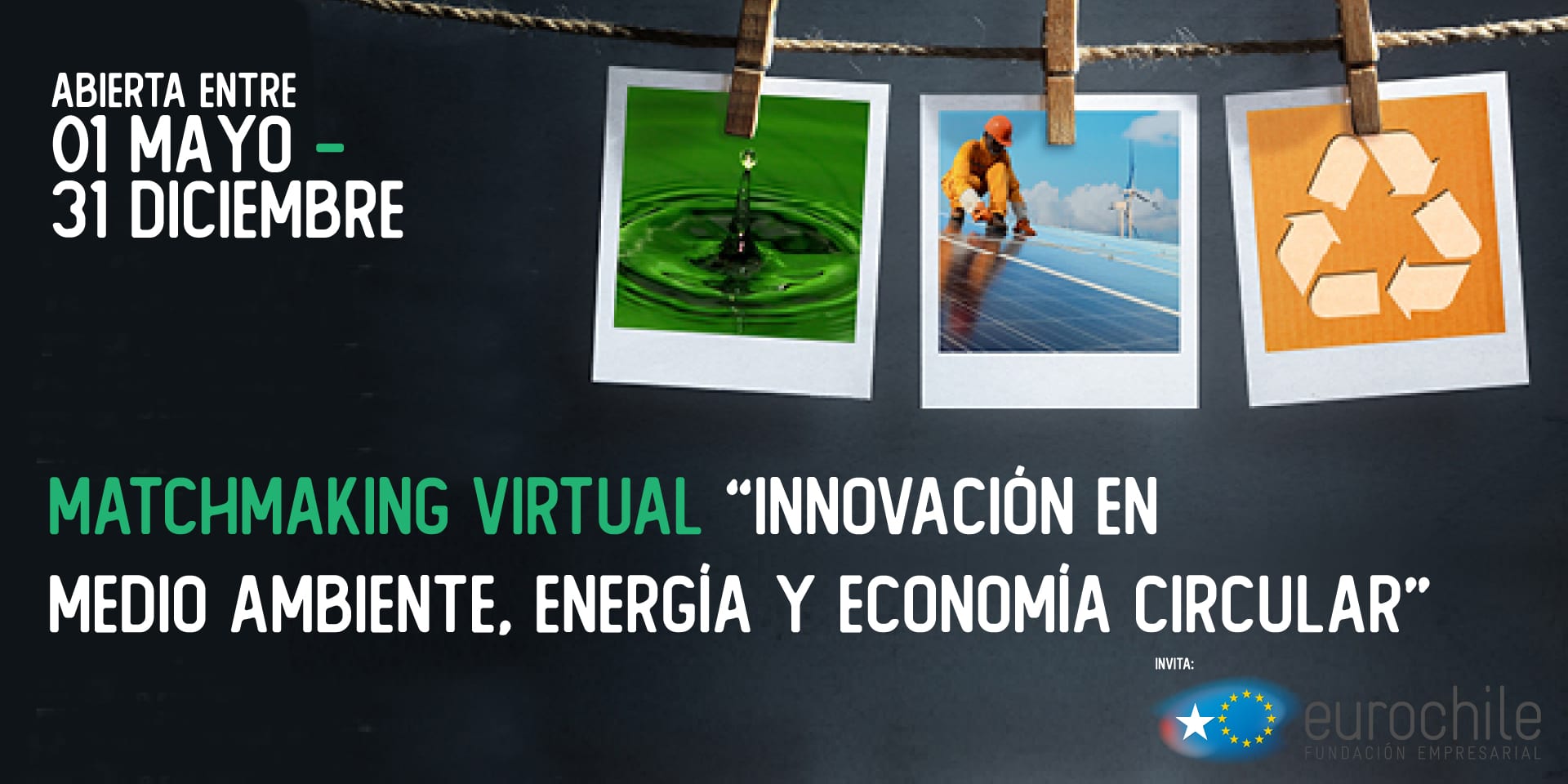
The Eurochile Business Foundation makes a new call to participate in the Virtual matchmaking event “Innovation in Environment & Energy and Circular Economy”

IFAT in Munich, Germany is the world’s leading trade fair for water, waste and raw material management, where exhibitors from around the world present strategies, solutions, products and innovations for the sustainable use of resources. And it is also the place where a parallel event of the “Innovation in Environment & Energy and Circular Economy” platform, of the European network -Enterprise Europe Network (EEN), was going to take place, bringing together research organizations and companies worldwide to generate commercial contacts and technological cooperation in this matter.

However, the crisis due to the pandemic forced the postponement of the fair this year and in this scenario, the EEN partner, Bayern Innovativ decided to organize a virtual matchmaking event, with the aim of offering a good opportunity to companies around the world to meet and network despite all travel restrictions. The event was held on May 4-5 and brought together more than 650 companies and institutions from 43 countries -including Chile with 29 participating companies- to generate business contacts and technological cooperation in areas such as circular economy, waste and recycling, renewable energy, water and energy efficiency.

Given the interest and positive reaction generated by this matchmaking between research organizations and companies worldwide, Bayern Innovativ decided to keep the platform open until December 31 and Eurochile, as exclusive partner and only contact point of the EEN in Chile will continue as co-organizer of this event with the aim of supporting more Chilean companies to join this initiative. The companies that already participated on May 4-5 with virtual meetings maintain their active participation and may continue to schedule meetings until the end of the year.

How does the process work?

The already registered participants will be receiving an email informing them of the extension of this platform and inviting them to continue participating and generate meetings with European counterparts.

The meetings will be flexible. The platform will be open until December 31 and participants will have the opportunity to schedule meetings on day and time they deem appropriate.

What about new participants?

To participate, you must enter the following link: https://international-partnering-environment-2020.b2match.io/

The participant must complete and describe a concise and clear profile in English in order to give visibility to their offer or demand; must indicate who you are, from where you are; what type of partner you are looking for and for what specific sector. If you do not complete the profile uploading process, it will not appear on the matchmaking platform and you will not be able to participate.

For more information, contact Manuela Caruz mcaruz@eurochile.cl

Daniel Calleja: “To recover from this crisis, circularity has to become the norm”

The Director-General of the DG for Environment, Spanish national, Daniel Calleja, has an experience of more than 30 years in the institution and has witnessed a large part of the processes of change that have been carried out in the European continent in the last years. And today, from his position, he is at the forefront of defining strategies that help that continent to cope with the impacts caused by the coronavirus pandemic.

A crisis, says Callejas, which is changing the world and that, in the case of Europe, will give greater boost to the shift towards sustainable development and the circular economy. He also talks about the role that Latin America will have and the cooperation between countries to advance in this line. “We look forward to working with Chile to promote the Circular Economy and drive the sustainable transition further”, he claims.

Today, it seems that Europe went through the worst of the crisis and is starting to revive some sectors of society and the economy. What is happening in this continent today?

Currently, the European Commission is fully mobilised to protect citizens’ health and address the social and economic effects of the crisis. We are working, together with the Member States, towards robust and effective recovery strategies to recover from the pandemic.

Europe after this crisis will be very different. The pandemic has exposed and exacerbated the vulnerability of our globalised and interconnected world. Its impact on our health, societies and economies is profound and long-lasting.

But this difficult moment offers also an opportunity to lay the ground to put resilience and sustainability at its core. In essence, this means better protecting and restoring our nature and ecosystems, accelerating the transition to the circular economy and scaling up our actions on climate change so that by 2050 there will be no net carbon emissions.

What do you think will be the main impacts that this crisis will have on Europe, and at global level?

COVID-19 is changing the world. The economic, social/societal impacts around the globe are dramatic, posing huge challenges and threatening to reverse the developmental gains of recent years. Global solidarity is more important than ever. Of course, the public health crisis is the most urgent challenge to address.

At the same time the Commission’s efforts have been focused on developing an ambitious strategy to promote the economic recovery of our continent. In a downturn, we must focus on policies that spur growth and create jobs, but don’t lock us in to the technologies of the past. We need investment in sectors that build resilience like smart circular economy, renovation wave and clean transport, but also in ecosystems, and in protecting and restoring biodiversity, in line with the Biodiversity Strategy and the upcoming Strategy for Forests.

Confinement has helped us understand how valuable nature is, how important the green spaces in our cities are, and how much we crave the clean air we could suddenly enjoy. I believe this experience will contribute to a long-term re-orientation of our policies in Europe and abroad, to better live with and as part of nature.

The President of the European Commission, Ursula von der Leyen, presented a plan to mobilise EUR 2.2 trillion for reconstruction. How will these resources be distributed, to which sectors of the economy, for example? 

The funding will be spread in 3 pillars: €540 billions to support Member States immediate recovery, €1100 billions in an enhanced multi annual financial framework over the coming years and € 750 billions for the recovery, boosting investments, to overcome the crisis.

The recovery plan is based on three pillars. The first pillar, a new Recovery and Resilience Facility of €560 billions of which €310 billion for grants and €250 billion in loans. It will offer financial support for investments and reforms, including in relation to the green and digital transitions and the resilience of national economies. It will be available for all Member States but will concentrate on the most needed areas.

The second pillar seeks to mobilise private resources with the provisioning of an EU budget guarantee for financing of investment projects via the EIB group and national promotional banks and €15.3 billion for InvestEU. The Solvency Support Instrument, which will mobilise private resources to support companies in the sectors most affected, preparing them for a cleaner, digital and resilient future. In addition, the Strategic Investment Facility to boost the resilience of strategic sectors, notably those linked to the green and digital transition and key value chains in the internal market.

The third pillar focuses on a new EU4Health program, the Union’s Civil Protection Mechanism, rescEU and the reinforcement of Horizon Europe to fund vital research in health, resilience and the green and digital transitions.

How will this reconstruction work? What will be the European Green Deal, and the new Circular Economy Action Plan, which will be at the forefront of the post of COVID-19?

The Recovery Package adopted by the Commission reinforces the status of the European Green Deal as Europe’s growth strategy.

As we exit the immediate crisis, its proposals will have a central role to play in the EU’s recovery efforts, and in achieving a just, sustainable and rapid recovery and ultimately a just and fair transition, which leaves no-one behind.

To get there, we will need more circularity in the most important sectors such as construction, renewable energies, chemicals, textiles, tourism and agriculture. That is why the EU Recovery Plan strongly insists on the role of circular economy and the green economy to reboot the economy, create new jobs and reduce the EU’s dependency on external suppliers.

 Reference is made to three or four years, which in normal time would have been 15 or 20 years. Is this acceleration feasible? Because it needs resources that are probably not necessarily available today.

Just between 2012 and 2018 the number of jobs linked to the circular economy in the EU grew by 5% to reach around 4 million, showing the impact that circular economy measures can have, even in a relatively short timespan.

To reach a truly circular economy, the whole lifecycle of products has to be addressed; that is why the new CEAP announces initiatives for the entire life cycle of products, from design and manufacturing to consumption, repair, reuse, recycling, and bringing resources back into the economy.

It’s also a question of momentum, and critical mass. When you really close a loop, you create a virtuous circle, which becomes self-sustaining. That’s the long-term goal, but it can happen quite quickly under the right circumstances, as we see from the circular economy industrial parks that are becoming more common.

In January, you raised the view that the green deal is the response not only to these climate and environmental challenges, but also to the social challenges involved. What is the dimension of these words, in times of economic and social reconstruction?

Many people, regions and sectors hit hardest by the crisis will also have to make a bigger change than most. The Commission is therefore proposing to strengthen the Just Transition Fund with an additional €32.5 billion in order to alleviate the socio-economic impacts of the transition.

Going green is good for the planet, but we are really doing this for citizens and our wellbeing. There is no doubt about the benefits created by a transition to a circular economy. The monitoring framework we adopted under the first action plan tells us that in 2017, sectors relevant to the circular economy already employed around 3.5 million workers. It has opened up new business opportunities, fostered new business models and developed new markets, domestically and outside the EU. In 2017, circular activities such as repair, reuse and recycling generated almost €128 billion in value added, and also accounted for around €15 billion worth of investments.

But it’s not just about numbers. It’s about the sort of future we want. The future that citizens want. And it seems very clear to me that in the wake of this crisis, citizens will back everything that leads to greater sustainability. Because it’s so obviously in their interest, in the short and the longer term.

What would be the first elements of a green recovery?

In line with the Green Deal, we will embark on a number of initiatives very quickly, for example

– A Renovation Wave will create jobs in the construction sector, reduce energy poverty and provide healthier living conditions for EU citizens.

– Investment in clean technologies and value chains will be unlocked through additional funding for our Research Programme Horizon Europe, and the new Strategic Investment Facility will invest in key technologies for the clean energy transition,  such  as  renewable  and energy  storage  technologies,  clean hydrogen,  batteries,  carbon  capture  and  storage  and  sustainable  energy  infrastructure.

– A focus on accelerating the production and deployment of sustainable vehicles and vessels and alternative fuels encompasses the installation of 1 million charging points, clean fleet renewals sustainable transport infrastructure and a shift to clean urban mobility will be supported by funds such as the Connecting Europe Facility and InvestEU.

How will this be translated, in concrete terms, in circular economy?

To recover from this crisis, circularity has to become the norm. We are working to ensure we make the most out of our opportunities. The EU Recovery Plan strongly insists on the role of circular economy and the green economy to reboot the economy, create new jobs and reduce the EU’s dependency on external suppliers.

Our new Circular Economy Action Plan will help keep our resource consumption within the planetary boundaries, in reducing our consumption footprint, and in doubling circular material use rates in the coming decade. Products placed on the EU market should be designed to last, easier to repair, and use more recycled materials. If our smartphones lasted just one year longer, it would be the same, in terms of carbon emissions, of taking one million cars off the road.

The 35 initiatives included in the action plan aim at making sustainable products, services and business models the norm, not the exception. The Plan also addresses key product value chains and promotes circularity and value retention along the entire production chain.

This will require broad support from governments, citizens, but also from companies and industries. Is there a consensus, the conviction of all actors, that this is the road?

We have every indication that there is such a consensus. When introducing our recovery plan to the European Parliament, President von der Leyen reaffirmed that we have to “strengthen our economies by focusing on our common priorities, like the European Green Deal, Digitalization and Resilience.

The EU Member States Heads  of State and Government underlined already back in March that we should start to prepare the measures necessary to get back to the normal functioning of our societies and economies and to sustainable growth, integrating the green transition and the digital transformation, and drawing all lessons from the crisis.  Earlier in April, Environment Ministers from 17 Member States had called on the Commission in an open letter to “use the European Green Deal as a framework for this exercise [the EUCO discussions] and thereby to keep momentum by implementing its initiatives.”

Another example is the alliance of 180 European politicians, business leaders, Members of the European Parliament and environmental activists called in an open letter on 14 April for a “Reboot and reboost our economy for a sustainable future”.

The support is there, and I’m not surprised. The advantages are very real!

How does the situation in Latin America give rise to differences in Europe?

Latin America is a key partner for the EU with increasingly strategic importance in global environmental and climate issues. A recent example of good cooperation was the COP25 presided by Chile in December 2019 in Madrid. We jointly organised very successful side events on circular economy in particular with Eurochile, and also with the youth and citizens, where Executive Vice-President Timmermans launched the European Green Deal.

The EGD explicitly mentions the importance of relations with Latin American, and envisages to mobilise all the EU’s diplomatic and financial tools to ensure that green policies play a key role in our relations with the region. With this new impetus, the EU and Latin America should continue to work together to address global environmental challenges, both by strengthening our bilateral cooperation and by cooperating in relevant multilateral fora.

In a green recovery scenario, this should be comprehensive in order to be effective. How will we maintain European support for the circular economy in Latin America? What role will the funding bodies play in this?

The global transformation will not be achieved by any country or region acting alone. It is all about cooperation. In Europe, we will try to lead by example, and work with others to promote a global green transition as an essential elements to achieve the Sustainable Development Goals and the Paris agreement. The EU will use its diplomatic and financial tools to ensure that green alliances are part of its relations with Africa and other partner countries and regions, including in Latin America. We will also step up our international partnerships, and continue to make available expertise and financial resources, both public and private funds, as part of our significant development cooperation.

The climate elements will be crucial. The Commission proposal for a Neighbourhood, Development and International Cooperation Instrument proposes to allocate a target of 25% of its budget to climate-related objectives. The Commission will also support the commitment made by national public financial resources to improve the investment climate and achieve contributions from the private sector. This work will need to be accompanied by opportunities to de-risk investments in sustainable development through tools such as funding guarantees and blended financing.

On key areas as on Circular Economy, the Commission has proposed launching a Global Circular Economy Alliance to identify knowledge and governance gaps in advancing a global circular economy and take forward partnership initiatives, including with major economies. We are now in the process of elaborating in more detail the objectives and actions of the Alliance. As to its membership, we are looking at those countries that are interested in furthering the global transition to a climate-neutral, resource-efficient and circular economy in multilateral fora. Chile could be one of such countries.

Chile is working on its roadmap for the circular economy, a work that is led by Eurochile and which is very much about the European experience in this area. How important is this work today, where emphasis should be put?

I am very pleased to hear this, because I led the first ever EU Circular Economy Mission to Santiago de Chile in 2016. Since then, a number of technical exchanges and follow-up actions have taken place to step up our exchange of experiences on Circular Economy in line with our Environment Cooperation Arrangement signed in 2016, and my services took part in one of the workshops to develop this roadmap.

The golden rule is to make sure you are addressing the whole life cycle, from design and manufacturing to use and recycling. If you neglect one element, the whole can’t function – you have to complete the loop. And of course, you have to build support across society – you can’t just impose and hope for the best. Circularity is all about building bridges!

We look forward to working with Chile to promote the Circular Economy and drive the sustainable transition further.

In the end, is the circular economy the way to a new type of development and what could this mean for Chile?

Promoting a more circular economy is entirely opposed to the old linear “take-make-dispose” model which is no longer viable.

The benefits of circularity derive from retaining more value from the materials, energy and products in our economies through the lifecycle analysis in all phases.

This implies many opportunities to improve the wellbeing of our citizens and to develop new business models, whilst at the same time decoupling these activities from the use of natural resources. Transitioning to a more circular economy, where the value of products, materials and resources is maintained for as long as possible and the generation of waste is minimised, is an essential contribution to develop a competitive, sustainable, climate-neutral and resource-efficient economy. A circular economy helps create new business opportunities through innovative and more efficient production methods. Local jobs will be created at all skills levels, with opportunities for social integration.

I believe the circular economy offers a great opport for countries like Chile to move forward. There is in my view no alternative. The future will be circular. If we want to successfully respond to these challenges, I have no doubt that those who decisively move in this direction will have the first movers’ advantage. Chile can, in this area, lead the efforts of Latin America from the front. You have everything to gain.

19 Chilean companies and institutions join the Plant InterCluster Network virtual platform

Less than a week for the virtual meetings begin, there are already 19 Chilean companies and institutions that have registered to participate in the most important cluster event in the plant production industry in Europe, which will be held June 22-26.

Representatives of the academia (Pontificia Universidad Católica and Universidad de la Frontera); Consorcio de Viveros de Chile, Chilean-German Chamber of Commerce and Industry (CAMCHAL) and Institute of Agricultural Research (INIA) are some of the Chilean entities that will participate in this important platform.

These virtual meetings are an initiative of the Enterprise Europe Network (EEN) together with Vegepolys Valley, and Eurochile, the only partner in Chile of this network and co-organizer of the event is inviting to join this platform that aims to promote innovation in plant production and creating a common strategy to facilitate the international development of plant groups and their members.

Plant InterCluster Network 2020 offers a variety of activities during the week through this platform with the aim of keeping up to date with the latest European calls for proposals in the H2020 programs, COSME; show your know-how- experience- technology or product; find the right technology- R&D and business partners; share and promote your projects and ideas; network with regional companies and keep up to date with the latest developments in the field of crop improvement

How to participate?

Registrations are open until June 25, 2020. To register and participate in this platform, you must enter the following link: https://picweek-2020.b2match.io/

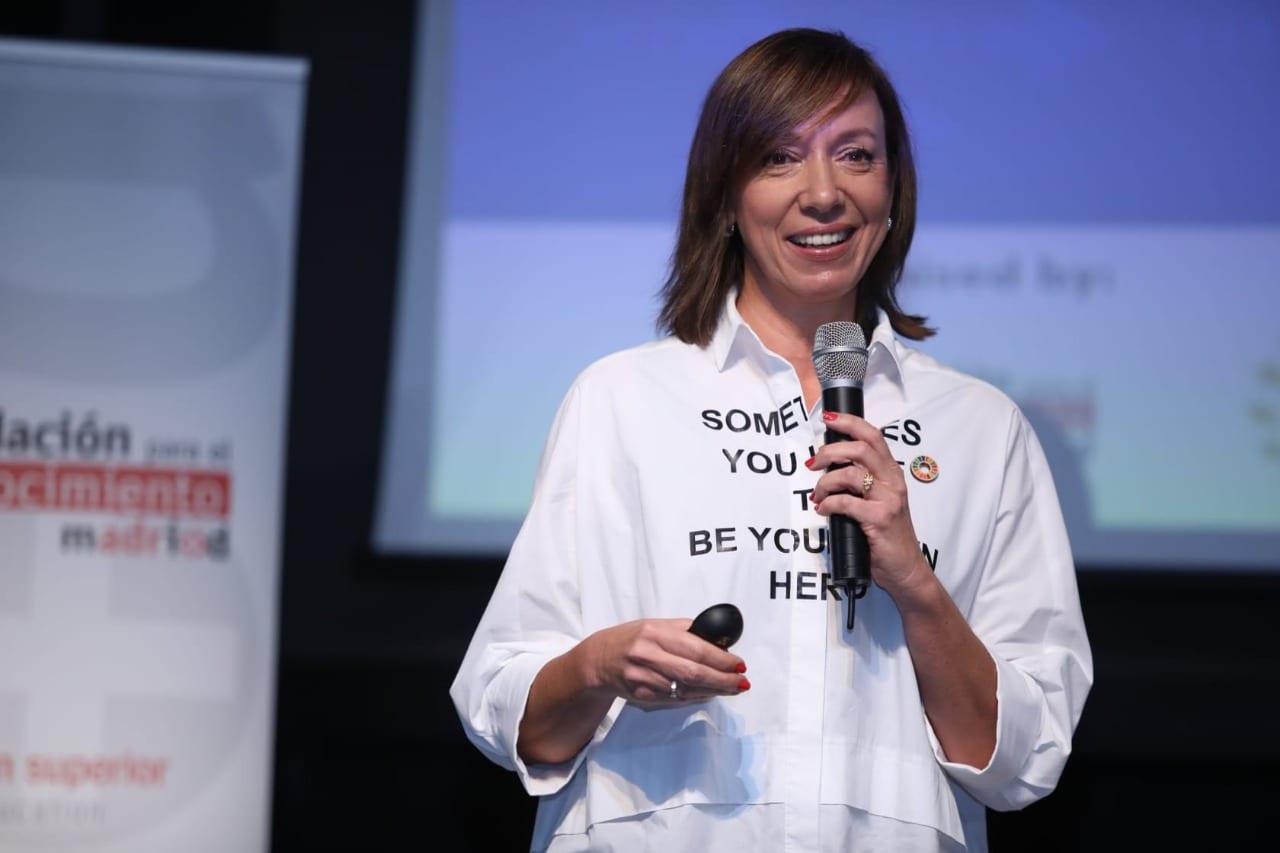
Jesús Rojo, from madri+d: “Sustainability is going to be the economic engine of the next decade, whoever wants to work with the EU will have to focus on a green economic model”

The Spanish foundation, madri+d is defined as a place for education, science and innovation, as key elements of competitiveness and the well-being of citizens. And to advance in this objective, it has been working with all the universities and public research organizations of the Community of Madrid for 16 years, as well as with technology-based companies and entrepreneurs to contribute to the articulation of an innovative ecosystem -efficient and integrated knowledge-based- in the European Union.

Today, like many of the European entities, and of the world, madri+d faces the difficult job of maintaining its operations in the current scenario and at the same time collaborate with the challenge of finding and implementing solutions that help combat the pandemic. Among them, the international platform “Care & Industry together against CORONA”, of which the Business Foundation Eurochile  is also part with the aim of incorporating Chilean companies, organizations and enterprises into an international network based in the European Union for this task. .

To learn how they have dealt with this scenario, and learn from what has already been achieved in this area in Europe, we spoke with Jesús Rojo González, head of the Technology Transfer and European Programs Area of ​​Fundación para el Conocimiento madri+d, who told us how they have done to maintain their operations even as more global and medium-term challenges are being addressed.

What steps have you taken as an organization to stay operational?

Several days before the State of Alarm was declared in Spain, measures for the implementation of remote work were already put in place by madri+d. First, the staff was provided with a fully functional laptop to connect from home. From management, computer screens and portable wifis were provided to all staff that needed it. All Foundation personnel have VPN access to the work servers. To execute an optimal work from home, from the first moment professional profiles of Microsoft Teams and Zoom were enabled so that all scheduled meetings and face-to-face activities could be carried out, but in a comfortable and virtual way.

Thanks to this, it has been possible to continue with the meeting plan, evaluation committees, plenary sessions, training programs, and business meetings, without the need to make major changes to the agendas.

What measures have been taken to guarantee the well-being of your workers?

As we have mentioned, the Foundation’s management has always been one step ahead, facilitating at all times those workers who are at higher risk or who have more problems complementing family and work life in this period of pandemic, all the flexibility necessary to guarantee optimal health. A few weeks ago, we proceeded to subsidize the antibody test to all personnel as a decision-making measure for the de-escalation plan when they can return to the office. The entire team has received specific training on occupational hazards in relation to COVID-19.

In addition, a video call is organized weekly with all the staff where the situation of each is shared, as well as the progress and news from the Foundation’s management. This makes all staff feel fully supported and with direct contact between us.

The Foundation is currently working to adapt our facilities to the new security measures decreed by the Government of Spain. This involves a large personal and financial effort that from madri+d is being taken, since the priority is to guarantee the health of all. Reorganization of spaces, new air filters, protective screens, availability of hydroalcoholic gels in all workplaces, and the continuity of remote work, are just some of the considerations that are already being put in place to guarantee a safe return to the new normal.

How have you maintained the relationship with your stakeholders and the progress of the projects you were developing? Do you go ahead with all of them?

Thanks to the implementation of remote work and the tools and measures put in place by madri+d, we have been able to continue with our work as normal. In fact, we have noticed that thanks to the virtual realization of events, in the case of business rounds, our clients are participating more in international events. When these same events were face-to-face, many times we did not get the necessary interest from our clients to travel to the fair in question, missing opportunities when reporting successes in our actions. Now, thanks to the savings in time and money that virtualization of conferences and business rounds entails, in some projects we are even noticing improvement in the results.

In relation to our main stakeholders, such as the Community of Madrid, the European Office of the Ministry of Science and Innovation or the Center for Industrial Technological Development of the Ministry of Industry, all of them have opted for remote work and virtually rescheduling events that they had planned for the coming months. In many of them we participate giving presentations as a Foundation, either from the perspective of the National Point of Contact for the Marie Curie Programme, or as coordinators of the Enterprise Europe Network in Madrid.

At the European level, the trend has been the same. From the European Commission, all the actions and meetings scheduled for the entire year 2020 have been transferred to virtual format, and the number of training webinars has even increased. All this means that, in many of our areas, the workload has increased significantly as a consequence of this new situation.

In what areas has your work been redirected in recent months due to the Covid-19 pandemic, to support the fight against the virus?

Our core activities remain constant, addressing a wide variety of topics such as the environment, sustainability, implementation of new materials, defense and space research, energy, and of course, health. It is in this last field where, logically, there has been a greater proliferation of new initiatives and where, since March, many of the Foundation`s resources have been dedicated. Specifically, we would like to highlight two initiatives: the regional hackathon #vencealvirus, and the international platform “Care & Industry together against Corona”, where we collaborate with Chile, among other countries.

The #vencealvirus hackathon, organized by the Community of Madrid, took place on April 4 and 5 and more than 8,000 researchers, businessmen, entrepreneurs and students participated to generate new ideas in the fight against COVID-19. Focused on three main challenges (health, community and work and industry), more than 750 projects were presented, of which more than 240 passed the first phase and 100 reached the second phase. Finally, 20 winning projects were selected and are already being supported by the Foundation so that they can start operating in the coming months. This hackathon is the beginning of the future Open Innovation Platform of the Community of Madrid that will be launched in early 2021. The objective of the platform is to create a space where the free exchange of ideas and knowledge is encouraged, integrating very different elements of the innovative Community of Madrid ecosystem who can find synergies based on shared challenges, and where they can pose challenges that act as catalysts for ideas, putting different teams to work around common goals.

In relation to the international platform “Care & Industry together against CORONA”, it is a space for exchange with the option of holding virtual meetings that will be open, for the time being, until the end of 2020. Companies, hospitals, nursing homes and others actors who are involved in the COVID-19 crisis can upload their demands or offers of services or products to this free platform. Currently there are 1,574 collaboration opportunities from 727 participants from 36 different countries. From the Community of Madrid we have already registered and validated 144 participants. From the Foundation we are the Spanish coordinators of this initiative and we are within the management team at the international level, directly in contact with the European Commission for coordinated management of activities.

What role will R&D have in this area, and why is collaboration between all actors important?

The great asset of the madri+d is networking, cooperating with all the agents of the regional system of education, science, technology and innovation. It is in our DNA to contribute to the progress and well-being of citizens through the promotion of these four disciplines, so for us the role of R+ D + i is, has been and will be the main pillar to overcome the adversities of this crisis and prepare for those that will come in the future. In the current situation caused by the coronavirus, it has been clearly reflected that in those countries where R + D + i already had a strong tissue, they have been able to give faster and more forceful responses to the virus. In addition, at both the national and international levels, extraordinary funds are being mobilized to directly investigate COVID-19. The conclusion is clear: the world is facing a health crisis that has led to a crisis on a social, economic, political, and environmental level. We must strengthen our R & D & i systems if we want to be competitive and leave early and with guarantees of success in all the dimensions that are being affected by the pandemic.

How are you working this at the Enterprise Europe Network level?

The work has increased thanks to the virtualization of events, meetings and conferences. The possibility of holding international meetings from your home is something that we are seeing as positive in all the international activities that we are co-organising. Events such as “Innovation in Environment & Energy & Circular Economy” where Madrid’s participation was not relevant, in this 2020 edition that took place in early May, we had the presence of more than 30 clients. And it is being the common denominator in any event of any theme. Furthermore, at the internal level of the network, the meetings of the sectoral groups, which are usually held twice a year, have increased their frequency, occurring once a month in many cases.

In relation to our training program, it has been maintained as scheduled and we have had no problems in transferring to virtual version the seminars that were scheduled in person.

The thought that comes to mind is the resilience that is so great that a network like the Enterprise Europe Network has, where more than 4,000 people from 65 countries have been able to adapt overnight to a unique situation, and improving the expected results.

In Chile, Eurochile is the exclusive representative of EEN for the region, and is convening different companies and organizations to the “Industry and Health together against the coronavirus” campaign. How has this worked in Spain, and how has the selection process of the companies worked?

The international coronavirus platform has a main focus of work at the Spanish level made up of members of the health sector group of our country: University of Alicante in the Valencian Community and Murcia; University of Navarra in the Foral de Navarra community; FICYT in Asturias; Acciò in Catalonia and the Madrid Science Park and the madri+d Foundation in our region. Other co-organizers from Castilla y León, Cantabria, the Basque Country and Extremadura join this working group. The terms of reference to which any member of the EEN must consider at the moment of selecting their companies, are published on the platform’s website. The two main issues to consider for a profile to be successful are that it has a clear relationship regarding its work with COVID-19, and that it reflects a specific service, product or collaboration in the Marketplace with clear objectives.

To facilitate this work and give support to all the co-organizers, who currently are more than 155, the “Extra Eyes” working group has been created, where 9 of the most active organizers double-check the validity of the profiles, to guarantee the maximum quality of the information that appears on the platform. The Foundation is part of this committee, supporting all of Spain as well as Italy, Portugal, Argentina and Chile.

What role will SMEs, entrepreneurship, play in this task?

The Enterprise Europe Network is the largest support network for SMEs with an international vocation. It is true that these SMEs must work together with the most academic and research aspect if they want to go far, so from Madrid we have always acted as a bridge between these two sectors. Clearly, from what we are seeing in recent months, the agility and versatility of SMEs in providing solutions quickly is admirable, which can make a difference from here and on. In addition, initiatives such as the #vencealvirus hackathon have brought to light many entrepreneurs with real solutions directly linked to solving problems derived from the coronavirus, which otherwise would have been hidden. Support in the form of financing and a service to these entrepreneurs and these SMEs is essential in a country like Spain, where 98% are small and medium-sized companies. It is true that we must not forget that the current situation has caused that many of these SMEs are facing serious subsistence problems right now, for which support measures are needed at the national level so that they can do R&D+ i as a priority again.

How do you see the scenario once the health crisis is over and the economic recovery begins?

This health crisis has revealed other underlying crises such as the environmental, economic and social crisis. There are lights and shadows in all these questions, since once we have been able to control the pandemic, a fact that is still on a distant horizon, we will have to see if, individually, at the level of society and of policies, we have learned something from this whole situation.

In relation to the environmental crisis, the planet is clearly better off without us. In other words, we cannot return to the way of consuming, of traveling, of exploiting the resources that we had been exercising before COVID. Sustainability is going to be the economic engine of the next decade, as stated by the President of the European Commission Ursula von der Leyen, when she approved the European Green Deal in early 2020. Member States and anyone who wants to work with the EU will have to focus on a green and sustainable economic model. This is the main difference with previous policies, which only talked about mitigating the effects of climate change. Now we are talking about green growth, economically and socially.

Continuing with these masked crises, a return to normality will reveal a different society. We have seen first-hand the benefits of remote work at the level of conciliation and at the level of economic and environmental savings. It will be a matter of time before companies begin to choose between a mixed model of face-to-face work and remote work, which leads to a more economically and personally sustainable situation for all institutions and workers, as well as to rationalize costs and prioritize better.

Finally, all this is not possible without a policy that learns and supports those conclusions that have emerged from the pandemic era. Having the European Commission focused on a real change in the production model is something that will impact national economies, and we hope that it will serve to generate strategic frameworks where we can be prepared to give a firm response to all future crises that will come.

Linnet Solway: “There are initiatives on going, but an ecosystem that brings together all the actors of the circular economy is missing”

After three meetings and a little over a month in operation, the Strategic Committee of 32 companies, ministries, experts and academia -among others- that is supporting the creation of a Roadmap for the circular economy in Chile is beginning to generate more concrete the first lines of work, after a first diagnostic report prepared by Eurochile, who leads this work with the Ministry of the Environment.

Linnet Solway, director of Eurochile’s Technology Transfer and Circular Economy Area, explains that although this report shows that in Chile there are several initiatives and projects on going for the implementation of a circular economy, they are still being developed in isolation.

For this reason, she adds, “it is necessary to create a circular economy ecosystem that brings together all the actors in the transformation and promotes collaboration. In addition, a vision and a strategy are needed to give a clear direction for the adoption of a circular economy in the country. And that is what the Roadmap seeks to generate. ”

This becomes more important today, says Linnet Solway, because although the need to move towards more sustainable production and consumption models was identified before the pandemic, “today with the economic and social crisis the need to do so is further ensured by ensuring a transition for everyone and with everyone”.

The study shows a series of gaps to overcome for its implementation. Which do you think appear most relevant, and which should be prioritized?

One of the priority gaps is to redesign the waste management system, since today due to its structure, above all costs, it does not allow priority strategies in a circular economy, such as repair and recycling, to be competitive. Education is also a key aspect, so that the circular economy is understood as a model that goes far beyond recycling and that includes the adoption of new technologies, rethinking designs and processes and implementing new business models. Another important gap is collaboration, especially between companies, to address sectoral or pre-competitive challenges, and to establish industrial symbiosis and make more efficient use of resources. Another aspect that must be addressed is the need to take into account the territorial realities in the country for the implementation of appropriate strategies to local conditions.

How are you going to work this initial diagnosis in the Strategic Committee, what are the first issues that are emerging in the discussion?

An overview of the diagnosis was presented at a meeting with the Strategic Committee and the document was sent to them for review and comment. In general, the need to deepen certain aspects was highlighted, such as working metrics to measure circularity in the industry; incorporate supply and demand gaps for circular products, and also incentives; the obligation to use recycled raw material; focus on the population not only as a consumer, but also as a focus of education; and include a human vision oriented to ethical behavior as a society.

What are the regulatory changes that should be given priority to help boost the circular economy?

The current waste management system needs to be reformed, and the lack of regulations to organize efforts aimed at the circular economy from all sectors has also been highlighted.

How will this work be carried out, and what basic aspects will this roadmap contain, in the sense of directing the adoption of the circular economy in the companies – small, medium and large – of the country?

The work will be carried out very closely with the Ministry of the Environment and other institutions such as the Sustainability and Climate Change Agency and Corfo. Furthermore, it will involve key actors from the public and private sectors: various ministries, municipalities, union and industrial associations, NGOs and organizations representing civil society. We will accompany, guide and coordinate the development of a co-creation of the roadmap, through different activities, meetings and workshops, with the aim that the end of the consultancy is in the beginning of the work for the transition to the circular economy, and that each actor takes the roadmap as a starting point and begins to implement the proposed strategies. That is why the participation of the business sector is so important; they need to empower the roadmap to give it the continuity it requires.

What can Eurochile contribute to the discussion that will be generated in these workshops, and what can you learn from this process?

Eurochile can contribute with its extensive experience in public-private relations and generation of networks, since those are of the important gaps highlighted many times when talking about circular economy: the lack of collaboration and networking. Furthermore, due to its link and networks with Europe, the foundation can contribute knowledge, experiences, and success stories. Part of the foundation’s mission and vision is to contribute to the sustainable productive development of Chile. We see that the roadmap is a tremendous opportunity to enhance that change. It is framed in a very specific context today, with a Chile that is going through several crises, one social and one sanitary and human, that are making visible the flaws in our system. Today’s Roadmap for the Circular Economy is not the same as the one drawn up a year ago, it has the potential and the capacity to be part of the response to the crises we are experiencing. We want to use the instances of this project to help stakeholders to project themselves to a Chile of the future and visualize the necessary tools to respond to crises and generate social, environmental and economic capital for everyone, with everyone.

The creation of the roadmap will help formalize the ecosystem of the circular economy, something that Eurochile has been working on for a long time. What progress have you made in this regard, in Chile and in the region?

Since the circular economy company mission in 2016 organized by Eurochile and the European Commission’s Directorate General for the Environment, a network of companies interested in circular economy concepts has started to be generated. In 2018 and 2019, with the circular economy PDT executed by Eurochile, the first Circular Economy project financed by Corfo, skills and knowledge related to circular economy were installed in several Chilean SMEs. Continuing this work, the circular economy working group was formed, mostly with SMEs committed to adopting circular economy models. At the institutional level, different initiatives were also generated and supported to link Chilean and European institutions. In addition, through the various activities that Eurochile has carried out in the country and abroad, the circular model has continued to be disseminated to invite more and more companies and institutions to join this transition and build a CE ecosystem.

Will the circular economy be integrated into all Eurochile projects and work areas in the future?

Yes of course. We seek that the CE is a transversal line of action that is integrated in all the projects that are generated and executed, and in the internal and external activities of the foundation. We have to see the circular economy not as one more aspect in projects, but rather as one of the pillars on which we develop the project, along with issues of partnership and cooperation with Europe. This is how we are working today both in our ongoing projects and in the projects that we have in our portfolio.

How important is the transfer of technology with Europe that you can facilitate? Is this cooperation going to intensify?

Without a doubt, many of the low-carbon technologies that exist today have been developed in Europe, who are clearly at the forefront in this area. Therefore, for Chilean and regional companies that want to move towards the circular economy and decarbonization, there is an opportunity to transfer technology and knowledge from Europe to Latin America. The European Commission is promoting and financing several projects to promote this transfer. Corfo also has several instruments – technology centers, eureka, scholarships for internships – that promote the transfer of knowledge, especially from Europe to Chile.


At Eurochile it has always been pointed out that in this transformation the company plays a key role that this has to be a business transformation. How can this change be accelerated in companies?

The business sector is a dynamic, fast-moving sector with a high capacity for transformation and innovation, and therefore the company undoubtedly plays a fundamental role in the transition to a circular economy. To accelerate this change, the government must play an important role, through the development of rules and regulations that promote the installation of good practices and sustainable models within companies. Through incentives and taxes, the state can guide decision-making within the company. In addition, it needs to provide clarity regarding what is coming so that companies dare to invest in technology, training, R&D and innovation. Once the regulatory framework gives a clear direction to the business sector, the most likely is a fast and radical change in the production system. There are already large and small companies pioneering the implementation of the circular economy, and these are going to put pressure on the system once the rules of the game are clear to everyone.


Beyond the roadmap, what are the main activities Eurochile will have this year in the area of ​​Circular Economy?

In addition to the Circular Economy Roadmap, we are working with the circular economy working group, which we want to strengthen and grow this year. We are also working on initiatives to develop a network of stakeholders in the circular economy, at naional level and also -eventually- at the Latin American level, to create an ecosystem of actors for a circular economy. And this year, if the world situation allows it, we will also organize a circular economy encounter where we will have conferences, workshops and business rounds to continue promoting the transition to a circular economy and encourage the development of networks and collaborations between the actors in this transition.