English

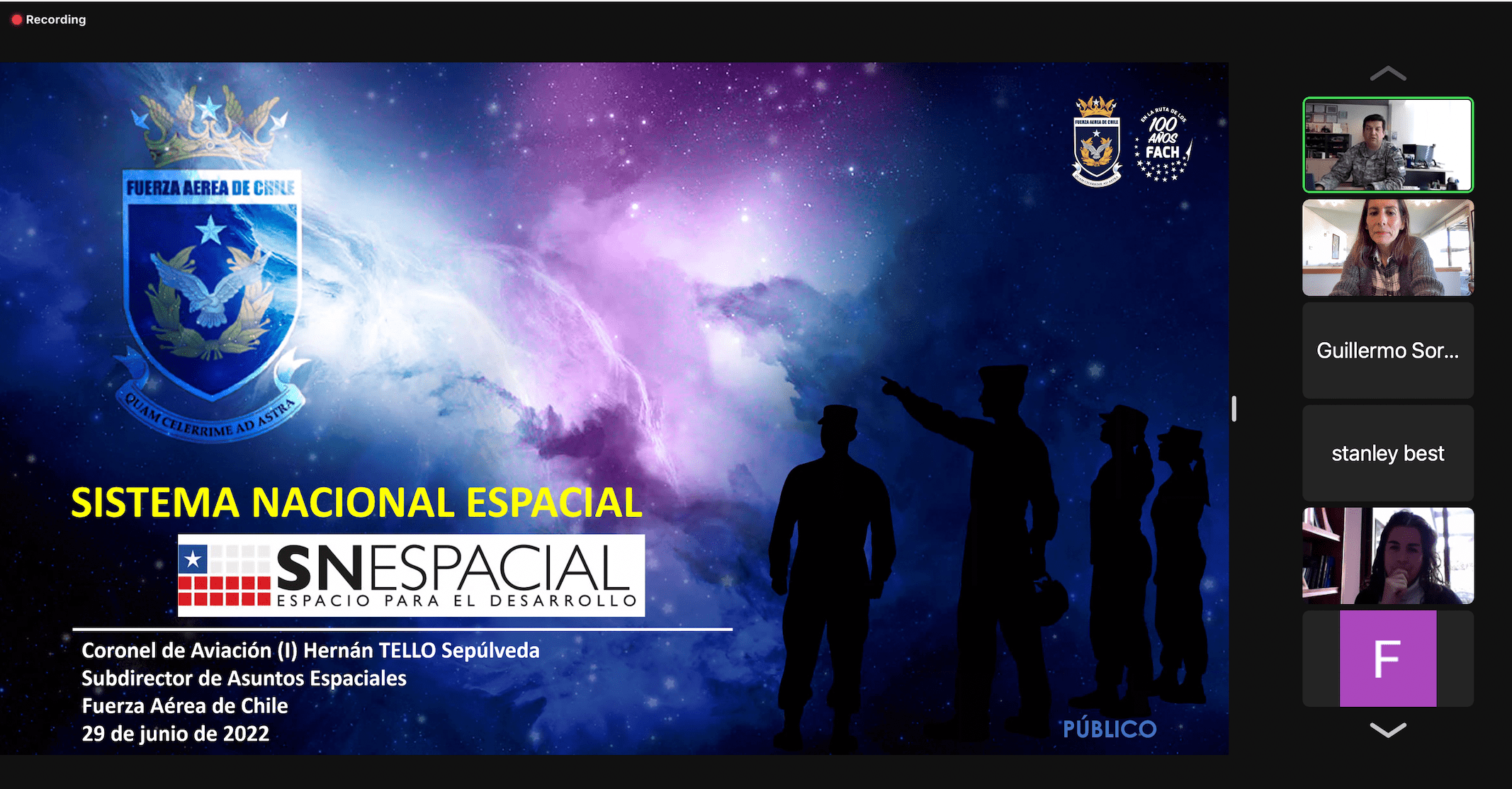
Hernán Tello (FACH): “The multidisciplinary character is a hallmark of the National Space Program”

The National Space Program establishes a set of initiatives, projects and resources aimed at the development, promotion and dissemination of space activity, in addition to the use of technologies and applications, to contribute to the implementation, monitoring and compliance with the national policy on this matter. In this interview, Colonel of the Chilean Air Force (FACH) and Deputy Director of Space Affairs, Hernán Tello explains the scope and development of this space project, and his participation in the Trade Mission ConnectEO.

The National Space System brings together the joint work of the Ministries of Defense, Science, Technology, Knowledge and Innovation, Foreign Relations, Transport and Telecommunications, National Assets, the academic world and the Chilean Air Force (FACH), and seeks to contribute to the institutionality and country vision.

The Colonel of the Chilean Air Force and Deputy Director of Space Affairs, Hernán Tello reviews, in this interview, the scope of the National Space Program project, which emerged from another instance of satellite renewal, and which took on multidisciplinary overtones over time.

Considering that the FACH already had a history around space activities, how much did that previous experience influence the current project?

The Chilean Air Force has developed space activities for almost 25 years, with Fa Sat (Earth Observation Satellite System) in 1995, 1998 and in 2010, with Fa-Sat Charlie. This system has the objective of providing spatial information for different dual-use activities, but it is a very punctual project, which is not the same as now. From the point of view of space operations, it has been very successful. It is a French satellite that, thanks to its operation and the activity of engineers, has been able to double its operational life. So, we take those lessons learned to be able to integrate them now, taking this as a national and not an institutional challenge.

How did the Space Program come about?

It started at the FACH, and later in the process we were able to deliver the proposal to other institutions (ministries and universities), and thus it took on other shades, to see what the interest and challenges around the project were, also to carry out a survey of studies around the space needs of the country, and thus it was built through the participation and articulation of different actors. In the renovation process, we had generated a project to change the satellite for one with greater capacity, but finally the government asked us to review this project and articulate it together with various actors. This is how today’s National Space System was reached. Pillars were sought that nourish and allow reaching people with information and solutions. Likewise, this project has a more social aspect in which it seeks to inform the public about the process, through the School Space Program.

How has the implementation of the School Space Program been?

The implementation of the School Space Program began -with pilot programs-in the places where we had the operation centers (Antofagasta, Santiago and Punta Arenas) and in general the reception has been good, also having a good work system in terms of the coordination of connection with teachers and other actors. In education there is a great technological and digital gap, and through this project we seek to contribute with opportunities and knowledge, in addition to being able to work on different skills. This has allowed us to have a great arrival with the regional governments, we have signed agreements with some of them; We have increased from three regions to five and in terms of schools we have increased from 15 to 20 in just a few months. One of the latest regions to join this initiative is the Ñuble region.

What are the main challenges and difficulties surrounding the creation of the National Space System?

In general, what we have noticed is more interest, but new challenges and some problems have appeared. For example, regarding the challenges that may arise due to climatic diversity in Chile, the University of Magallanes told us that they did not have a sensor for the ozone layer, to which we replied that we would create a payload at the national level, and this is a project that has to materialize during these years and that has the support of the Ministry of Science and Technology, universities and research centers. It is in these instances where a space is fostered to materialize this type of problem and solve it. Now, Chile, due to its territorial configuration and distribution, has many challenges, and the good thing is that the space allows you to deliver information and services, and generate applications for the benefit of society; and due to our geopolitical position in the world context, a very large country with diverse landscapes, we have the possibility of carrying out space activities in a way that other countries cannot.

Taking into consideration that this work contemplates the participation of government actors, academics and the Chilean Air Force itself, what evaluation do you have of the multidisciplinary nature to date?

The evaluation has been good, the multidisciplinary nature is a hallmark of the program. We have had fluid communication with all the stakeholders that are part of this project. In this sense, being able to make video calls has been essential to meet with people and institutions from all over Chile in order to advance in the implementation process. The interaction that has been generated between the organizations has been potential and that shows how well the communication has flowed. The program seeks to generate work teams, for example, in the construction of satellites, the idea is that there are 2 people from the Air Force and the 8 to 10 additional persons are all civilians, from different universities and regions.

How do you evaluate the current status of Chile in this matter, compared to the rest of the countries of the world?

Europe has a great advantage in this area, specifically in terms of space engineering, but we believe that through this program the distance will be closed. However, when it comes to the application of space technology, I think we are pretty good in some areas. At the country level we have very good specialists and technicians who have known the subject very well for a long time.

This program has as actors the academy, the government sector and the FACH. In Chile there is a niche of companies inserted in this subject that have knowledge and good practices to transmit. Do you plan to involve private actors in the project?

Throughout the project we have been building relationships through agreements with many universities, in this case framework agreements and specific agreements with other organizations. And regarding this work, there are many non-governmental organizations with which agreements have been reached, so we are also open to establishing relationships with companies to expand this project, especially in the educational aspect, there are even some with that is in talks, so it is a challenge that we currently have. The objective is to be able to advance in agreements and labor relations with other companies in educational matters.

You were part of 2 days of the ConnectEO Trade Mission, a virtual mission where European companies participated, and where you. presented the project, how do you rate this opportunity organized by Eurochile?

Within the framework of the project, we are willing to participate in all the seminars related to space activity to generate conferences on the subject. For us, participating in the event organized by Eurochile is a value because it allows us to integrate with the European Commission and with European companies that are developing this type of activity, and thus be able to incorporate new knowledge and technologies. For example, after our participation in the activity organized by the foundation, two companies contacted us to see the possibility of collaborating, so these types of instances are very important. So yes, it was a very good experience to participate in the ConnectEO Trade Mission because what is not communicated does not exist.
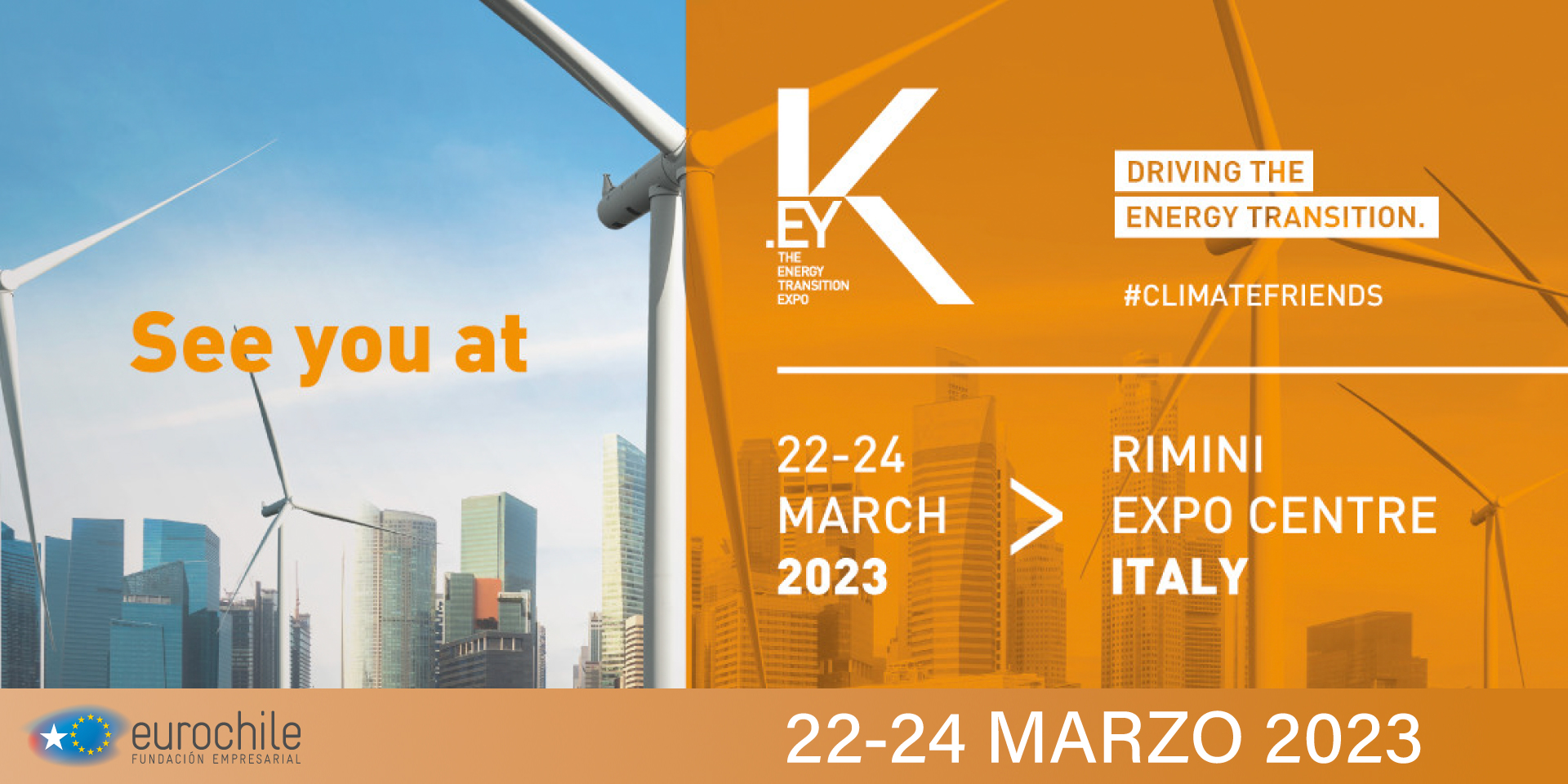
Eurochile Foundation invites Chilean companies to participate in the Key Energy fair, which this year debuts with a new format

With the aim of learning about trends and new technologies in the renewable energy ecosystem and providing tools to be leaders in innovation and promotion of sustainable development, the Eurochile Business Foundation, through its Business Cooperation area, invites Chilean companies to be part of KEY 2023, the largest international exhibition of renewable energies.

This year, Key Energy will be an autonomous event, with a new format and positioning, and scheduled on a different date. The event will be held at the Expo Center in the city of Rimini, Italy, between 22 and 24 March.

The fair will be distributed in twelve pavilions where will have a different product sector. KEY will cover the full range of renewable energies in a larger space than previous editions, which will facilitate visits and increase business and networking opportunities, expanding contacts, and meeting key players in the sectors of reference of the energy transition.

The agenda includes three days to cover 28,000 m2 of exhibition space, with more than 9,000 attendees, 90 participating foreign countries, mostly from Europe, and 253 brands.

In 2023, the exhibition will operate on six main and product pillars, with defined spaces: Wind, Efficiency, Solar, Hydrogen Expo, City and Electromobility.

Based on these topics, more than 100 workshops, conferences and seminars will be held. It will be a series of activities aimed at exploring aspects related to the world of renewables and the energy transition at national and international level, including from a regulatory point of view. There will be 350 exhibitors, presenting new trends and opportunities, in addition to all the stands showcasing their latest innovations and products.

In this way, Key Energy aims to be a global exhibition, a cultural, scientific and technical hub and a community catalyst capable of connecting stakeholders, actors and leaders in the renewable energy sector, giving them the opportunity to communicate with each other: not only a business platform, but also and above all an opportunity for education and information on the subject of energy and the acceleration of the energy transition process, already underway.

How to participate?

This year, the organisers, EG Italian Exhibition Group SpA, are inviting, through the VIP Buyer Programme, ten Chilean entrepreneurs to experience the most important international trade fair for technological and industrial innovation in the renewable energy.

Professionals with decision-making power in procurement (purchasing managers, company directors and general managers) from the energy transition sectors can participate. Representatives from industries, municipalities, public authorities or governmental bodies, management and service companies or agri-food companies are also invited.

The programme includes a 3 nights hotel stay, single room with breakfast for one person per company; free entrance to the fair; transfers airport/hotel; hotel/fair; hotel/airport; guided tour of to the fair with translator; technical visits to learn about production processes, technologies and the production chain model.

In addition, programme includes a reimbursement of 400 euros on the value of the air ticket. Eurochile Business Foundation will oversee all formalities related to some of the services related to the Key Energy fair, such as entrance to the event, transfers, and technical visits.

The foundation specifies that the entrepreneur must oversee all formalities related to entering the country such as visa, vaccination approval and all that is required for entry into the country in according to the provisions of the Italian embassy in Chile.

For more information, please contact Manuela Caruz at mcaruz@eurochile.cl. You can also visit the fair´s website https://en.keyenergy.it/

Circular Economy working group of Eurochile Business Foundation invites SMEs to be part of the group this 2023

This year the agenda of the Eurochile´s Circular Economy working group is packed with various activities that seek to support its transition towards a more sustainable productivity model through access to new knowledge, collaboration with European institutions, connection services to Europe and matchmaking events.

With this important task ahead, the team led by Enrique Sánchez Slater, director of Sustainability and Circular Economy at Eurochile, is preparing, and whose first work meeting of the year is scheduled for March.

“On the occasion a European Expert will join us who will talk about Circular Economy and,  we will discuss the possibility of proposing a CORFO project together as a group”, says Sánchez.

In this context, the director of the area highlights the existing interest of SMEs to move forward in a concrete way. “We want to materialise it this year, but as a group, through a Corfo associative instrument. In the meeting held last December, we found at least four of them interested”, he recalls.

The Circular Economy (CE) working group started in 2019 and after the pandemic began a process of updating its objectives, aiming at three main guidelines: implementing circular economy strategies and their business models, promoting a systemic transformation in Chile; linking the group with relevant experts from Chilean public and private institutions and their position in the implementation of the roadmap and, collaborating and creating Chilean-European synergies between companies and important entities in circular economy.

“Regardless of the services we offer to this circular economy group, we want to open it up and hopefully take it to regions. We also want to link it with our Chilean- European Business Center and this topic will be part of the discussion in the first sessions ”, he comments.


Why must companies be part of the group?

Eurochile’s director of Sustainability and Circular Economy says that private companies don´t always have access to knowledge of circular economy regulations, such as the EPR Law, and therefor it is important for companies to participate in networks such as the circular economy working group, he stresses.

“One of the added values ​​of being a member is having access to information on public policies on recycling. The big challenge for companies is the implementation of the EPR Law and there will surely be a lot of talk about that, and how we can accompany them through the transfer of information and public policies, and make public institutions visible in this group, so that they can anticipate and implement the EPR Law and other policies associated with recycling, such as the Roadmap for a Circular Chile by 2040”, he explains.

Among the core services are workshops on eco-design strategic guidelines and internationalisation. In terms of networking services to Europe and matchmaking events, a national is planned, and there is also the possibility of participating, on demand, in a European, in a hybrid format.

These activities will be linked with European experts from the Slovenian organisation, Circular Change thanks to a collaboration agreement that the Foundation and the entity signed in 2022, he points out.

The calendar with activities activities of this 2023 is already structured and includes two Open Days, one scheduled for the first half of the year and the second for the month of August. The aim of these two activities is to raise awareness of the group´s work and encourage new members. The workshops are planned to be held monthly and the topics have already been defined. In order to show the progress of the group and its actions during 2023, a seminar will be held in December.

“We want to invite all Chilean SMEs – from north to south – that want to join Eurochile’s Circular Economy working group, so that together we can promote the development of networks and collaborations between the actors in this transition”, concludes Sánchez.

Eurochile Circular Economy Working Group closes the year with a roadmap for 2023

The Sustainability and Circular Economy team of Eurochile Business Foundation had its last meeting with the ten members of the Circular Economy (CE) working group, with the aim of saying goodbye to 2022 and talk about the offer of services and new training spaces to which its beneficiaries will have access in 2023.

Enrique Sánchez, director of Sustainability and Circular Economy at Eurochile, welcomed the attendees, and Javier Mora, in charge of projects for the area, reviewed the actions carried out this year, highlighting among them, the updating of the mission and vision of the group, the return to face-to-face and the connection with actors such as Enel, Sofofa Hub and the Ministry of the Environment.

The companies that are part of this group are: Bases, Indunext, Epyral, ICP Engineering, Cav + Sustentable, Watgen, Ecology in your Neighborhood, Ecology and Multiplastics.

The vision for 2025 was outlined, which in essence points the group of circular SMEs as the most relevant in Chile and internationally recognised for its role in incorporating the Circular Economy as the basis for the development of SMEs. Meanwhile, the new objectives will go in the direction of implementing circular economy strategies and their business models, promoting a systemic transformation in Chile, as well as connecing the group with relevant actors from public and private institutions and, collaborate and create Chilean-European synergies between companies and relevant institutions in the circular economy.

In line with these strategic changes, the areat of the Sustainability and Circular Economy of Eurochile will strongly promote access to new knowledge; collaboration with European institutions in the transition of SMEs to CE through programs such as the Enterprise Europe Network (EEN); dissemination of the group and SMEs; matchmaking events, to be held nationally and in person, and with the possibility of attending, on demand, events in Europe, in a hybrid format.

Javier Mora highlighted as a novelty the possibility of using the Chilean-European Business Center that is located next to the Eurochile offices. “The idea is to reactivate this center, to facilitate this work space so that the companies can have a well-located place”, pointed out Mora.

Regarding access to new knowledge, this activity will be part of the monthly internal meetings, where experts on different relevant CE topics will participate. This will be complemented with ecodesign and internationalisation workshops.

In the work of connecting with Europe, the foundation will invite relevant actors -such as Circular Change- to the meetings to address issues of interest. The Sustainability and Circular Economy area will manage internships in European institutions, access to EEN network services, such as uploading profiles to search for experts or solutions in Europe, participation in missions, schedules of visits to technology centers and/or similar with a focus on CE.

Action plan 2023

During the meeting, the schedule of actions for the next year was presented in detail. In March, members of the network are invited to a Circular Change workshop, and in April they will meet with a European expert. In that month, the foundation will hold an Open Day with companies and institutions in order to disseminate its work and encourage the participation of new partners.

In May another training will be carried out with Circular Change on a topic to be defined and in June a thematic meeting and a workshop on ecodesign and its implementation in value chains will be held. In July there will be an internationalisation workshop with the director Enrique Sánchez and in August a new Open Day. In September, like the previous month, a thematic meeting will be held, and an internationalisation workshop will be added. Thematic meetings are scheduled in October and November and in that last month the theme of the workshop is yet to be defined and the closing meeting of the year is set for December, where it is evaluated to do so within the framework of a seminar.

Connection with the CE Office of the MMA

In the second session of the meeting, Tomás Saieg, head of the Circular Economy Office of the Ministry of the Environment, intervened, as was considered within the group’s actions this year.

The professional explained how the work areas are structured, highlighting the regulatory agenda where the legal bodies and decrees of the Law of Extended Producer Responsibility and Promotion of Recycling (EPR Law) and programs such as “Circular Communes” were borne within the framework of the National Organic Waste Strategy.

In this context, Saieg said he expected the Executive’s organic waste bill to enter Parliament in January or in March of next year, which “seeks to move towards a management of municipal organic waste, establishing obligations for the municipalities”. The management alternatives can range from a door-to-door collection truck or a home composting program, the authority specified.

The project is also aimed at restaurants, stadiums, or free fairs to take charge of this type of waste, Saieg added. In turn, the legal initiative gives responsibility to regional governments and municipalities to prepare waste plans and the legal figure of the Executive Secretariat for Waste and Circular Economy is created, which will bring together different public services to coordinate this task.

Regarding financing, the project proposes a tax on the cleaning fee, targeting non-municipal waste (non-hazardous industrial). Saieg specified that “originally it was going to go to the organic project, but later we had conversations with the Ministry of Finance, and we are looking to see if we can make this proposal as well in the corrective tax package.”

The head of the EC Office of the MMA also reported that this summer the proposed regulation of the Single-Use Plastic Law should be ready in a citizen consultation version. Regarding the decree on lubricating oils, Saieg announced that it could leave the legal unit of the ministry during the first semester of 2023 to be admitted to the Council of Ministers for Sustainability and Climate Change. Lastly, he estimated that the final version of the decree on goals for batteries and electrical and electronic devices would be available by the second half of next year, since currently “we are working very hard on the observations that came to us from the citizen consultation.”

Speakers from the public, private, academic, and civil society sectors of Antofagasta discussed the opportunities in the framework of the circular economy

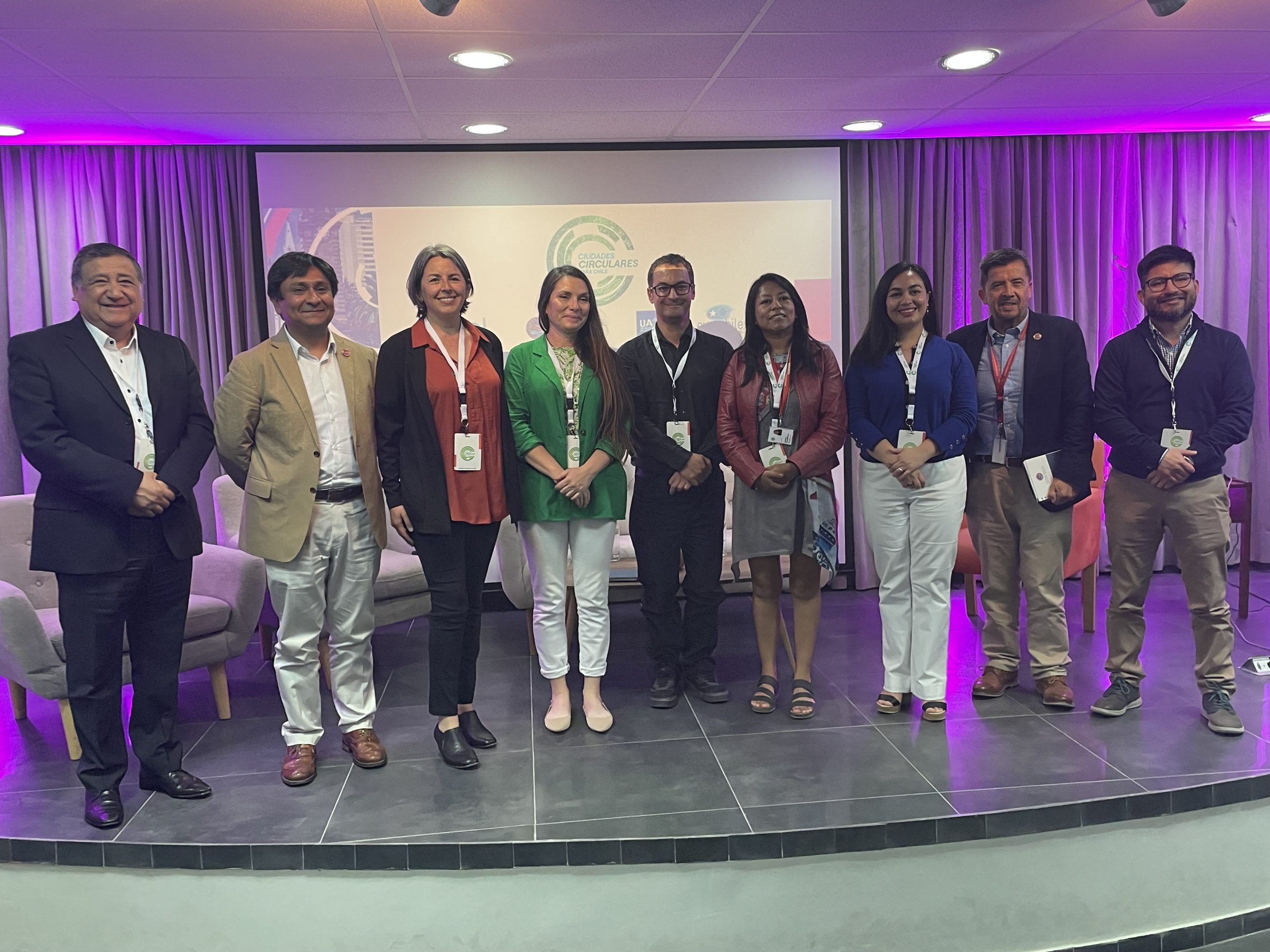
With the aim of disseminating the main topics of the study “Circular Cities for Chile” and sharing the local initiatives that are contributing to the sustainability and resilience of Antofagasta, the second conference was held within the framework of the research developed by Enel Chile together with the Extension Center of UC Davis Chile and the collaboration and sponsorship of the Ministry of the Environment.

The event organised by Enel, the Eurochile Business Foundation, the Regional Government of Antofagasta, and the University of Antofagasta brought together important speakers from the public, private, academic, and civil society, who discussed the vision of a circular city, a new urban model whose advantages have been exposed in the study, which focuses on the transformation of the energy, construction and food sectors.

The head of the Planning Division of the Regional Government of Antofagasta (GORE), Iván Maturana, raised how Antofagasta has been combining with that industry that has characterized it as a city and with other social factors, among them, the integration of migrants.

“The city requires thinking, it requires acting, based on a strategy that we have to do from this; strategy that we must generate between the public world, the private world and, above all, taking citizens into account”, he explained.

In line with the above and in a complementary way, the president of the University of Antofagasta, Marcos Cikutovic, remarked that collaboration between the different sectors, and mainly, the academy, is key. He also highlighted the role of the circular economy in the design of the cities of the future, in the current context of health crisis that the planet is experiencing, which must, he said, give way to an economic and sustainable development model.

The executive director of the Eurochile Business Foundation, José Aravena, also reflected on the central theme of the event. He agreed that the circular economy is a shared commitment and circularity is a prerequisite for climate neutrality.

In that context, he recalled that Eurochile carries out a series of initiatives and projects in different regions of the country based on European knowledge and experience, making Chilean SMEs aware of the opportunities that the transition towards a circular growth model offers them, supporting them in the path of adapting their production and marketing processes to this new paradigm in order to meet the growing demand for circularity that will come from the market or from public regulation.

To have a real impact in the fight against climate change, it is necessary to expand the scale of the circular economy, affirmed the Executive Director of Eurochile, “going from the pioneers to the main economic agents and from companies to society. It is within this framework that we greatly value the Circular Cities for Chile research developed by Enel. Different key players meet in cities for a successful transition to the circular economy. Here, companies, academia, public institutions, and civil society interact, what better place to discuss an agreed strategy to achieve a climate-neutral and efficient society in the use of resources, because, ultimately, it is the commitment of society that depends on the success of this crucial initiative”.
In the event, the head of Circular Economy at Enel Chile, Natalia Correa, presented the main results and scope of the study “Circular Cities for Chile”. The research identifies circularity opportunities for the economic sectors of energy, construction, and food, while proposing interventions based on the principles and business models of the circular economy for Santiago, Concepción and Antofagasta.

“We know that cities face many challenges, because they are increasingly complex systems, but in the case of Antofagasta they have a tremendous opportunity. It is still a small city and there is time to avoid the design mistakes that were made in other cities in the world,” she stressed.

Governance

The first session moderated by the Executive Director of Eurochile Business Foundation addressed the implementation of public policies and governance for the Circular Economy. At the beginning of the dialogue, the Regional Ministerial Secretary of Environment, Fernando Varas, highlighted that -within the framework of the Climate Change Law – one of the areas where efforts are focused on is reducing polluting emissions on waste, which, he said, has a direct link with the circular economy about the final disposal of organic waste.

The collection and recycling of tires is regulated by the Law of Extended Responsibility of the Producer and Promotion of Recycling, soon to be implemented in January of next year according to its regulations. In this regard, Varas said that there are already several initiatives that were approved by the Environmental Impact Assessment System.
The other priority product of the EPR Law is containers and packaging whose debut will be in September 2023, for which the local companies are preparing.

“These companies are requesting fundings to install a recovery plant in our area. What we do in Antofagasta is collect and transport waste to the city of Santiago or to the central area of the country for recycling. What we need is for the infrastructure to be installed in the Antofagasta region, “he said.

The Vice President of the CChC Antofagasta, Andrew Trench, who lamented that even in Antofagasta there is no infrastructure for the recycling of construction waste, even though the union has been noticing it for seven years. However, he mentioned the work of the CChC together with GORE to move forward on this point, since, according to Trench, they have detected that there is a significant potential for impact.

In this field of action, he commented that Clean Production Agreements (CPA) are being promoted, integrating all the companies in the construction area and with other key players involved, such as the Sustainability and Climate Change Agency, the academy, partner companies and waste management companies.

From the academy, the director of the Center for Circular Economy in Industrial Processes (CECPI) of the University of Antofagasta (UA), Ingrid Jamett, pointed out that the demand for circularity requires investment in R+D+i, and the importance that from the communities understand and install the concept of a new human development based on the circular economy model and contribute from there.

“We must invest in R+D+i, but we have to promote it with a focus and objectives that provide the possibility of combining these actions. We are not going to develop great technology; we cannot bring and buy what people tell us will work. For this, we must develop ourselves technically within the university and in society,” she stressed.

At the event, Jamett highlighted what in terms of recycling photovoltaic panels project they are carrying out with Solar Circular, an initiative supported by the Corfo Antofagasta with fundings from the Regional Government.

This project proposes the generation of protocols and technical and economic standards to enable the second-life market for these functional and non-functional modules, together with an installation manual.

One of its inputs is a study financed by Enel, which will allow obtaining answers about module failure rates, how many are seized, what conditions they are in, and how companies can dispose of them safely for the environment.

“Solar Circular has to do with the possibility of giving a different functionality to photovoltaic modules, perhaps, in another field of application, perhaps with less quality of energy generation. We don’t know, because there is no data and that is where the academy is entering generating this data, for example, in the application of green solvents, why don’t we use them?”, she said.

Initiatives and Transformation

The second session ‘Innovative Solutions for a Circular Antofagasta’ began with the director of Valora Alimentos, María José Larrazábal, told how the project was born together with other academics and professionals from various disciplines of the University of Antofagasta. In 2020 this group got together with the objective of recovering and valuing food waste generated in vegetable and fruit trading centers in the region, such as La Vega Central of Antofagasta and the Terminal Agropecuario of Calama.

The food safety expert commented that they had to carry out a data collection for the first stage of implementation of food waste management for the associated premises, which gave way to a classification into three categories: food suitable for human consumption, food partially recoverable and processed food for animal nutrition.

According to Larrazábal, Valora Alimentos has also developed a book of recipes prepared with recovered foods (leaves, stems, peels, etc.) that are usually thrown away and that is aimed at the entire population. Along with this, the project has launched two opportunity food banks, aimed at entrepreneurs, where business lines based on the circular economy are proposed.

For more than ten years Creo Antofagasta, urban planning and coordination office, has been working for the sustainable development of the city. Its executive director, Nicolás Sepúlveda, was one of the guests that spoke about the SARA programme, Antofagasta’s Recycled Water System, which is emerging as a viable and sustainable technology in the face of, he said, the environmental impact generated by desalination plants.

This new look at addressing water management in the city and the region has been taking shape for about seven years which, he remarked, is generating changes in public policies at the national level.

One of the many benefits of generating recycled water, mentioned Sepúlveda, is that “you stop irrigating public spaces with desalinated water, whose desalination plant is powered by energy that comes from a thermoelectric plant, generally, that works on coal in Mejillones.”

The SARA system, by allowing different points of treatment plants, saves resources in the distribution network, therefore, possible green areas are generated in different places, at a value that, in the case of sewage, is a third or half of the desalinated water, and in the case of gray water it is up to a twelfth.

“We have a tremendous opportunity to double, at least, the public spaces of our city with green areas and generate greater comfort. In Antofagasta, the measures are 2.7 square meters of green area per person, which is very low compared to the official recommendations of 8 to 10 meters,” he stated.

The CEO of Ecorayén Foundation, Pamela Pérez, explained the scope of the activities that they have been developing for eight years, in favor of the city’s environment, through educational spaces focused on children and older people, promoting recycling, self-cultivation and composting through workshops and guided tours, promoting the reuse of materials, transforming them into parks and family recreation spaces for educational purposes.

In the task of raising awareness, Pérez has carried out several workshops in the field of construction, innovating construction of domes made with tires. For now, this environmental education laboratory is in an alliance with Enel that seeks to make an eco-furniture store available for the inhabitants of Antofagasta. “We are very grateful because they (Enel) came to us to offer us this huge project that we believe is super important for what we are doing. With this eco-furniture store, we seek to educate the entire population of Antofagasta about how we can build furniture, how we can use pallets, but also how we can create furniture for the community”, she explained.

In this context, within the measures that Enel proposes in its study “Circular Cities for Chile”, is building with reused materials, reducing the use of virgin materials, and favoring those that are low in carbon, with valued and local contents.

Other circular projects in the city are led by the person in charge of the Environment and Cleaning of the municipality of San Pedro de Atacama, Leticia González, who has been in the area since 2020.

One of her first tasks was the installation of a municipal recycling spot. Then, the mayor decided to collaborate with a group of researchers from Católica del Norte University with a project for a solid waste energy recovery plant. For the municipality it was the opportunity to recycle, through the pyrolysis system, the tires that for years were piled up next to the sanitary landfill of the commune.

To date, Leticia specified, 1.3 tons of tires have been treated and a biofuel, gas, carbon black (material for various uses) is obtained and additionally -because it was not contemplated at the beginning- steel was obtained. “All tires come with a steel material, and it turned out to be a fourth material that can be valorized from this process, where you enter the tire into a chamber, apply pressure and temperature in the absence of oxygen. It is not an incineration, so CO2 is not produced because it is an anaerobic system. We are very happy because it worked,” she added.

The experience has motivated the municipality to continue the project with financing from the SQM company and the next goal is to further refine the biofuel before it is used in a car.

At the end of the conference, the Regional Governor, Ricardo Díaz, valued the initiatives and stated that environmental problems must continue to be faced with efficient and sustainable actions in a collaborative manner.
“We must be able to assume the commitment to be a region where we are all responsible for our waste. This means stopping consuming so much, we must change our practices, assume that we live in the driest desert in the world and, therefore, we cannot throw away water as we do. We must understand that our deserts are not garbage dumps, that there is nature there, and therefore, understand that we must pay for our waste. This implies a whole change of mentality that we are not going to achieve immediately, we need to commit ourselves to generating this dynamic, with community discipline in each act we carry out,” he said.

Eurochile invites Chilean companies to participate in the Rioja Wine Trade Mission 2023, within the framework of the European network “Enterprise Europe Network”

The Copernicus network is the Earth Observation Program, which is coordinated and managed by the European Union (EU) and is made up of the Relay Center and Academy from around the world. The network brings together 140 participants, including the Eurochile Business Foundation. Copernicus promotes the supply and access to technological applications based on satellite image, which are available to people, service providers, public administrations and other international organizations.

These tools are developed by those who are part of the network through projects that they present within the framework of the Copernicus calls. During these days, applications to the Horizon Europe program are open, which closes its process on the first days of March 2023. On this occasion the European Commission is very interested in financing Chilean initiatives, whose amounts can reach up to the US$3 million. To do this, it must be done with partners from Chile and Europe as a consortium.

In this context, and given the interest in strengthening the coordination of the network in Chile and connecting its Relay Centers and Academies to get to know each other and evaluate development of projects, Eurochile organised the event ´Copernicus: Opportunities for collaboration and challenges between Chile and the European Union´, which had as a guest the prestigious Finnish Meteorological Institute (FMI), with vast experience in the design of Copernicus applications and a potential European partner, who has previously worked with Eurochile on air quality measurement issues.

The Executive Director of Eurochile, José Aravena, remarked the reason for the activity, highlighting that it responds to the commitment that the foundation agreed upon when it held meetings with the Copernicus leaders during his visit to the city of Prague in last october.

He stressed that the existence of projects, collaborative work and having the experience of entities such as the FMI will be decisive when presenting the project on time in March, since it is a highly competitive process that requires a lot of dedication, human capital, and the result is difficult to achieve.

“Project approval rates are below 10%, that is, 1 out of 10 projects is being approved, or even less than 1. Therefore, if we want to present a project of these characteristics, we have to think carefully about whether we have the capacities to do so and whether we have European partners with expertise in the matter that can guide us”, he said.

He added that Copernicus is a very interesting program because it opens the door to a series of developments for a country like Chile, but at the same time, that there is still room to continue growing, for example, in areas such as mining.

Boost the network

Eurochile collaborated with the Copernicus project that the FMI began to implement locally a couple of years ago, led by Mikko Strahlendorff, space advisor for the Finnish entity and the European Commission, and whose visit to Chile in January 2023 will be an opportunity to continue evaluating the feasibility of applying together with the local Relay Center or Academy for the call of next year.

The institute is currently collaborating with the Ministry of the Environment in three projects for air quality control and management of monitoring, in charge of the air quality and energy expert of the FMI, Katja Lovén, who in her presentation during the activity described how the work methodology has been and shared some recommendations for the proper use of Copernicus applications.

Regarding the opportunities and challenges that the Chilean ecosystem faces in the use of this program, the IMF researcher, Edith Rodríguez, recognized the level of the air quality system, but also pointed to continue advancing in optimizing the use of Information from the network of stations of the Ministry of the Environment in those mining or volcanic activity areas.

“Longer-term work is expected to be done on data management and how that data can be used, for example, for air quality modeling and forecasting. As the FMI we are supporting and we want to continue supporting the ministry and other institutions involved in this task”, she added.

With Eurochile, the FMI already has a path together and both are studying the feasibility of raising an initiative, which would have to come from Chile. In parallel, the foundation talking with the EARSC (European Association of Remote Sensing Companies), which should be defined in these next months.

During the meeting an important milestone for Chile was announced. The Geospatial Projects engineer of the Center for Mathematical Modeling (CMM) of the University of Chile, Roxana Trujillo, and the Director of the Antarctic Research Center of the University of Magallanes, Carlos Cárdenas, confirmed that both institutions are working on a Copernicus project to apply in March.

Representatives of other entities such as Paulina Vidal, from the Hémera Earth Observation Center, from the Universidad Mayor; Camila Barrera, Head of Strategic Programs at CIREN, and René Muñoz, professor at the Department of Agricultural and Aquaculture Sciences at the University of Magallanes also expressed their willingness to support the network.

In this sense, the Executive Director of Eurochile highlighted that “at Eurochile we work with European companies that use Copernicus applications, some Chilean, and we want to promote that.”

The event also gave rise to a discussion where collaboration projects between Chile and Finland in the field of air quality, which are carried out by the FMI together with the Ministry of the Environment, were studied in depth.

At the beginning of the activity, the first secretary of the Finnish embassy in Chile, Antti Kauttonen, recalled that cooperation between the two countries began in 2017, in a context in which environmental issues are becoming increasingly relevant for the governments. Regarding the history of the FMI, he highlighted that it is one of the most important public meteorological institutions in the world, with a cooperation network that covers 25 countries.

In this activity, the FMI’s expert on air quality and energy, Katja Lovén, spoke about the Plan for the Modernization and Redesign of the Air Quality Monitoring Networks that was applied in Concón, Quintero and Puchuncaví and in the municipalities of Calama, Huasco and Coronel, based on the analysis and evaluation of air quality monitoring data obtained over three years.

In her presentation, the expert highlighted a series of recommendations from the IMF’s work, including developing monitoring networks by adding new measurements and laboratory analysis while reducing the amount of monitoring of non-priority pollutants and focusing on priority particulate matter SO2 and PM2.5.

The other collaboration experience of the FMI has been with the María Molina Center since 2011. Felipe Reyes, a researcher from the Chilean entity, disclosed details of the projects developed jointly, most of them financed by the Ministry of the Environment and with the focus on identifying and understanding those measures that help reduce environmental pollution.

Also, during the activity, Matías Quintana, product manager of Metcom, representative of Vaisala, commented that it is key for the industry to understand how contaminants are dispersed beyond the surface level, how the boundary layer moves and how current analysis systems complement each other with new solutions.

Kepa Solaun, climate change expert: “In a large part of the tourism sector, the focus is almost exclusively on the short term and we are not in a position to strategically address these types of future challenges”

At the recent COP27 held in Egypt, the World Tourism Organization (UNWTO) brought together the main stakeholders of the sector seeking to combine criteria on how to accelerate the shift towards greater sustainability and achieve the goal of halving its carbon emissions to 2030 and reach Net-Zero no later than 2050.

The balance of the event was positive in the words of the executive director of the UNWTO, Zoritsa Urosevic: “We are proud to see the way the Glasgow Declaration has inspired our sector into action. Unlocking finance and developing measurement frameworks will be critical to scaling-up our support and continue accelerating climate action for resilience.”

Climate action refers to efforts to measure and reduce greenhouse gas emissions and strengthen adaptive capacity to climate-induced impacts. An area of work in which the Spanish Kepa Solaun is a specialist, who since 2004 has advised a series of projects through Global Factor where he is Founding Partner and CEO.

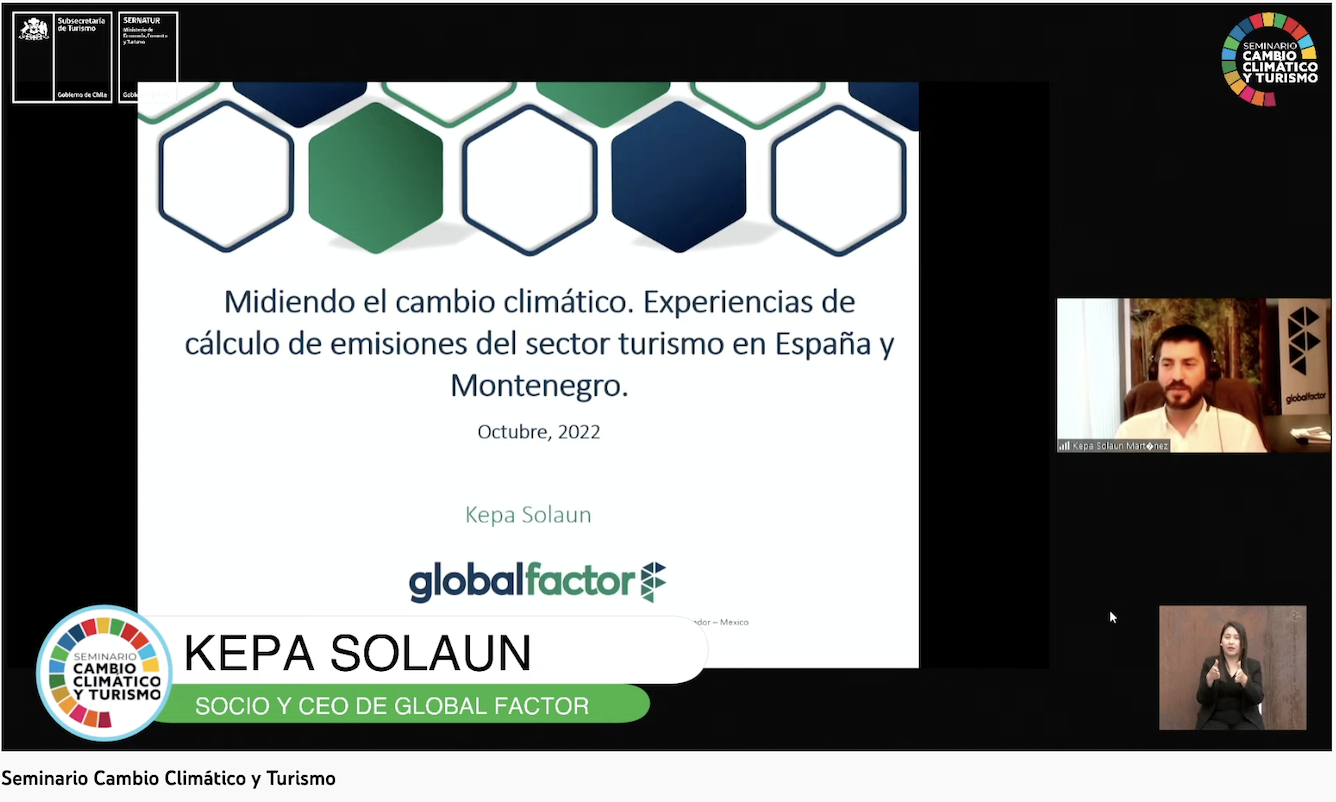
Solaun was invited by Eurochile to participate – remotely – in the Seminar “Climate Change and Tourism”, organized by the Undersecretary of Tourism and Sernatur and where successful experiences of mitigation practices and measures were shared. It was the opportunity to present the results of the measurement of the impact of climate change in the tourism sector of Spain and Montenegro that his consultant carried out.

As Solaun explains in an interview with Eurochile, “within the projects developed to date focused on aspects of mitigation of greenhouse gas (GHG) emissions in the tourism sector, these two countries seemed to be good examples of the application of different methodologies for calculating GHG emissions. In both cases, the focus of the study was national, but the starting data made it necessary to carry out different approximations to arrive at the estimate of GHG emissions from the sector”.

The Global Factor study focused on calculating CO2 emissions and for this it applied different methodological approaches to measure the carbon footprint depending on the country. What are the two visions and why were they used for these experiences?

To estimate the sector’s GHG emissions, two different approaches can be taken. On the one hand, an approach from above – below or top down, and on the other, an approach from below – above or bottom up. In the first case, work is done with macro tools, almost always of an economic nature, that allow working at the country level. In the second case, the starting information is that of the sector, such as, for example, energy consumption, kilometers traveled or waste generated per tourist or per average stay. This second approach is used above all when working with a local or regional scope.

Normally, the application of one or another methodology responds to the type of information available, as well as the objectives that are to be achieved with the study. In the case of top-down methodologies, the approach tends to be more strategic and long-term, to set macro action paths for the sector. In the second case, when the information available is more specific, it makes it possible to identify reduction measures in the short term and to estimate their impact with greater precision than with the top-down approach.

How was the process for accounting and preparing GHG reports?

These types of studies always have a certain degree of complexity and it is necessary to establish hypotheses and assumptions, based on information and existing expert knowledge. For this reason, at Global Factor we normally look for the work teams to combine both experience in calculating GHG emissions and their methodologies, with specific knowledge of the sector and of the country or region where we are going to carry out the study.
The key in the process is the gathering of information, since it is the basis for everything else. This phase of the work is also usually the one that lasts the longest. Based on the information, the treatment and calculation phase begins, in addition to the contrast with sector and local experts.

What results gave the measurements with each methodology?

In both cases, the GHG emissions associated with tourism in both countries were estimated. The difference is that in the Spanish case there were no specific activity data (i.e fuel consumption or km travelled) and in the case of Montenegro they did. The aim of both studies was different, so this was not a problem. In the first case, the aim was to propose a long-term roadmap for the sector to deal with climate change and in the second case, a methodology was sought that could be applied annually to measure the effect of the measures that were defined from the first emission results.

You have said that the carbon footprint is not only about the results, but also about what can be done with it, for example, share, control, reduce, compensate. What would be the best option?

The estimation of GHG emissions is always carried out in order to identify ways to reduce them. Of course, it is important to inform and carry out periodic follow-ups of the same, but the reduction is the ultimate goal of the calculation, everything must start there.

However, not all emissions are refutable with current technologies, so there is an option to offset them with reductions that occur elsewhere. There are internationally recognized standards, such as the Gold Standard or Verra, which certify that these emission reductions are taking place and control that they are not used more than once.

Global Factor has launched a new initiative this year called OffCarbon, through which we are promoting the development of projects that reduce GHG emissions that can be certified and used to offset.

Some experts warn that the focus to combat climate change should be on adaptation rather than mitigation. What do you think? If so, which roadmap would be the most effective for the tourism sector?

Climate change is producing a series of impacts to which it is necessary to adapt, and its future evolution indicates that they will be more intense and frequent as time progresses. However, the cause continues to be GHG emissions, so we cannot ignore the importance of continuing to make efforts to reduce emissions. As the Paris Agreement made clear, both aspects are essential and complementary in many cases.

As for the tourism sector, the focus should be twofold. Address, on the one hand, the reduction of GHG emissions with measures that support the decarbonisation of the sector, through energy efficiency, renewable energy and sustainable transport. But without forgetting to carry out an analysis in each case of how climate change can affect tourism and establish strategies to reduce its vulnerability to future climate. Here, unfortunately, I cannot point to a common roadmap, since it depends a lot on each region, both on the characteristics of its tourism and on the climate projections that are available for the area.

How is a mitigation or adaptation plan financed? How important is the advice from the public and private sectors?

To answer the question, I am going to differentiate what is the phase of elaboration of the plan itself, from what is the implementation phase. Obviously, the second phase is the one with the highest associated costs. Different actors usually intervene in its financing, many of the actions will be promoted by the private sector. From the administration it can be supported through incentives, such as financial aid or instruments that serve to recognize those most involved, in addition to the application of obligations regulated by law.

At the international level, there are also numerous bilateral and multilateral organizations that are supporting decarbonisation and adaptation to climate change, through donations or loans, among other economic instruments. In addition, public-private collaboration also allows a better application of the planned measures and there are many countries that are already making efforts in this regard.

On the other hand, technical advice is key, both in the first phase of preparation of the plan itself, and later in its implementation. A series of technical studies are needed, such as carbon footprints and GHG emissions inventories or climate risk analysis, which must be carried out by professionals who know and use the appropriate methodologies.

Taking into account the economic effects that the pandemic brought on the tourism sector worldwide, what are your projections for climate change in the short or medium term? Could they be more negative if the sector is reactivated without doing so in a sustainable way or is your vision optimistic?

It is a difficult question to answer. The situation that the sector has experienced with the COVID pandemic has been extreme and sudden, with no time or capacity to adapt to the situation. Undoubtedly, if the commitment to reducing GHG emissions is not continued, climate change will lead us to a future of extremes. However, changes occur gradually, which allows us to establish strategies to strengthen our ability to adapt to them. Furthermore, the steps taken in the last decade towards global decarbonization, as well as the increased general awareness, make me optimistic. Currently, the international commitment, both from public and private actors, to reduce GHG emissions are clear. Technological advances in this sense are already being important and I believe that their development in the following years will be even greater, offering solutions in those areas where the reduction of emissions is more complex.

A key issue here will be the tourist’s sensitivity to the topic and to what extent they will push for changes in the direction of sustainability.

Chile is the first developing country to have a Climate Change Framework Law. How can you capitalize on this milestone in the tourism sector?

The Framework Law on Climate Change approved in Chile is a very important step for the different sectors of the country, including tourism. The Law establishes the goal of carbon neutrality and resilience for 2050, an ambitious objective that is in line with many international initiatives and that offers many options for the country’s development in environmental, economic and social matters.

This milestone could allow the Chilean tourism industry to take fundamental steps in the development of a responsible and respectful activity with the environment, through different lines of action and concrete measures that require the commitment of all the key players within the sector. The Law will promote a modern and resilient transformation of the tourism sector, from transport to construction or the way of doing tourism until now.

The tourism industry in all its fields may register in the public registry of GHG emissions proposed by the Law, as well as obtain certificates that confirm the reduction or absorption of gases through the implementation of projects in Chile for this purpose. In addition, it will promote the modernization of its infrastructures, through an implementation of constructions based on energy efficiency, which will support a more sustainable, profitable sector thanks to green energies. Uniting sustainable technologies tourism in Chile is possible, to also create an economically viable and environmentally friendly ecosystem.

What is your opinion of the work that Eurochile Business Foundation develops within the framework of the Circular Economy Roadmap?

The transition from a linear to a circular economy is a complex process that requires a significant transformation in the ways of producing and consuming, and without the collaboration of organisations like Eurochile it would be impossible to achieve it. Only in this way is it possible to consolidate joint strategies to promote this progress towards circularity and innovation within the economy, and everything that this directly and indirectly entails.

The work that they are developing from the foundation to promote, especially, that the private sector knows and has the possibility of developing a Circular Economy Roadmap will also support the consolidation of links with Europe. All of this will help to further drive, supporting the international dissemination of this economic, energy and climate transition and fostering collaboration between companies, as well as exchanging experiences and strengthening environmental entrepreneurship through cooperation.

From now on, where should the efforts be placed to make the tourism sector in the world more resilient to climate change?

The sector should already have reasons to be resilient, since its own competitiveness and, in some cases, its survival are at stake. Consider, for example, winter sports tourism in areas where you will have to rely almost exclusively on artificial snow. But something similar happens in different sun and beach destinations.

The question is to what extent the sector is prepared to look at the long term and make decisions to reduce that vulnerability now. In a large part of the sector, the focus is almost exclusively on the short term and it is not in a position to strategically address this type of future challenges.

Here, public and private institutions play an essential role in disseminating information and providing tools to visualize and understand the expected impacts and design measures to address them preventively.

Eurochile reactivates the Copernicus network seeking to accelerate the presentation of projects in a key call

The Copernicus network is the Earth Observation Program, which is coordinated and managed by the European Union (EU) and is made up of the Relay Center and Academy from around the world. The network brings together 140 participants, including the Eurochile Business Foundation. Copernicus promotes the supply and access to technological applications based on satellite image, which are available to people, service providers, public administrations and other international organizations.

These tools are developed by those who are part of the network through projects that they present within the framework of the Copernicus calls. During these days, applications to the Horizon Europe program are open, which closes its process on the first days of March 2023. On this occasion the European Commission is very interested in financing Chilean initiatives, whose amounts can reach up to the US$3 million. To do this, it must be done with partners from Chile and Europe as a consortium.

In this context, and given the interest in strengthening the coordination of the network in Chile and connecting its Relay Centers and Academies to get to know each other and evaluate development of projects, Eurochile organised the event ´Copernicus: Opportunities for collaboration and challenges between Chile and the European Union´, which had as a guest the prestigious Finnish Meteorological Institute (FMI), with vast experience in the design of Copernicus applications and a potential European partner, who has previously worked with Eurochile on air quality measurement issues.

The Executive Director of Eurochile, José Aravena, remarked the reason for the activity, highlighting that it responds to the commitment that the foundation agreed upon when it held meetings with the Copernicus leaders during his visit to the city of Prague in last october.

He stressed that the existence of projects, collaborative work and having the experience of entities such as the FMI will be decisive when presenting the project on time in March, since it is a highly competitive process that requires a lot of dedication, human capital, and the result is difficult to achieve.

“Project approval rates are below 10%, that is, 1 out of 10 projects is being approved, or even less than 1. Therefore, if we want to present a project of these characteristics, we have to think carefully about whether we have the capacities to do so and whether we have European partners with expertise in the matter that can guide us”, he said.

He added that Copernicus is a very interesting program because it opens the door to a series of developments for a country like Chile, but at the same time, that there is still room to continue growing, for example, in areas such as mining.

Boost the network

Eurochile collaborated with the Copernicus project that the FMI began to implement locally a couple of years ago, led by Mikko Strahlendorff, space advisor for the Finnish entity and the European Commission, and whose visit to Chile in January 2023 will be an opportunity to continue evaluating the feasibility of applying together with the local Relay Center or Academy for the call of next year.

The institute is currently collaborating with the Ministry of the Environment in three projects for air quality control and management of monitoring, in charge of the air quality and energy expert of the FMI, Katja Lovén, who in her presentation during the activity described how the work methodology has been and shared some recommendations for the proper use of Copernicus applications.

Regarding the opportunities and challenges that the Chilean ecosystem faces in the use of this program, the IMF researcher, Edith Rodríguez, recognized the level of the air quality system, but also pointed to continue advancing in optimizing the use of Information from the network of stations of the Ministry of the Environment in those mining or volcanic activity areas.

“Longer-term work is expected to be done on data management and how that data can be used, for example, for air quality modeling and forecasting. As the FMI we are supporting and we want to continue supporting the ministry and other institutions involved in this task”, she added.

With Eurochile, the FMI already has a path together and both are studying the feasibility of raising an initiative, which would have to come from Chile. In parallel, the foundation talking with the EARSC (European Association of Remote Sensing Companies), which should be defined in these next months.

During the meeting an important milestone for Chile was announced. The Geospatial Projects engineer of the Center for Mathematical Modeling (CMM) of the University of Chile, Roxana Trujillo, and the Director of the Antarctic Research Center of the University of Magallanes, Carlos Cárdenas, confirmed that both institutions are working on a Copernicus project to apply in March.

Representatives of other entities such as Paulina Vidal, from the Hémera Earth Observation Center, from the Universidad Mayor; Camila Barrera, Head of Strategic Programs at CIREN, and René Muñoz, professor at the Department of Agricultural and Aquaculture Sciences at the University of Magallanes also expressed their willingness to support the network.

In this sense, the Executive Director of Eurochile highlighted that “at Eurochile we work with European companies that use Copernicus applications, some Chilean, and we want to promote that.”

The event also gave rise to a discussion where collaboration projects between Chile and Finland in the field of air quality, which are carried out by the FMI together with the Ministry of the Environment, were studied in depth.

At the beginning of the activity, the first secretary of the Finnish embassy in Chile, Antti Kauttonen, recalled that cooperation between the two countries began in 2017, in a context in which environmental issues are becoming increasingly relevant for the governments. Regarding the history of the FMI, he highlighted that it is one of the most important public meteorological institutions in the world, with a cooperation network that covers 25 countries.

In this activity, the FMI’s expert on air quality and energy, Katja Lovén, spoke about the Plan for the Modernization and Redesign of the Air Quality Monitoring Networks that was applied in Concón, Quintero and Puchuncaví and in the municipalities of Calama, Huasco and Coronel, based on the analysis and evaluation of air quality monitoring data obtained over three years.

In her presentation, the expert highlighted a series of recommendations from the IMF’s work, including developing monitoring networks by adding new measurements and laboratory analysis while reducing the amount of monitoring of non-priority pollutants and focusing on priority particulate matter SO2 and PM2.5.

The other collaboration experience of the FMI has been with the María Molina Center since 2011. Felipe Reyes, a researcher from the Chilean entity, disclosed details of the projects developed jointly, most of them financed by the Ministry of the Environment and with the focus on identifying and understanding those measures that help reduce environmental pollution.

Also, during the activity, Matías Quintana, product manager of Metcom, representative of Vaisala, commented that it is key for the industry to understand how contaminants are dispersed beyond the surface level, how the boundary layer moves and how current analysis systems complement each other with new solutions.

Eurochile Business Foundation, Enel Chile and the Regional Government of Biobío organize the III Conference: Circular Cities for Chile in Concepción

Next Tuesday, December 6, in the Mural Room of the Biobío Regional Government in Concepción, the Eurochile Business Foundation, Enel Chile and the Biobío Regional Government will hold a new Conversation “Circular Cities for Chile”, which seeks to be a space to reflect on the opportunity offered by the circular economy to create economic, social and environmental value in the cities of Chile, this within the framework of the study of the same name developed by Enel’s Sustainability Management in conjunction with the Center for Extension of UC Davis Chile and the collaboration and sponsorship of the Ministry of the Environment.

Like the first event held in the city of Santiago and the second in the city of Antofagasta, this third event will bring together national and international experts such as José Espí from EURECAT, Spain, highlighting local innovations and calling for #circularaction in the territories, in line with the National Circular Economy Roadmap and international commitments for climate action.

The conference will be divided into two parts; Session 1: Implementation of Public Policies and Governance for the Circular Economy, will be moderated by the Executive Director of Eurochile, José Aravena, and will share opinions with the Regional Ministerial Secretary of Environment, Óscar Reicher, Head of Infrastructure and Transport Division, Óscar Ferrel, and the mayor of Coronel, Boris Chamorro.

Session 2: Innovative Solutions for a Circular City will be led by Andres Palma from Enel Chile and will part of the discussion Fernando Pérez from City Lab Biobío; Marietta Montenegro from Essbio; Cristina Segura from the Technological Development Unit of the University of Concepción and Clahudett Gómez from the Biobío Solidario Food Bank.

At the end of the day, the signing of the commitment to circular cities for Chile and words of Gore de Concepción are scheduled.

The Studie ‘Circular Cities for Chile’ aims to develop a vision of circular economy for the cities of Chile; collect data and indicators based on existing public information on materials, energy and emissions, identify circularity opportunities for the decarbonisation of three economic sectors: energy, construction and food and propose circular interventions for the study cities based on the principles and business models of circular economy.

To register for the event, in the following LINK

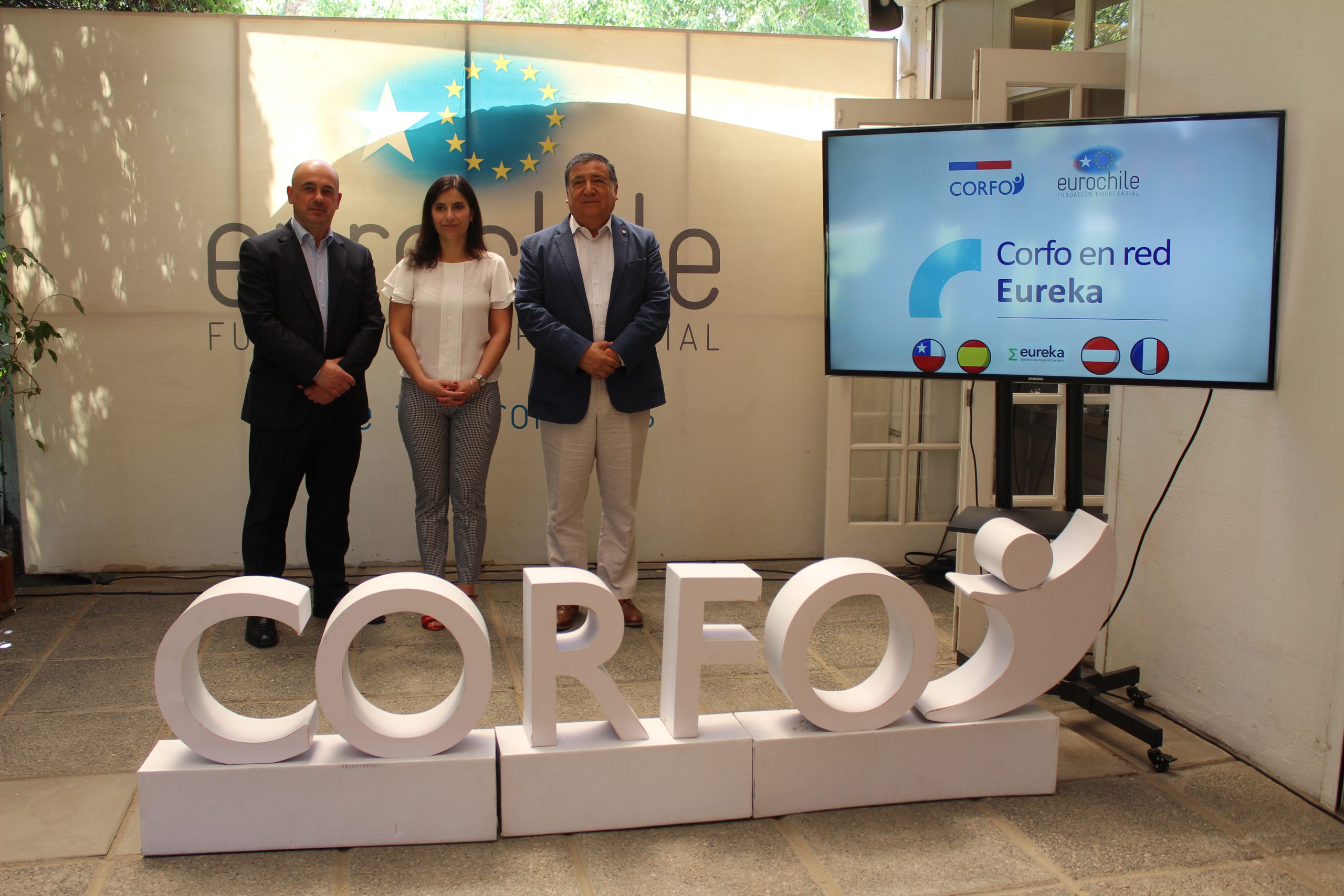
Eurochile Business Foundation and Corfo jointly carry out the pre-launch of the call for the Eureka network

The pre-launch of the call of Eureka was carried out in Eurochile with the presence of authorities from Corfo, the Center for Technological Development and Innovation of Spain (CDTI), representatives of European embassies and national entrepreneurs. This network will allow Chilean and European companies execute joint innovation projects and apply for co-financing funds.

This activity is part of a milestone for Chile since, through Corfo, it rejoins this network of innovation agencies from Europe, the most important in the world in terms of promoting R+D+i in companies, after reaching agreements of cooperation with France, Spain, Austria and Belgium, after the last call of this network was carried out in 2020.
Corfo’s call that it makes together with these countries is to participate in the ‘network projects’, with a focus on the development of clean technologies such as green hydrogen, in order to face as a country, the challenges imposed by environmental problems, says Jocelyn Olivari, Corfo Innovation Manager.

“Chile is trying to develop innovative projects in a collaborative way with countries of the European Union and the novelty is that Belgium joins and that reflects the interest not only of this Belgium, but of other countries to collaborate with our country, which is seen as very serious and that it has tremendous potential in the development of clean technologies. Therefore, it must be highlighted, that there is interest from other countries to learn about what is being done in Chile”, she remarks.

Along the same lines, she recalls that our country has a coordinated institutional framework at a public level, and the Green Hydrogen Committee has been organized, which the current government has given continuity and depth.
“We have the challenge of exporting green hydrogen by 2030 and reaching carbon neutrality by 2050 and we see green hydrogen as a means where we have competitive advantages to promote the development of this industry”, she adds.

In this context, Eurochile’s role in supporting the identification of the ‘perfect partners’ within the framework of the call for network projects stands out. “It is important to identify which company is interested in your same project that can complement the capabilities and develop a much more effective initiative, and Eurochile is helping us with the vast experience it has. It has previously participated in Eureka projects and that is why we see it as a fundamental partner, especially in the first part of the process, where it is necessary to find the perfect match between the companies, since the development of a successful project depends on that” , she says.

This mission of bringing Chilean and European companies closer is at the heart of what Eurochile has always done, through the Enterprise Europe Network (EEN) where more than 600 institutions in more than 50 nations participate, and where all the countries of the European Union are part of.

“We provide a network that allows connections between Chilean companies and those of the countries that are part of Eureka and, this network provides the financing that enables the execution of the projects; therefore, we are absolutely complementary,” says José Aravena, Executive Director from Eurochile.

The call targets established companies that are a minimum of 18 months old, with some sales. Applicants can do it with an associate, that is, a research center, a university, or a technological institute, explains, Corfo’s Innovation manager.

“The beneficiary and final objective of this call are private companies that can always be accompanied. It is interesting when universities or research centers show technological developments that can be transferred to companies”, she indicates.

Opportunities from Spain

Chile has been for decades a suitable country for investment and business development with Spain. The relationship has been strategic and the possibility of continuing to bring the two countries closer is an opportunity offered by Eureka.

This is how Francisco Sánchez sees it, delegate of the Center for Technological Development and Innovation of Spain (CDTI), who in the event presented the different milestones that must be incorporated and taken into account in Eureka projects.

The representative from Spain agrees that Chile’s attraction for this call is in non-conventional renewable energies, green hydrogen and the agricultural and forestry sectors. In this sense, he points out that the CDTI is already coordinating with the innovation agencies of the countries that participate in the network.

In fact, Spanish companies, are consulting the opening date of the call, since they are interested in working with business partners from sectors that they have estimated have potential in the aforementioned areas, he adds.

Regarding how to guide Chilean companies when it comes to identifying the perfect Spanish partner, he stresses that “as CDTI we can help them to identify them, but there is also a network with which we are going to work more closely, which is the Enterprise Europe Network (EEN ) through which those proposals that come up with concerns from Chilean companies will be circulated through the EEN, and in the case of the CDTI for those companies that have their focus on Spanish companies, of course we will be delighted to review them and be able to detect partners in Spain”.

Participants and requirements

The official launch will be in mid-December, when applications open on the Eureka platform and those interested enter the profile of their projects. Corfo will evaluate that the uploaded information is framed within the objectives of the call to develop innovative products, processes and services, which have an R&D component, which require the development of a prototype, technical validation and the potential to reach to the market within a maximum period of four years.

In this first stage, applicants must sign a collaboration agreement with another company from the participating countries.

The advantage that Eurochile offers is its work in these matters, which has made it easier for Chilean companies to connect with European counterparts since they participated in a B2B or fair organized by the foundation, which is a solid base to start on.

“What we are going to do is that when a Chilean company is interested in participating and who do not have a partner, we are going to transmit this profile through the EEN network and among the Eureka countries through their hubs; at the same time it can also happen that they write us from Austria saying that they have a company that wants to present a Eureka project and is looking for a Chilean partner. So, we do the task of looking for the national counterpart”, comments the Executive Director of Eurochile.

The platform will be receiving profiles until February 24 of next year and from that date they will be evaluated jointly by the innovation agencies of Spain, Chile, Belgium, France, and Austria. Confirmation will be given in March for the initiatives to apply for Phase 2 through the ´Crea y Valida´programme.

“In the second stage of the Crea y Valida call (Corfo programme) each project is presented in its country of origin. For example, the Chilean company will do it on the Corfo website, while its partner, if it is French, will do it on the BPI website, which is the simile of Corfo in France. The call closes in May and between June and July 2023 we decide together with the other agencies in the network which initiatives will receive the financing”, concludes the Corfo Innovation Manager.