Eurochile Business Foundation is a non-profit organisation created on 12 March 1993 by the State of Chile and the European Union with the aim of promoting commercial, technological, cultural and academic exchange between both regions, with the mission of creating, promoting and consolidating this exchange between small and medium-sized enterprises and Chilean institutions and those of the nations that make up the European Union, both public and private, as a facilitator of the internationalisation process of SMEs and the strengthening of support institutions.
Eurochile's activities also include business cooperation, where it promotes collaboration between European and Chilean companies through various projects with the aim of providing advice, exchanging new technologies and creating contact networks through the Enterprise Europe Network (EEN), a support network whose objective is to help with the growth and internationalisation of companies through information, advice and networking services. It also has a technology transfer area, specialised in sustainability and circular economy, which facilitates the exchange of technical and scientific knowledge between Europe and Chile, supports the training of professionals, studies and the transfer of technology and best practices.
For this reason, the Eurochile Business Foundation has positioned itself as a benchmark in the field of cooperation and business development, highlighting its commitment to associative work in various projects of great relevance. Among them, its constant participation from 1994 to the present in the AL-INVEST Verde programme, a project that promotes sustainability and circular economy in the business environment, currently focused on the fruit and construction sector, stands out. In addition, its work extends to the Coquimbo region through the Innovation Fund for Competitiveness (FIC), contributing to the reactivation and recovery of tourism through the generation of new sustainable and circular products, thus promoting the knowledge and practice of the circular economy in the region. The Foundation is also involved in the development of the National Regional Development Fund (FNDR) Osorno, promoting the improvement of the recycling and waste management value chain, focusing its efforts on citizens, waste managers and SMEs.
Likewise, it promotes cooperation in areas related to sustainable development, such as renewable energies, environment, sustainable agriculture and circular economy, as well as trade and investment exchange between the two continents, promoting participation in fairs and exhibitions, organising business missions and facilitating the identification of business opportunities. All this has allowed it to establish strategic alliances with public and private institutions in Europe and Chile, to strengthen collaboration in areas of common interest.
In this regard, we spoke with José Aravena, executive director of Eurochile Business Foundation, who told us about its trajectory, the objectives and challenges that the Foundation has faced in relation to its 30 years of existence, the projects it is currently working on, the integration of the Circular Economy in Chile and the path that this organisation will follow in the coming years.
What has it been like and what has it meant for you to take on the leadership of the Foundation?
The Eurochile Business Foundation was a project that was in the hands of the Under-Secretariat of the Ministry of Economy and a team had been put together to set it in motion, and Eurochile was inaugurated in 1993. I was one of the members of the management team and in 1997 I took over the management of the Foundation. It has been a great challenge, in practice a very fruitful experience, since we are an institution that seeks to contribute to the development of Chile through what we can do in favour of small and medium-sized enterprises. So, it is a very varied job, there are many issues that must be seen, but very much in line with what I wanted to do with my professional life, since I started to relate to Europe since 1983 when I went to study, and when I joined the Eurochile team, I connected with their purposes and the meaning they wanted to achieve.
How has the circular economy been evolving in Chile and what impact has the Foundation had in terms of disseminating these issues throughout the country?
Putting it in context, Eurochile since its inception has always been looking for issues that have a great development with the European Union, one of them is the circular economy, an issue that the European Commission had been working on since early 2010, so that by 2020 the "European Green Pact" arises, an initiative that seeks a new growth model that is more sustainable and helps combat climate change. For this reason, when we as a Foundation began to address these issues, we could have European development as a reference, which allowed us to carry out business missions, business rounds, seminars and conferences to begin to disseminate the circular economy in Chile, a topic that was quite unknown when we started in 2016.
We are currently addressing this issue to the business world because it is the one, we are targeting, with the aim of being able to publicise this new growth model that seeks to avoid all types of waste, and thus be able to reuse and reprocess everything that can be reused and reprocessed. This circular model is characterised by companies being more efficient and by joining this initiative, you contribute to improving the quality of life of the population, because, at the end of the day, environmental problems are becoming a global problem that affects the health and integrity of people.
And in this sense, how did the need to support SMEs and bring them closer to this new system arise?
In general, Chilean SMEs have serious difficulties in absorbing technology and making productive changes, for a myriad of reasons: financial, time, lack of human resources, among others. In Chile, the issue of the circular economy has been developed by large companies, including multinationals such as Enel, CMPC, among others, since they have the means to do so. On the other hand, we have the SMEs that find it very difficult, firstly because they have no knowledge or resources, and secondly, they have no possibility of obtaining technical assistance and access to specialists who can help them in this area, so it is that world that we try to help with our projects and initiatives.
How are the benefits obtained by the Foundation through its connections with Europe reflected for the benefit of Chilean companies?
At Eurochile, we have been pioneers in establishing an information and technology bridge between Europe and Chile. This connection allows us to keep abreast of the latest trends and advances in various sectors that are being developed on the other side of the continent, since one of our objectives is to transmit this valuable information to Chilean companies, so that they can anticipate changes and adapt more efficiently to the needs of the global market.
Moreover, it is exciting to see how Chilean companies find their European counterpart, generating synergies and business opportunities that benefit both sides. In this sense, we have established ourselves as leaders in the internationalisation of Chilean companies to Europe.
Likewise, over the last 30 years, our work has been based on strengthening business capacities and creating collaboration and learning networks between the two continents. Through training, consultancy and promotion programmes, we have sought to promote the sustainable and competitive growth of Chilean companies in the European market.
How is the success of Eurochile reflected in these projects?
Well, it is reflected in the fact that we have more and more projects, we dedicate a lot of work to disseminate what we do as a Foundation, through national and international seminars, with the aim of being able to reach as many people as possible. We did a great job on the issue of the roadmap, but it was clear that the next step would have to be to work with companies directly, because the theory was already more or less developed, which is why our success has been reflected in the number of projects we have been assigned, especially those that focus on issues related to sustainability and the circular economy.
Now, that is the success of the Eurochile Business Foundation, but for us the most important thing is not the success of Eurochile, but the success of the companies, and that is what we are trying to achieve today, is that the companies that work with us can incorporate the circular economy in their way of production so that they can be more productive and competitive. In the end, the outcome is important, because you have to reconcile economic performance with resource use, you always need to balance the two. Whereas, in practical terms, the final result has to do with the number of companies that start to move towards a circular path, because this does not happen overnight, it is long, it has costs, companies sometimes do not have enough resources to do everything that needs to be done, but it is a process, and in the end, one will reap the results as companies become more circular.
What future projections do you have for the Foundation and how do you see it in 5 to 10 years?
Look, I think that the Foundation is a spectacular instrument for cooperation in technology transfer between Chile and the European Union, we have many possibilities for growth. As for the limitations we may have, they are currently financial, but for our part we will continue to apply for projects, despite having a co-financing character, we will look for ways to cover the costs, in order to continue helping small and medium-sized enterprises to move towards circular systems and to internationalise them so that they can find their European counterparts.
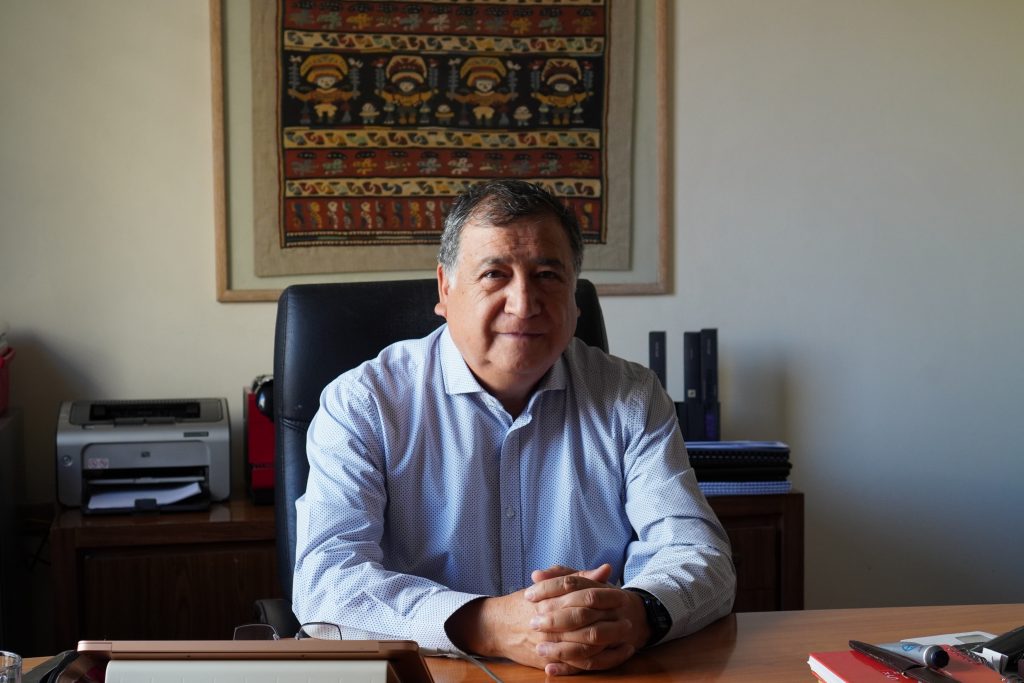
José Aravena, executive director of Eurochile Business Foundation
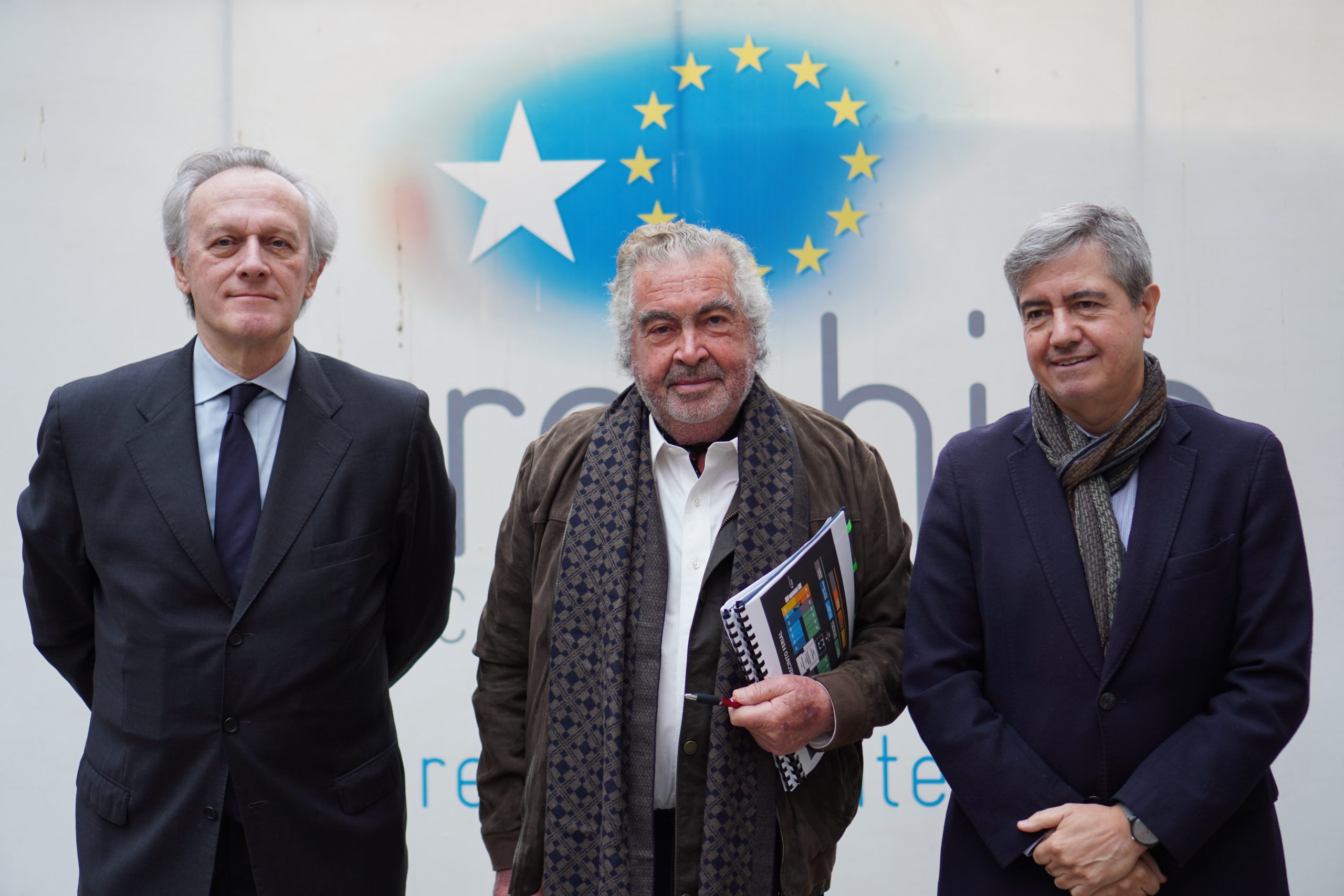
Eurochile Business Foundation and the Chamber of Commerce of Mallorca, join forces in an agreement to promote cooperation and mutual development. This alliance promises to generate commercial, technological and training opportunities, benefiting both institutions.
Eurochile Foundation is a private, non-profit organisation, created by the European Union and the State of Chile, which allows national SMEs to access the European market, to obtain the best information, technologies and business opportunities and to support European companies and institutions that want to cooperate with Chile.
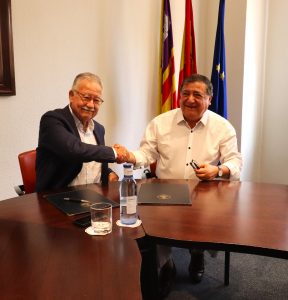
The strategic agreement sealed on Wednesday 19 July by José Aravena, executive director of the Eurochile Business Foundation, and Eduardo Soriano, president of the Chamber of Commerce, will enable cooperation between companies participating in the activities of both Eurochile and the Chamber of Commerce of Mallorca.
These companies will benefit directly or indirectly in commercial, technological and training matters through projects and activities that both institutions will jointly promote, identifying activities that facilitate their internationalisation, promoting sustainable development, organising business meetings to strengthen the ecosystem of innovation and entrepreneurship through cooperation, among others.
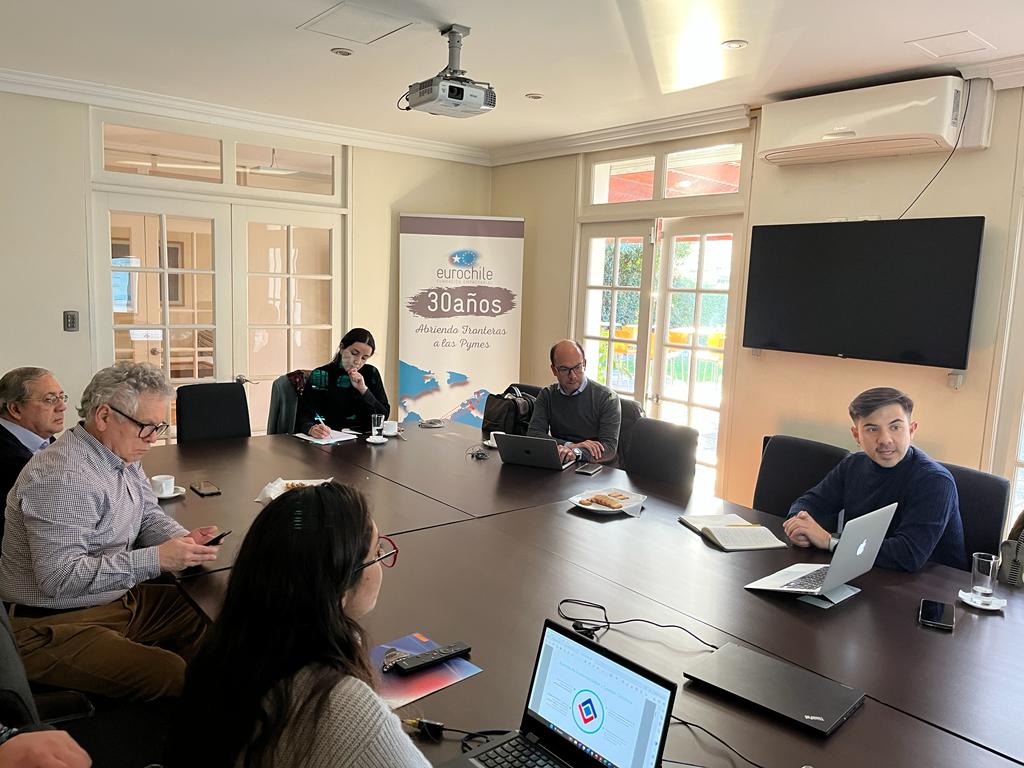
In the framework of the activities of the circular economy working group, founded in 2019 as an instance to support Chilean SMEs in their transition to become more circular, participating members met with national and European experts to address the different points of view regarding the Clean Production Agreements (CPAs) that are being developed both in Chile and Europe and the benefits that these tools bring by incorporating them into companies.
Clean Production Agreements (CPAs) are a voluntary environmental management tool that seeks to improve efficiency in the use of natural resources through specific and measurable commitments and goals, within a given timeframe, to reduce greenhouse gas emissions, improve energy efficiency and reduce the use of toxic products.
In Europe, CPAs are also an important environmental management tool and are promoted by the European Commission. These agreements focus on objectives such as improving energy efficiency and reducing greenhouse gas emissions in the industrial sector.
Meanwhile, in Chile, CPAs have been developed for various productive sectors, such as agriculture, mining, construction, tourism and transport and storage of goods, among others. These agreements involve companies, communities and public bodies, who work together to establish concrete environmental objectives and targets and develop action plans to meet them.
The benefits of Cleaner Production Agreements offered to companies are varied, including: more efficient management of resources, reduction of operating costs, and improvement of environmental quality. In addition, CPAs can encourage technological innovation and the development of new environmentally friendly products and services that have a favourable impact on productivity and increase competitiveness.
During the meeting, Linnet Solway, a French expert in Circular Economy, gave a remote presentation on the benefits that the initiatives of the CPA pacts have had in Europe. On the other hand, Sebastián Carvallo, Deputy Director of Sustainable Production of the Agencia de Sustentabilidad y Cambio Climático de Chile, presented the measures that are being taken in the country to address this issue.
"A factor that allows the promotion of Cleaner Production Agreements in Chile is the development of four official standards that establish guidelines for the development, implementation and certification of compliance with them. Another relevant issue is that in 2012, the UN internationally validated the Clean Production Agreements as the first Nationally Appropriate Mitigation Action, highlighting the eco-efficiency and sustainability promotion strategy implemented by the Sustainability and Climate Change Agency. Since 2016 we have decided to publicly report the emission reductions achieved through these agreements in accordance with the Ministry of Environment standards. This has allowed us to estimate reductions of 1,466,336 tonnes of CO2 between 2012 and 2019, with the Clean Production Agreements being the first Chilean mitigation action to report these reductions to the United Nations," says Sebastián Carvallo, deputy director of Sustainable Production at the Sustainability and Climate Change Agency.
On the other hand, Ivonne Palma, Director of the Sustainability and Circular Economy area, highlights that, "Clean Production Agreements are a key tool to move towards a circular and sustainable economy, as they promote the adoption of more environmentally friendly practices and technologies, generating benefits for both companies and society in general. This is why, thanks to the experts' insights, they help our Circular Economy working group to have the necessary tools to promote strategies and solutions that contribute to a sustainable future.
In short, adding CPAs o companies is an opportunity to improve processes, products and services, with the aim of generating a positive impact on the environment and the community. In addition, having the opportunity to join the Circular Economy group of the Eurochile Business Foundation provides access to a wide network of contacts, knowledge and tools to achieve a more efficient and sustainable management.
Within the framework of the AL-INVEST Verde Construction project "Articulation and development of sustainable business models led by MSMEs for the construction sector", an initiative that seeks to benefit small and medium-sized enterprises and business organisations in the sector to develop sustainable business models, the Eurecat Technology Centre together with the Eurochile Business Foundation have carried out International Seminars in three regions of the country.
MSMEs from Osorno, Los Lagos and the Metropolitan Region have benefited from these activities, specifically focused on the circular economy in construction, where Frederic Clarens, Director of the Waste, Energy and Impact Unit, Cristian Riquelme, Advanced Researcher of the Environmental Impact Unit, both representatives of Eurecat, have been in charge of guiding the participants on the benefits and duties of transforming the construction industry by implementing the Circular Economy.
The third International Seminar, held on 30 May at the Chilean-European Business Centre of the Eurochile Business Foundation, was attended by Ivonne Palma, director of the Eurochile Sustainability and Circular Economy Area, who presented the opportunities presented by sustainable and circular practices in the business environment and invited the small and medium-sized enterprises present to participate and be part of the project and its activities during the 30 months of implementation.
During the meeting, experts shared various strategies and solutions applied in different parts of Europe, such as the implementation of solar panels, the use of recycled materials and the reuse of water in construction processes. They also emphasised the importance of collaboration between different actors in the construction sector and the need for long-term planning to achieve an effective transition to sustainability.
In summary, the implementation of sustainable practices in construction is high on the current agenda of the business sector, and these workshops have been an opportunity for attendees to learn first-hand about the benefits of moving towards a Circular Economy. Undoubtedly, the seminars have been a key opportunity to continue advancing in the search for innovative and sustainable solutions to transform the construction industry.
About AL-INVEST Verde
AL-INVEST Verde is a European Union (EU) programme whose main objective is to promote sustainable growth and job creation in Latin America by supporting the transition to a low-carbon, resource-efficient and more circular economy. Through Component 1, led by sequa, the programme manages funds for the implementation of innovative small business partnership projects to boost sustainable practices in the private sector.
Further information: www.alinvest-verde.eu
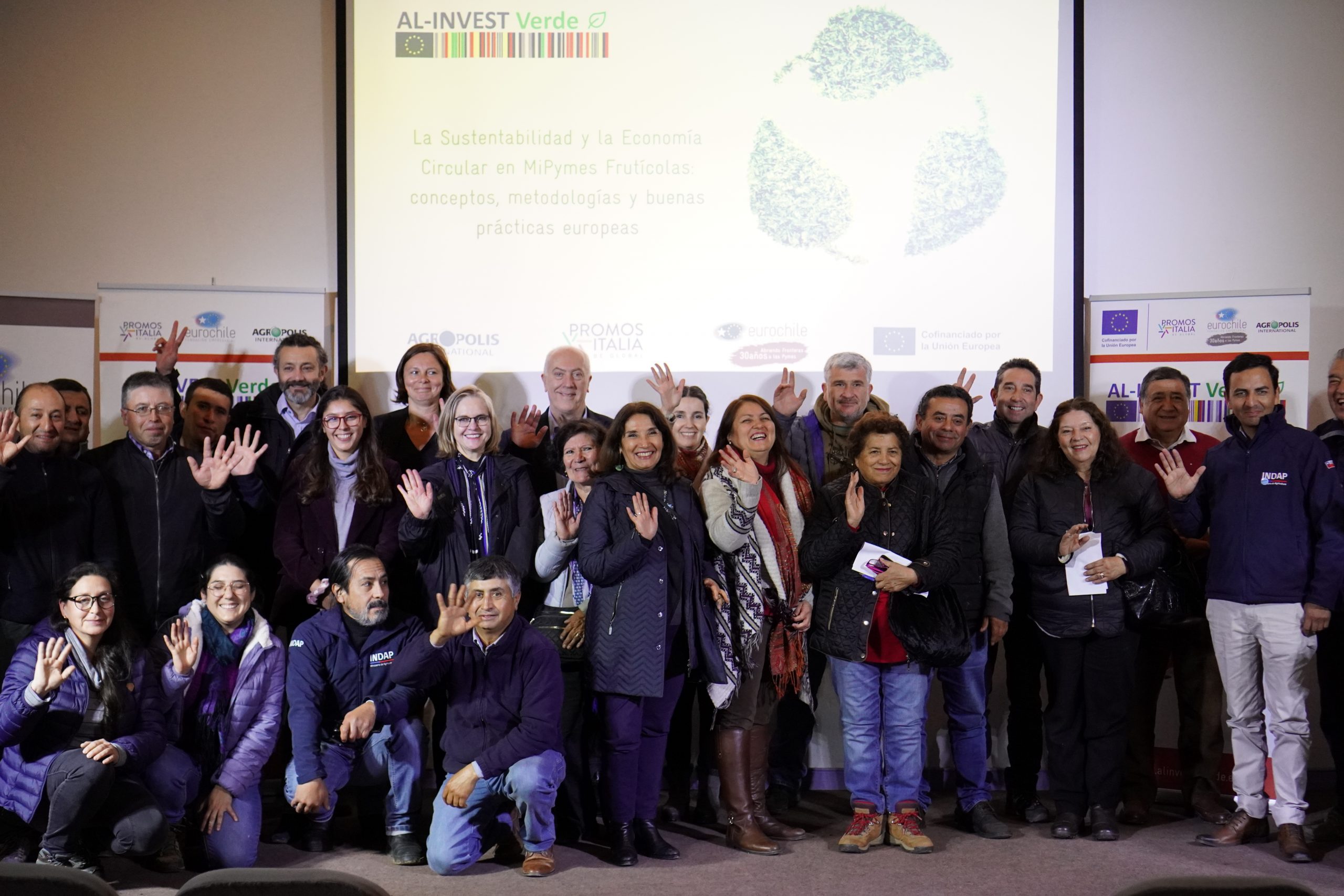
Eurochile Business Foundation, in collaboration with its European partners Promos from Italy and Agropolis International from France, presented the AL-INVEST Verde Frutícola project last May in the commune of Lolol, O'Higgins region. This initiative aims to help small and medium-sized enterprises to adopt sustainable and circular practices in their agri-food systems.
In this context, on 25 and 26 May, workshops were held in the regions of Biobío and Los Lagos to provide details and invite producers to participate in the project, called "Chilean-European Alliance for the green transition in MSMEs in the Chilean fruit sector and their Business Organisations". This project is a step forward in the creation of international alliances to promote sustainability and environmental care in the agri-food sector.
During the days of activities, Rodrigo Silva Muñoz, project manager and Ivonne Palma, director of the Sustainability and Circular Economy Area, both representatives of Eurochile Business Foundation, together with the European experts, Iciar Pávez and Sabrina Deforge-Lagier, highlighted the importance of the circular economy as a tool for the sustainable management of natural resources in the fruit sector.
Currently, the Chilean production system is highly intensive in the use of agrochemicals, due to the use of pesticides and fertilisers, which affects both the environment and the health of consumers. For this reason, European markets have defined norms in their export systems, where agri-food producers must comply with certain environmental and sustainable standards in order to be able to trade their products.
Rodrigo Silva, project manager of the Sustainability and Circular Economy Area, points out that, "The challenge for Chilean fruit growing is to respond to this and move towards a more sustainable agriculture, so this will allow better use of resources and help MSMEs to implement a more circular agriculture, and thus comply with the regulations for exporting to European markets".
From the European perspective, the French experts opened up a world of opportunities for the attendees, presenting all the options for knowledge exchange and success stories in Europe where circular economy practices in production and waste management were implemented in the fruit sector. These examples showed how these practices are not only beneficial for the environment, but can also generate economic savings and improve product quality.
Iciar Pávez, Researcher at L'Institut Agro Montpellier, reports that, "the workshops allowed us to reflect on the need and benefits of a paradigm shift towards a circular economy. It was interesting to note, through discussions with producers, technicians and researchers in the regions, the similarity of the challenges faced by fruit growers in Chile and France. This opens up possibilities for the exchange of experiences and knowledge.
In conclusion, the presentations highlighted the importance of sustainability and circular economy in the fruit sector, and how these practices can be beneficial for both the environment and producers. Collaboration and knowledge sharing between MSMEs and experts in the field can contribute to the adoption of more sustainable economic models in this sector.
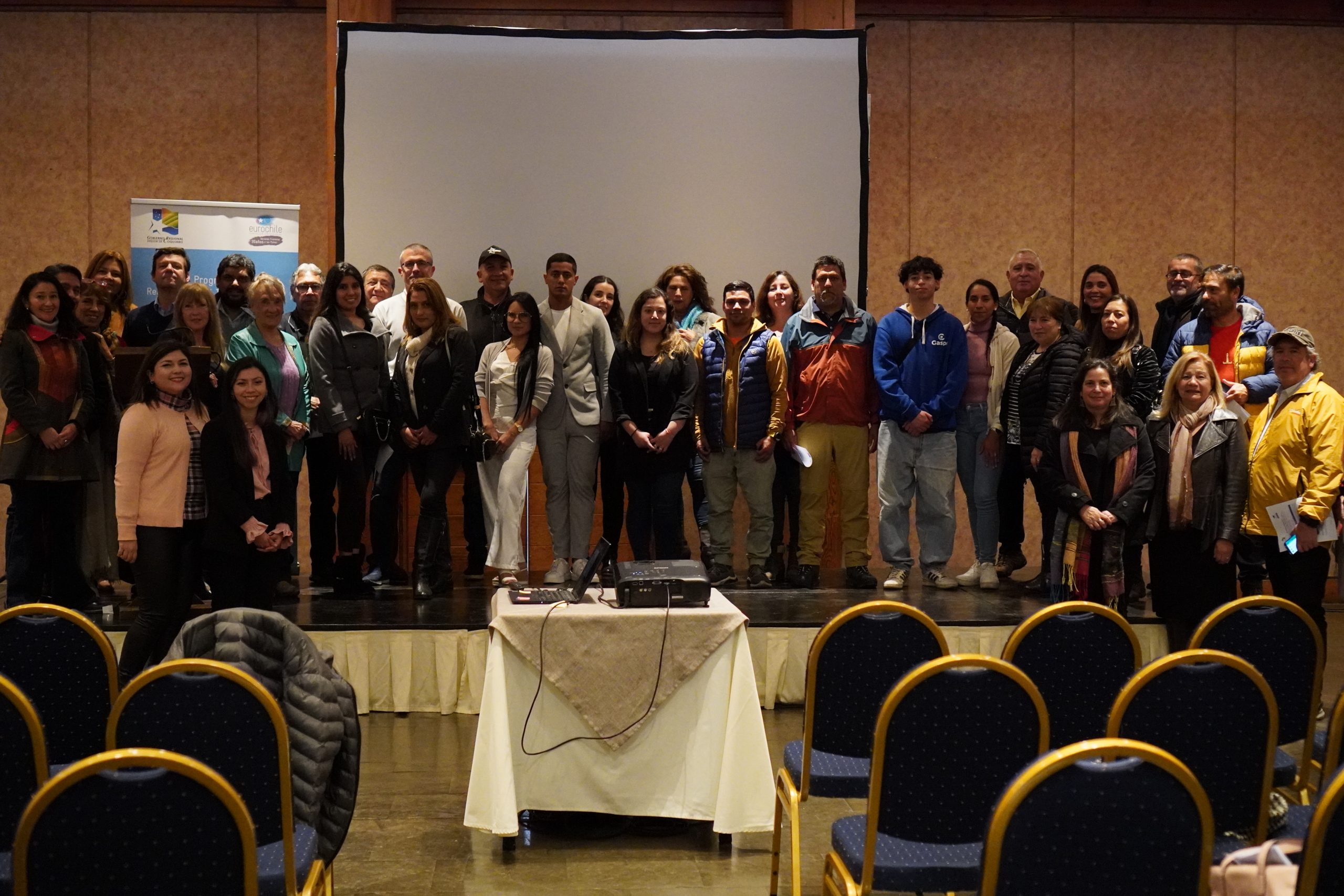
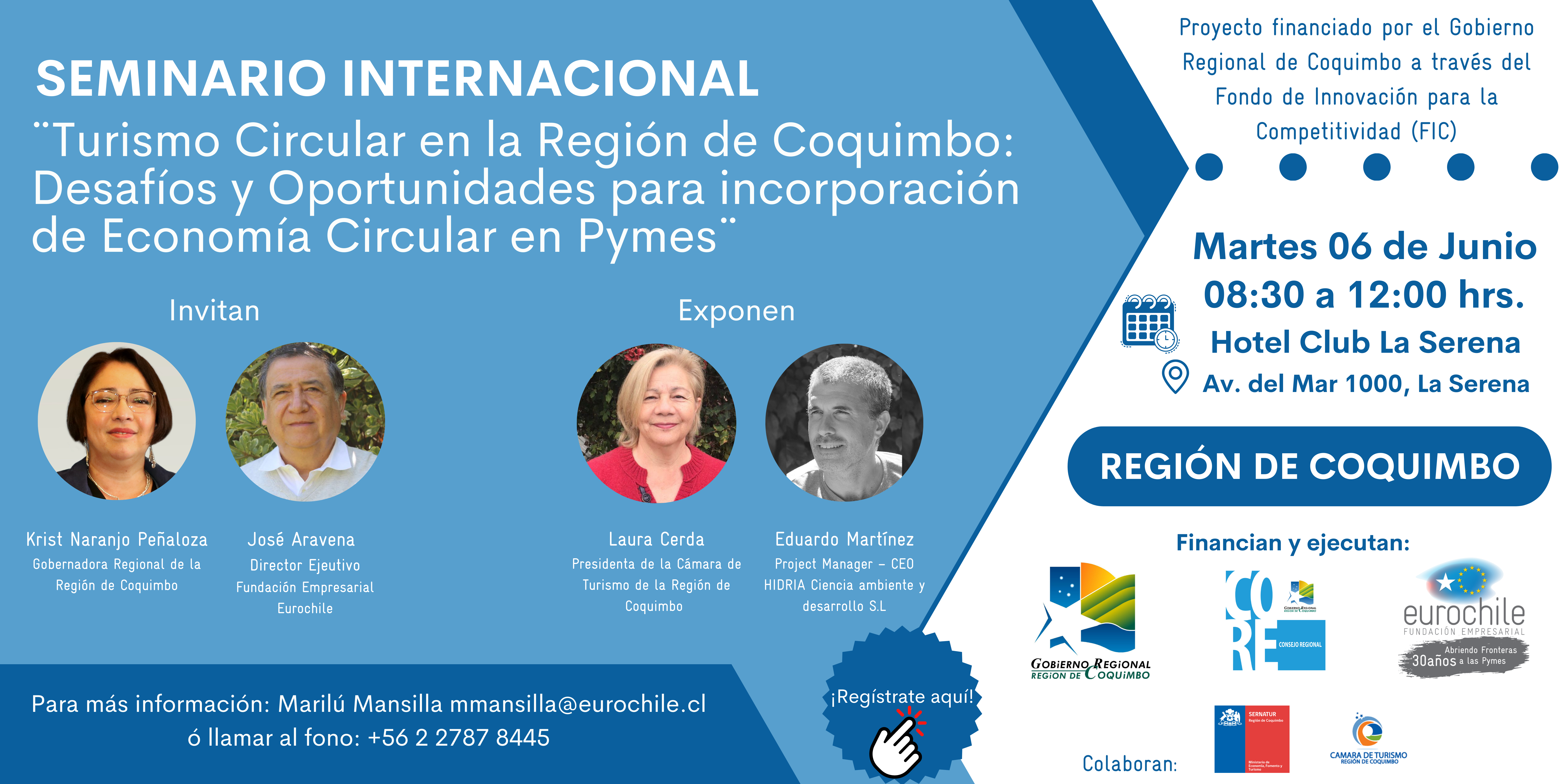
On June 6th, at the Hotel Club La Serena, Eurochile Business Foundation together with the Regional Government of Coquimbo held the International Seminar "Circular Tourism in the Coquimbo Region: Challenges and Opportunities for the incorporation of Circular Economy in SMEs", which brought together regional authorities, MSMEs in the tourism sector and experts in the area.
This activity took place in the framework of the launch of the programme "Reactivation of Regional Tourism with Circular Economy", financed by the Regional Government and executed by Eurochile, through the Innovation Fund for Competitiveness (FIC), which contributes to the reactivation and recovery of local tourism through the generation of new sustainable and circular products, thus promoting knowledge and the transition to a circular economy among SMEs in the region.
Among the authorities present at the activity were José Aravena, executive director and Ivonne Palma, director of Sustainability and Circular Economy, both representatives of Fundación Empresarial Eurochile; Juan Hasfura, deputy head of the Development and Industries Division of the Regional Government of Coquimbo; Eduardo Martínez, Spanish expert with extensive expertise in tourism and circular economy; Laura Cerda, president of the Chamber of Tourism of the Coquimbo Region; Gustavo Dubó, deputy regional director of Corfo Coquimbo; Eduardo Martínez, Spanish expert with extensive expertise in tourism and circular economy; Laura Cerda, president of the Chamber of Tourism of the Coquimbo Region; Gustavo Dubó, deputy regional director of Corfo Coquimbo and Angélica Funes, regional director of Sernatur Coquimbo. The specialists presented the advantages and benefits that circularity can offer in the field of tourism, highlighting the importance of optimising resources and promoting sustainable practices in the industry.
In this context, Juan Hasfura, representative of the Regional Government of Coquimbo, states that, "For us to be able to work with Eurochile is of vital importance, as it gives us a degree of confidence that the programme will go according to plan, given that they have the capacity to develop the main objective, which is to benefit the region's MSMEs".
On the other hand, Luis Rubio, attendee at the event and representative of the Rucor Tourism agency, which operates in the region of Coquimbo and La Serena, points out that, "To date, this region has taken on a very important role with respect to tourism, and for us it is fundamental to provide a great variety of tourist destinations. This is why, thanks to this programme, we feel in a way that we have the possibility to strengthen what we do and to approach new measures to help the environment".
In addition, Laura Cerda, president of the Chamber of Tourism of the Coquimbo Region, "For us it is important to promote the permanent alignment and meet the needs of our businesses according to the look of enhancing cost management, improvement in service processes, especially with a look at circular economy that allows us to optimise immediate deadlines".
Also during the launch, the leading specialist in tourism and circular economy, Eduardo Martinez, CEO of HIDRIA, Ciencia ambiente y desarrollo, was presented. Martinez focused on the benefits of the application and opportunities of the circular economy in SMEs in the tourism sector, noting that, "Currently, hotels and restaurants are the ones that would concentrate much of the initial effort in circularity, because they are those that have processes of matter and energy that go in and out, which is why I will work more on examples of applicability of circularity to tourism today".
At this meeting, attendees enjoyed a keynote presentation and an interactive debate where they had the possibility to raise their concerns and opinions on the circular economy and how it can be applied to local MSMEs.
Similarly, José Aravena, executive director of the Eurochile Business Foundation, explains that, "At Eurochile we focus on promoting sustainable business models and efficient tools for the implementation of these projects that contribute to the resolution of environmental problems at the regional level".
In short, the circular economy represents a great opportunity for the sustainable development of companies in the tourism sector in the Coquimbo region, and its adoption is key to continue moving towards a more sustainable economic model. Therefore, this event was key for MSMEs to learn about the topic and the measures necessary to implement sustainable practices in their production processes.
The Ecomondo Fair is an international exhibition held in Rimini, Italy, since 1996. The fair focuses mainly on the areas of green economy, environmental technology and sustainable development and is considered one of the most important meeting points in Europe, attracting numerous exhibitors and visitors from all over the world.
In this context, the launch of Ecomondo in its 2023 version took place on 25 May at the Eurochile Business Foundation, where Andrea Batazzi, representative of MultiRep Services and Ecomondo in Latin America, presented this new edition, which will be open from 7 to 10 November.
During the presentation of the Ecomondo fair, the objectives and purpose of this event, which has become a reference in the environmental sector, were highlighted. In this sense, it was pointed out that the fair is dedicated to promoting the circular economy and sustainability, as well as encouraging innovation and the exchange of environmental knowledge.
In addition, the key points to be addressed during the fair were presented, highlighting the importance that this year will have for the deployment of investments and reforms foreseen in the Recovery, Transformation and Resilience Plan (PNRR). In particular, emphasis was placed on funding programmes for circular economy systems and on the implementation of the National Strategy for the Circular Economy and the State Waste Management Programme.
Among the authorities present at the activity was Vicente Caruz, president of the Eurochile Foundation, who highlighted the relevance of events such as Ecomondo in promoting actions that allow moving towards a more sustainable economy. Also present was the manager of Strategic Affairs of Corfo, Claudio Maggi, who highlighted the various instruments that the entity has for the benefit of SMEs.
Cristián Morales from Espyral, Hugo Muñoz from Ecología en tu Barrio, Juan Carlos Bello from Bellbast Chile LTDA and Margarita Sepúlveda from ITE were some of the entrepreneurs who participated in the 2022 edition of Ecomondo and who were able to tell their own experience and post-fair achievements, as well as highlighting the technical visits made outside the fairgrounds. The four businessmen agree that it is important to carry out this type of activities and to know the trends in situ because it is where everything happens, in addition to meeting companies and generating contacts that would not be possible in Chile.
In this sense, Andrea Batazzi, Ecomondo's representative in Latin America, states that, "the interestfrom Chile and its companies has produced very important relations, all thanks to the cooperation with the Eurochile Foundation, this is due to the organisation of the Ecomondo 2022 business mission, whose success was important because it was the first event after a pandemic".
During the launch, Batazzi highlighted the importance of the Ecomondo Fair being internationalised, resulting in an effort to address the environmental crisis at a global level. He also highlighted the role of Eurochile Business Foundation in promoting and collaborating to carry out this type of event.
The Ecomondo representative in Latin America adds that, "we have found that interest and debate on issues such as circular economy, smart waste management and renewable energies are of great importance for companies".
In short, this year's edition of Ecomondo is expected to be a unique opportunity for companies, institutions and experts to discuss environmental challenges and innovative solutions for waste management and environmental impact reduction. In this sense, the fair is expected to be a space for learning, networking and collaboration to drive the transition towards a circular and sustainable economy.
The next edition of Ecomondo 2023 will take place from 7-10 November in Rimini, Italy. For more information contact Manuela Caruz, mcaruz@eurochile.cl or visit the website https://en.ecomondo.com/
AL-INVEST Verde is a programme carried out by the European Commission that was launched in December 2021 with the objective of promoting sustainable growth and job creation by supporting the transition towards a low-carbon, resource-efficient and more circular economy in Latin America.
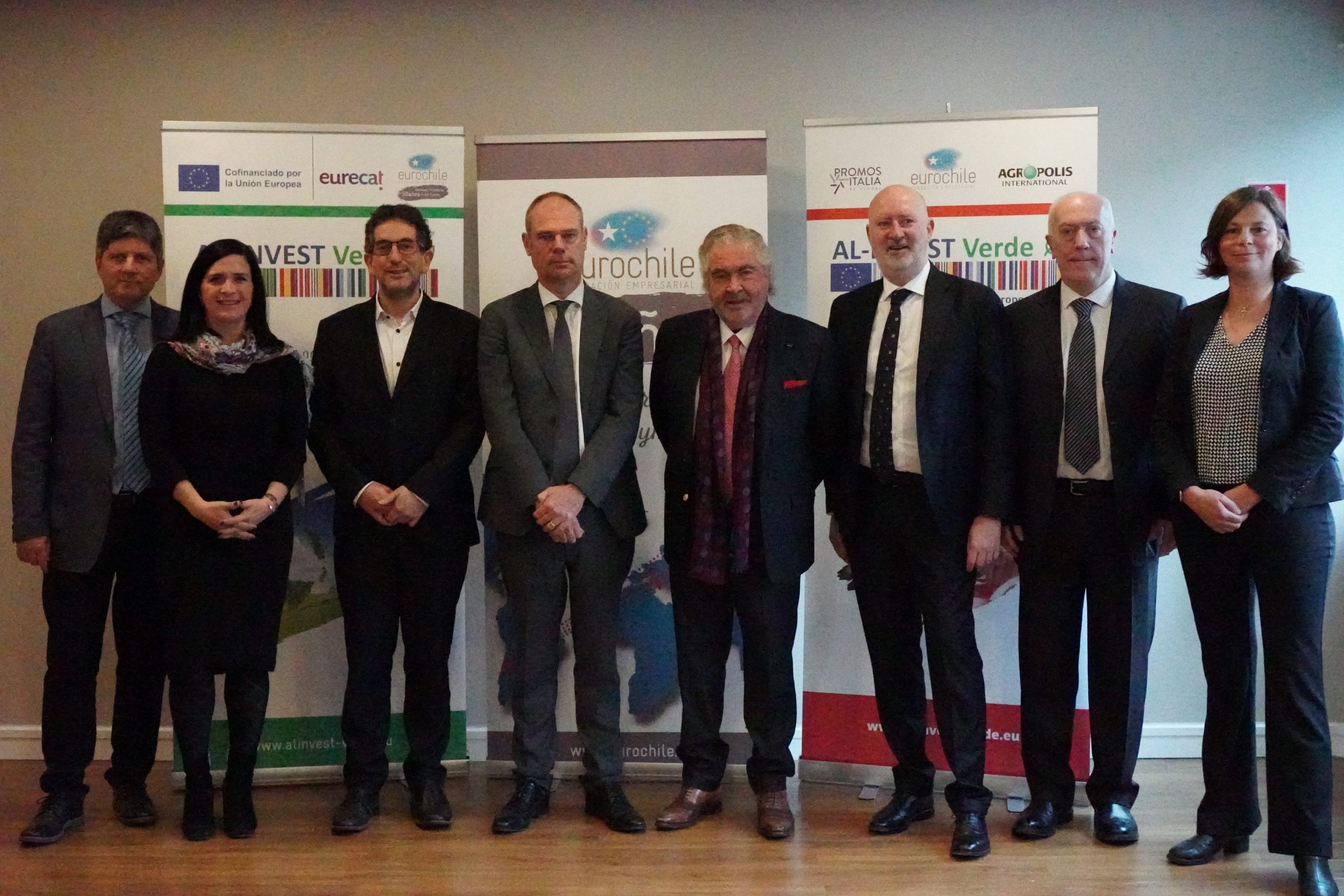
In this sense, last Tuesday 23 May, in the premises of the Hotel NH Collection Plaza Santiago, was held the launch of two projects that are part of the AL-INVEST Verde program, where Eurochile Business Foundation, in its capacity as leader, was awarded together with its two European partners -Promos Italy and Agropolis International of France- a project for the fruit sector, together with its two European partners -Promos Italy and Agropolis International from France- was awarded a project for the fruit sector. On the other hand, the Spanish entity, Eurecat, as leader, was awarded a project for the construction sector, where Eurochile will participate as a co-executing partner. Both projects are mainly aimed at promoting sustainability and circular economy in Chilean MSMEs and business organisations (EOs).
During the activity, professionals from the executing entities presented the projects, their scope, milestones, objectives and the regions where the workshops will take place; European experts and national and international authorities also participated and shared their different points of view based on what is being implemented today in both sectors.
Among the participating authorities were Vicente Caruz, President of the Eurochile Business Foundation; Andrés Zahler, Senior Innovation Advisor, Ministry of Economy, Development and Tourism; Ewout Sandker, Head of Cooperation, Delegation of the European Union in Chile; Andrea Bonalumi, Director of Promos Italia, National Agency of the Italian Chambers of Commerce Network; Claudio Maggi, Strategic Affairs Manager of Corfo and Antonio Walker, President of the National Farmers' Association (SNA).
During the course of the activity, several expert panels were held, where Europeans and their Chilean counterparts presented and discussed the progress made in the construction and agriculture sectors in both regions, as well as the way in which these two areas have been able to move towards a more sustainable and circular system.
In the fruit sector, the programme will last 24 months and aims to benefit 300 MSMEs and 15 Business Organisations (BOS) in the regions of O'Higgins, Biobío and Los Lagos so that they can move towards more sustainable and circular agri-food systems, while the construction programme - over the course of 30 months - proposes to strengthen and improve the linkages of 200 MSMEs and their Business Organisations in the Metropolitan Region and the Los Lagos Region.
The event was an excellent opportunity to highlight the efforts of Chile and Europe in the fight against climate change, as well as to share experiences and good practices in sustainable development. In addition, the challenges and opportunities faced by companies and entrepreneurs in this context were discussed, and innovative solutions to promote sustainability and business competitiveness were presented.
It should be noted that the AL-INVEST Verde programme is a European Union initiative that seeks to promote sustainable investment and trade in Latin America, and that its launch in the framework of the commemoration of the 30th anniversary of the Eurochile Foundation was a sign of the commitment of both regions to sustainability and economic and social development.
Ultimately, the successful launch of this programme in commemoration of the Foundation's 30th anniversary has reflected the importance being given to sustainability and economic and trade cooperation for a more sustainable and environmentally friendly future.
About AL-INVEST Verde
AL-INVEST Verde is a European Union (EU) programme whose main objective is to promote sustainable growth and job creation in Latin America by supporting the transition to a low-carbon, resource-efficient and more circular economy. Through Component 1, led by sequa, the programme manages funds for the implementation of innovative small business partnership projects to boost sustainable practices in the private sector.
Further information: www.alinvest-verde.eu
The launch of the programme "Reactivation of Regional Tourism with Circular Economy" will take place next Tuesday, June 6th, at 08:30 hours, at the Hotel Club La Serena, with the participation of regional authorities. The activity is focused on presenting the programme, its objectives and actions to be developed during the 18 months of implementation, which will benefit 200 MSMEs linked to tourism in the 3 provinces of the region.
On this occasion, the Spanish expert, Eduardo Martínez, CEO of HIDIRIA, Science environment and development that has extensive knowledge in circular economy applied to the tourism industry, will participate in the event, who, during the event, will present the benefits and opportunities of incorporating the circular economy in SMEs.
Eurochile Business Foundation was awarded the programme "Reactivation of Regional Tourism with Circular Economy" in September 2022 and is financed by the Regional Government of Coquimbo through the Innovation Fund for Competitiveness (FIC) whose objective is to contribute to the reactivation and recovery of tourism in the region through the generation of new sustainable and circular products, thus promoting the knowledge and practice of the circular economy among MSMEs in the area.
To achieve the objective of the programme, the Eurochile Business Foundation will work together with local authorities and experts in tourism and the circular economy, with the aim that this programme will have a positive impact on the local economy and, at the same time, promote new sustainable practices in the tourism industry. It will seek to incorporate the circular economy, a concept that seeks to minimise waste and maximise the use of resources in the production and consumption of goods and services. In the context of tourism, this may include the promotion of eco-friendly practices, the valorisation of local resources and the reduction of the carbon footprint generated by tourists.
In conclusion, the programme Reactivation of Regional Tourism with Circular Economy, implemented by the Eurochile Business Foundation and financed by the Regional Government of Coquimbo through the Innovation Fund for Competitiveness (FIC), represents a great opportunity to boost the regional economy and tourism in the area. The implementation of this project will greatly contribute to the sustainable development of the region, generating jobs and promoting a culture of recycling and efficiency in the use of natural resources. Undoubtedly, a great benefit for the whole community and an important step in the creation of a prosperous and sustainable future.
The AL-INVEST Verde programme is an economic cooperation project between the European Union and Latin America that aims to promote sustainable development and competitiveness in enterprises, with a specific focus on supporting SMEs that seek to implement sustainable practices in their production processes and improve their access to international markets.
In the case of Chile, the programme is focused on promoting innovation and green entrepreneurship, as well as fostering competitiveness and access to new and increasingly demanding markets for SMEs.
Within the framework of this programme, Eurochile was awarded the project called "Chilean-European Alliance for the green transition in MSMEs in the fruit sector and their Business Organisations", whose role will be that of leader and which will be implemented together with two European partners -Promos Italy and Agropolis International of France- and whose objective is to ensure that Chilean fruit MSMEs and their Business Organisations (BOS) move towards more sustainable and circular agri-food systems, becoming more efficient in the use of resources, reducing waste generation and becoming more competitive and prepared to meet new sustainability demands from the market.
On Wednesday 24 May at 15:00 hrs in the Cultural and Civic Centre of Lolol, O'Higgins Region, the launch of the AL- INVEST Green Fruit programme took place. During the event, the mayor of the commune of Lolol and the executive director of Eurochile addressed the public highlighting the importance of the implementation and execution of the project and the work with farmers in the area. Also, the national and European exhibitors presented the details of the programme, milestones and its scope as well as the strategies to be followed to promote a more environmentally responsible sector.
In this regard, José Aravena, executive director of Eurochile Business Foundation, says that, "With Agrololol we are going to sign a cooperation agreement to work with the group of producers, with the aim of starting a transition towards a more sustainable and circular production. We are going to put our best efforts and equipment, but you are the actors and the first group with whom we are going to develop the first part of the programme".
Similarly, José Alfredo Román, Mayor of Lolol, said that, "We are very happy to be able to host this alliance that has to do with linking Chile with the European Union with the aim of being able to innovate and strengthen agriculture in the region and join a more circular economy. In addition, we have the possibility of being able to draw on the good experience from other perspectives and the vision that European experts can share with us".
In this context, the main actors of this project will be the fruit MSMEs organised in cooperatives or other associative forms of the fruit sectors of the regions of O'Higgins, Bio Bío and Los Lagos, which is why it will work with companies, authorities and public bodies interested in supporting the sustainable development of this sector, as well as trade organisations and private sector production groups.
In this regard, Rodrigo Silva, project manager in the area of Sustainability and Circular Economy at Eurochile, explains that, "The main objective of the programme is that with our team of specialists we can lead SMEs and SOs in the agricultural sector to move towards a more sustainable and circular agriculture, so that they can face the ups and downs of the market, especially the European market, which has a carbon neutral policy by 2050, so they demanded that their farmers implement and leave aside practices that are not very sustainable".
Eurochile's Sustainability and Circular Economy team, responsible for carrying out the project's activities, will visit the Biobío and Los Lagos regions on Thursday and Friday 26th May to carry out activities and workshops together with European experts who will present different approaches and new trends that are being used on the other side of the continent in the area of fruit growing.
About AL-INVEST Verde
AL-INVEST Verde is a European Union (EU) programme whose main objective is to promote sustainable growth and job creation in Latin America by supporting the transition to a low-carbon, resource-efficient and more circular economy. Through Component 1, led by sequa, the programme manages funds for the implementation of innovative small business partnership projects to boost sustainable practices in the private sector.
Further information: www.alinvest-verde.euContact
For more information about the event write to rsilva@eurochile.cl or call 2 2787 8409.

 The strategic agreement sealed on Wednesday 19 July by José Aravena, executive director of the Eurochile Business Foundation, and Eduardo Soriano, president of the Chamber of Commerce, will enable cooperation between companies participating in the activities of both Eurochile and the Chamber of Commerce of Mallorca.
These companies will benefit directly or indirectly in commercial, technological and training matters through projects and activities that both institutions will jointly promote, identifying activities that facilitate their internationalisation, promoting sustainable development, organising business meetings to strengthen the ecosystem of innovation and entrepreneurship through cooperation, among others.
The strategic agreement sealed on Wednesday 19 July by José Aravena, executive director of the Eurochile Business Foundation, and Eduardo Soriano, president of the Chamber of Commerce, will enable cooperation between companies participating in the activities of both Eurochile and the Chamber of Commerce of Mallorca.
These companies will benefit directly or indirectly in commercial, technological and training matters through projects and activities that both institutions will jointly promote, identifying activities that facilitate their internationalisation, promoting sustainable development, organising business meetings to strengthen the ecosystem of innovation and entrepreneurship through cooperation, among others.