English

Luis Baldó: “The Creation of Thematic Products is a trend that is setting tourism”.

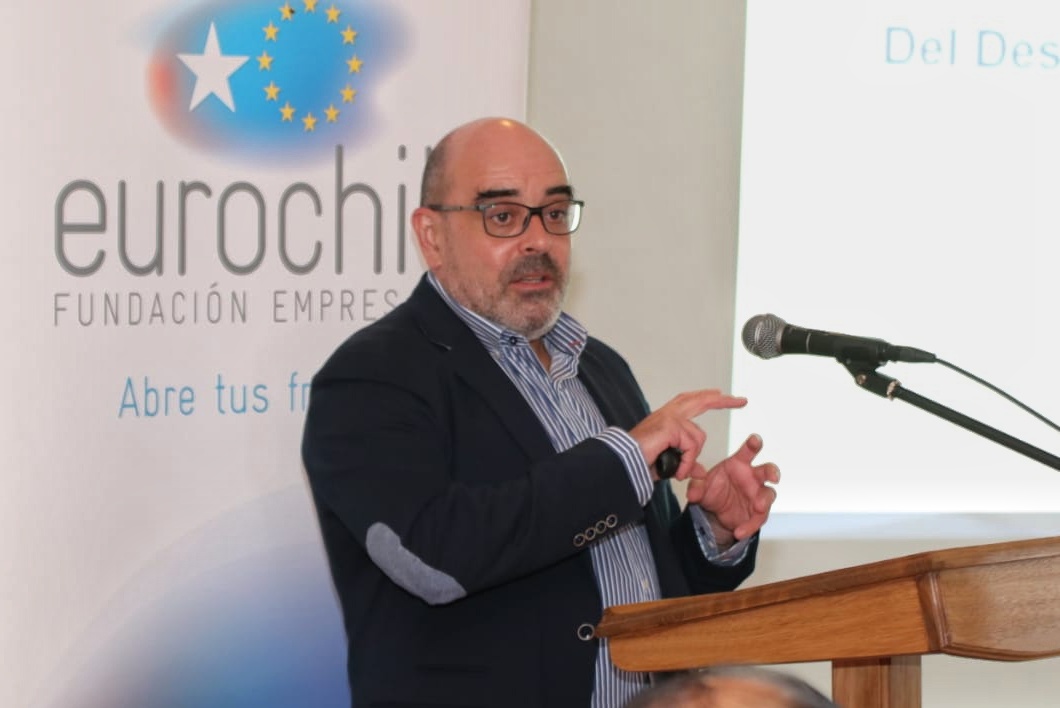
One of the European experts who are part of the project on the development and experiences of sustainable tourism and the challenges it faces due to the effects of climate change. Luis Baldó, with experience in the development of tourism in the Iberian Peninsula, gave us a roadmap on the path to be taken by SMEs and MSMEs in tourism in our country and the business opportunities that are opening up in the development of an increasingly specialised economic and social activity.

From his European perspective and extensive experience, he spoke about the experiences that could be replicated in the local models of the Norte Chico territory and the importance of associativity and the use of new technologies to create new sustainable and competitive business models.

What characteristics does a tourist destination need to have in order to be sustainable?

The sustainability of a tourist destination must always be observed from a triple point of view: environmental, socio-cultural and economic sustainability. In other words, it must develop actions that allow it to be respectful of the ecosystem, with a minimum impact on the environment and local culture. Furthermore, in the economic aspect, it must seek to generate employment and income for the local population.

What strategies are being implemented in Spain to revive tourism in a sustainable way? Which are the most popular?

After the pandemic, tourism in Spain has revived almost spontaneously, with visitor and overnight stay figures even higher than in 2019. In any case, work is being done to improve the sustainability of destinations and businesses, especially by implementing solutions that reduce environmental impact (energy savings to reduce greenhouse gas emissions, waste reduction and management of visitor flows to avoid overcrowding in fragile areas), as well as better management of the impact of tourism on the local population.

With respect to the above, what measures could be replicated in Chile?

In general, all measures aimed at improving environmental sustainability are replicable to a greater or lesser extent, depending on the size and investment capacity of companies and destinations. In terms of social and cultural sustainability, starting from a position where mass tourism has not yet occurred facilitates the adoption of preventive measures, which should always be based on better governance of the destination through public-private cooperation and coordination. With regard to economic sustainability, the creation of specialised tourism products is proving to be an effective tool for the development of activity in territories and times of low tourist activity, also generating a greater economic impact on the local population.

What negative impacts can tourism activity have on the environment? And what measures are being taken to counteract the effects of climate change?

Like all human activity, tourism generates impacts on the environment from the moment the tourist starts travelling. The commitment of the tourism sector, both public and private, must be to reduce these impacts as far as possible, as well as to try to compensate for their effects. To this end, measures are being adopted such as greater energy efficiency to reduce emissions, favouring the use of less polluting means of transport (electric vehicles, bicycles and public transport for journeys to destinations) and the reduction and recycling of waste (reduction in the use of paper by digitalising processes, elimination of single-use plastics, etc.).

On the other hand, work is being done to compensate for these impacts (which cannot be completely eliminated) by involving the tourism sector (public and private) and tourists in environmental recovery programmes: reforestation, fauna recovery and carbon footprint compensation.

In addition to these measures that contribute to mitigating climate change, work is also being done to adapt both destinations and companies to its effects, through the creation of new products that are less sensitive to the changes that are taking place or the adaptation of existing ones. In this sense, in recent years there has been a clear shift in tourist flows towards destinations with milder climates, favouring territories traditionally considered less “touristy”.

What role do local residents play in promoting and preserving sustainability in a tourism destination?

Residents play a fundamental role in the development of a tourist destination. It is therefore very important that they feel involved in the tourist activity itself, trying, through governance, to limit the negative impacts and reinforce the positive ones, such as employment and the greater development that tourism can have on the local population. From this point on, both public administrations and companies should work to communicate the actions being taken to improve sustainability and thus ensure that residents are involved.

What are the main challenges facing tourism destinations on their way to sustainability and intelligence?

From a technical point of view, there are already numerous tools and solutions available for improving sustainability and tourism intelligence. The main challenges, from my point of view, are the lack of awareness of the usefulness and benefits of these tools and solutions for destinations and companies, as well as a greater awareness of the advantages they generate. It is essential to strengthen the governance of destinations to enable us to develop actions to disseminate and encourage the adoption of these solutions, involving all stakeholders in the destination, both public and private, as well as the local population.


Eurochile to link tourism MSMEs in the Coquimbo Region with European companies

The Eurochile Business Foundation carried out a work plan called “Mentoring” aimed at SMEs and tourism MSMEs in the Coquimbo Region, an activity that seeks to generate access to new European markets, Manuela Caruz, Director of International Networks of the Eurochile Business Foundation, during the webinar “Digital Marketing and European Networks”, explained that the purpose of the activity is to transfer knowledge, experiences and generate alliances for business or projects of European companies to Chilean companies.

The initiative will provide an interesting opportunity to modernise and expand business models for tourism SMEs and MSMEs in the Coquimbo Region in the process of economic reactivation with a circular economy, through the use of new sustainable technologies.

The professional said that, according to the profiles of Chilean companies, the search for supply and/or demand with their peers in Europe is defined. The profiles will be distributed among the partners of the Enterprise Europe Network (EEN) to make a bilateral match and organise monthly meetings with counterparts in Europe. The activity will be carried out in a virtual format and will work with EEN partners to generate a bilateral matching.

It should be noted that the Mentoring meetings between a group of Chilean companies and their European counterparts will focus on the topics of: Digitalisation and Digital Marketing. At the end of each Mentoring, a report will be prepared with the topics discussed and each session will be recorded with the aim of being able to have the information to replicate it in other companies or have it available when needed. In addition, a satisfaction survey will be developed to evaluate the progress of the mentoring programme, adjust it as necessary to achieve the objectives, and to get to know the companies better in order to provide them with support in various aspects.

Manuela Caruz also specified that, in order to be in contact with the other members of the network in Europe, the Eurochile Business Foundation plays the role of link and nexus with its European peers. This is done through the uploading of business or technology profiles on the EEN (http://een.ec.europa.eu/).

Tourism SMEs propose public-private alliance to develop Sustainable Tourism in the Coquimbo Region

During the webinar “Sustainable European strategies for the reactivation of the tourism sector”, in the framework of the Training Plan of the programme “Reactivation of Regional Tourism with Circular Economy”, a project financed by the Innovation Fund for Competitiveness (FIC) of the Regional Government of Coquimbo, the tourism SMEs and MSMEs of the IV region proposed to promote public-private partnerships, with the aim of reactivating tourism activity, strengthening regional tourism goods and products around sustainable tourism.

The idea arose during the presentation by the European expert Luis Baldó, who referred to the active role played by the Spanish State in making its fiscal heritage available and valuable for the development of sustainable tourism. In this regard, he gave as an example the case of Paredones, where an accommodation project has been carried out so that tourists can stay in state-owned properties, which has encouraged the development of rural, sustainable and ecological tourism.

As a result, the tourism companies in the Coquimbo region participating in the online activity expressed their willingness to replicate the Spanish experiences and the State could become a key and relevant actor in encouraging the development of tourism activity through the provision of heritage properties in the public domain that could be used for the implementation of projects with a focus on sustainable tourism.

They also agreed that it is necessary to create a public-private alliance so that the State of Chile, through the application of its norms and tools, will make public real estate and resources available for the development of these initiatives. Meanwhile, the private sector, through its resources and ideas, will develop and implement sustainable tourism projects to attract new visitors eager to acquire new experiences and thematic products. This will result in an improvement in the quality of the tourist profile and higher revenues for the region.

Tourism: A driving force for economic recovery

Tourism has gone from being a social phenomenon to an economic activity that involves the production of diverse goods and services that satisfy the mobility of people around the different destinations that are favoured with the economic luxury of goods and culture, which allows for the improvement of inbound tourism and the contribution of foreign exchange to the Gross Domestic Product (GDP).

The main positive economic impacts of tourism relate to foreign exchange earnings, contribution to public revenues, employment generation and business opportunities. In addition, tourism expenditure represents an injection of money into the local economy of a destination. These productive dynamics have made tourism a key driver of global socio-economic progress, according to data and analysis published in 2020 by the World Tourism Organization (UNWTO).

In the same vein, a report by the International Monetary Fund (IMF) indicates that Tourism has again been identified as a key driver of economic recovery and growth.

On the other hand, according to the World Bank, tourism in Chile represents a direct contribution of 3.3% of GDP and 7% of employment, contributing more and more to the national economy in recent years.

According to the National Tourism Service (Sernatur) in December 2023, Chile received a total of 439,632 foreign tourists, which represented an increase compared to the same period in 2022, when it reached 376,948 tourists.

Taking into account the studies mentioned above, tourism in Chile has been picking up significantly. The Coquimbo Region, in particular, has stood out as one of the regions in northern Chile that has benefited the most from tourist arrivals, thanks to its numerous natural attractions and its growing hotel infrastructure. This recovery not only underlines the resilience of the Chilean tourism sector, but also the crucial role that promotional campaigns and the diversified offer of destinations play in revitalising the local and national economy.

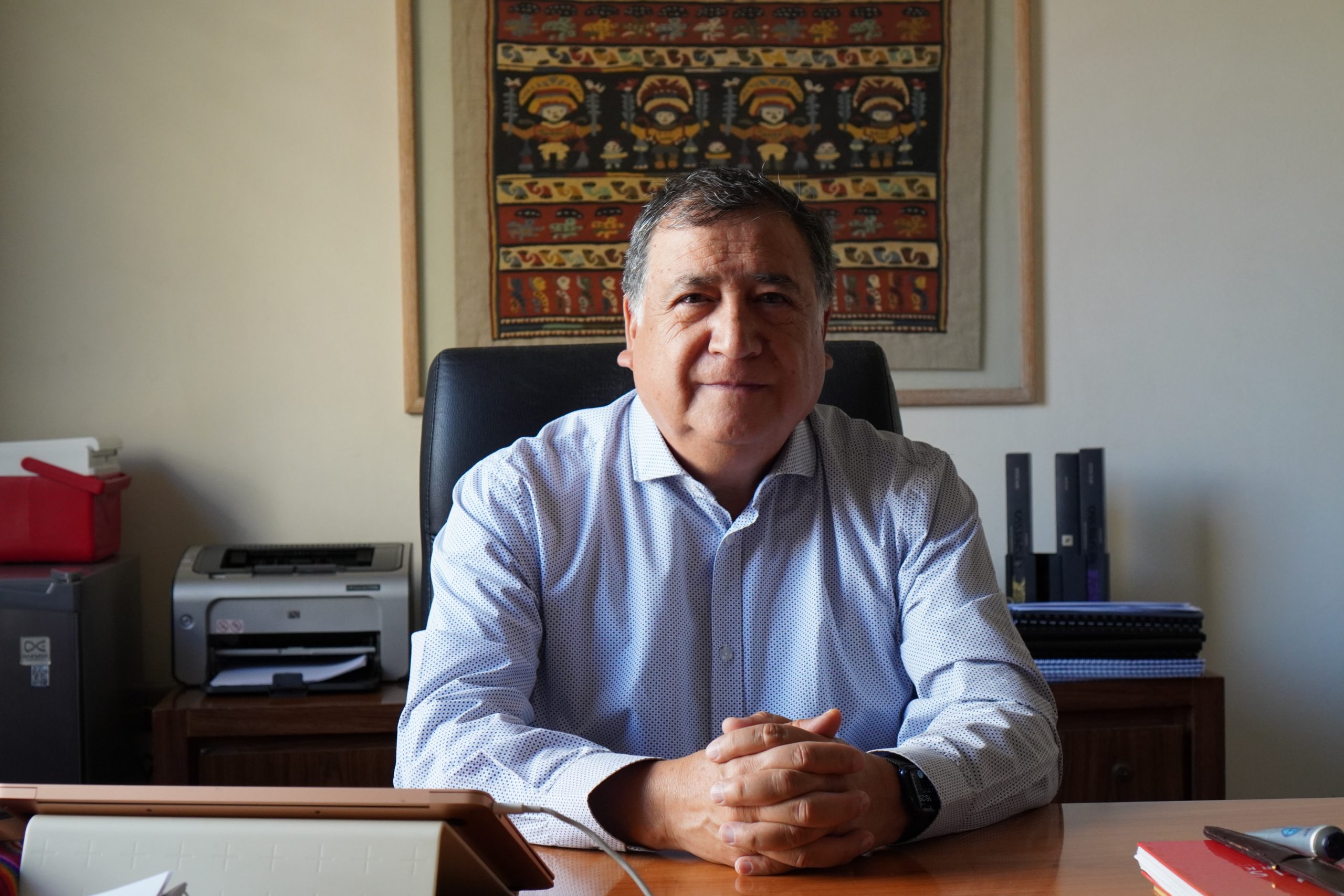
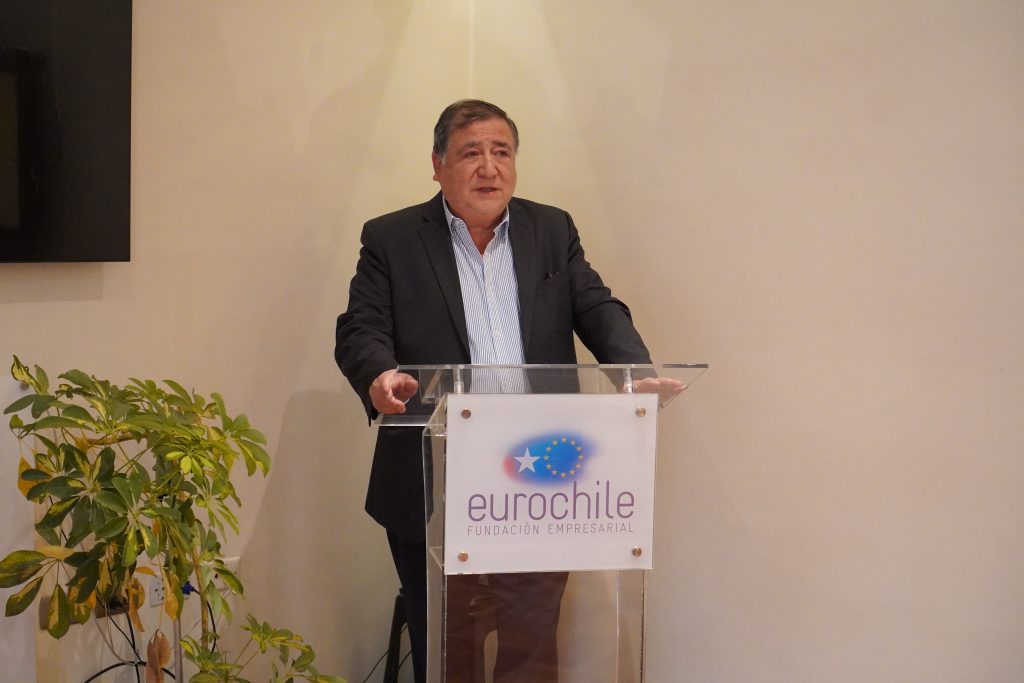
José Aravena: After 27 years he leaves his role as Executive Director of the Eurochile Business Foundation

José Aravena, after more than 32 years in Eurochile and 27 in his role as executive director of the Foundation, decided to retire, leaving his position in this institution, which is characterised by supporting business cooperation and technology transfer between Chilean SMEs and institutions and those of the member countries of the European Union.

Aravena, an economist with a degree in economics from the University of Chile and a master’s and doctorate in economics from the Catholic University of Louvain, Belgium, was an integral part of the team in charge of the Foundation’s start-up since 1992 and, after its inauguration in 1993, he held various executive positions until he took over as executive director in 1997.

During his tenure, important initiatives were launched in line with the Foundation’s objectives. Thousands of companies were supported in their internationalisation processes, putting them in contact with European or Chilean counterparts, as appropriate. Dozens of projects were also launched in support of the tourism sector, bringing European expertise to train businessmen and entrepreneurs in areas such as the development of special interest tourism, destination management, tourism product development, the dissemination of sustainable tourism, etc.

Support has also been extended to other sectors such as agribusiness and cross-cutting issues such as environment, satellite technologies and associativity.

A milestone has been the dissemination and support for the implementation of circular economy concepts in Chile, leading the first activities in this field in the country. Since 2016 and hand in hand with the Directorate General for the Environment of the European Commission, the Foundation has collaborated in different initiatives, starting with the organisation of the visit to the country of the first world tour of a European business delegation specialised in Circular Economy, through ensuring the technical secretariat responsible for the construction of the circular economy roadmap for Chile, to all the projects that are currently being implemented in support of SMEs and entrepreneurs seeking to have more circular and sustainable production processes.

“My work at the Eurochile Business Foundation allowed me to maintain constant contact with Europe, a continent with which I deeply identify and where I lived for eight years. Leading the Foundation has been an experience of great satisfaction and challenges, always guided by the institutional commitment and core values of Eurochile,” says Aravena.

Aravena also stressed that every institution is a living organism that needs to renew itself and incorporate new people at all levels. Aware of this, “last year I spoke with the Foundation’s Board about my desire to hand over the position of executive director to a new generation of professionals, who would bring new visions and experiences to the Foundation’s work, which was perfectly understood by the board members”.

Based on the above, Eurochile’s Board of Directors began the search for applicants according to the profile required for this position, where the European background of the candidates, their knowledge of the world of SMEs and their relations with Chilean and European institutions relevant to the work of the Foundation were key elements for the final selection.

During the search process, a number of excellent professionals were interviewed, and finally the Board, by unanimous vote of its members, chose the name of Felipe Mujica Cominetti, who fully meets the profile sought by the Foundation.

José Aravena, the former Executive Director of the Eurochile Business Foundation, expressed his best wishes for his successor. He is confident that he will be able to successfully face the present and future challenges and lead the Foundation to a new stage in its development.


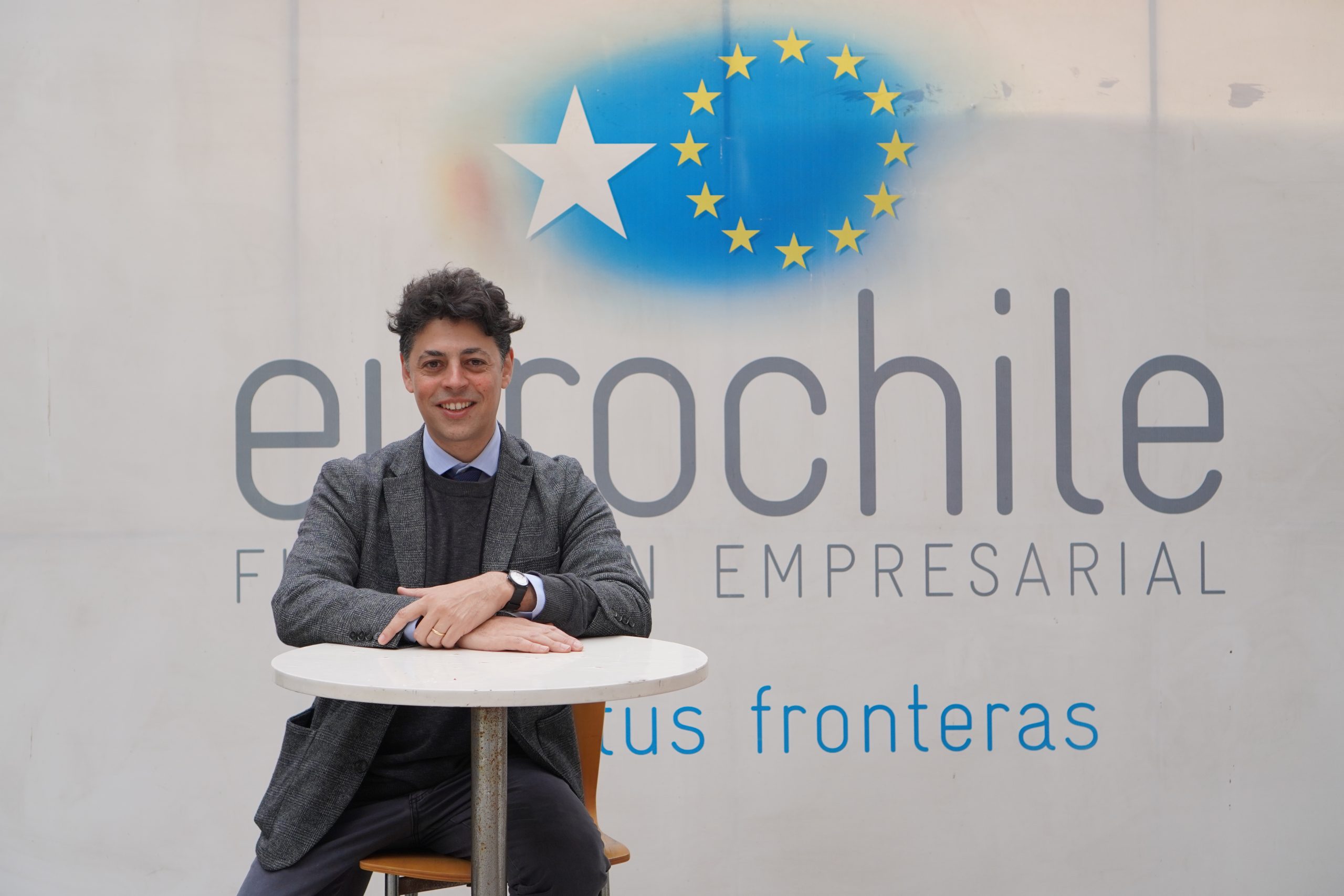
The Eurochile Business Foundation welcomes its new Executive Director

The Eurochile Business Foundation welcomes its new Executive Director, Felipe Mujica Cominetti, who will have the task of continuing Eurochile’s 31-year legacy. The Foundation’s mission is to create, promote and consolidate economic, commercial and technological links between Chile and Europe.

Felipe is an economist with experience in economic development and international economics. He studied at the Universidad Autónoma de Madrid, Spain and at the Université Paris-Dauphine, France.

The current executive director was unanimously elected by Eurochile’s Board of Directors, after a selection process of several candidates who had to meet certain requirements, among them, their links and trajectory with Europe.

As for the transition with his predecessor, it was a process of transferring information about the management and the portfolio of projects that the Foundation is implementing in the sectors of Tourism, Construction, Fruit and Waste Management that are being carried out in the different regions of the country, all with a focus on the circular economy.

“One of the main challenges for the new executive management of Eurochile is the continuity and implementation of activities within the framework of the projects that we are currently carrying out, but at the same time, incorporating the modernisation of the Advanced Framework Agreement (AMA) with the European Union. Our mission is to continue strengthening economic, commercial and technological ties with Europe, and we need the collaboration and enthusiasm of the entire ecosystem to achieve these objectives“, emphasises Felipe Mujica, executive director of the Eurochile Business Foundation.

In short, the new executive director of the Eurochile Business Foundation will have the mission of continuing and projecting the legacy of more than 30 years supporting SMEs and institutions in the national and European market, facing the short and long term challenges that arise, and continuing to position and strengthen the Foundation together with the team of professionals that compose it.

Today, Eurochile has on its agenda for the month of June activities related to Europe, highlighting the “Bilateral Meeting with Commercial Attachés of the countries of the European Union”, which aims to bring Chilean SMEs closer and encourage them to explore the possibilities and advantages of exporting to the European market. Andrea Batazzi, representative of Multirep Services and Ecomondo, the most important international fair on Sustainability and Circular Economy, will also visit the event.

200 people participate in Eurochile and Corfo event on Circular Economy and Smart Tourist Destinations as a response to Climate Change in Los Lagos

The Eurochile Business Foundation, with the support of Corfo Los Lagos, held the seminar “Adaptation to Climate Change: The Circular Economy as a strategy to boost the development of smart cities and tourist destinations”, in the framework of the Viraliza Eventos Masivos programme. This event, held on 15 May in Puerto Varas and 16 May in Osorno, aimed to engage SMEs in the region to explore and adopt sustainable and circular practices in their tourism operations and services, as well as to promote the circular economy as a crucial climate change adaptation strategy for smart cities and tourism destinations (DTI).

Both days were attended by regional authorities, national and European experts, as well as MSMEs from the Los Lagos region. Through keynote speeches, conversation panels and thematic working tables, participants had the opportunity to learn first-hand about the topics covered in each session. To achieve this purpose, Know-How tools, expertise and networking opportunities were provided to promote the development of circular enterprises at a business level.

Patricio Vallespín, Regional Governor said that “the Regional Government together with Corfo are making available relevant instruments for our region. Climate change is already happening in Los Lagos and tourism has to be attentive to these changes, as there will undoubtedly be opportunities, but also some weaknesses that affect us and we have to be prepared for that. We have to identify these threats and learn about international experience through specialists in alliance with the Eurochile Business Foundation, who provide spaces for our entrepreneurs, public institutions and the tourism sector chain to be in tune with the challenges that lie ahead. Tourism is going to be a fundamental productive strategy, but it has to be prepared for the challenges ahead“.

Nina Morales, Director of Institutional Affairs at the Eurochile Business Foundation, highlighted the importance of working on regional business development. “It is one of the policies or lines of action that the Foundation has and our experience in national and European models, having the opportunity to bring international experts to support and transfer important tools, is what gives us the possibility to contribute in the regions, it is important that not only these activities remain here, but that we can generate, from the gaps that are identified, disseminate new actions and projects that allow us to support and contribute to the region,” she explained.

David Espinoza, regional director of Corfo Los Lagos, said that “this initiative is part of the implementation of Corfo’s viraliza instrument that allows us to integrate the ecosystem of entrepreneurs in a territory. In these two instances, we were able to insert relevant topics such as climate change, circular economy and smart tourist destinations (DTI). In addition, we have had the opportunity to access international practices that have been key in the development of tourism management, the construction of an ITD and how, through a methodology of governance, technology and sustainability, this productive sector can effectively develop in a consensual manner with the territories and surrounding communities, in terms of the Region“.

European experts who participated in the event included: Marco Celdrán, Professor of Tourism at the University of Alicante, Spain, who spoke about the Evolution of Tourism Destinations to become more sustainable and intelligent, taking as an example the case of the Valencian Community. Carlos Romero, Director of Innovation at SEGITTUR, presented on the circular economy as a strategy for adapting to climate change in Smart Tourism Destinations. In addition, Pablo Rodríguez, expert in innovation, entrepreneurship, circular economy and DTI of GEOCyL, addressed the Importance of the enabling elements to move towards smart and circular tourist destinations, while Eduardo Bustillos, expert in Climate Change, Tourism and Territorial Planning of GEOCyL, shared on business strategies for adaptation and mitigation of the impact of climate change in tourist destinations.

In summary, this event represents a significant step towards strengthening the fight against climate change in the Los Lagos region. The implementation of the circular economy and the consideration of smart destinations emerge as key strategies, areas in which the Eurochile Business Foundation has accumulated over 30 years of experience. In addition, this event allowed local SMEs the opportunity to strengthen their business strategies and establish valuable connections through networking, facilitating collaboration and mutual empowerment for sustainable development.

Eurochile and Corfo invite SMEs from the Los Lagos Region to participate in a massive event focused on Climate Change

Through Corfo’s Viraliza Evento Masivo programme, the project “Adaptation to Climate Change: The Circular Economy as a strategy to boost the development of smart cities and tourist destinations” will be carried out. This activity is aimed at SMEs in the Los Lagos Region and will include a two-day event with keynote speeches, panel discussions and thematic working groups. The event will be attended by leading national and European experts.

The main objective of this initiative is to engage stakeholders interested in exploring and adopting sustainable and circular practices in their tourism operations and services, as well as to promote the circular economy as a crucial climate change adaptation strategy for smart cities and destinations. To achieve this purpose, Know-How tools, expertise and networking opportunities will be provided to foster the development of circular ventures at the enterprise level.

José Aravena, executive director of the Eurochile Business Foundation, emphasises that, “for us, this initiative that we are developing with CORFO helps to boost business development in the Los Lagos Region. This translates into an invaluable opportunity for SMEs in the region. As an implementing entity, we are committed to providing tools and resources that not only help SMEs to thrive, but also guide them towards a circular approach in their ventures. This is fundamental to building a sustainable and circular future in the area”.

The massive event will take place on Wednesday 15 and Thursday 16 May. It will be free of charge and with limited spaces, and will be divided into two days that will take place in two provinces of the region. The first will be held at the Radisson Hotel in the city of Puerto Varas, while the second day will take place at the Sonesta Hotel in the city of Osorno. Both activities will start at 09:00 hours.

For his part, the regional director of Corfo Los Lagos pointed out that “in a context of growing environmental awareness and climate challenges, it is essential to promote more sustainable and responsible business practices. Tourism, as one of the main industries in the region, has a crucial role to play in the adoption of circular economic models that minimise its environmental impact and contribute to resilience in the face of climate change. From Corfo we would like to invite you to participate in this 2-day event with keynote speeches, panel discussions and thematic working tables, with the participation of leading national and European experts in circular economy and sustainable tourism. Corfo thus reaffirms its commitment to the economic and sustainable development of the Los Lagos Region and is proud to support initiatives that promote innovation and sustainability in the tourism sector”, he said.

With regard to the participating European experts, they are: Marco Celdrán, lecturer in Tourism at the University of Alicante, Spain; Olga Martin, General Director of ACLIMA; Carlos Romero, Director of Innovation at SEGITTUR and Pablo Rodríguez and Eduardo Bustillos, both partners of GEOCyL. These experts will participate in the keynote speeches scheduled during the event.

For more information or if you have any questions, please contact us by emailing lberrios@eurochile.cl.

Boosting Coquimbo: Eurochile’s Webinar provided tools to SMEs in the IV Region to promote and make the tourism market more visible

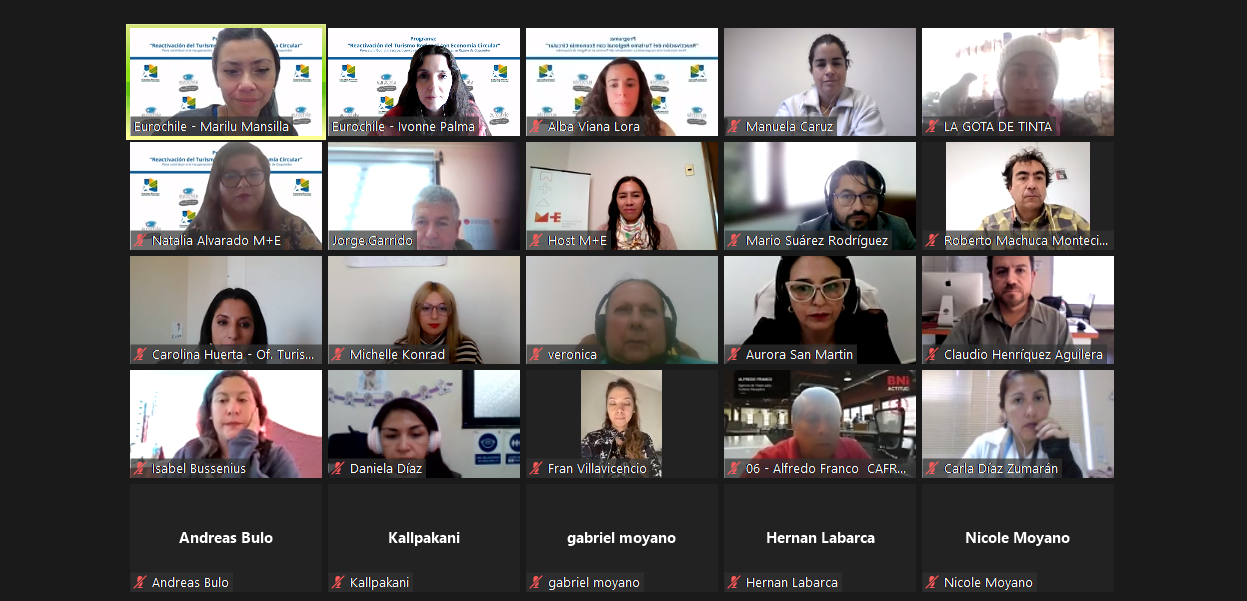
There was great interest in the webinar “Digitalisation, Digital Marketing and European Networks for Tourism Companies”, held on Tuesday 16 April by the Eurochile Business Foundation, which is part of the project financed by the Innovation Fund for Competitiveness (FIC) of the Regional Government of Coquimbo, whose objective is to provide digital tools to small and medium-sized tourism companies to boost their business models and open up to the national and international market.

The event was attended by leading experts in the area of digital marketing and European networks; Alba Viana Lora, with extensive experience in tourist destinations in Spain, Natalia Alvarado, in charge of digital marketing at the M-E Comunicaciones agency, and Manuela Caruz, director of International Networks at the Eurochile Business Foundation.

During the day, the importance of using digital platforms in tourism businesses and the application of marketing strategies to attract target audiences was highlighted, such as the use of creative messages that captivate users, the importance of creating a community and sharing experiences, products and services. MSMEs had the opportunity to learn about practical examples of successful tourism advertising campaigns in the Coquimbo Region.

In this context, Natalia Alvarado shared 4 innovative digital platforms that allow MSMEs to visualise their tourism business models in the national and international market. The new tools make it possible to create a product and service card and to geo-reference products and services, the contents of which are available to travellers on all computer media. On the other hand, Alba Viana Lora, a Spanish expert, explained the importance of the responsible use of digital marketing, with the aim of promoting a product in a correct way and incorporating sustainable practices. She also recommended disseminating information on real commitments to environmental care, carbon footprint measurement actions and good practices, avoiding falling into greenwashing, a communication strategy in which a company or organisation tries to present a falsely positive image of its environmental practices.

On the other hand, Manuela Caruz, Director of International Networks of the Eurochile Business Foundation, explained the mission and objectives of the Foundation, which since 1993 has been committed to national small and medium-sized enterprises through the development of networks, links, ties and strategic consultancy services that allow them to enter the European market through the transfer of alliances and knowledge. In this context, it made available the different programmes formulated by Eurochile to help tourism MSMEs in the Coquimbo Region to enter the European market.

The webinar also included the participation of Marilú Mansilla, project executive of Eurochile’s Sustainability and Circular Economy Area and Mario Suárez, head of the Development and Industry Division of the Regional Government of Coquimbo, who spoke about the natural attributes of the Region, the need to promote sustainable tourism, promote endogenous economy, sustainability of tourism resources, the scarcity of water resources and the importance of the project implemented by Eurochile for the region’s MSMEs.

The Training Plan will continue on Tuesday 07 May, where the webinar “Sustainable Tourism and Climate Change” will be given online, with a presentation by the European expert, Luis Baldó.


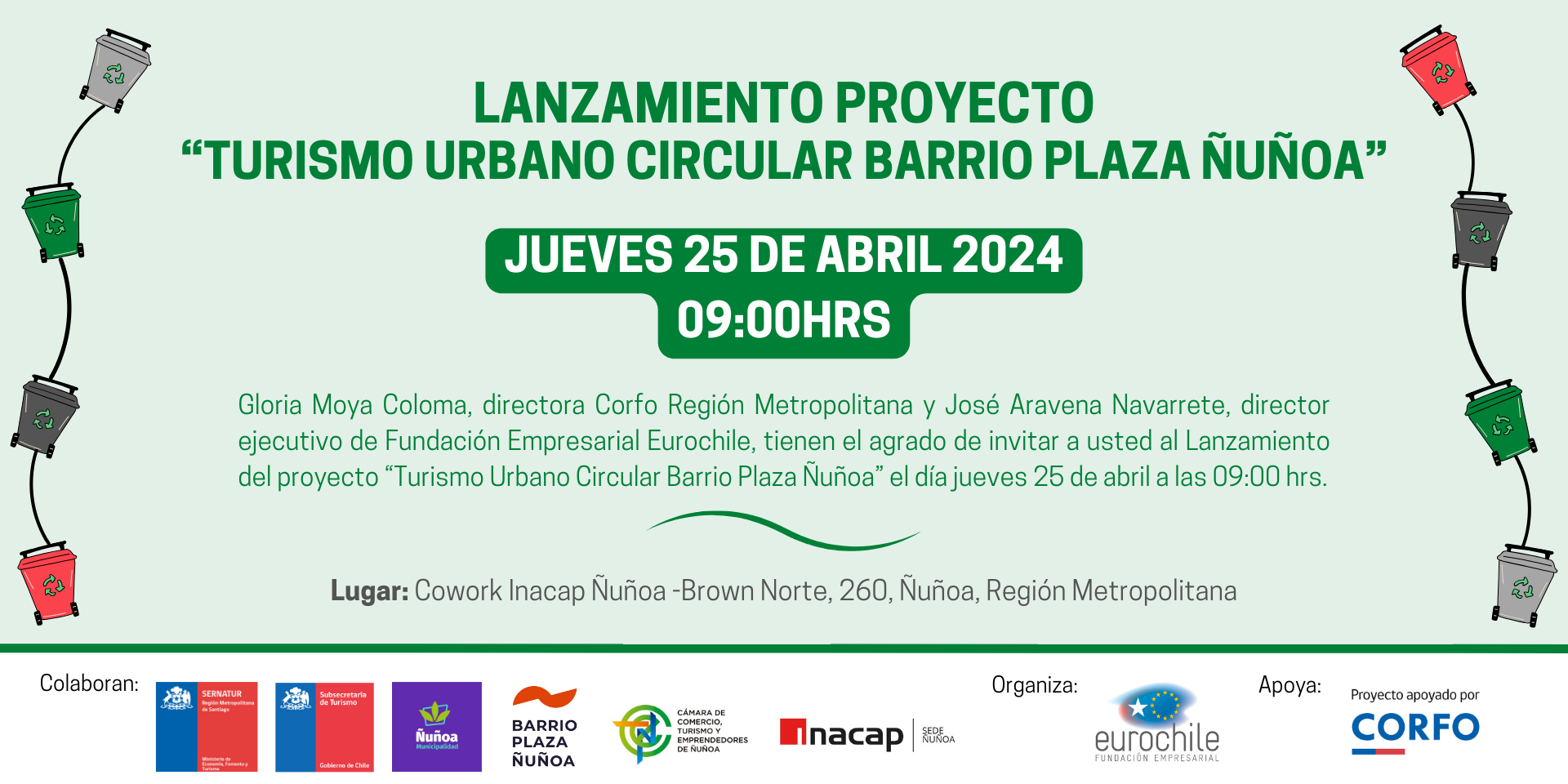
Eurochile Business Foundation promotes the Circular Urban Tourism project in the Barrio Plaza Ñuñoa

The Eurochile Business Foundation, through the Regional Technology Dissemination Programme (PDT) of Corfo’s Metropolitan Regional Directorate, in collaboration with the Ñuñoa Chamber of Commerce, Tourism and Entrepreneurs, will implement the project “Circular Urban Tourism Barrio Plaza Ñuñoa: Demonstration pilot of an efficient and self-financing community waste management model with composting technology, practical techniques and innovative and circular European and Chilean processes”.

This initiative aims to contribute to the improvement of productivity, making waste management more efficient, both at the individual and collective level in tourism SMEs in the Plaza Ñuñoa neighbourhood. It will be carried out through the implementation of a demonstrative pilot of community waste management that will allow testing and measuring the use of composting technology, as well as innovative and circular techniques, practices and processes from Europe and Chile. It is expected that this project will define a self-financing and replicable community waste management model that can be adopted by the participating SMEs.

As for the list of companies awarded the programme, geographically located around Plaza Ñuñoa and its surroundings, there are 26 in total, including: La Tecla, La Destilería, La Vinocracia, Hotel Plaza Ñuñoa, Kunstmann, Las Lanzas, La Finestra, Barba Negra, Barba Azul, Santo Secreto, Fuente Suiza, Escuela Internacional Arte Bianca, Ají Seco, Barbudo, Bar Local, Uncle Fletch, Pollo Stereo, Jardín Newen, Casa Mekero, El Paréntesis, Antonia Lounge, El Pacto, Sanguchería Petrü, Sin Envase, Huamantanga and Pollo con Estilo.

José Aravena, executive director of the Eurochile Business Foundation, says, “this initiative is not only about promoting more sustainable tourism, but also about helping businesses to adopt more circular practices. We firmly believe that this initiative will make a significant difference, especially in improving the quality of life of residents and contributing to the sustainable development of the commune“.

The programme has a duration of 12 months, during which it is expected to address the technological gaps identified in the group of companies through a preliminary diagnosis. In addition, a Dissemination Plan designed to improve knowledge, access and joint adoption of technologies, as well as the implementation of both European and Chilean best practices, techniques and processes, with a focus on innovation and circularity, will be carried out. The joint adoption of these technologies and practices will also be encouraged through the elaboration and continuous monitoring of a specific Joint Adoption Plan for each participating company. During the month of November, a technology tour to Barcelona is planned with the aim of testing and measuring the use of technologies and techniques to generate a community waste management model.

Urban tourism has undergone a remarkable evolution in recent years, largely influenced by changes in people’s consumption habits. In this context, it is essential to highlight the importance of promoting sustainable practices in this industry, ensuring that they are accessible to all types of customers. In this sense, the programme that Eurochile will develop with the establishments located in the Plaza Ñuñoa neighbourhood will enrich the tourist experience and benefit the local community, promoting a more conscious and responsible urban tourism.

Corfo’s Regional Technology Dissemination Programme (PDT) is an initiative that helps to improve the competitiveness of regional companies through prospecting, dissemination, transfer and absorption of knowledge, in order to increase their productivity, generating jobs and sustainability in business strategy.