English

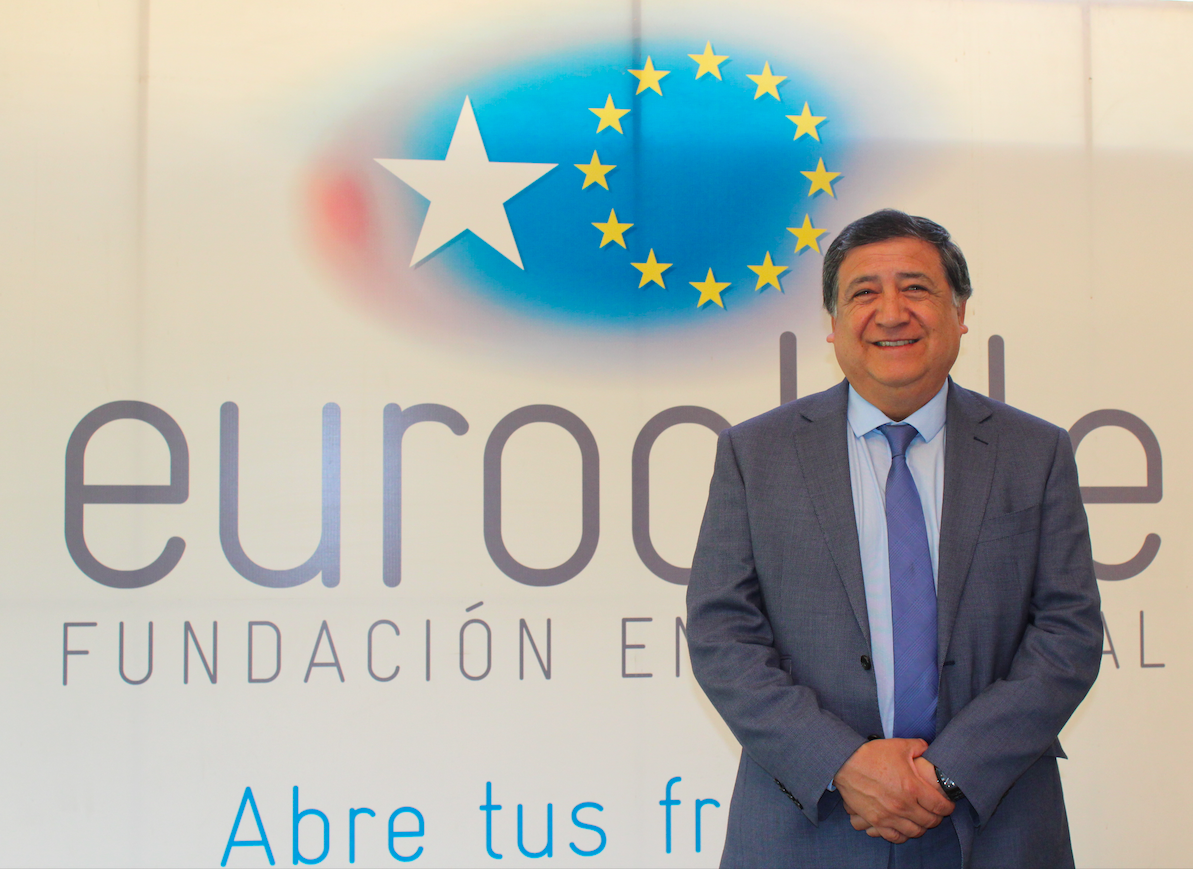
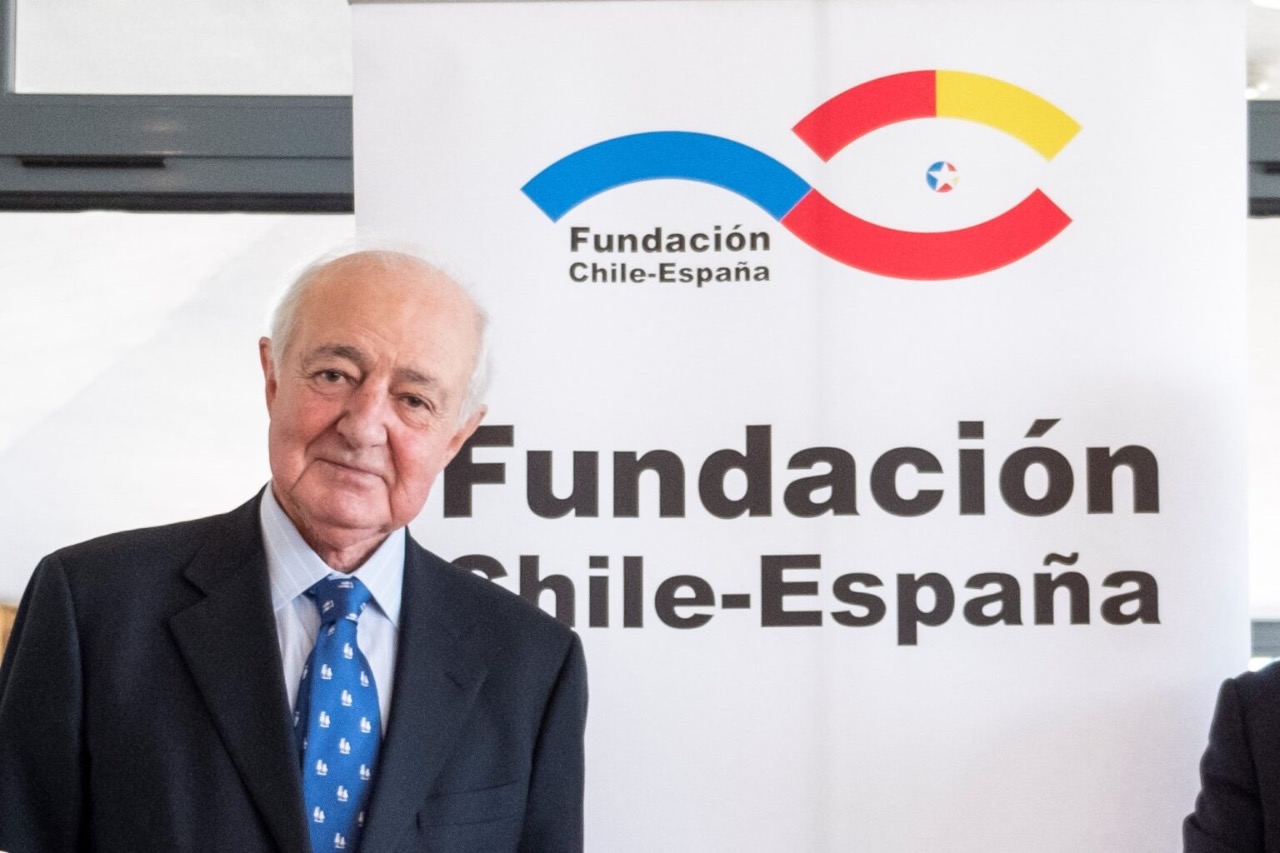
Emilio Gilolmo: “Chile is facing the COVID-19 pandemic with good results”

In recent weeks, through the catchword #FCEorgullosadesusempresas, the Chile-Spain Foundation has been reporting on a series of initiatives by its partner companies, either through solidarity actions or developing innovative programs to manage, investigate or combat the effects of the coronavirus, as well as the expertise of its employers and collaborators.

And in the opinion of its president, Emilio Gilolmo, while the pandemic progresses in Latin America in a very unequal way, there are countries that seem to have managed to establish successful strategies in containing and mitigating the transmission and number of deaths due to COVID- 19. “This is the case of Chile, which, although it has confirmed a large number of infections (14,885 infected), so far reports one of the lowest case fatality rates in the region (216 deaths), according to the Ministry of Health. They took drastic measures very quickly, “he says.

In an interview published on the FCE website, Gilolmo recalls that -thinking about future recovery- Chile is a country open to the world, and has 29 agreements signed with 65 markets, representing 67% of the world population and 88 % of global GDP.

For this reason, he affirms, “it is still very interesting to take advantage of its export capacity, to use the Chilean market as a platform for third countries. Likewise, it is a country that encourages foreign investment which will help to overcome the economic crisis and will continue to be a very attractive place for trade and investment. Furthermore, it should be noted that, among the members of the OECD, Chile is one of the least indebted countries, which offers some space for public indebtedness”.

Today the Chile-Spain Foundation, like many institutions, has had to cancel or postpone meetings it had scheduled, but they are continuing with the programme they had planned for the last quarter. These include the III Chile-Spain Health Forum, to be held in Madrid and which will aim to present the challenges of the health sector in the 21st century and the needs and transformations of the sector that are emerging, both in Chile and in Spain from COVID-19.

“In the times we are living we believe that it is very necessary to create instances where we can share good practices, innovation and success stories between different countries and analyze the important opportunities that are opening up in this sector for companies,” says Gilolmo.

In that sense, he says, opportunities arise from all crises. This was the case in 2008, when after the crisis companies learned to internationalize quickly, finding new markets and businesses.


“In this case, the business opportunities that are emerging from this terrible pandemic are numerous and many companies, as well as entrepreneurs, are developing interesting innovative solutions for both the present and the future that lies ahead. Proof of this is the numerous applications that are being given to copper in Chile with the aim of fighting the coronavirus,” he says.

On the other hand, this crisis offers opportunities in many other sectors such as renewable energy, cybersecurity, technological innovation, and of course, in the health sector, where a window of opportunities opens up.

“In Europe, an alliance for a green recovery to the current crisis has been launched. These movements will be key for us to emerge from this crisis as environmentally more sustainable and ecological societies. We hope that the boom in investments in renewable energies, sustainable supply chains and circular economy will continue, many of which were presented at COP 25, which took place in Madrid under the presidency of Chile, which is at the forefront of the fight against climate change ”, says Emilio Gilolmo.

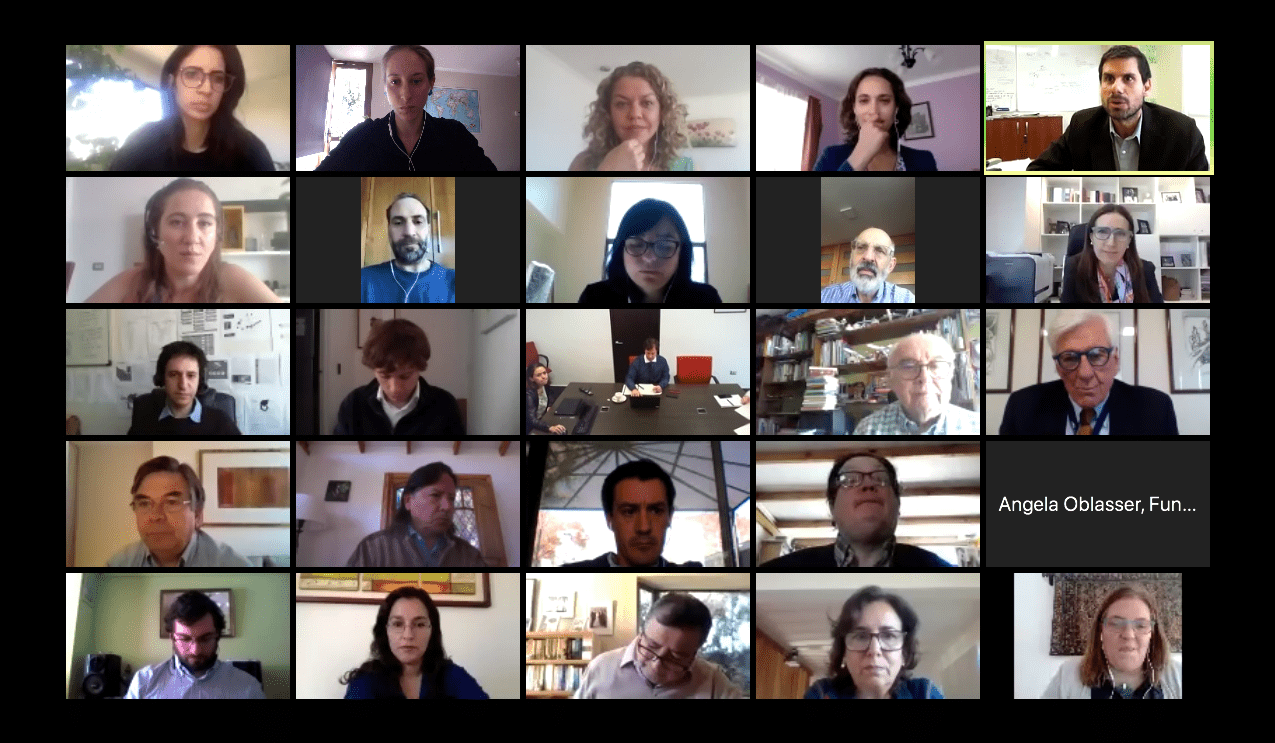
Ministry of Environment officially initiates the Strategic Committee of the Circular Economy Roadmap led by Eurochile

This morning, the Ministry of Environment officially began the work of the Strategic Committee for the preparation of the Circular Economy Roadmap, a work led by the Eurochile Business Foundation and whose main objective is to build a joint and consensual agreement between all the actors to define the main guidelines for the implementation of this mega-trend in the country between now and 2040.

“Promoting and boosting the circular economy will be one of the best ways to ensure that the economic recovery, after the Coronavirus health crisis, is green and sustainable. After the pandemic, countries will need to grow, but we must do it through this new paradigm, transforming our ways of producing and consuming, but it is also an opportunity for the generation of a large number of green jobs, “said the Minister of Environment, Carolina Schmidt, who led the event with the Minister of Economy, Lucas Palacios.

In this sense, a first proposal that will be put on the table in the work of preparing the Road Map is to set an ambitious goal: that by 2040 only 10% of waste will reach the sanitary landfill and that at least 65% of household waste generated in the country is recycled.

“The transition from the end-of –life concept to a circular economy means a paradigm shift, and requires a huge transformation in our ways of producing and also consuming. That is why we decided to lead the construction of a road map, inviting a cross-sector group of organizations to help us define concrete goals and objectives to make Chile a circular country, “said Minister Schmidt.

Beginning of work

From now on, the Strategic Committee will meet at least once a month, and will focus on working during the vision definition and roadmap design phases, actively participating in the workshops that will be held in these phases, and serving in the role of validation of the results obtained.

“Its role will be, basically, the construction of the Road Map. Based on the inputs, we will be developing the initiatives and strategies of the road map. It will be a process that we will be guiding, but it should not be forgotten that they are – as well as experts in the field – the stakeholders and the most interested parties in this work, since after the preparation of this document they will have to participate in its implementation,”said Linnet Solway, director of Eurochile’s Technology Transfer and Circular Economy Area.

The Road Map will be structured in four main pillars, each of which will have concrete goals, objectives, in the short, medium and long term. These axes are: obtaining raw materials; production; consumption and services; and waste management. To this end, a cross-sector group of organizations was invited to the Strategic Committee, which will help define the specific goals and objectives of the Road Map. The members of the Strategic Committee are:

Public sector

Ministry of Environment

Ministry of Economy

Ministry of Social Development

Ministry of Finance

Ministry of Health

Ministry of energy

Ministry of State (Subdere)

Ministry of Agriculture (Odepa)

Ministry of Science

Corfo

Agency for Sustainability and Climate Change


Municipalities

AMUSA

MSUR


Civil society

Asociación Nacional de Recicladores de Base

AVINA Foundation

Basura Foundation

AdC Circular

ODECU


Academy

Universidad de Chile

Pontificia Universidad Católica de Valparaíso

Private sector

SOFOFA

SONAMI

CChC

CCS

Mining Council

ANIR

ASIPLA

ACERA

Acción Empresas


Experts

Gonzalo Muñoz

Petar Ostojic

The Covid-19 and the opportunities to emerge stronger from the crisis

Opinion column of José Aravena, Executive Director of  Eurochile Foundation.

It is obvious that in the whole world the exit from the crisis will necessarily involve important investments of resources, both public and private, and therefore it becomes very relevant to discuss then the type of investments that should be made to -effectively- transform this painful crisis into a bad memory, having made it an excellent opportunity to promote policies designed to strengthen the country’s social and productive structure.

Europe and the United States have already begun this interesting reflection regarding the way the countries should get out of the crisis generated by Covid-19. And one of the images that is used mostly is that this, as well as the necessary and powerful reactivation plan that will need to be implemented to get the countries back on track, is an opportunity not only to recover what was lost in employment, product and income, but it is the right time to think of plans that make them stronger, more productive and better prepared for the future shocks that will inevitably reproduce.

This debate is not surprising, it is what has normally happened after great economic or social cataclysms. In the United States, the great depression of 1929 gave rise to the New Deal proposed by President Roosevelt, which – with a medium and long-term perspective – included a powerful economic chapter, with measures as relevant as the enormous electrification program, which helped and helps until today to substantially improve the productivity of that country; and an equivalent social chapter, the Works Progress Administration, which employed and trained millions of unemployed workers.

For its part, Europe, devastated by the Second World War, emerged from the crisis with two major constructions: the Welfare State, which ensured its citizens unprecedented social coverage in pre-war European society; and the common market for coal and steel, which subsequently evolved in the European Community until reaching what we know today as the European Union. Surely neither of these two great initiatives would have borne fruit if the tragedy of World War II had not occurred, which forced the European countries involved to rethink the world in which they wanted to live and the way in which they wanted to rebuild their destiny.

Looking at our country, what could be these great programs for Chile, made with the intention of strengthening growth and well-being of the population in the medium and long term? We can think of at least three macro initiatives.

The first that comes naturally to the spirit is the strengthening of the health system, correctly defining the roles between the public and private sectors, privileging the public system that is where the majority of the population is served. This system requires integrating innovations, training and investments that guarantee its hardiness to face future crises, which indicates that they will be repeated with some frequency in the future. And along with this, ensure adequate responses to the growing demand for better health by the population. The contributions of science, technology, entrepreneurs, industry and workers in the sector must be promoted by specific programs of the different public agencies, which must be directed to gather resources and “intelligence” to give life to the best system of health to which the country can aspire.

Secondly, the importance of the internet has also become very clear in this crisis, which has allowed part of the companies and people to remain operational, remotely accessing their sources of work, studies, information and even entertainment. But this opportunity has not been the same for everyone. The optical fiber that allows a better and faster data transmission is not available for the least favored sectors of the population, nor for a significant segment of small and micro-enterprises.

Today, when talking extensively about digitization and digitizing SMEs, in order to face the “new normal” generated by the pandemic, it is necessary that its natural highway, which is fiber optics, multiply and strengthens so that it arrives with speed and at accessible prices, or even free, to all corners of the country. But only the “road” is not enough. SMEs, neighborhood councils, sports clubs, cooperatives and all kinds of associative figures must be equipped with the basic instruments to perform in this world of information and, above all, must be accompanied by the necessary training so that they can take advantage of the equipment, software and broadband to which they have access.

A high speed internet, present throughout the length and breadth of the territory, will help not only remote work. Above all, it will allow entrepreneurs, small entrepreneurs and the general population to associate to collaborate, train, learn the benefits of digital exchange, innovate, and generate new solutions to solve urgent problems of all kinds, be these from the productive sectors or from the population in general.

Third, a strong agenda of initiatives must be established to tackle and significantly reduce the air pollution present in the main cities of the country. The current crisis has highlighted the dangerous mix that results from a virus like the one that currently attacks the world, with the existing pollution in cities. Evidence is accumulating in the scientific world that pollutant particles floating in the air can become dangerous “virus transport vehicles.” Evidence is also accumulating that people with respiratory conditions exacerbated by pollution have a worse prognosis when facing a COVID-19 infection. Finally, the contamination enhances other respiratory diseases that, added to those of the virus, necessarily lead to the collapse of any health system.

Then, preparing the country to fight any other Covid-19 type virus in the future must consider the frontal fight against air pollution. This fight has several fronts, in all of which the State has an important role to play. Accelerating the decarbonization of the energy matrix is ​​an important first step, which must be accompanied by the electrification of the transportation system, the conversion of household heating to less polluting fuels, and the transformation of industries towards production systems, more efficient in the use of energy and raw materials.

In this fight against pollution, the adoption by companies, cities, consumers and other relevant actors of a circular economy model that allows a better use of productive resources, thus reducing waste and contributing to less emission.

In these three initiatives, the Eurochile Business Foundation has a role to play and a contribution to deliver. Innovations in health, digitization, the fight against pollution and climate change are areas where cooperation with European public and private actors offers a promising future. The collaboration that could be generated from the Chilean reactivation programs and those promoted by the European Union, or some of its member states, could help to enhance the deployment in Chile of the three initiatives previously proposed.

This Chilean-European cooperation space is the field in which the Eurochile Foundation has always operated, and the one we know best. Thus, in 27 years of existence we have promoted countless business contacts between Chilean and European companies, and we have facilitated access to the “know-how” accumulated in both worlds and the transfer of technology between the parties. Towards the future we will develop our best efforts to put all this experience, networks, contacts and access to local and European Union programs at the service of recovery and strengthening of Chilean and European companies and institutions. Thus, we will be contributing our grain of sand to ensure that overcoming this crisis does not only translate into recovering what has been lost, but also transforms Chile into a more integrated, more equal country with better services and quality of life for all.
Yves Gidoin, from Vegepolys Valley: “We will see the consequences of Covid when the crisis ends and the economy recovers”

Vegepolys Valley is a public-private network of companies, research centers and training centers that is deployed in the French regions of Brittany, Pays de la Loire, the Center-Val de Loire, and Auvergne-Rhône-Alpes, covering all the innovation agriculture value chain in plants, for plants and with plants.

With nearly 500 partners and a global mission to transform itself into an international cluster of plants for agriculture, combining competitiveness with respect for the environment and health, today it is also facing the new challenges that the coronavirus imposes on its daily work, to their communities, and also to the markets.

Yves Gidoin, International Vice President of Vegepolys, says that since March 15, all Vegepolys Valley staff is working remotely, some of them part-time due to school closure. And like what happened in Chile in recent weeks, all physical meetings are postponed or turned into digital events, as happened with the working group for Latin America planned for April 7 and conducted 100% online.

What has happened with the projects carried out by Vegepolys in front of the scenario imposed by Covid-19, how does it work in its continuity?

Vegepolys Valley leads different types of projects from a very local scale to regional scales and finally to a European scale, where we support and follow our members to establish new innovation projects. Of course, in this scenario each situation is evaluated on a case-by-case basis. For the European project, for example, we decided to go ahead even with internationalization tasks, because the Covid-19 is paralyzing many events and nobody can guarantee a return to “normality” before the end of the project. As for our members, we see an increase of ideas and projects, and our team has been working hard since March to prepare and identify the best approach for these potential projects.

What kinds of situations have been the most complex to resolve so far?

First of all, we try to support our members in the best possible way. At the company level, we seek to be an interface to access economic mitigation measures region by region, at the state level and in Europe. Regarding education, we opened a platform for students with a canceled or pending training period, and we proposed to link them with companies with reference or market research, if possible from home. And generally speaking, we hold webinars and prepare new types of remote events to keep in touch. But, without a doubt, for the cluster it is impossible – in this context – to really wait or press for the invoices and membership fees to materialize. This 2020 could be a difficult year for our own budget balance since 50% comes from the members themselves, but our priority is to support them in this difficult period.

How has this crisis affected the world of agriculture in France, especially horticulture?

The situation is very complicated for horticultural producers, especially for flower and plant productions. As we are in spring season, our greenhouses are full of products and the selling points have been closed for four weeks. We had to do a lot of destruction and the losses are enormous, from 50% to 80% depending on the productions. For the other agricultural activities, the situations are variable. But business is generally slow, particularly for exports.

In this crisis scenario, have opportunities arisen in the world of horticulture?

Until now it is difficult to imagine opportunities because there are no shipping possibilities. We will see the consequence of Covid when the crisis ends and the economy recovers.

Are there measures implemented in France that could be applied in the agricultural world in Chile?

It is still difficult to imagine what kind of support we will have. Everyone is asking for financial assistance, and I’m not sure everyone will get enough money to survive.

How do you see the scenario once the health crisis ends and the economy begins to recover?

To limit the impacts of COVID, we have to find a new system of life and relationships for our population, with a chain of solidarity to avoid the social crisis.

What actions is Vegepolys defining for this second phase after COVID-19? And which are the sectors that will need more support and of what type?

It is still too early to risk a conclusion or talk about the post-crisis. Our role will remain to boost innovation, and support the growth and internationalization of our members. Adaptation will be the keyword, and the Covid-19 will likely change our mindset for events or travel.

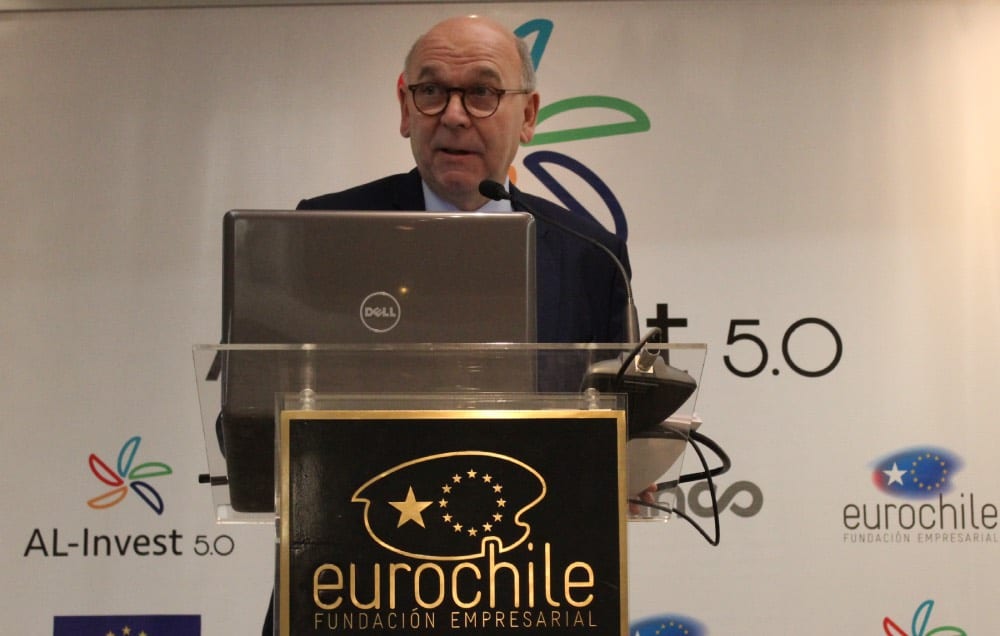
Harman Idema, Ambassador of the Netherlands: “The Roadmap for the Circular Economy is a great initiative for the sustainable development of Chile”

Historically, Chile and the Netherlands have had a very good bilateral relationship, with ongoing support work on issues important to both countries. And so it is also in matters of climate action and circular economy, affirms the country’s ambassador to Chile, Harman Idema: “For example, Chile and the Netherlands work together – at the request of the Secretary General of the United Nations, António Guterres, to their presidents – in convincing other countries to raise the goals of each country to achieve the results of the Paris Agreement”.

And within this framework, the embassy is currently in conversation with the Eurochile Business Foundation to help both in the preparation of the Circular Economy Roadmap and in the exploration of different ways of collaboration in this matter. One of the areas where bilateral cooperation is strong today, for example, is in water resources, where today the impact of climate change feels strong. Along these lines, there is currently a project in La Serena for the management of integral water with the use of aquifers and in Los Vilos in the protection of the coast.

In the circular economy, the Netherlands is also making significant progress through initiatives such as Pharmafilter, which turns wastewater suitable for hospitals; Protix, a company that has developed a sustainable and circular way to harness the power of insects for the production of insect-based products, including feed for aquaculture and inputs for pharmaceuticals; or DSM-Niaga, which produces fully recyclable carpets for the world market, among others.

In this interview with Eurochile, the ambassador of the Netherlands, Harman Idema, deepens into the scope that this cooperation could have, and how the progress of his country in terms of circular economy can help the adoption of this trend in Chile and its companies.

What are the main advances that the Netherlands is making today in the field of the circular economy, that could help develop this trend in Chile?

In the Netherlands we have already completed the Road Map process; we already have a public policy whose main objective is to have a fully circular economy by 2050. In the search for solutions to face common challenges, our country uses the famous “Dutch Diamond ”, in which representatives from the public sector, the private sector and knowledge and research institutes work together. From there, solutions are agreed between all, if it is to collect, process and recycle plastic, waste processing in a sustainable way, lower the amount of waste, manage water in a circular way or change the mobility system, etc. All of this is supported by a system of subsidies and exemptions.

Today there are a number of initiatives in this area, and among them the main one is the elaboration of a Roadmap for the Circular Economy, a work that Eurochile is developing today. How could you support this process?

We see the Roadmap for the Circular Economy as a great and very valuable initiative for the sustainable development of Chile, and as a new business model. In the Netherlands we have gone through a similar process, with learning and good practices. We are going to share them with Chile, among others, through the Holland Circular Hotspot, which is an innovative cooperation between the public sector, the private sector and knowledge institutes, with the aim of supporting the circular economy internationally. The Holland Circular Hotspot is in the best position to transmit the most specific lessons, good practices and solutions to support the process in Chile. In addition, at the request of the Ministry for the Environment, our Minister in charge of circular economy Stientje van Veldhoven, will participate in the international advisory committee accompanying the process of formulating the Road Map in Chile.

How has the implementation of the circular economy progressed in Europe, and in particular in the Netherlands, and what are the main concrete achievements until today?

From the vision of the European Union, I believe that the ‘European Green Deal’ creates the ideal conditions to strengthen the circular economy. The recent experiences of countries such as Finland and the Netherlands can serve as examples for its implementation. Having a state policy focused on a circular economy in 2050 gives the private sector direction of where the market is going and what they should invest in. It has released an unlimited ambition – with existing companies, multinationals, new start-ups and B companies – towards the efficiency of the use of inputs, new sustainable products and changes in market concepts, such as ‘light as a service’. Fot example, Schiphol airport has signed a contract with Signify lightning (originally from Philips). They pay for having good light (the service) instead of a price per bulb (the product), which generates an attitude of efficiency (of the service) instead of maximizing volume (of selling bulbs).

There are so many examples to show, in all sectors. Think for example of the SolaRoad, which instead of asphalt the road is made of 100% solar panels that generate energy. Or Bluecon, which cleans wastewater for agricultural use – small and medium scale. Or The Waste Transformers, which is a small facility capable of transforming large amounts of organic waste into energy and heat. Many examples of Netherlands initiatives in circular economy can be found in the Holland Circular Hotspot catalog.

What are the main areas or sectors where you see the greatest opportunities for cooperation between the Netherlands and Chile in both climate action and the circular economy?

For several years now, Chile and the Netherlands have a successful cooperation in water, agriculture, ports and smart cities, including waste management. And just the focus within these sectors is largely to strengthen the circular economy – from both our public and private actors. For example, the Dutch company Arcadis helps to reduce water consumption and water treatment in the mining sector, and the Dutch bank Rabobank conducts a sustainability analysis of each client and has a focus on sustainable financial solutions. More generally, I believe that the participatory process that we always follow to reach agreements between the government, the private sector, knowledge organizations and consumers is something that may have a certain value to explore for Chile.

What is the progress of the Netherlands in these areas, and how could such cooperation be more concrete?

In the Netherlands, based on public policy with the goal of being a 100% circular country in 2050, tables were built by sector where public, private and knowledge entities agreed on what measures they can take to contribute to the national goal. We are now in the process of implementing these agreements, with a good monitoring system, including a role for our parliament.

To mention just one specific example: in waste management in the Netherlands there is an advanced garbage collection system, then a very high percentage of recycling, and the part that does not have enough value to recycle, is used to convert energy through Waste-to-Energy facilities. Less than 1% of residential waste in the Netherlands ends up in landfills, and we would love to support Chile in achieving this.

Eurochile survey: 81% of SMEs have a significant impact due to the COVID-19 crisis and 45% believe that they will not be able to continue operating in the face of mandatory quarantine

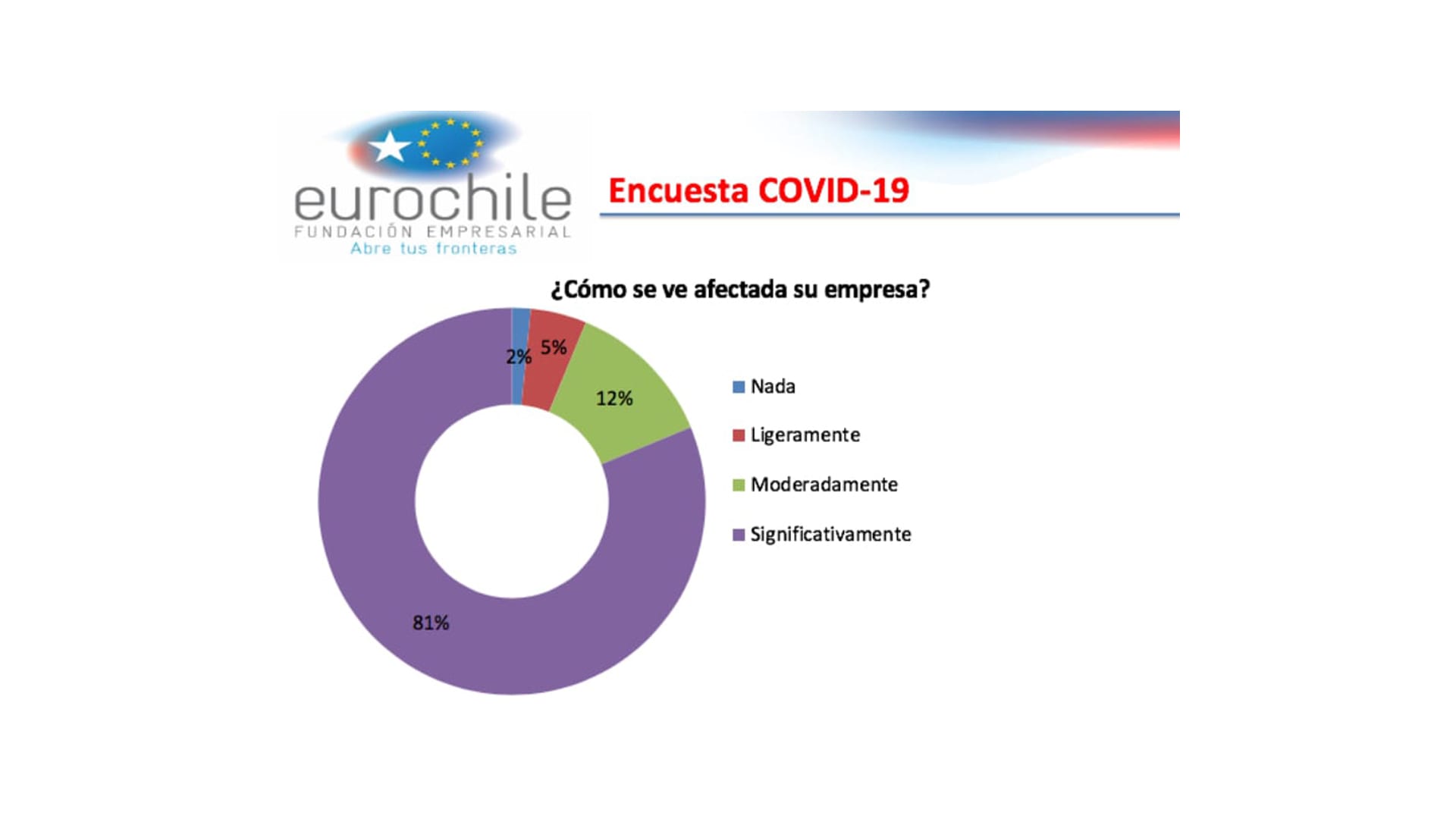
In the context of the crisis caused by the global pandemic of COVID-19, and its impact on the country’s economy, Eurochile Business Foundation carried out a survey to 128 companies of different sizes and productive sectors of the country to see how they have been affected by this crisis, and know their opinion regarding possible support measures in this scenario.

“This survey seeks to find out the opinion of the entrepreneurs linked to Eurochile, regarding the effects that the current pandemic situation has had and will have on their businesses, and also what measures they consider most effective for the recovery. With this information, the Foundation can generate knowledge for decision makers and can also adapt its offer of support services to national SMEs”, explains Francisco Meneses, director of Strategic Development at Eurochile.

Most of the companies surveyed are micro-companies with less than 10 workers (52%) and small companies that have between 10 and 20 employees (30%), while 15% are medium-sized companies with up to 100 employees. Only 3% represent large companies. Of these, 30% correspond to tourism companies, 19% to services, 17% are consulting and education companies, followed by commerce and industry with 7% each, among the main ones.

Of these companies, 81% answered that the crisis caused by COVID-19 has affected them significantly, which explains the impact of the shutdown of numerous activities, while 12% say that the effect has been moderate. Only 7% of them indicate that the pandemic has affected them little or nothing.

This has strongly affected their income and the impact has been huge, to the point that 73% of the companies surveyed affirm that they have lost more than half of their usual income. Additionally, 19% of these affirm that the loss of income already ranges between 30% and 50%. Only 2% of the companies have had no impact on this matter.

Added to this is a significant increase in their operating costs for 43% of companies, mainly due to the protection and control measures they have had to implement to protect their workers from the COVID-19. For 27%, this increase has still been moderate.

Facing this scenario, only 23% of those surveyed think that if a mandatory quarantine was decreed in the country, they could continue, mainly because they are companies that can operate and provide services remotely. On the other hand, 45% of the companies will not be able to continue operating with a mandatory quarantine, a figure that increases to 70% in the case of the tourism sector.

As Francisco Menses explains, a health crisis like the one we are experiencing has a huge negative impact on economic activity because – unlike other scenarios – it simultaneously affects offer and demand.

“Productive capacity,” he points out, “is limited by the quarantine with regard to the workers and employers, and at the same time, it is difficult for consumers to access products and services. And as activity diminishes, income also falls and there is a multiplier effect. This is especially severe in service sectors, and in particular the tourism industry, an area in which Eurochile has supported for many years. Additionally, as it is a global crisis, this phenomenon also strikes Chile from abroad, as demand for our exports, especially copper, decreases”.

Measures to get out of the crisis

 How to get out of this crisis? The survey shows that the most effective measure – in the opinion of SMEs – is to offer a subsidy to the company to encourage maintaining their workers (59.4%), and it is followed by two measures related to credit: postponing the payment of taxes (57.8%) and establishing special loans for companies (57%).

Other measures proposed are of a tax nature, such as reducing income tax (45.3%) and reducing VAT (40.6%). With less approval, other options appear such as: support workers by allowing them to use their unemployment funds or pension funds during the emergency, with 37% and 34%, respectively.

According to Meneses, companies operate -simply- buying, working, selling. If they don’t sell, they have no resources to work or buy. If they have payment commitments with suppliers or workers, the lack of sales for a period simply means collapse. In general, the smaller the company, the less resources it has as ‘working capital ‘as well as access to credit, and therefore the shorter the period it can be without sales. Therefore, the measures that ease this pressure are the most valued by SMEs.

“Among these financial relief measures, subsidies are valued first, which is obvious since these are resources that should not be reimbursed. Next, the most important thing is to postpone payments. Not so much that they reduce the tax rates (except for the large companies, which do propose it) but rather to be able to temporarily ease their cash flow needs, receiving new credits or postponing the payment of taxes. Below are the measures that allow workers to maintain their income, which – although they are important – are not the most urgent for the employer, ”explains the director of Strategic Development at Eurochile.

Severe economic impact and technological challenge

According to the analysis by Francisco Menses, the first conclusion of the survey applied to companies that work with Eurochile is the economy due to the current situation. This is because the survey shows that -in just one month- entrepeneurs have been severely affected.

Indeed, 81% say this has affected them significantly and 73% say their income is cut in half or less. Although most of them see that this situation will last between 4 and 12 months, only 23% affirm that they could maintain their business if a massive quarantine was decreed. This means that the future looks even darker than the present. ”

Likewise, when asking about more qualitative opinions, very few entrepreneurs mentioned the need or possibility of expanding their use of digital technologies to communicate, buy, work and sell, which in turn, could reduce the impact of quarantines. By absence, this is also a conclusion of the survey.

“The technological gap that still exists in the business world, and especially in SMEs, is verified.

Despite the high availability of computer equipment and smartphones in Chile, and relatively high internet coverage, very few SMEs have incorporated these technologies into their business. This is a line that must be explored, not only to face this pandemic but also as a mechanism for reducing costs and accessing markets, permanently, “explains Meneses.

And in the case of tourism, he adds, “that gap was already being noticed because many small businesses associated with unique natural attractions in the world, were having difficulties securing their promotion, reservations, charges, etc., against a potential world demand characterised by connected youth. Without a doubt, the digitalisation of SMEs is a challenge that must be urgently addressed”.

Bruselas desbloquea 1.000 millones para pymes con problemas de liquidez

La Comisión Europea ha desbloqueado 1.000 millones de euros para que el Banco Europeo de Inversiones (BEI) incentive a bancos y otras entidades de préstamo a conceder 8.000 millones de euros en créditos a unas 100.000 pymes y empresas de capitalización media europeas.

La iniciativa forma parte del primer paquete de medidas que el Ejecutivo comunitario anunció a mediados de marzo como primera respuesta de emergencia para paliar los efectos de la pandemia de Covid-19.

Según ha informado Bruselas en un comunicado, los fondos se utilizarán para que el BEI, a través del Fondo Europeo de Inversiones (FEI), emita avales “especiales” para impulsar préstamos a empresas con problemas de liquidez a causa de la enfermedad.

Estos 1.000 millones de euros permitirán el FEI conceder 2.200 millones de euros en garantías a intermediarios financieros, una cifra que conducirá a la movilización final de 8.000 millones de euros en préstamos a pequeñas y medianas empresas.

El Fondo Europeo de Inversiones ofrecerá estos avales al mercado a través de una convocatoria pública que ha sido lanzada este mismo lunes a varios centenares de entidades financieras europeas.

Estas garantías tendrán un acceso simplificado y más rápido, cubrirán el 80% de las pérdidas potenciales (frente el 50% habitual), se centrarán en préstamos para el capital circulante de las empresas e incluirán términos más flexibles con respecto a aplazamientos o renegociaciones.

Europa anuncia que usará “cada euro disponible para salvar vidas y medios de vida”

“La profundidad y amplitud de esta crisis requieren de una respuesta sin precedentes en escala, velocidad y solidaridad”, afirmó la Comisión Europea en una comunicación enviada al Parlamento Europeo, al Comité Europeo y al Comité Económico y Social Europeo, entre otras instituciones. Y en ese escenario, anunció una serie de medidas “audaces y sin precedentes” que implican una promesa: “utilizaremos todos los euros disponibles que tengamos, de todas las formas que podamos, para salvar las vidas y proteger los medios de vida”.

Este paquete de ayudas considera la creación de SURE, un nuevo instrumento de solidaridad de la Unión Europea para ayudar a los trabajadores a mantener sus ingresos, y ayudar a las empresas a mantenerse a flote y retener su personal.

SURE proporcionará asistencia de hasta 100 mil millones de euros en préstamos de la Unión Europea, y será un esquema a nivel de la Unión Europea para mitigar los riesgos del desempleo.

A esto se suma la adaptación del Fondo de Ayuda Europea para garantizar la entrega de alimentos a los más desfavorecidos, y medidas específicas para apoyar a los pescadores y agricultores de Europa, que desempeñan un papel esencial en la mantención de los suministros de alimentos y de las comunidades locales.

Estas últimas medidas incluyen brindar apoyo a los pescadores para el cese temporal de las actividades pesqueras, a los acuicultores para la suspensión o reducción temporal de la producción, y medidas concretas para garantizar que los agricultores pueden obtener el apoyo que necesitan de la Política Agrícola Común. Esto incluye entregarles más tiempo para presentar sus solicitudes de apoyo, y para incrementar su flujo de caja se propone aumentar los anticipos para pagos directos y pagos de desarrollo rural.

Adicionalmente, para la protección de la economía y de las personas, la Comisión Europea propuso permitir que cada euro disponible de los Fondos Estructurales y de Inversión europeos se utilicen en la respuesta al coronavirus. En términos simples, esta es la máxima flexibilidad: sin límite en las transferencias entre fondos o entre regiones, sin límite en el gasto por objetivo de política, y sin requisitos de cofinanciamiento.

Eurecat inaugura sede en Centro de Negocios de Eurochile para impulsar transferencia tecnológica que favorezca desarrollo empresarial en Chile

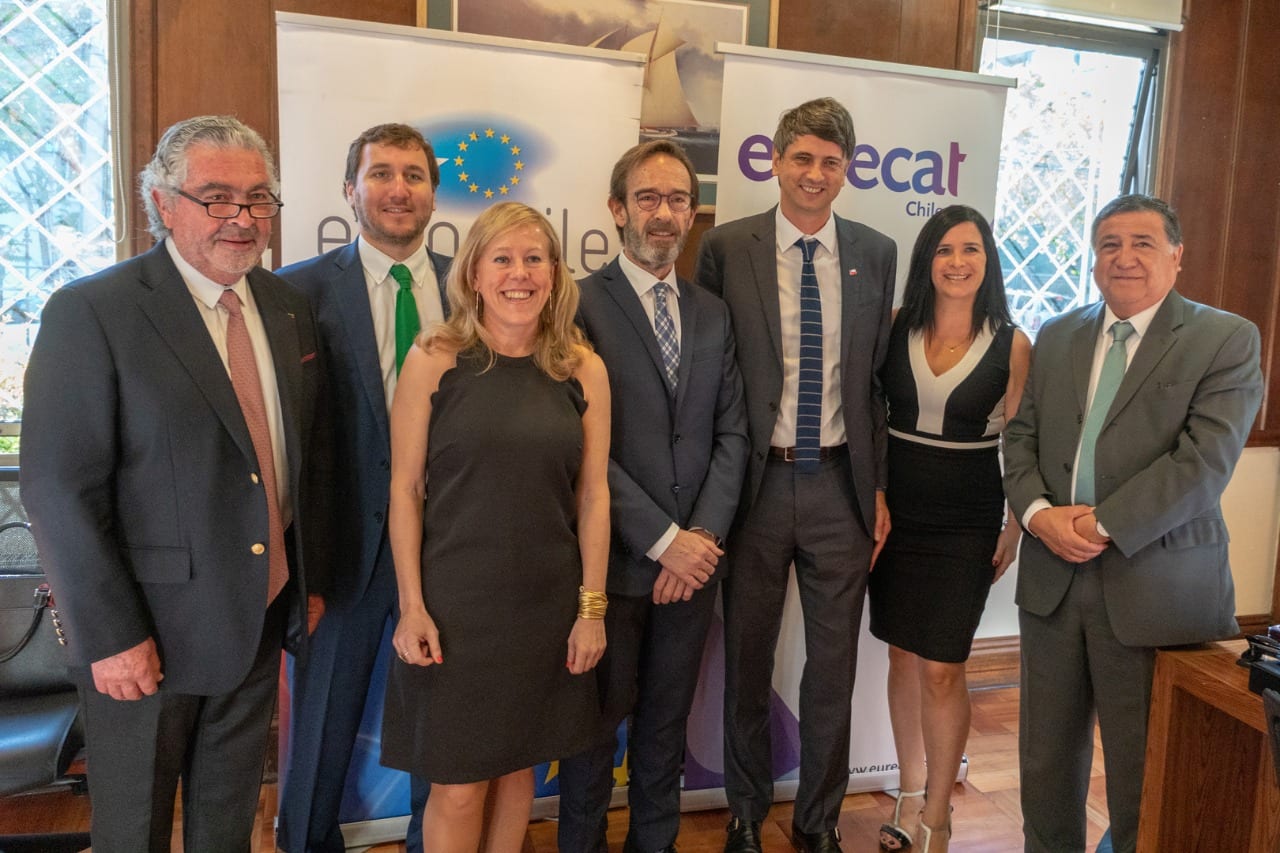
El pasado 10 de marzo, en una ceremonia que congregó a más de 120 asistentes, se oficializó la instalación de Eurecat, centro de innovación tecnológico ubicado en Cataluña y uno de los principales de su tipo en España, en el Centro de Negocios Chileno Europeo que mantiene Eurochile en su sede en Providencia. Con esto, se inicia formalmente el trabajo en Chile de este centro español, que posee más de 600 profesionales y mil empresas entre sus clientes, y que actúa como un puente natural entre la investigación aplicada y el desarrollo de las actividades empresariales.

En la ceremonia estuvieron presentes el ministro de Ciencia, Conocimiento, Tecnología e Innovación, Andrés Couve; el vicepresidente ejecutivo de Corfo, Pablo Terrazas; el presidente de Eurochile, Vicente Caruz; el director general de Eurecat, Xavier López; y el director ejecutivo de Eurochile, José Aravena, entre otros.

Eurecat ha sido un socio activo de Eurochile, y desde 2016 mantienen un acuerdo de colaboración conjunto que ha permitido participar en proyectos y postulaciones a fondos concursables en los que han encontrado sinergias mutuas. Ahora, con su instalación en Chile como primera sede de Eurecat en Latinoamérica, el objetivo es mantener y potenciar esta relación para seguir desarrollando proyectos que apoyen a resolver los desafíos tecnológicos de las empresas chilenas. Un ámbito clave para el desarrollo económico del país, apunta el ministro de Ciencias.

“El ecosistema de innovación tiene como objetivo agregar valor a nuestro sistema productivo, para que podamos tener una sociedad donde el conocimiento es central. Y para ello tenemos que fortalecer un ecosistema que hoy día cuenta con más actores que nunca, desde la academia, la empresa, los emprendedores, las organizaciones civiles y no gubernamentales”, dijo Andrés Couve.

“Por lo tanto -agregó el ministro-, incorporar un elemento nuevo como Eurecat al ecosistema nacional es de tremendo valor, porque nos da la posibilidad de conectarnos mejor y también especializarnos en aquellas temáticas que van a hacer que nuestra economía sea más competitiva globalmente”.

Proyección y consolidación de la alianza Eurochile-Eurecat

Para el presidente de Eurochile, Vicente Caruz, la relevancia de que una entidad especializada en el desarrollo tecnológico como Eurecat se instale en el Centro de Negocios Chileno Europeo , es que su principal énfasis es el trabajo con las empresas. Esto, afirma, es clave en un escenario donde la gran dificultad que existe hoy es traspasar los avances científicos primero a la innovación, y posteriormente traspasar esas innovaciones hacia los productores -especialmente las pequeñas y medianas empresas- “es una dificultad más grande todavía. Lo que los países necesitan hoy día, y tenemos todos muy claro eso, es que estas herramientas lleguen a la productividad”.

Esto, agrega Caruz, es parte fundamental de la misión de Eurochile. “La base es llegar con la innovación productiva mediante alianzas entre empresas e instituciones chilenas y europeas, que es el método que se ha mostrado más eficiente. Europa tiene un stock de ciencia e innovación enorme, y eso es lo que pretendemos que se transfiera. Esa transferencia se hace en forma directa con las empresas, pero también con las organizaciones privadas, públicas o mixtas que existen en los países y que apoyan este proceso”, explicó.

En ese sentido, afirmó que el principal trabajo que realizará Eurochile tras la instalación de Eurecat en el Centro de Negocios Chileno Europeo será apoyarlos al máximo no sólo en la instalación de su oficina, sino de manera activa en su trabajo. “Nosotros tenemos una red de empresas chilenas, tenemos relaciones con Perú, Uruguay, los países de la Alianza del Pacífico, para ayudar a conectar este quehacer aplicado de Eurecat con las empresas chilenas y de la región”, afirmó.

Para Xavier López, director general de Eurecat, el Centro de Negocios Chileno Europeo es una “plataforma excelente” para un aterrizaje inicial en Chile, que permitirá en una primera instancia conocer mejor a los diferentes agentes del sistema e ir construyendo capacidades en el país de forma complementaria a lo que ya existe.

“Eurecat empieza a apoyar valor complementario a los agentes que ya están trabajando en diferentes ámbitos. Nos parecía que una primera instalación en esta plataforma, con nuestros amigos y socios de Eurochile, era la mejor manera de hacerlo”, dijo López.

El director general de Eurecat explicó que ya poseen una cartera de proyectos en marcha vinculados a distintos ámbitos de su trabajo, entre ellos temas de economía circular, de inteligencia artificial e innovación turística. “Son ámbitos que son referentes para nosotros en España y en Cataluña, y pensamos que aquí hay oportunidades para generar valor.

También es muy importante para nosotros tener los inputs procedentes de la industria y los agentes de Chile, para ir construyendo adecuadamente esas capacidades”, señaló.

Fomentar la transferencia de tecnología

Para comenzar a trabajar en Chile, Eurecat ya cuenta con acuerdos de colaboración firmados con Eurochile y Corfo, y se están analizando ya algunos proyectos de colaboración con universidades del país.

“A partir de ahí -explicó López- buscaremos los mecanismos más adecuados para esta colaboración. Nosotros trabajamos con formatos muy flexibles en materia de transferencia tecnológica hacia las empresas, por ejemplo co-generando conocimiento y después explotándolo. Las fórmulas que utiliza Eurecat en Europa y en España pensamos que en buena parte son trasladables también aquí, y estamos abiertos a diferentes fórmulas de colaboración”.

En esto será clave nuevamente, explicó, la relación con Eurochile, ya que “vamos a contar con el personal de Eurochile que nos va a apoyar en muchas acciones, que nos va a aportar también el conocimiento y el capital relacional de diferentes ámbitos que para nosotros es muy importante. Nuestra idea con Eurochile es intensificar la colaboración de tal manera que haya más empresas chilenas que puedan plantearse el aterrizar en el mercado europeo, y más empresas nuestras también que tengan mayores facilidades para plantear iniciativas desde desarrollo tecnológico o incluso temas de comercialización de tecnología en Chile. Siempre vamos a tener eso presente: plantear proyectos que faciliten la conexión entre empresas de las dos regiones”.

Medidas de nuestra Fundación ante el Coronavirus

Ante las recomendaciones de las autoridades de nuestro país para evitar la propagación del COVID-19, y con el objetivo para cuidar la salud de nuestros colaboradores y la de sus familias, como Fundación Eurochile hemos decidido suspender las reuniones masivas, realizando todas nuestras reuniones a través de video llamadas.

Asimismo, se suspenden todos los viajes al extranjero y los extranjeros que soliciten reunión en nuestro país deberán acreditar que han cumplido con las medias establecidas, de lo contrario no podremos recibirlo.

Igualmente reiteramos que por parte de nuestro equipo hay servicios permanentes y que la gran mayoría está trabajando a distancia durante este periodo.

Finalmente y en términos administrativos, todos los pagos y trámites que se realicen durante este periodo serán online.